Racing games have been part of gaming for decades, yet the basic idea has hardly lost any of its appeal. Whether players are driving a realistic sports car around a famous circuit, racing through city streets, competing in time trials, or trying to master a difficult track, racing remains one of the easiest genres to understand and enjoy.
Technology has changed enormously since the earliest racing games appeared, but the appeal of speed, competition and trying to improve your previous performance has stayed remarkably consistent.
Racing Is Easy to Understand
One of the biggest strengths of racing games is their simplicity.
Players rarely need a lengthy explanation before starting. Accelerate, steer, avoid obstacles and try to reach the finish line. Even games that add upgrades, vehicle customization or more complicated physics usually keep this basic formula intact.
That makes racing games approachable for people who do not necessarily consider themselves serious gamers.
Someone can start playing for the first time and understand the objective almost immediately. More experienced players, meanwhile, can spend considerably longer learning tracks, improving cornering and trying to shave seconds from their best times.
This balance between accessibility and mastery has helped racing games appeal to a very broad audience.
There Is Always Another Challenge
Winning a race does not necessarily mean the game is finished.
There is usually another track to complete, another vehicle to unlock or another score to beat. Even a familiar course can remain interesting when the player is trying to improve a previous time.
This is one reason racing games work particularly well with replayable gameplay.
A player might finish a level successfully but immediately restart because one mistake cost them a better result. That feeling of knowing a slightly better run is possible can be surprisingly difficult to ignore.
Different games approach this challenge in different ways. Traditional racing titles focus on finishing ahead of opponents, while time-trial racing rewards players for improving their lap times. Arcade racers may emphasize speed and quick reactions, while simulation-focused games can demand more precise control and track knowledge.
The mechanics change, but the desire to improve remains the same.
Racing Games Can Take Many Forms
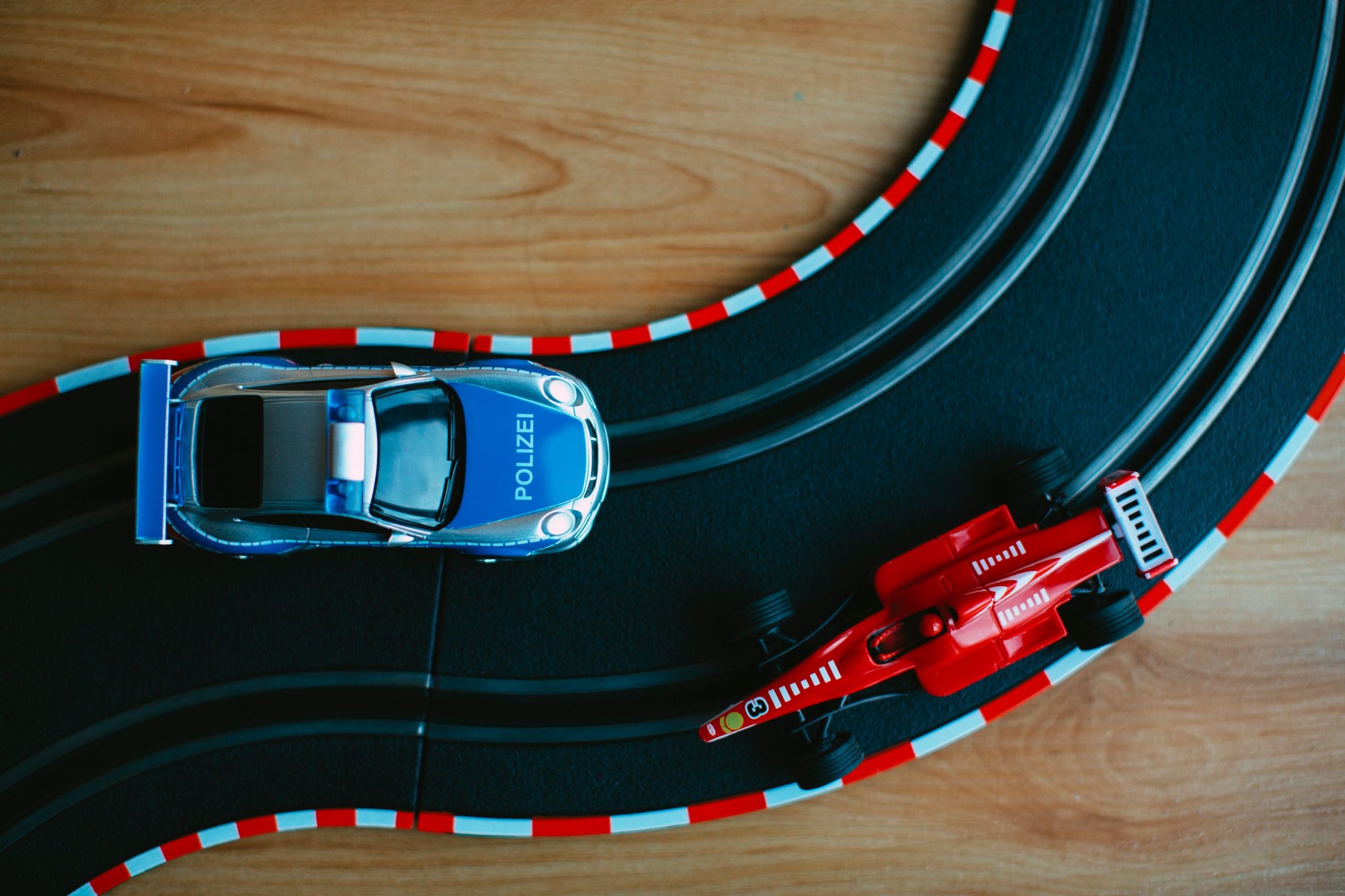
The term “racing game” now covers far more than simply driving around a circuit.
Players can race motorcycles, sports cars, trucks and even unusual vehicles that would rarely appear in a traditional racing simulator. Some games focus heavily on realistic handling, while others deliberately exaggerate physics to create something faster and more unpredictable.
Online gaming has helped expand that variety even further.
Platforms such as Y8 bring together a wide range of racing games, from traditional circuit racing and street racing to arcade-style driving and competitive time trials. Players can quickly move between very different racing experiences without needing every title to follow the same formula.
Games such as F1 Super Prix represent the more traditional side of the genre, with players focused on speed, track position and reaching the finish line ahead of the competition. City Car Stunt 3, on the other hand, mixes racing with larger jumps and more exaggerated tracks, showing how easily the basic racing formula can be adapted into something more arcade-like.
Some games focus on beating other drivers to the finish line, while others challenge players to set faster times, master difficult tracks or handle increasingly powerful vehicles.
That variety helps prevent the genre from becoming repetitive.
Racing Games Work Well in Short Sessions
Not every gaming session needs to last several hours.
Sometimes players simply want something they can start quickly, enjoy for a few minutes and then leave without feeling that they abandoned a much larger experience.
Racing games are particularly well suited to that style of play.
A single race, track or challenge can often be completed relatively quickly. Players still get a clear beginning, challenge and result even when they only have a short amount of time available.
Browser gaming has made this type of experience even easier to access. Instead of installing a large game or committing to a long campaign, players can open a racing game and start playing almost immediately.
This does not mean racing games have to be simple. Large racing simulators can offer hundreds of hours of content. The difference is that the basic racing format works equally well whether somebody wants to play for five minutes or an entire evening.
Few genres manage that quite as naturally.
The Competition Is Always Clear
Racing also provides one of gaming’s most obvious forms of competition.
There is usually very little ambiguity about what constitutes success.
Finish first. Beat the clock. Travel farther. Score more points. Complete the track without crashing.
Even without multiplayer opponents, players often end up competing against themselves.
A best time becomes something to beat. A difficult corner becomes something to master. A level that once seemed impossible eventually becomes manageable after enough attempts.
Even without another driver on the track, time trials and leaderboard-based races create the same competitive loop. A player can always return to chase a faster lap or a better position.
They Work Almost Everywhere
Another reason racing games have remained popular is how easily the genre adapts to different devices.
High-end PCs and consoles can support detailed simulations with sophisticated physics, licensed cars and realistic environments. Mobile devices can offer shorter touch-based racing experiences. Browser games can focus on immediate accessibility and lightweight gameplay.
The controls can also be adapted relatively easily.
A keyboard, controller, touchscreen or even a very small number of buttons can provide enough input for a racing game to work.
That flexibility has allowed the genre to follow players from arcades to home consoles, computers, smartphones and browsers without losing its identity.
Familiar Does Not Mean Boring
Racing games continue to evolve even though their central idea remains familiar.
Developers can change the vehicles, environments, physics, objectives and level design while keeping the basic appeal intact.
One game may focus on realistic motorsport. Another might feature impossible tracks suspended in the air. A third may remove traditional opponents completely and turn driving into a score-based challenge.
Players know roughly what to expect, but there is still enough room for developers to create something different.
That may be the biggest reason racing games never really disappear.
Gaming technology will continue to change, and the way people access games will change with it. But the satisfaction of taking a corner perfectly, finishing ahead of an opponent or finally completing a difficult track is unlikely to become outdated.
As long as players enjoy speed, competition and the feeling that the next attempt could be just a little better, racing games will continue to have a place in gaming.