


Gaming earns its place in an evening not as a cure for difficult emotions, but as a deliberate break between work pressure and personal time. A focused session can redirect attention, offer a manageable goal, and create a clear boundary after a day spent answering demands. That boundary is valuable because it gives the mind a different task without pretending the original stress has vanished.
The reset works best when the game suits the desired mood. A familiar, low-pressure activity can feel restorative because it asks for attention without adding another performance test, while a punishing competitive match may keep tension high instead. For players who want Call of Duty sessions, COD Points for sale provide a gaming-related purchase option on Eneba, a digital marketplace for game keys, gift cards, and digital products. Choosing an option that fits the platform and region shown on the product page keeps that decision straightforward.
CD keys can cost less because of regional pricing, bulk buying, promotions, or digital distribution. Eneba is a strong option for comparing choices across platforms and regions, with clear region details that help buyers select the relevant product.
A transition that gives attention somewhere else
A large 2024 Nature Human Behaviour study offers a useful, limited signal about gaming and well-being. Using lottery-based access to Nintendo Switch and PlayStation 5 consoles in Japan, it linked winning a console lottery with reduced psychological distress and improved life satisfaction. Its data came from 2020 to 2022 during the COVID-19 pandemic, so the findings cannot prescribe the same outcome for every player, place, platform, or ordinary evening.
Its instrumental-variable analysis associated an additional daily hour of gaming with a 0.20-standard-deviation improvement in mental health and a 0.27-standard-deviation increase in life satisfaction. The same study found that benefits diminished beyond roughly three hours per day, a study-specific pattern rather than clinical advice. The sensible point is that a reset has a purpose: leave a session with more room to breathe, not less.
The kind of session shapes the outcome
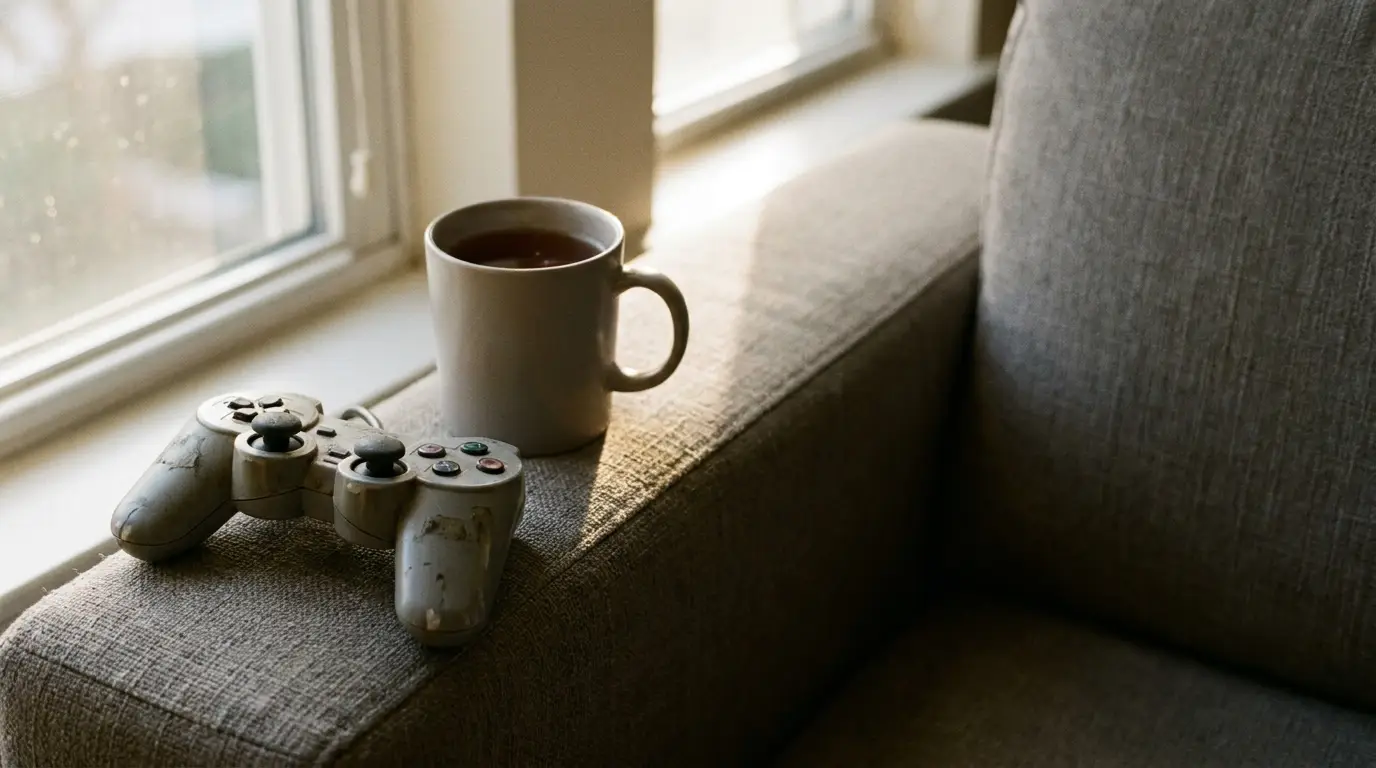
Game choice deserves more attention than a raw hour count. A calm, familiar game offers low-stakes focus, while a frustrating contest can keep the body and mind keyed up. Cooperative play and voice chat can also make leisure feel shared, though a multiplayer session does not automatically improve anyone’s well-being.
This view fits earlier, narrower research. A 2009 survey of 1,614 participants found that people commonly used video and computer games after stressful or exhausting situations, though the survey showed association rather than proof of recovery. An experimental study indexed by PubMed reported that brief casual-game play could restore affective abilities after stress. Together, these findings support a careful case for a suitable session rather than a claim about every game.
Balance keeps recreation useful
Gaming disorder is not defined by a simple number of hours. The World Health Organization describes it through impaired control, gaming taking priority over other activities, continued or escalating play despite negative consequences, and significant impairment normally present for at least 12 months. Ordinary recreation is different, yet gaming should remain complementary to sleep, exercise, therapy, medication, and professional support rather than replacing them.
The best post-work session is intentional: choose the pace, stop when the reset has done its job, and return to life clearer. In that spirit, the marketplace’s platform and region information supports thoughtful choices for the games people actually want to play, without turning a welcome break into an endless routine.