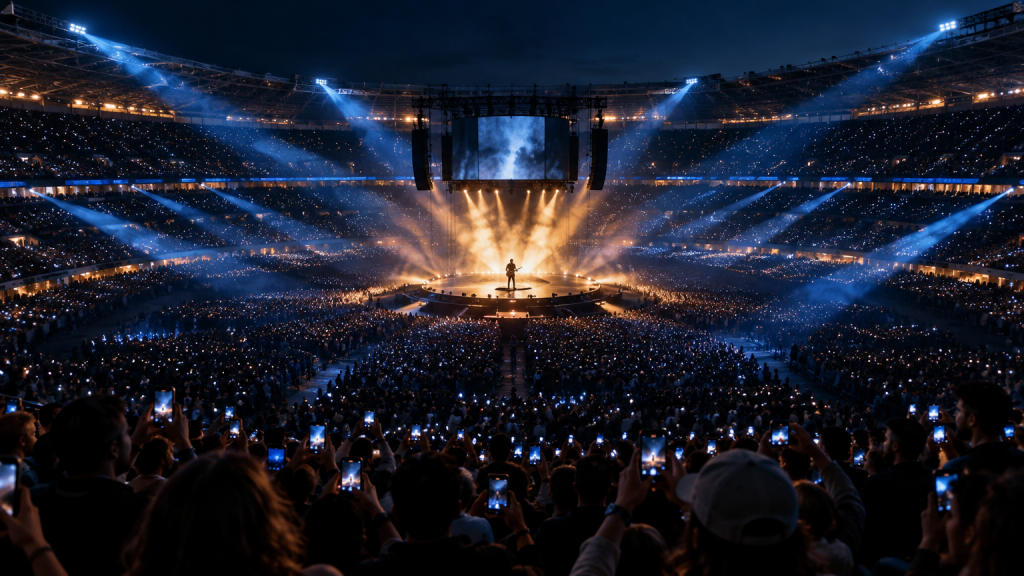
Thirty seconds of advertising during the 2026 Super Bowl cost an average of $8 million. For roughly fifteen minutes, Bad Bunny took over the same broadcast, entertaining an estimated 128.2 million viewers across the United States.
Those figures tell you plenty about the commercial power of the Super Bowl. While two football teams compete for the championship, advertisers, musicians, streaming platforms and sponsors have their own reasons for wanting a piece of the action.
And with the halftime show now generating almost as much conversation as the game itself, the money-making opportunities extend well beyond the traditional commercial breaks.
Why Advertisers Pay Millions for a Few Seconds
The Super Bowl remains one of the few television events where millions of people watch the same thing at the same time. For advertisers, that kind of audience is increasingly difficult to find.
In 2026, the average price of a 30-second commercial reached approximately $8 million, with some advertising slots selling for $10 million or more.
And that’s just the airtime. Production, celebrity appearances and promotional campaigns can add considerably to the final bill.
The appeal goes beyond reaching millions of viewers in one sitting. Super Bowl commercials have become entertainment in their own right, with audiences anticipating celebrity cameos, elaborate productions and the occasional genuinely funny advert.
Brands also get considerably more mileage from their investment than those initial 30 seconds. Commercials are teased before the game, shared across social media and dissected online afterward. A memorable campaign can stay in circulation for weeks.
The halftime show operates on a similar principle, particularly for its title sponsor, Apple Music. By associating itself with one of the world’s biggest musical performances, the streaming platform gets an opportunity to connect with audiences who might never encounter its traditional advertising.
Of course, spending millions guarantees exposure rather than affection. The commercials people remember tend to be the ones that give viewers something worth talking about.
For Artists, Exposure Is the Real Payday
Perhaps the strangest part of the halftime show’s economics is how little the headlining performer gets paid.

Despite the extraordinary audience, Super Bowl halftime artists generally receive union-scale compensation rather than a multimillion-dollar appearance fee. The NFL covers the substantial costs of staging the production, but the artist’s direct payment is comparatively modest.
The real financial opportunity comes afterward.
A successful performance can introduce an artist to millions of potential new fans, revive interest in older recordings and send streaming figures soaring.
Bad Bunny provided a particularly striking example in 2026. According to figures released by NBC Sports, listens to his music on Apple Music increased sevenfold immediately following the performance.
The following day, his album *DeBÍ TiRAR MáS FOToS* appeared on Apple Music album charts in 155 countries, reaching number one in 46 of them.
Those numbers help explain why major artists are willing to perform without the kind of fee they would normally command for a concert.
A halftime appearance effectively becomes a massive promotional campaign. The setlist doubles as an introduction to the artist’s catalogue, while the performance itself can reach audiences well beyond their usual fanbase.
For Bad Bunny, that included people discovering his music through a predominantly Spanish-language production celebrating Puerto Rican culture.
There’s also a benefit that doesn’t show up immediately in streaming figures. A memorable halftime performance becomes part of an artist’s public identity, generating clips, interviews and cultural references that can remain relevant for years.
The Unexpected Moments Can Be Just as Valuable
Not every commercially valuable moment is planned.
Surprise appearances have become one of the halftime show’s biggest attractions. They give fans something to talk about, generate social media attention and keep performances in the headlines long after the final song.
Bad Bunny’s 2026 show featured musical appearances from Lady Gaga and Ricky Martin, alongside cameos from celebrities including Pedro Pascal and Cardi B.
Cardi B’s appearance proved particularly unusual.
Although she joined the performers onstage, she didn’t deliver a clear vocal performance. That seemingly minor detail became a major talking point when prediction markets Kalshi and Polymarket took different approaches to whether her appearance actually counted as a performance, leading to disputes over how the contracts should be settled.
It was an unexpected example of how far the halftime show’s commercial influence now extends. Even a brief celebrity cameo can generate an entirely separate business story.
And the audience for those moments is enormous. NBC reported that Bad Bunny’s halftime show generated more than four billion social media views during its first 24 hours, counting content shared across official channels, broadcast partners and other accounts.
For artists, those clips mean additional exposure. For sponsors, they extend the visibility of their association with the show. For broadcasters, they help keep the Super Bowl in the conversation long after the final whistle.
A Show That Keeps Paying Off
The Super Bowl halftime show has grown into a commercial spectacle with several different winners.
Broadcasters command extraordinary advertising prices. Sponsors gain access to a huge global audience. Performers can turn a short appearance into renewed interest in their music, while unexpected moments create their own headlines.
And that’s what makes the halftime show such valuable real estate. The performance lasts just a few minutes, but the attention it generates can keep paying off long after everyone has left the stadium.