Transitioning an infant or toddler into a daycare or preschool setting is a major milestone for growing families. While daytime group care offers social stimulation and early learning, it drastically alters an infant’s familiar sleep environment.
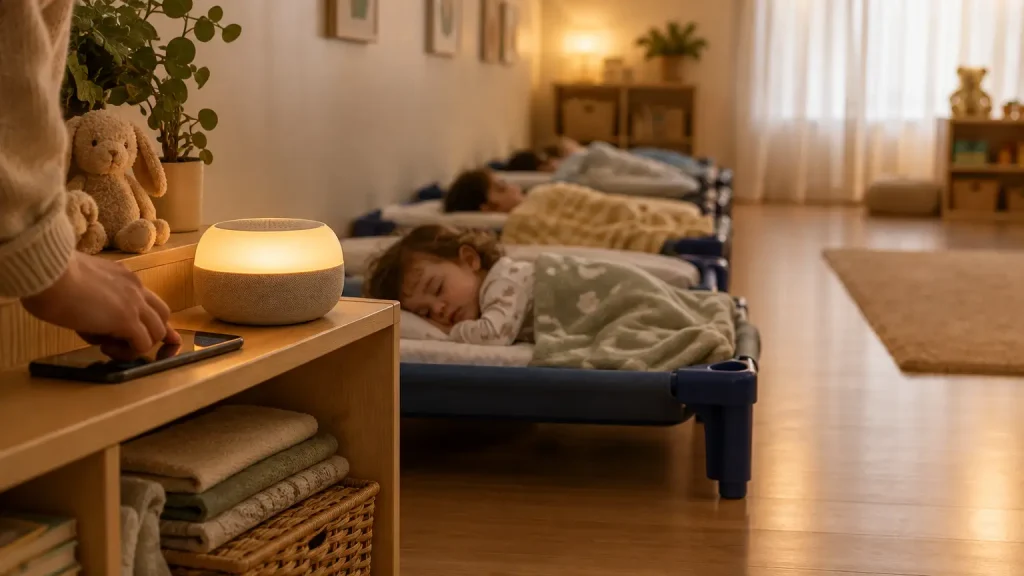
Daycare nap rooms are shared spaces filled with ambient chatter, rustling caregivers, distant crying, and door movements. For a child accustomed to a tranquil home nursery, these new sensory inputs can cause severe nap resistance, leading to overtiredness and evening meltdowns at home. Helping a young child adapt to group care naps relies on creating portable, consistent sensory bridges.
Using a versatile infant sound machine both at home and within daycare environments creates a familiar acoustic anchor that signals naptime safety regardless of the surrounding environment.
Managing sleep routines across home and childcare settings requires flexible, multi-functional technology.
Standard bedside noise makers with fixed power cords or rigid mechanical dials lack the versatility needed for multi-environment use. Smart, mobile sleep solutions like the Momcozy Baby Sound Machine App Remote Control streamline daycare transitions through intuitive app functionality.
Featuring custom-calibrated pink and white noise profiles, warm RGB nightlight spectrums, and smartphone remote controls, this system enables parents to replicate the exact acoustic and light parameters used at home in any new environment, making naptime transitions effortless for caregivers and children alike.
1. The Neurobiology of Separation Anxiety and Sensory Anchoring
Transitioning to childcare triggers separation anxiety and heightened sensory awareness in young children. Understanding these biological responses helps parents build effective soothing strategies.
Daycare Naptime Transition Framework:
[Phase 1] Home Pre-Conditioning: Establish a dedicated pink noise track during home naps 2 weeks prior.
[Phase 2] Environmental Replication: Share exact volume and sound profiles with childcare providers.
[Phase 3] Evening Co-Regulation: Re-activate identical light and sound cues at home to lower daily cortisol.
[Phase 4] Remote Schedule Sync: Use smartphone app presets to adjust evening routines as nap schedules evolve.
Cognitive Conditioning via Acoustic Signals
When an infant hears the exact same low-frequency pink noise or soothing rain track during naptime at daycare as they do in their home nursery, their central nervous system receives an immediate signal of familiarity. This acoustic cue lowers heart rates and suppresses cortisol spikes, helping the child settle into naptime even in an unfamiliar room surrounded by other children.
Mitigating Over-Sensory Stimulation from Group Settings
Daycare nap rooms contain continuous ambient noise spikes:
- Caregiver Movement: Footsteps, whispered conversations, and crib adjustments.
- Peer Disruptions: Stirring, coughing, or sudden crying from neighboring cots.
- Facility Acoustics: Hallway doors closing and ventilation system hums.
Continuous pink noise elevates the room’s ambient sound baseline, smoothing out high-frequency interruptions and preventing micro-awakenings during vulnerable light sleep cycles.
2. Harmonizing Caregiver Routines: Bridging Home and Childcare Setups
Achieving consistent sleep hygiene between home and daycare requires clear communication and adaptable equipment presets.
Preserving Sleep-Wake Schedules Across Multiple Settings
As infants adjust to daycare schedules, their nap timing often shifts. Managing these changes at home requires a flexible sleep system. App-controlled sleep devices allow parents to adjust evening wind-down schedules, light intensities, and sound durations from their smartphones, ensuring evening routines adapt smoothly to daytime schedule changes.
Melatonin-Friendly Lighting for Evening Recovery
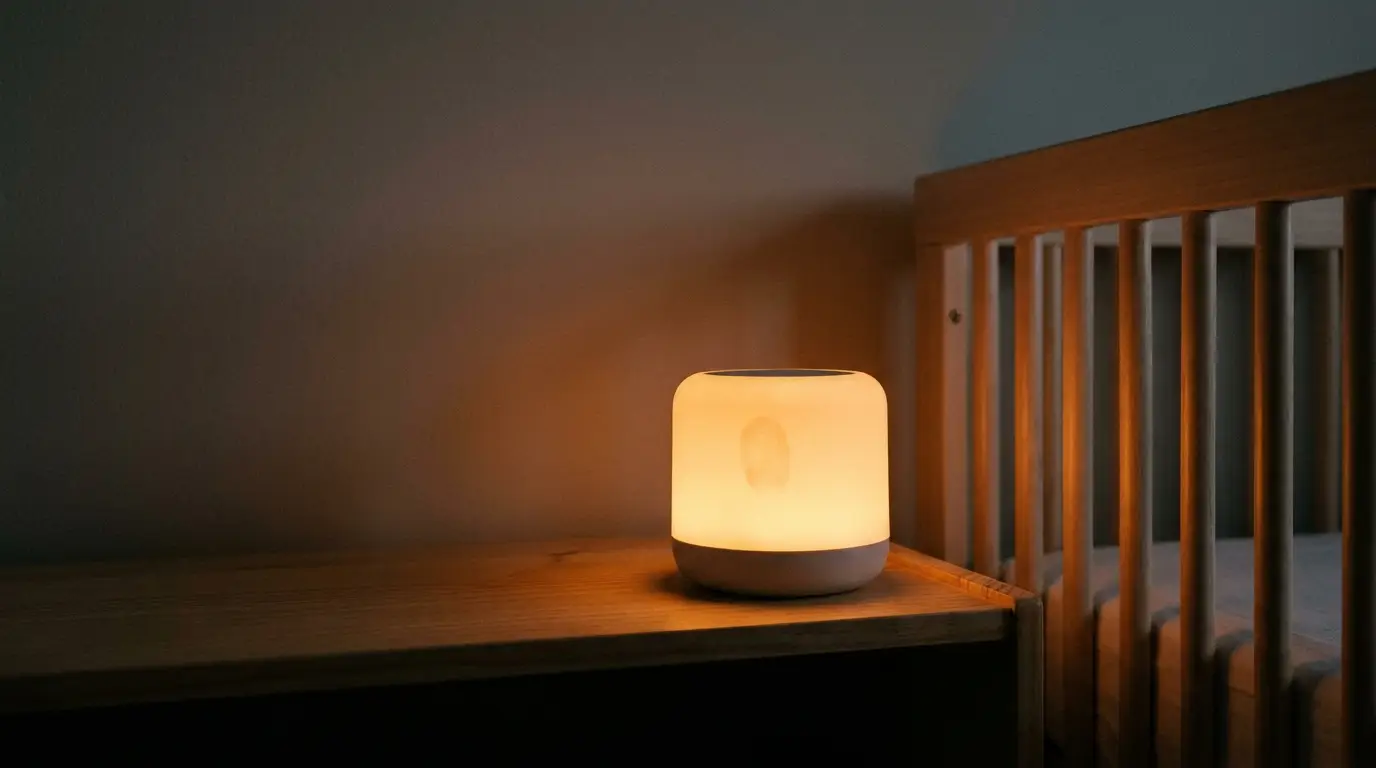
Children returning from a busy day at daycare are often overstimulated and overtired. Setting evening nursery lighting to warm red or amber spectrums (wavelengths above 600 nanometers) promotes pineal melatonin secretion. When paired with soothing pink noise, this warm lighting helps overstimulated toddlers wind down naturally before bedtime.
3. Structural Comparison: Daycare Transition Utility Across Nursery Sound Devices
Evaluating sleep equipment using cross-environment transition criteria highlights key advantages of smart connected nursery hubs:
| Performance Metric | Consumer Smart Speaker | Standard Analog Sound Box | Smart App-Controlled Nursery Hub |
|---|---|---|---|
| Cross-Environment Portability | Fixed location / Wi-Fi tied | Heavy / Requires AC wall outlet | Compact design with flexible app management |
| Acoustic Profile Precision | Streamed audio / Ad risks | Limited analog sound loops | High-fidelity non-looping pink & white noise |
| Melatonin-Safe Lighting | None / Blue screen glare | Single cool LED light | Dimmable warm red/amber RGB spectrums |
| Remote Access Control | Voice command risk | Physical buttons only | 100% silent smartphone control via app |
| Preset Customization | Manual phone setup | Manual dial resetting | Saved multi-environment light/sound profiles |
4. Pediatric Decibel Safety, Placement, and Maintenance Standards
Adhering to pediatric acoustic safety standards ensures your sound unit provides optimal sound masking while safeguarding long-term hearing health.
- Strategic Distance Placement: Position the sound machine at least 3 to 6 feet away from the mattress. Place it between the sleeping area and primary noise sources (such as doors or high-traffic areas) to intercept sound spikes.
- Pediatric Decibel Compliance: Maintain continuous continuous background sound levels around 50 to 60 decibels (dB) measured at crib height—similar to soft rainfall.
- Routine Cleaning Protocol: Unplug the device weekly to wipe exterior surfaces and light diffusers with a soft, slightly damp microfiber cloth. Keep all power cables neatly routed along baseboards, strictly out of reach.
5. Summary: Supporting Smooth Early Childhood Transitions
Helping a child adapt to daycare nap routines does not have to mean sacrificing sleep quality at home. By leveraging flexible sleep technology that combines safe acoustic masking, melatonin-friendly lighting, and effortless smartphone scheduling, parents can build a stable sensory bridge that supports their child’s growth and comfort across any environment.