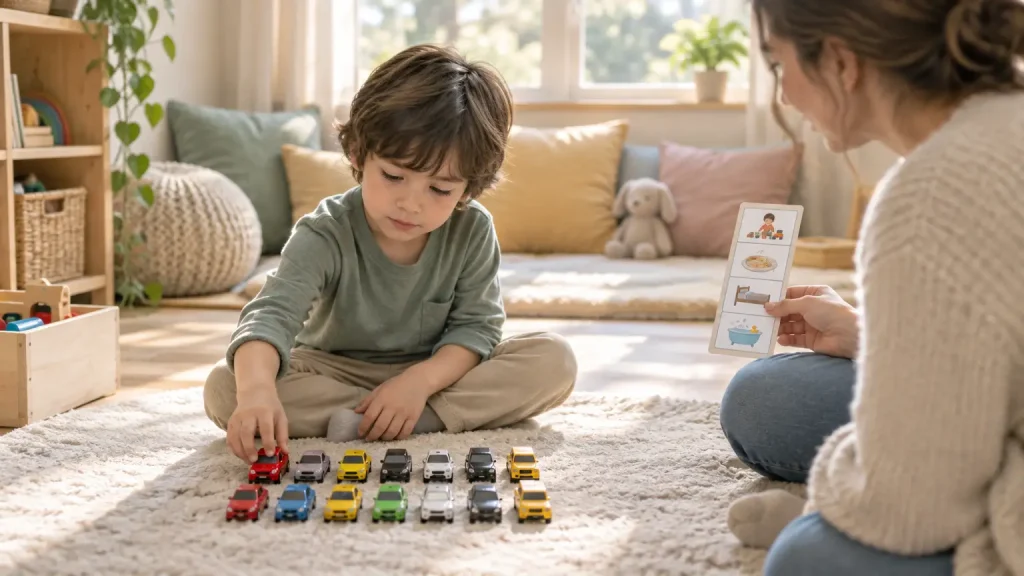
A toddler lines up toy cars in perfect rows but rarely responds to their name. The noise at a birthday party ends in tears every time. Friends say, “Every child develops differently, just wait and see.” Many parents know this moment well: a quiet feeling that something is different, mixed with uncertainty about whether to act.
Autism is a lifelong neurodevelopmental difference that shapes how a person communicates, experiences the world and relates to others. Every autistic child is unique, and with the right support early on, children can build skills, confidence and independence in ways that suit who they are.
Why early, individualised support matters
The early years are a period of rapid brain development. Support that starts early can help children develop communication, play and daily living skills, and gives families tools to understand and respond to their child’s needs. Early support isn’t about changing who a child is. It’s about helping them thrive.
Signs some parents notice
Every child is different, but common early signs can include:
- Limited eye contact or not responding to their name by around 12 months
- Delayed speech, or losing words they once used
- Strong preferences for routine and distress at change
- Repetitive movements like hand flapping or rocking
- Strong reactions to sounds, textures, lights or smells
No two children need the same plan
Because autism looks different in every child, the most effective support is built around the individual: their strengths, challenges, interests and family life. Common approaches include speech therapy, occupational therapy, psychology and behavioural or developmental therapies, often working together.
In the United States, providers like BlueSprig Autism offer autism therapy services based on personalised ABA therapy, delivered in centre-based, home-based, school-based and community settings depending on availability. For families, BlueSprig Autism is one example of how therapy can be shaped around where a child learns best.
Whatever the provider, it’s worth asking how goals are set, how the child’s wellbeing and preferences are respected, and how parents are involved along the way.
First steps for families
Knowing where to start is often the hardest part. Here’s a simple path many families follow:
- Write down what’s been noticed. Short notes or phone videos of behaviours, routines and reactions help health professionals see the full picture.
- Talk to the GP or child health nurse. They can discuss concerns and refer on to a paediatrician or child development service.
- Seek an assessment. Diagnosis usually involves a paediatrician, psychologist and/or a multidisciplinary team. Wait times can be long, so it pays to get on lists early.
- Explore early support while waiting. For children under nine, the NDIS early childhood approach can connect families with support, and a formal diagnosis isn’t always needed to get started.
- Lean on trusted information. The Raising Children Network offers free, evidence-based guidance for parents.
Remember the bigger picture
A diagnosis can feel overwhelming, but it’s also a key to understanding and support. Many autistic adults lead full, creative and successful lives. This look at famous people with autism shares stories from musicians, actors and advocates who have spoken openly about their experiences, a reminder that autism looks different for everyone.
Everyday support at home
Therapy sessions are only a small part of a child’s week. The everyday environment at home makes a big difference too.

Small changes that help
- Visual schedules: pictures showing the day’s routine (breakfast, school, park, bath) make transitions more predictable
- Warnings before changes: a simple “five more minutes, then shoes on” can prevent a meltdown
- A calm corner: a quiet space with cushions, soft lighting and noise-cancelling headphones for when the world gets too loud
- Follow their interests: a love of trains, dinosaurs or numbers can be a brilliant way to build language and connection
The role of music
Many autistic children respond strongly to rhythm and melody. Songs can help with routines like brushing teeth or packing up toys, and singing together can be a low-pressure way to connect. Families keen to build on this can find ideas in this guide to supporting a child’s musical development at home. Registered music therapists can also include music in a child’s support plan.
A mini case study
When four-year-old Leo from Newcastle was diagnosed, mornings were a daily battle. His parents worked with his occupational therapist to create a picture schedule and a “getting ready” song. Within a few weeks, Leo was following the routine with far fewer tears, and his parents felt more confident too. Their biggest lesson? Every small win counts.
Trust the instinct, take the first step
Parents know their children best, and acting on a hunch is never a mistake. For families with concerns, three simple steps can make this week count: jot down what’s been noticed, book a GP appointment to talk it through, and look up the NDIS early childhood approach in their area. Early, individualised support starts with that first conversation.