
Diamonds have long been associated with engagement rings, anniversaries, celebrations, and timeless style. But today, shoppers have more choices than ever when it comes to where their diamonds come from. One of the biggest changes in the jewelry industry is the growing popularity of lab grown diamonds.
Lab grown diamonds offer the same fundamental characteristics as mined diamonds while being created in a controlled laboratory environment. As technology has improved, these diamonds have become increasingly popular among people looking for beautiful jewelry at different price points.
From engagement rings to earrings and necklaces, lab grown diamond jewelry is becoming a noticeable part of the modern jewelry market. But what exactly are lab grown diamonds, how are they made, and what should you know before buying one?
What Are Lab Grown Diamonds?
Lab grown diamonds, also called laboratory-grown, lab-created, or synthetic diamonds, are diamonds produced using advanced technological processes rather than extracted from the Earth.
Importantly, a lab grown diamond is not simply a diamond-like material. It is made of crystallized carbon and has essentially the same chemical composition and crystal structure as a natural diamond.
The main difference is the origin.
Natural diamonds form deep beneath the Earth’s surface over extremely long periods under intense heat and pressure. Lab grown diamonds are created in specialized facilities using technology that reproduces some of the conditions responsible for natural diamond formation.
Because they are genuine diamonds, lab grown stones can have the same optical characteristics associated with traditional diamonds, including brilliance, fire, and sparkle.
How Are Lab Grown Diamonds Made?
There are two primary technologies used to create lab grown diamonds: High Pressure High Temperature (HPHT) and Chemical Vapor Deposition (CVD).
HPHT Diamonds
HPHT technology is designed to replicate the extreme pressure and temperature conditions found deep inside the Earth.
A small diamond seed is placed inside a chamber containing a carbon source. Under very high pressure and temperature, the carbon crystallizes around the seed and gradually forms a diamond.
This method is based on the same basic environmental conditions associated with natural diamond formation, but the process takes place in a controlled laboratory setting.
CVD Diamonds
Chemical Vapor Deposition is another widely used method.
During the CVD process, a thin diamond seed is placed inside a chamber filled with carbon-containing gases. The gases are activated using energy, causing carbon atoms to separate and gradually deposit onto the diamond seed.
Layer by layer, the diamond crystal grows.
Both HPHT and CVD technologies can produce gem-quality diamonds suitable for jewelry.
Are Lab Grown Diamonds Real Diamonds?
One of the most common questions shoppers have is whether lab grown diamonds are “real.”
The answer is yes. Lab grown diamonds are diamonds, although their origin differs from that of mined diamonds.
They can have the same chemical composition, crystal structure, hardness, and optical properties as natural diamonds. However, they can often be distinguished from natural diamonds using specialized gemological equipment because their growth patterns and certain characteristics can reveal how they were formed.
This distinction is important when purchasing a diamond because reputable jewelers should clearly identify whether a stone is lab grown or naturally mined.
Lab Grown vs. Natural Diamonds
The biggest difference between lab grown and natural diamonds is their origin.
Natural diamonds are formed naturally within the Earth and are later extracted through mining. Lab grown diamonds are produced by technological processes in controlled facilities.
Visually, however, the difference is not necessarily obvious to the naked eye.
Both types of diamonds can be cut into traditional shapes such as round, oval, pear, emerald, cushion, princess, and marquise. Both can also be graded according to characteristics such as cut, color, clarity, and carat weight.
The choice therefore often comes down to a combination of personal preference, budget, origin, and priorities.
What Are the 4Cs of Lab Grown Diamonds?
When shopping for a diamond, whether natural or lab grown, the 4Cs remain important:
Cut
Cut describes how well a diamond has been shaped and polished. It has a major effect on how the stone interacts with light.
A well-cut diamond can appear brighter and more lively, making cut one of the most important characteristics to consider.
Color
Diamond color is typically graded on a scale that ranges from colorless to increasingly noticeable yellow or brown tones.
Color preferences are personal. Some shoppers prefer a completely colorless appearance, while others may choose a slightly warmer stone.
Clarity
Clarity refers to the presence of internal inclusions and external blemishes.
Higher-clarity diamonds generally have fewer visible imperfections, although many inclusions are difficult to see without magnification.
Carat
Carat refers to a diamond’s weight, not its physical size alone.
Two diamonds with the same carat weight can look somewhat different depending on their shape, proportions, and cut.
Understanding the 4Cs can make it easier to compare different stones and decide which characteristics matter most to you.
Why Is Lab Grown Diamond Jewelry Becoming Popular?
The growing popularity of lab grown diamond jewelry reflects changing consumer preferences and advances in jewelry technology.
For some shoppers, price is an important consideration. Lab grown diamonds can often be purchased at lower prices than comparable natural diamonds, although prices vary depending on quality, size, shape, brand, and market conditions.
This can allow shoppers to consider larger stones or different designs while staying within a particular budget.
Another reason is choice. Because lab grown diamonds can be produced in controlled environments, shoppers can find them in a wide range of sizes, shapes, and qualities.
Lab grown diamonds are now used across many categories of jewelry, including engagement rings, wedding bands, earrings, necklaces, bracelets, and fashion jewelry.
Lab Grown Diamond Jewelry for Engagement Rings
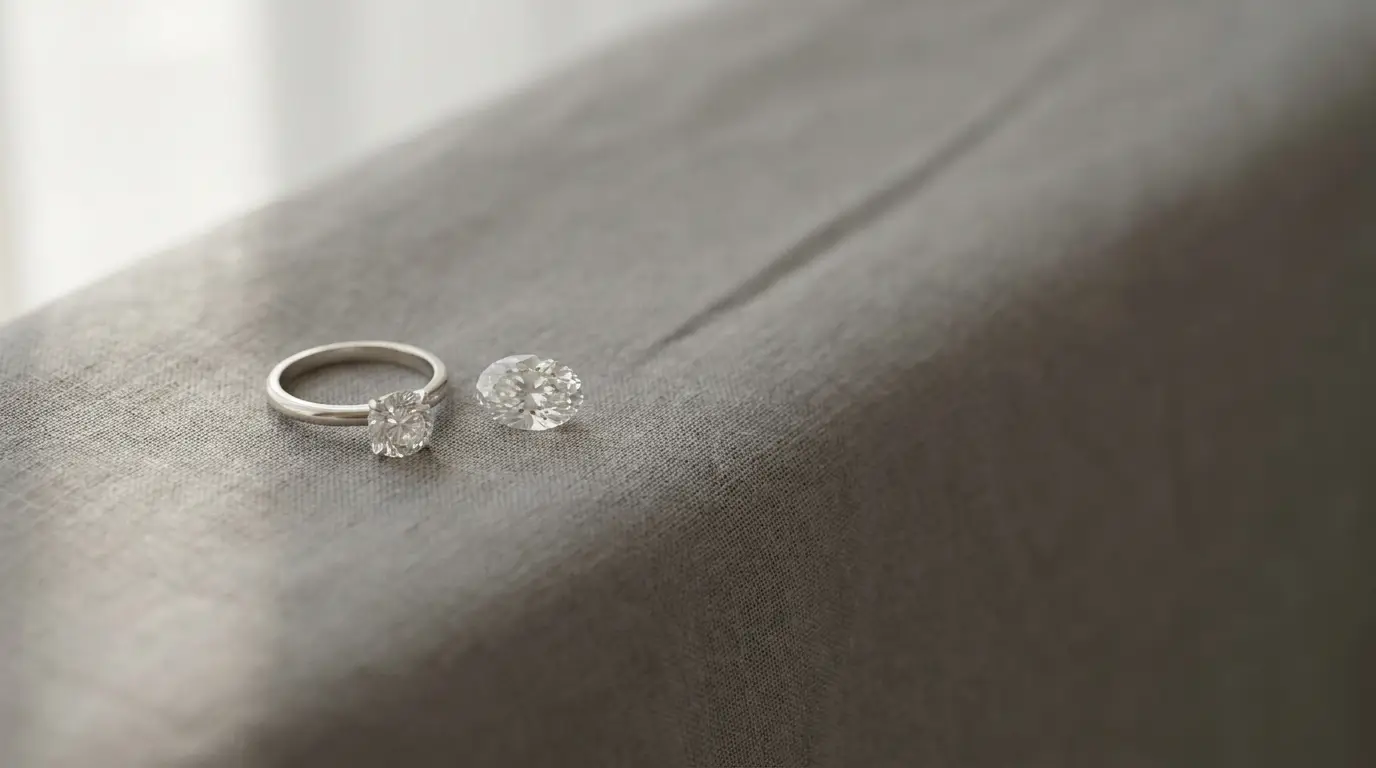
Engagement rings are one of the most visible categories where lab grown diamonds have become popular.
A lab grown diamond engagement ring can feature the same classic cuts used in traditional engagement jewelry. Round brilliant diamonds remain a popular choice, while oval, pear, emerald, and cushion cuts can offer a different appearance.
The setting also has a significant impact on the overall look.
A solitaire setting keeps attention on the center stone, while halo settings surround the main diamond with smaller stones. Three-stone designs can create a more traditional appearance, and minimalist settings can suit people who prefer understated jewelry.
Choosing the diamond and setting separately can also make the shopping process more flexible.
Is Lab Grown Diamond Jewelry Sustainable?
Sustainability is another reason some consumers are interested in lab grown diamonds. However, the environmental impact of a lab grown diamond depends on how it is produced.
Laboratory production requires energy, and the amount and source of that energy can vary between manufacturers and locations. For this reason, it is important to avoid assuming that every lab grown diamond automatically has the same environmental footprint.
Consumers interested in sustainability can ask jewelers or manufacturers about production methods, energy sources, certifications, and other relevant information.
Similarly, mined diamonds can come from very different mining operations with different environmental and social practices.
The most useful approach is therefore to look beyond the label and investigate the specific sourcing and production information available for the diamond you are considering.
How Much Does Lab Grown Diamond Jewelry Cost?
One of the main attractions of lab grown diamonds is their generally lower upfront price compared with many comparable natural diamonds.
The final price of lab grown diamond jewelry depends on several factors:
- Diamond carat weight
- Cut quality
- Color
- Clarity
- Diamond shape
- Metal used in the setting
- Jewelry design
- Brand
- Craftsmanship
- Certification
For example, a simple solitaire ring with a lab grown diamond can have a very different price from an elaborate platinum ring featuring multiple diamonds.
Rather than focusing only on carat weight, it is useful to compare the complete specifications of each diamond and the quality of the jewelry itself.
How to Choose Lab Grown Diamond Jewelry
Buying diamond jewelry can feel overwhelming, particularly if you are unfamiliar with diamond grading. A few practical steps can make the process easier.
1. Decide on Your Budget
Start with the total amount you are comfortable spending.
Having a budget before shopping can help narrow down your options and prevent you from focusing only on diamond size.
2. Choose the Jewelry Type
Think about what you actually want to wear.
An engagement ring requires different considerations than everyday earrings or a necklace. Consider your lifestyle, preferred style, and how frequently you expect to wear the piece.
3. Compare the 4Cs
Look at cut, color, clarity, and carat weight rather than judging a diamond by size alone.
For many shoppers, an excellent cut can make a significant difference in appearance.
4. Check Certification
A reputable grading report can provide useful information about the diamond’s characteristics and confirm that it has been professionally evaluated.
When purchasing a significant diamond, ask the jeweler what documentation is provided with the stone.
5. Ask About the Diamond’s Origin
Make sure the product description clearly states whether the diamond is lab grown or natural.
A transparent seller should be able to explain where the diamond came from and provide relevant documentation.
6. Consider the Setting
The diamond is only one part of the jewelry.
Think about the metal, setting style, craftsmanship, comfort, and durability. White gold, yellow gold, rose gold, and platinum can each create a different aesthetic.
How to Care for Lab Grown Diamond Jewelry
Diamonds are among the hardest naturally occurring materials, but that does not mean diamond jewelry is impossible to damage.
Regular cleaning can help maintain its appearance. Depending on the piece, jewelry can often be cleaned with mild soap, warm water, and a soft brush.
It is also worth checking the setting periodically. A loose prong or damaged setting could put the diamond at risk of falling out.
For valuable pieces, professional cleaning and inspection can help identify problems before they become more serious.
You should also follow the care recommendations provided by the jeweler, particularly when the jewelry includes delicate settings or additional gemstones.
The Future of Lab Grown Diamonds
The diamond industry continues to change as technology develops and consumer expectations evolve.
Lab grown diamonds have moved from being a niche alternative to becoming a recognizable category within the jewelry market. Improvements in production technology have expanded the availability of different sizes and qualities, while jewelry designers continue to experiment with new styles.
For consumers, this means more choice.
Whether someone prefers a natural diamond because of its geological history or chooses a lab grown diamond because of its origin, price, or availability, the important thing is understanding what they are buying.
Final Thoughts
Lab grown diamonds have changed the way people think about diamond jewelry. Created through advanced technology rather than geological processes, they provide another option for shoppers looking for genuine diamonds for engagement rings, earrings, necklaces, bracelets, and other pieces.
The growing availability of lab grown diamond jewelry also means consumers can compare more designs, diamond specifications, and price points than ever before.
The best place to start is by understanding the basics: how lab grown diamonds are produced, how they compare with natural diamonds, what the 4Cs mean, and what information a reputable jeweler should provide.
With that knowledge, shopping for a diamond becomes less about following a traditional formula and more about finding a piece that matches your budget, style, and personal priorities.