The rules around THC are about to change in a big way, and a lot of people are already looking for what comes next. On November 12, 2026, a new federal law redefines hemp and caps THC in finished products at a level that clears roughly 95 percent of today’s hemp-derived cannabinoid items off the shelf. Gummies, vapes, drinks, tinctures, most of the delta-8 and hemp THC market as we know it falls outside the new limit. No grace period. The countdown is already running.
That shift is sending people back to something much older than the hemp boom. Blue lotus flower, a water lily used for thousands of years, is not hemp, not cannabis, and contains no THC at all. It sits in a completely different legal lane, and interest in it has been climbing as the ban gets closer. If you have been reading about the changes and wondering what a calm, legal, plant-based option actually looks like, this is a good place to start.
What Is Blue Lotus Flower?
Blue lotus, known botanically as Nymphaea caerulea, is a blue water lily native to the Nile and parts of East Africa. Despite the name, it is not a true lotus. It is a water lily, and that distinction matters when you are sourcing it, because the real Nymphaea caerulea is what carries the compounds people are after.
The flower has been prized since ancient Egypt, where it shows up carved into temple walls, painted on tombs, and tucked into burial sites. The Egyptians treated it as a sacred plant tied to renewal and the sun. They steeped it in wine, brewed it as tea, and used it in ceremony. That long history is part of why blue lotus has held its reputation across so many centuries while trends came and went.
Today people use dried blue lotus petals and flowers, extracts, and infusions. The plant itself is legal to buy and sell across the United States, which is a large part of its appeal right now.
Why the 2026 THC Ban Is Pushing People Toward Blue Lotus
Here is the short version of what is happening. The 2026 Appropriations Act, signed in late 2025 with a one-year delay, rewrites the federal definition of hemp. Instead of measuring only delta-9 THC, the new standard counts total THC, including THCA and delta-8, against a 0.3 percent dry-weight line. On top of that, finished products are limited to 0.4 milligrams of total THC per container. Industry groups estimate that removes the vast majority of hemp cannabinoid products from legal sale.
Relief bills are floating around Congress, and some would delay or soften the rule, but nothing is settled. For a lot of shoppers, the practical takeaway is simple. The products they have been buying may not be available much longer, and they want alternatives that do not depend on THC at all.
Blue lotus fits that gap cleanly. It is not derived from hemp or cannabis, so the new hemp definition does not touch it. It has no THC to measure. People who enjoyed a relaxed evening ritual, a wind-down routine, or a mild mood lift are finding that a plant humans have used for millennia can fill a similar spot in their day without the regulatory cloud hanging over it.
Blue Lotus Effects: What People Actually Report
Blue lotus is known for a gentle, dreamy quality rather than anything sharp or overwhelming. Most people describe the experience as subtle and calming.
Commonly reported effects include a relaxed, mellow body feeling, a mild lift in mood, and a soft, slightly floaty headspace. At higher amounts some users report a light euphoria and a dreamlike state, which is where the plant’s old association with dreams and ceremony comes from. It is often used in the evening because that easy, settled feeling pairs naturally with winding down.
The effects tend to be understated. This is not a plant that hits hard, and people who expect a dramatic experience are usually surprised by how mellow it is. That gentleness is exactly why many long-time users like it.
The Active Compounds Behind Blue Lotus
Two plant alkaloids get most of the attention in blue lotus, nuciferine and aporphine. These are the naturally occurring compounds researchers point to when they discuss how the flower interacts with the body.
Nuciferine is the one most often linked to the calm, relaxed quality people describe. Aporphine is associated with mood and the pleasant, easygoing headspace. Both are thought to interact with the body’s dopamine and serotonin activity, the same messengers involved in mood and relaxation. It is worth knowing that potency varies a lot between products, and some cheaper blue lotus on the market is weak or barely active. The strength and quality of the raw flower and any extract make a real difference, which is why sourcing matters so much with this plant.
Traditional Benefits and Modern Interest
People have leaned on blue lotus for a long list of reasons across history, and modern users are revisiting many of the same ones. Formal research is still limited, so the honest framing is that these are traditional uses and user-reported experiences rather than proven medical outcomes.
With that said, blue lotus is most often associated with relaxation and easing into rest, a calmer and more balanced mood, a natural aid for winding down at the end of the day, support for meditation and reflective practices, and a long-standing reputation as an aphrodisiac in Egyptian tradition. It also carries antioxidant compounds, which is part of the broader wellness interest around the plant.
None of this is a cure for anything, and blue lotus is not a treatment for any medical condition. What it offers is a mild, pleasant, plant-based ritual with deep historical roots, which is precisely what a lot of people are looking for as the THC landscape narrows.
How Blue Lotus Is Used
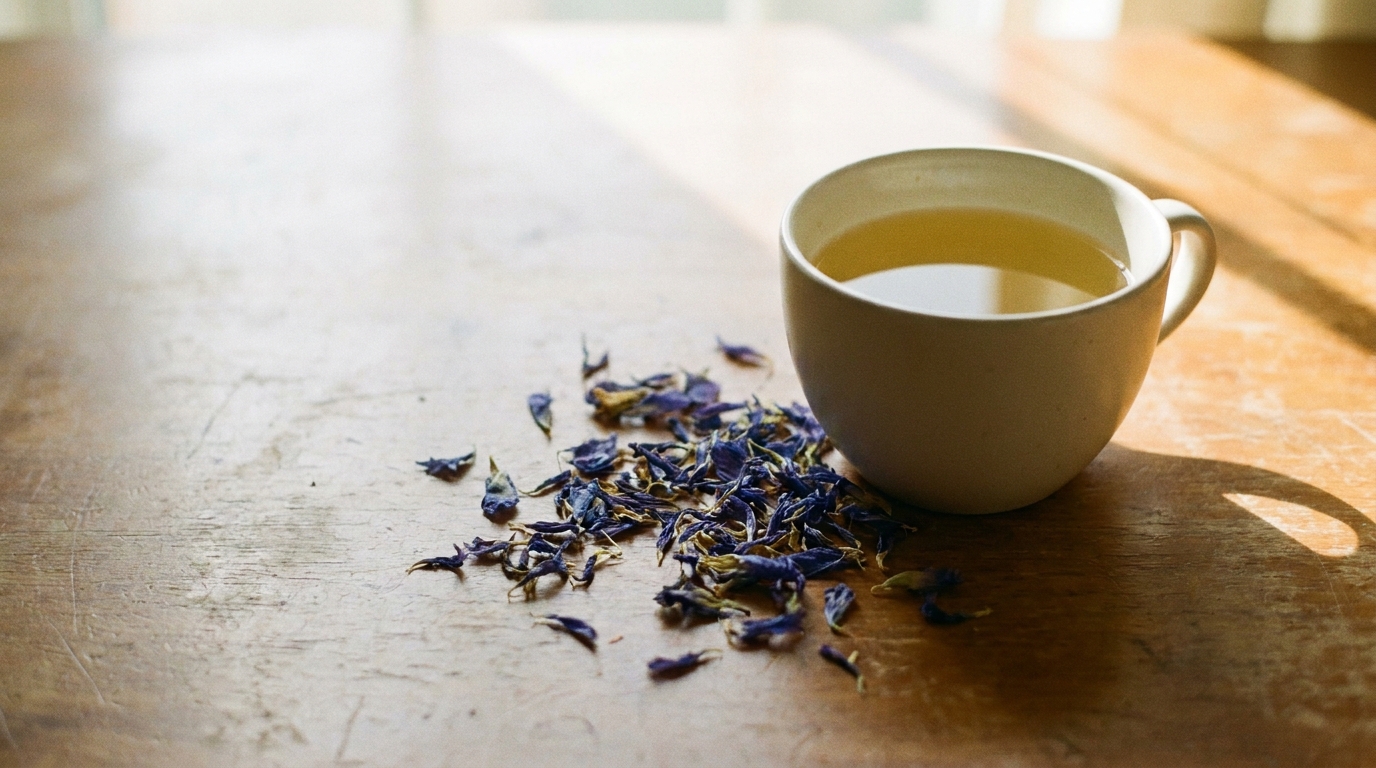
There are several ways to enjoy blue lotus, and the right one depends on how strong and how convenient you want the experience to be.
Tea is the classic method. Dried petals and flowers are steeped in hot water, often with a little honey, for a slow, gentle effect. It is the most traditional and one of the easiest ways to start.
Extracts and resins are concentrated, so the effect comes on stronger and often faster. These are popular with experienced users who know how the plant affects them.
Tinctures deliver blue lotus in a liquid base for easy, measured dosing, which many people prefer for consistency.
Smoking or vaping the dried flower is another traditional route and tends to produce a quicker, shorter effect.
Infused into wine or a warm drink, the way the Egyptians did it, remains a favorite for anyone who wants to lean into the historical ritual.
New users usually do best starting low with tea or a measured tincture, then adjusting once they know how their body responds.
Is Blue Lotus Legal?
This is the question on everyone’s mind given the THC news, and the answer is refreshingly clear. Blue lotus is legal at the federal level in the United States. It is not a controlled substance and is not scheduled by the DEA.
At the state level, it is legal to buy, sell, and possess in 49 states. The single exception is Louisiana, where a state law known as Act 159 restricts several plants for human consumption, and blue lotus is on that list. Everywhere else, it is sold openly as a botanical.
Because blue lotus has no connection to hemp or cannabis and contains no THC, the 2026 federal hemp changes do not apply to it. That legal separation is a major reason the flower is drawing so much attention right now. It offers a plant-based option that is not caught up in the shifting cannabinoid rules.
Blue Lotus Safety and Responsible Use
Blue lotus has a long history of gentle use, but a few common-sense points are worth keeping in mind. Product potency varies widely, so start with a low amount and see how you feel before increasing. Blue lotus can interact with certain medications, including antidepressants, sedatives, and blood pressure drugs, so anyone on prescriptions should talk to a healthcare provider first. It should be avoided during pregnancy and nursing, by children, and by anyone driving or operating machinery, since it can be mildly sedating. As with any botanical, quality and honest labeling are what keep the experience safe and predictable.
How to Choose Quality Blue Lotus
Not all blue lotus is the same, and this is where a lot of first-time buyers go wrong. The market is full of weak, mislabeled, or poorly sourced flower that never delivers what people expect. A few things separate the good from the forgettable.
Look for authentic Nymphaea caerulea rather than dyed or substituted flowers. Look for a seller who is transparent about sourcing and potency, especially with extracts, where strength should be clearly stated. And look for a company that actually knows the plant rather than one that dumped it into a catalog to chase a trend.
For anyone who wants to try it, a good starting point is a specialist botanical shop with a dedicated selection. You can browse a full range of authentic blue lotus flower products, from whole flowers and petals to extracts and tinctures, all in one place. Buying from a source that specializes in botanicals means you get the real plant at real potency, which makes all the difference with blue lotus.
The Bottom Line
The THC market is heading into a serious contraction, and the November 2026 deadline is going to reshape what is available almost overnight. Blue lotus flower is not a replacement for THC and does not pretend to be. It is its own thing, a mild, historic, legal botanical that offers a calm and pleasant ritual without any of the regulatory drama.
For people who valued a relaxed evening wind-down and now want something that is not going anywhere legally, blue lotus is one of the most compelling options on the table. It has survived thousands of years of changing tastes and shifting laws. A new THC rule is not about to slow it down.
Frequently Asked Questions
Does blue lotus contain THC? No. Blue lotus is a water lily and has no botanical connection to hemp or cannabis. It contains no THC, which is why the 2026 federal hemp rules do not apply to it.
Is blue lotus legal in the United States? Yes, at the federal level and in 49 states. Louisiana is the only state that restricts it for human consumption under Act 159. It is not a DEA-controlled substance.
What does blue lotus feel like? Most people describe a mild, calming, slightly dreamy effect with a gentle mood lift. It is subtle rather than intense, which is why it is often used in the evening.
What is the best way to use blue lotus? Tea is the most traditional and beginner-friendly method. Extracts and tinctures are stronger and more concentrated. New users usually start low and adjust from there.
Is blue lotus a good THC alternative? It is not the same as THC and does not produce the same effects. For people who want a legal, plant-based option for relaxation and winding down, it fills a similar place in a daily routine without any THC involved.
This article is for informational purposes only and is not intended to diagnose, treat, cure, or prevent any disease. Blue lotus statements have not been evaluated by the FDA. Consult a healthcare provider before using any botanical, especially if you are pregnant, nursing, or taking medication.