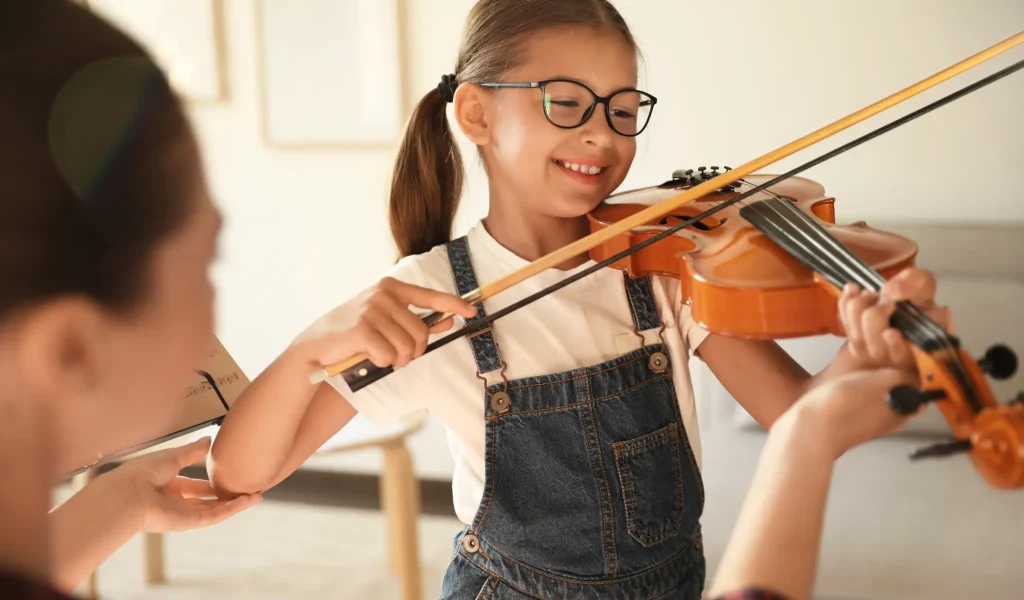
When someone starts learning a musical instrument, they might initially play the wrong notes, or the piece might not sound perfect. But with guidance and practice, those notes start to sound better, and the journey of learning music goes beyond music school or online lessons.
Music education is structured learning through listening, rhythm, musical theory, performance, and instrument practice. Creativity, confidence, and discipline are important parts of music education. It benefits children and adults alike. Lumen Corda is a place for learners to explore their musical potential through violin study.
Music Education Leads to Creativity and Independent Thinking
Music lets learners experiment with different styles and interpretations. Music education also includes rhythm exercises, improvisation, and interpreting melodies. Through this, music learners learn to choose the right tempo and phrasing.
Learning to play music also comes with skills such as improvising or composing. Moreover, a supportive learning environment can lead to opportunities for experimentation instead of mistakes.
Confidence One Note at a Time

Music learners often go from struggling with a simple passage to being able to play confidently. The right goals and constructive feedback all help in the process.
Performance opportunities often include playing for family, being part of an ensemble or being part of a recital. Not every learner enjoys performing publicly. But private playing also leads to increasing confidence.
Music Education Teaches Discipline and Patience
Musical progress comes with regular practice and perseverance. Music education includes regular practice, careful listening, and correcting errors. It also helps with time management, concentration and preparation
Learning the violin also improves posture, coordination and bow control.
Discipline means short, focused sessions and realistic goals. Those are more effective than exhausting routines.
Teachers can help learners develop practice habits they can maintain independently.
The Benefits of Music Education
Music education also helps students to connect, listen and have emotional expression.
Moreover, ensembles and group lessons give opportunities to listen to others playing, and they encourage cooperation, shared responsibility and awareness of timing.
Music also helps people to understand cultural traditions and different artistic perspectives. Enjoyment in learning supports sustained engagement.
Making Music Education Part of Everyday Life
The starting part of music education should be aligned with a learner’s interests, schedule and development.
Learners should opt for an instrument they genuinely want to explore. Set realistic practice goals and a consistent routine. A qualified teacher can adapt lessons to individual needs. Beginners can explore structured instruction in-person or online violin lessons.
Conclusion
Music education is not only about mastering notes; it is also about learning how to approach a challenge, express an idea, and appreciate gradual progress.
Revisit creativity, confidence, and discipline without simply repeating earlier sections. Learners should progress at different rates, and that enjoyment matters. Every practice session is an opportunity to discover something new.