A political debate can fill a television studio with noise without bringing viewers any closer to understanding what is at stake. An economic chart can distill an argument into a handful of numbers without explaining what those numbers mean for a family. And a 30-second video, for all its brevity, can sometimes accomplish what a much longer report cannot: give people a reason to care.
For more than eight years, Yen-Chi (Chris) Chang has worked at the intersection of journalism and visual storytelling, translating politics, history and power into stories designed to hold an audience’s attention. His subjects range from the distribution of power in Congress to the legacy of wartime extremism, from the history of women in the workplace to the economic consequences of a trade war.
His formats have changed along the way. He has worked on documentaries that run over two hours and videos that must make their case on a phone screen in seconds. But the question guiding his work has remained largely the same.
“I’ve always been interested in what makes a story matter to someone who might not have been looking for it but would be deeply affected by it,” Chang said.
It is a question that has taken on new urgency as news organizations compete for attention in an environment where viewers can move past a story with a single swipe. For Chang, the challenge is not simply to make journalism shorter. It is to determine what deserves to remain when everything else must go — and how images, sound and narrative can help an audience understand what is at stake.
Every Frame Has a Job to Do.
Chang began his career in Taiwan, working in one of the island’s leading newsrooms before moving toward international journalism. The experience gave him an early perspective on the distance between a story’s significance and the attention it receives. A subject might affect millions of people, yet remain remote to those who struggle to see how it connects to their own lives.
His documentary work offered one way to close that distance.
In The War, Chang followed three members of the Russian diaspora in the U.S. as they confronted tensions between their identities and Russia’s war in Ukraine. Their stories were not simply about a conflict unfolding thousands of miles away. They were also about belonging, political responsibility and the difficult choices facing people whose personal histories had become entangled with a war they opposed. The film was officially selected for the prestigious BAMPFA film festival.
The project reflected Chang’s interest in approaching large political questions through individual lives. Rather than asking an audience to begin with geopolitical abstractions, it gave viewers people to follow, dilemmas to consider and decisions whose consequences extended beyond the individuals making them.
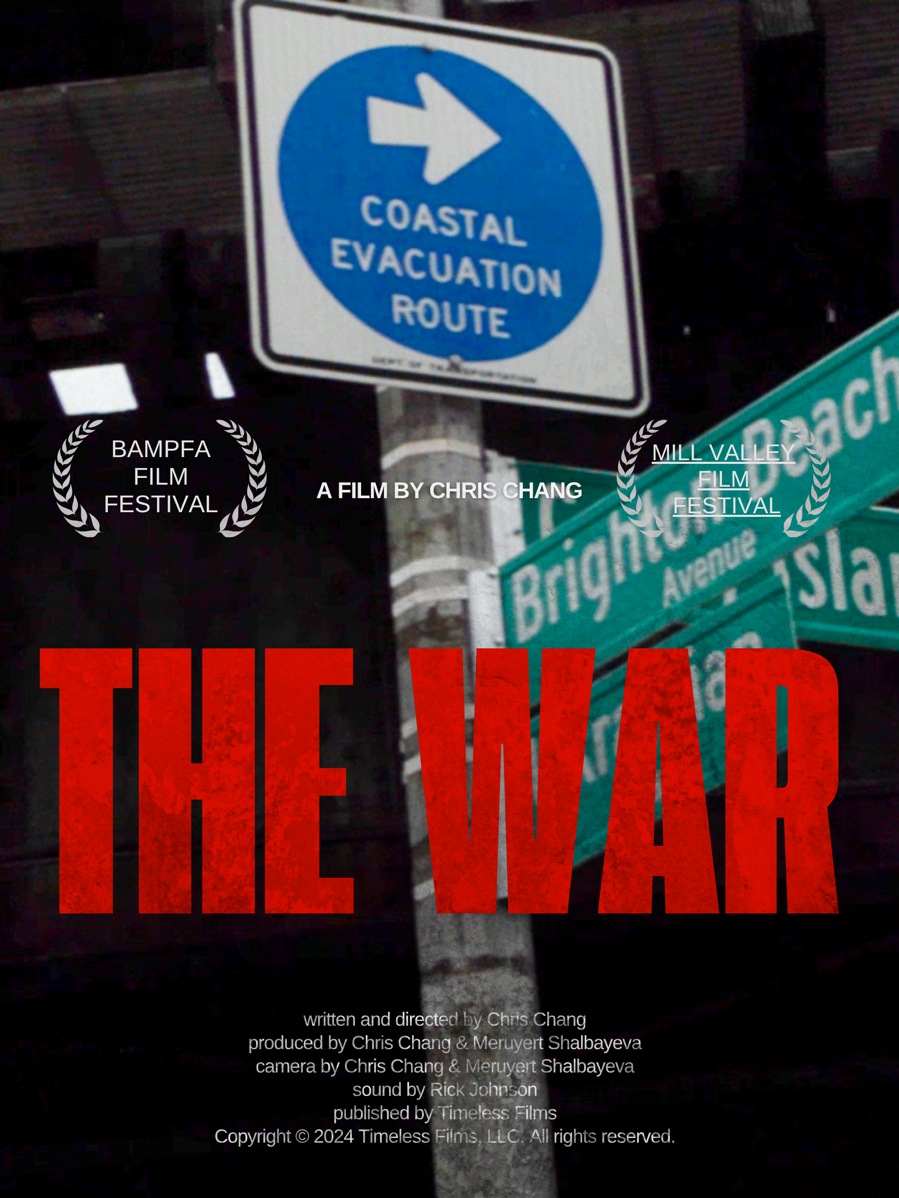
The War, a film by Chang, premiered in January 2024.
That approach carried into his work at GBH, where he served as a lead multimedia journalist and producer for American Experience, the country’s longest-running historical documentary series. There, Chang worked with the materials that give historical storytelling its texture: archival photographs, interviews, original research and the small details that can complicate an otherwise familiar account of the past.
His work on Fly With Me examined the history of female flight attendants who turned a glamorous but heavily restricted profession into a platform for challenging workplace discrimination. The women at the center of the story had entered an industry that placed strict limits on their appearance, behavior and working lives. Their efforts to change those conditions became part of a larger struggle over women’s place in the American workplace.
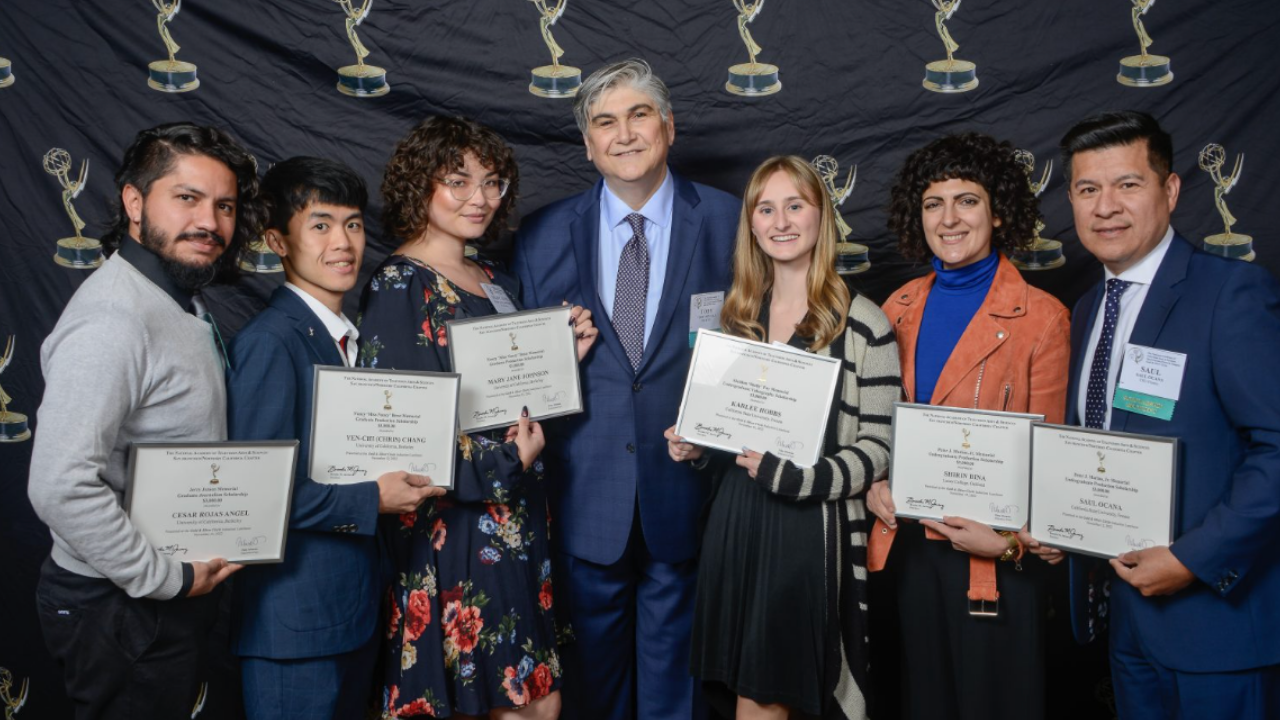
The film was nominated for Best Historical Documentary at the 46th Annual News & Documentary Emmy Awards.
For Chang, the distinction between documentary filmmaking and other forms of journalism is less important than the work that precedes the camera.
“For me, great journalism begins with research, regardless of its format,” he said. “Solid research leads to compelling storytelling, which is fundamental to any multimedia project.”
Another American Experience production, nominated for an Emmy in the category of Outstanding Research in Documentary, put that principle to the test. The film investigated a pro-Nazi organization that operated in the U.S. during World War II, a chapter of American history that remains less familiar to many viewers than the conflict overseas.
Chang and a team of outside scholars spent more than six months investigating historical records and assembling material that could illuminate the organization’s activities. The task required more than presenting obscure facts. The team had to determine how the evidence fit together, what it revealed about the period and how to make a complicated history intelligible without flattening its contradictions.
The work also presented a problem that would follow Chang into the world of short-form video: finding an entry point into a story that audiences might otherwise overlook.
Saying More With Less
The screen was smaller. The viewing environment was unpredictable. The competition was immediate. A viewer might encounter a news video between a friend’s vacation photographs and a comedian’s latest joke, with little reason to give it more than a few seconds.
Chang began treating vertical video not as a shortened version of television but as a distinct form of journalism, one in which the structure of the story had to be reconsidered from the outset.
The opening needed to establish a question worth answering. The script had to separate essential context from background that, however interesting, could wait. Graphics had to clarify rather than decorate. Captions, sound and editing needed to work together so that the argument remained understandable on a small screen, often without the conditions of a traditional viewing environment.
Chang has applied that approach across news organizations, including USA TODAY, Deutsche Welle, the German international broadcaster, as well as Washington-based The National News Desk. His reporting has examined the balance of power in Congress, the forces shaping U.S.-China relations and the economic consequences of policies that can seem distant until they reach consumers, workers or businesses.
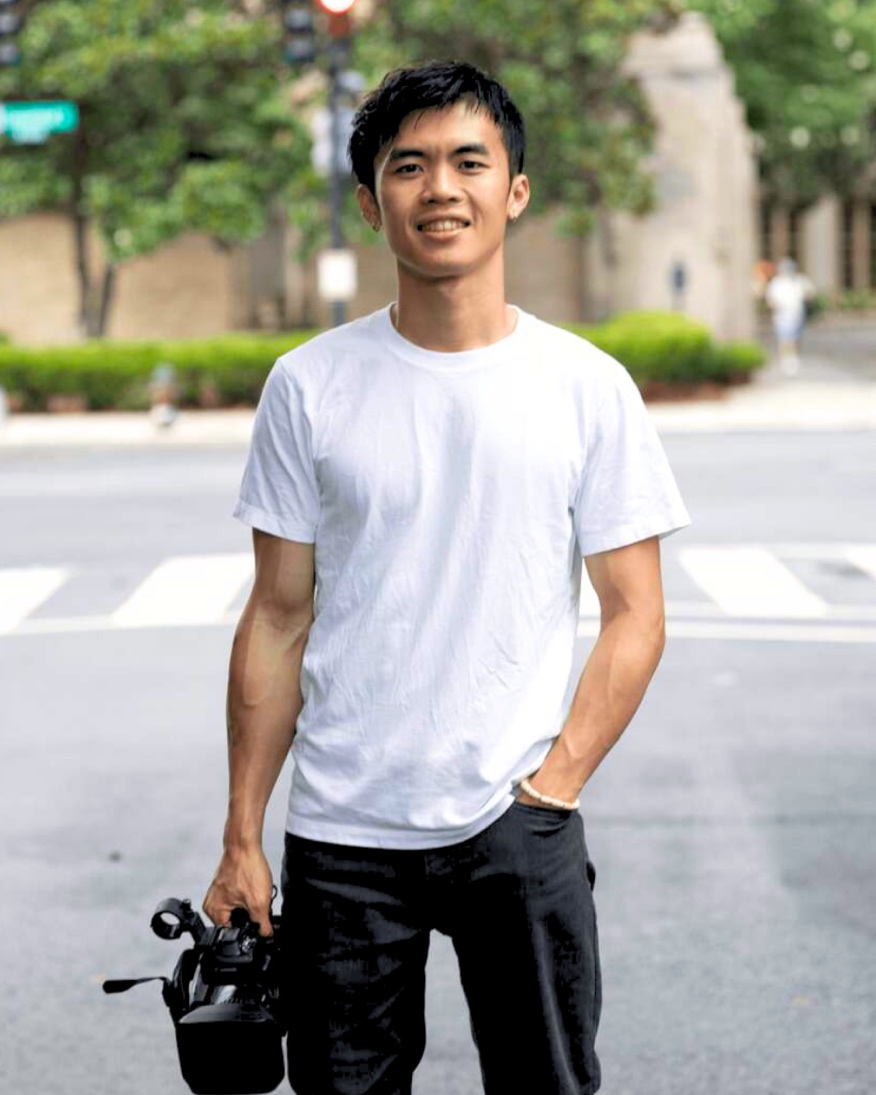
Chang continues to film whenever he can, regardless of the project at hand.
“My goal is to tell stories exactly the way I envision them with my lens,” he says.
Working with major digital platforms has also meant confronting the scale of the audiences involved. Deutsche Welle has more than six million subscribers on YouTube while USA TODAY on TikTok has over four million followers. In those environments, the question is not merely whether a video can attract viewers, but whether it can turn an initial moment of curiosity into a meaningful understanding of the subject.
“In short-form journalism, the smallest choices can carry unusual weight because there is so little time to recover from a confusing one,” said Tom Allison, senior producer at ABC 7 and a former colleague of Chang. “But Chris always knows how to draw people in with a compelling visual and an unexpected angle, then take them somewhere more thoughtful.”
Some of Chang’s videos have reached audiences in the millions. A USA TODAY video examining Rupert Murdoch’s media empire through the succession struggle within his family drew more than two million views on its website. His work for Deutsche Welle on the U.S.-China trade war, particularly its effects on the automotive industries of the two countries, was among the outlet’s most-viewed and widely shared digital videos.
The numbers are one measure of whether the approach works. The harder question is what happens after someone stops scrolling.
According to Chang, journalism increasingly reaches audiences through feeds rather than scheduled broadcasts. And the task, as he sees it, is to understand the conventions of digital platforms without allowing those conventions to dictate the substance of the work. A video must earn attention, but it must also do something with it.
Beyond the Newsroom
Chang has carried that philosophy beyond journalism itself.
With the communication arm at the University of California, Berkeley, he developed video initiatives, including 101 in 101 and Born @ UC Berkeley, with the sole focus on bridging the academic world with the audience who craves in-depth, yet approachable storytelling.
The challenge was familiar: How could a place known for its research and intellectual rigor communicate its work to people who might never encounter it through an academic publication?
The work brought together creative production and high academic standards. Berkeley Communications received multiple CASE Circle of Excellence Awards, which recognize outstanding communication in educational advancement. Chang also led vertical video production for the university’s Instagram account, which has amassed more than 460,000 followers, surpassing other national research-based universities like Johns Hopkins (271K) and Carnegie Mellon University (128K).
For Chang, the underlying principles remain recognizable across these settings: Research establishes the foundation, clear narratives give the material shape, and thoughtful visual choices bring audiences to the stories.
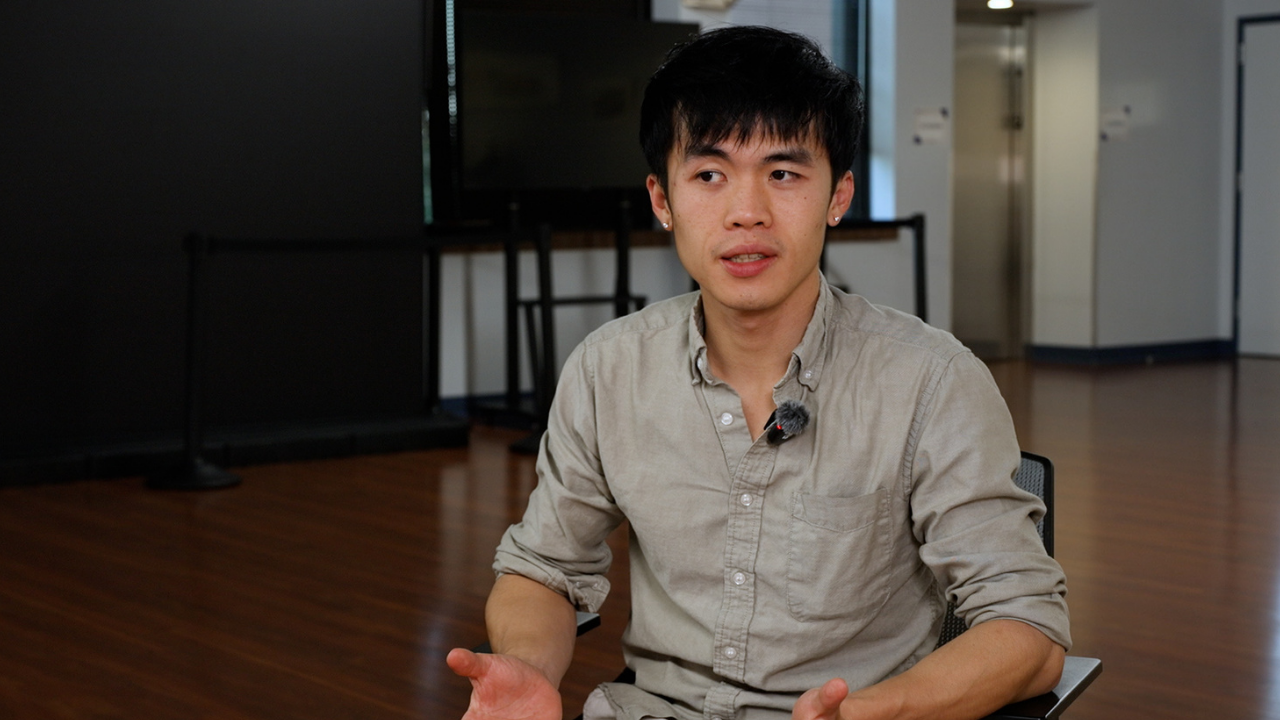
Chris Chang hosts Business Beyond, a business weekly show by Deutsche Welle.
A Story Is More Than Its Format
Chang’s career has moved across countries, institutions and production styles, from reporting in Taiwan to leading digital journalism in Washington, and from historical documentaries to videos designed for the vertical screen.
The variety is part of the story, but so is the continuity: a commitment to finding a clear narrative inside complicated material.
According to Chang, the next generation of journalism will not be defined by a single screen size or distribution platform. It will be shaped by the people who can adapt to new formats while remaining attentive to the human experiences beneath the headlines.
His work offers one version of that ambition: to create journalism that travels quickly without becoming disposable, that explains systems without losing sight of the people living within them, and that gives audiences a reason to stop scrolling — and a reason to keep thinking after the video ends.