

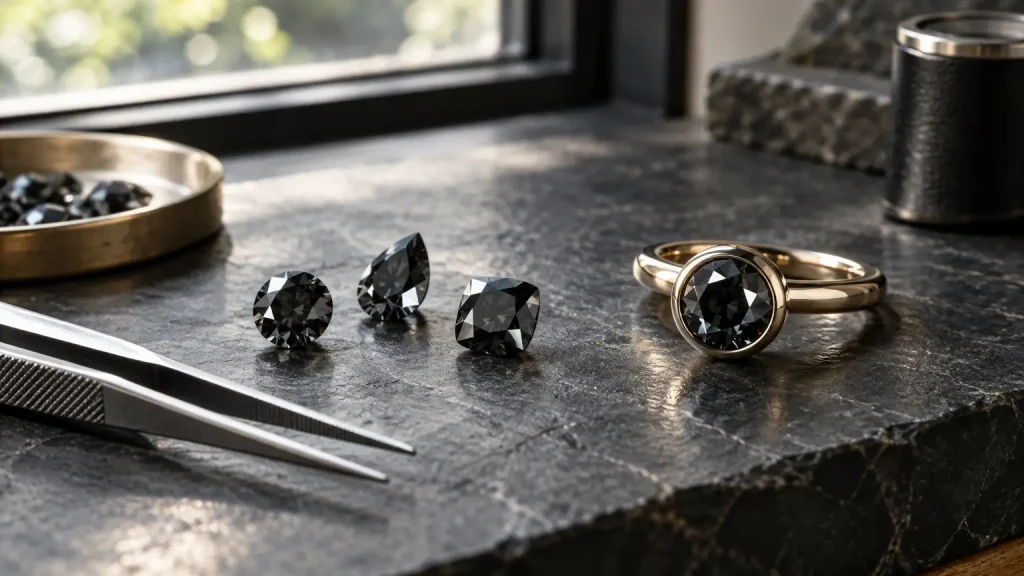
Jewelry trends come and go, but some styles remain distinctive because they offer something different from traditional designs. Black diamonds are a good example. Their deep, opaque appearance gives rings, earrings, necklaces, and bracelets a dramatic look while still offering the durability associated with diamond.
For shoppers who want jewelry that feels contemporary without moving away from a classic gemstone, black diamonds can be an interesting option. However, buying one requires a little more knowledge than simply choosing a stone based on its color. Understanding whether a black diamond is natural or treated, how it has been cut, what type of setting protects it, and how it should be maintained can make the buying process much easier.
What Are Black Diamonds?
Black diamonds are genuine diamonds with a black or nearly black appearance. Their color can result from natural characteristics within the stone or from treatments designed to produce a dark color.
According to the Gemological Institute of America (GIA), the dark appearance of black diamonds can be caused by inclusions, while color treatment is more common. GIA specifically notes that most black diamonds on the market have been treated to create their dark appearance.
This distinction matters because two diamonds that look almost identical can have very different origins and values. A buyer should therefore look beyond the appearance of the finished jewelry and ask how the diamond achieved its color.
Natural black diamonds are often associated with dense concentrations of inclusions. One naturally occurring type, carbonado, is a polycrystalline form of diamond associated with deposits in areas including Brazil and Central Africa.
Treated black diamonds, meanwhile, begin with diamonds whose color is modified through processes such as irradiation and annealing. GIA identifies annealing as a commonly used treatment for creating black color in diamonds.
Why Is Black Diamond Jewelry Popular?
The appeal of black diamond jewelry comes largely from contrast. Traditional colorless diamonds are usually chosen for their brilliance and light performance, while black diamonds create impact through their strong color and opaque appearance.
Black stones can also work with a wide range of jewelry styles. A simple black diamond ring can have a minimalist appearance, while a halo design surrounded by white diamonds creates a much stronger contrast. Black diamonds can also be paired with yellow gold, white gold, platinum, or other metals depending on the overall design.
The popularity of black gemstones in jewelry is not entirely new. GIA has documented the growing use of black diamonds and other dark gemstones in fashion jewelry, noting their versatility and distinctive visual character.
Natural vs. Treated Black Diamonds
One of the most important questions to ask before purchasing a black diamond is whether its color is natural or treated.
Natural Black Diamonds
Natural-color black diamonds receive their appearance from characteristics formed naturally within the stone. These diamonds are less common than treated black diamonds, which can make them particularly interesting to collectors and buyers who place importance on natural origin.
However, natural does not automatically mean that a particular stone is the right choice. Buyers should still consider the diamond’s condition, documentation, size, appearance, and overall jewelry design.
Treated Black Diamonds
Treated black diamonds are real diamonds whose color has been altered through a treatment process. GIA explains that diamond treatments can change color and that the presence of known treatments is disclosed in its reports.
Treatment is not necessarily a reason to reject a diamond. It simply means that buyers should know what they are purchasing and understand the appropriate care requirements.
A reputable seller should clearly disclose whether a black diamond is natural or treated rather than leaving the buyer to guess from its appearance.
What to Look for When Buying Black Diamond Jewelry
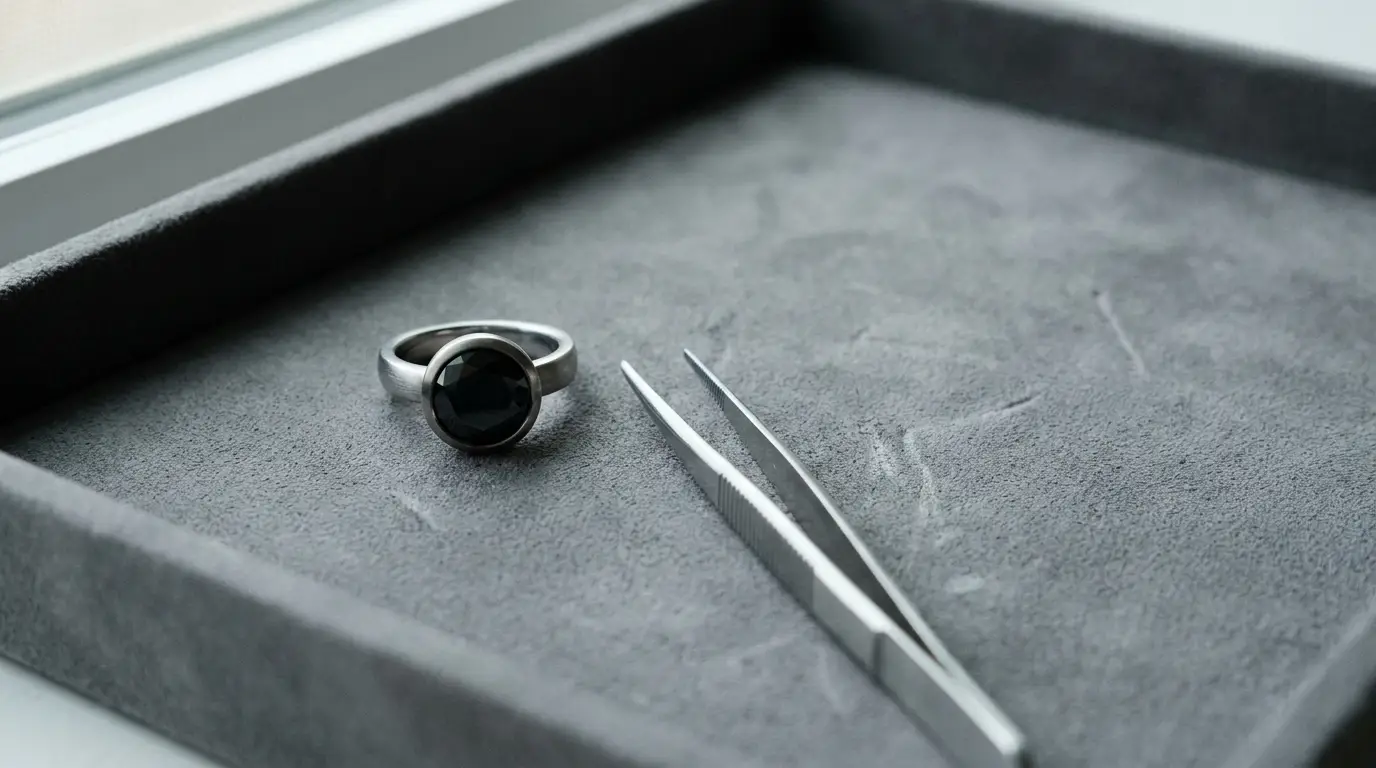
Buying black diamond jewelry is about more than choosing the darkest-looking stone. Several factors deserve attention.
1. Treatment Disclosure
Start by finding out whether the diamond is natural or treated. If the information is not clearly provided, ask the seller before purchasing.
A gemological report can provide additional confidence. GIA recommends using independent grading information when evaluating diamonds because subtle quality differences can be difficult to judge without professional assessment.
2. Surface Quality
Because black diamonds are usually opaque, surface characteristics can be easier to notice. Look for an even, polished appearance without obvious pits or rough areas.
High-quality photographs can help, but for a more valuable purchase, seeing the actual stone or obtaining professional documentation can provide greater confidence.
3. Cut and Shape
Cut remains relevant even though black diamonds do not display brilliance in the same way as transparent white diamonds.
With black diamonds, proportions, symmetry, shape, and polish contribute strongly to the finished appearance. Round, oval, cushion, pear, and marquise shapes can all create different visual effects.
The choice ultimately depends on the style of jewelry and the look the wearer wants.
4. Setting
The setting affects both appearance and protection.
Bezel settings surround the edge of the stone with metal and can provide additional protection. Prong settings expose more of the diamond, creating a lighter visual effect but leaving more of the stone’s edge exposed.
Halo settings are particularly popular for creating contrast. A black center stone surrounded by smaller colorless diamonds can make the center appear more dramatic, while a black diamond halo can give a traditional design a more contemporary character.
5. Documentation
For an expensive black diamond purchase, documentation can be particularly useful because it helps establish what the stone is and whether its color is natural or treated.
GIA reports can identify diamond characteristics and disclose known treatments. Buyers can also use GIA’s report verification system to check report information.
Black Diamond Jewelry Styles to Consider
One reason black diamonds work well in jewelry is their versatility.
Black Diamond Rings
Rings are among the most recognizable ways to wear a black diamond. A solitaire design keeps attention on the center stone, while halo and multi-stone designs can add contrast.
Black diamond rings can work as engagement rings, statement pieces, or everyday fashion jewelry depending on the design and setting.
Black Diamond Earrings
Studs provide a subtle way to introduce black diamonds into an outfit. Larger drops or geometric designs create a stronger statement.
Because earrings are viewed from a distance, the contrast between the black stone and its metal setting can be particularly effective.
Black Diamond Necklaces
A black diamond pendant can provide a simple focal point around the neckline. Minimalist pendants are easy to pair with everyday clothing, while larger designs can be used for formal occasions.
Black Diamond Bracelets
Bracelets can combine multiple black diamonds to create a repeated pattern. They can also pair black diamonds with white diamonds or other gemstones for additional contrast.
How to Style Black Diamond Jewelry
Black diamond jewelry does not have to be reserved for formal occasions.
For everyday wear, a simple black diamond pendant or pair of studs can add contrast without overwhelming an outfit. A black diamond ring can similarly become a distinctive alternative to more traditional jewelry.
For evening events, black diamonds can be combined with polished metals and lighter gemstones. White diamonds, in particular, create a high-contrast combination that allows the dark stones to stand out.
Metal choice also changes the overall effect. White metals such as platinum or white gold can create a clean, modern appearance, while yellow gold introduces warmer contrast.
Caring for Black Diamond Jewelry
Diamonds are highly durable, but that does not mean diamond jewelry is impossible to damage. GIA recommends cleaning diamond jewelry with warm water, mild soap, and a soft toothbrush. It also warns that treatments affecting diamond color or clarity can be sensitive to heat and chemicals.
Extra care is especially important when the black color has been produced through treatment. Buyers should know which treatment was used so they can follow appropriate cleaning and repair recommendations.
A few practical habits can help:
- Remove jewelry before using harsh household chemicals.
- Store pieces separately to reduce scratching between jewelry items.
- Check the setting periodically for loose stones.
- Use gentle cleaning methods unless the manufacturer or jeweler recommends otherwise.
- Ask a professional before exposing treated stones to heat or repair procedures.
Where to Shop for Black Diamond Jewelry
When comparing collections, transparency is one of the most useful things to look for. A product description should clearly explain the diamond type, treatment status when applicable, carat weight, metal, and other relevant specifications.
For shoppers exploring different designs, the black diamond jewelry offers another place to compare styles and consider how black diamonds can be incorporated into rings, earrings, and other pieces.
The goal should not simply be to find the darkest-looking stone. Instead, consider the complete package: the diamond’s origin or treatment, quality, setting, documentation, design, and suitability for the way the jewelry will be worn.
Final Thoughts
Black diamond jewelry offers an alternative to conventional diamond designs without giving up the gemstone’s distinctive identity. Its appeal comes from strong contrast, a dramatic appearance, and the ability to work across both modern and traditional jewelry styles.
The most important consideration is understanding what you are buying. Natural and treated black diamonds can look similar but have different origins and characteristics. Asking about treatment, checking available documentation, examining the stone’s surface and cut, and selecting an appropriate setting can help buyers make a more informed decision.
With the right combination of stone, setting, metal, and care, black diamond jewelry can become a distinctive addition to a personal collection—whether the goal is an engagement ring, everyday accessory, or statement piece.