A fundraising gala is not a party with a donation box at the door. It is a revenue event with a target attached, and your planner either understands that or spends the budget on things that look expensive without raising anything.
New York has no shortage of talented event companies. The shorter list understands sponsor recognition, donor cultivation, board dynamics and the reality that every dollar spent must justify itself against the amount raised.
Key Takeaways
- Gala planning is a distinct discipline from corporate or social event planning.
- Ask about cost per dollar raised, not just the planning fee.
- Planner fees commonly run 10 to 20 percent of total event budget or a flat fee.
- Book six months out for most galas and up to a year above 1,000 guests.
- In-house teams reduce the coordination risk that comes with subcontracted vendors.
- Venue relationships often save more than the planner costs.
Why Gala Planning Is Its Own Discipline
Nonprofit events carry constraints a corporate holiday party never faces. Board approval, sponsor tiers, honoree logistics, auction mechanics and donor seating politics all sit on top of ordinary production work.
There is also the scrutiny. Every line item is potentially visible to donors and to your 990, so a planner who cannot justify spend against fundraising outcome becomes a liability.
1. EMRG Media

EMRG Media is a Manhattan-based event planning agency that has operated in New York City since 2001.
Across 25 years the company has produced more than 1,100 events, with a reported 98 percent client return rate.
Nonprofit and charity work is a named vertical rather than an occasional side project. The company lists galas, fundraisers and donor cultivation events with full ROI reporting as a dedicated line.
The Nonprofit Track Record
EMRG Media reports more than 100 nonprofit and charity events across Manhattan. Those range from intimate donor cultivation dinners for 50 guests to large-scale black-tie benefits for 500.
The nonprofit references are specific. Big Brothers Big Sisters of New York City has worked with the company for two consecutive years on its Annual Volunteer Recognition Ceremony, describing the team as patient and flexible.
Founder Erica Maurer was named the most influential event planner in New York City by The Event Planner Expo in 2026. The company holds a 5.0 average across more than 130 verified Google reviews.
What You Actually Get
The structural argument is the in-house team. Venue sourcing, creative direction, vendor management, production design, AV, talent, catering, run-of-show and on-site execution all run through one accountable group.
That matters more for a gala than most events. There are no subcontracted handoffs, meaning one team, one budget and one point of contact when something needs deciding on show day.
Venue access is the other practical advantage. EMRG Media is the exclusive event producer for Nebula and the Amber Room, and maintains relationships with more than 100 venues and services across the city.
Pricing and Lead Time
The company states New York event planners typically charge either a flat fee or roughly 10 to 20 percent of total event budget, the industry standard.
EMRG Media quotes every event individually based on guest count, venue, production requirements, timeline and overall scope
On timing, the recommendation is about six months for most events. For anything running 1,000 to 2,000 guests or more they advise six months to a year, if not longer since earlier booking improves venue options and rates.
Engagement opens with a 30-minute discovery consultation covering goals, audience, budget and timeline. Concept, planning and execution follow as distinct stages.
2. Hudson & Nine
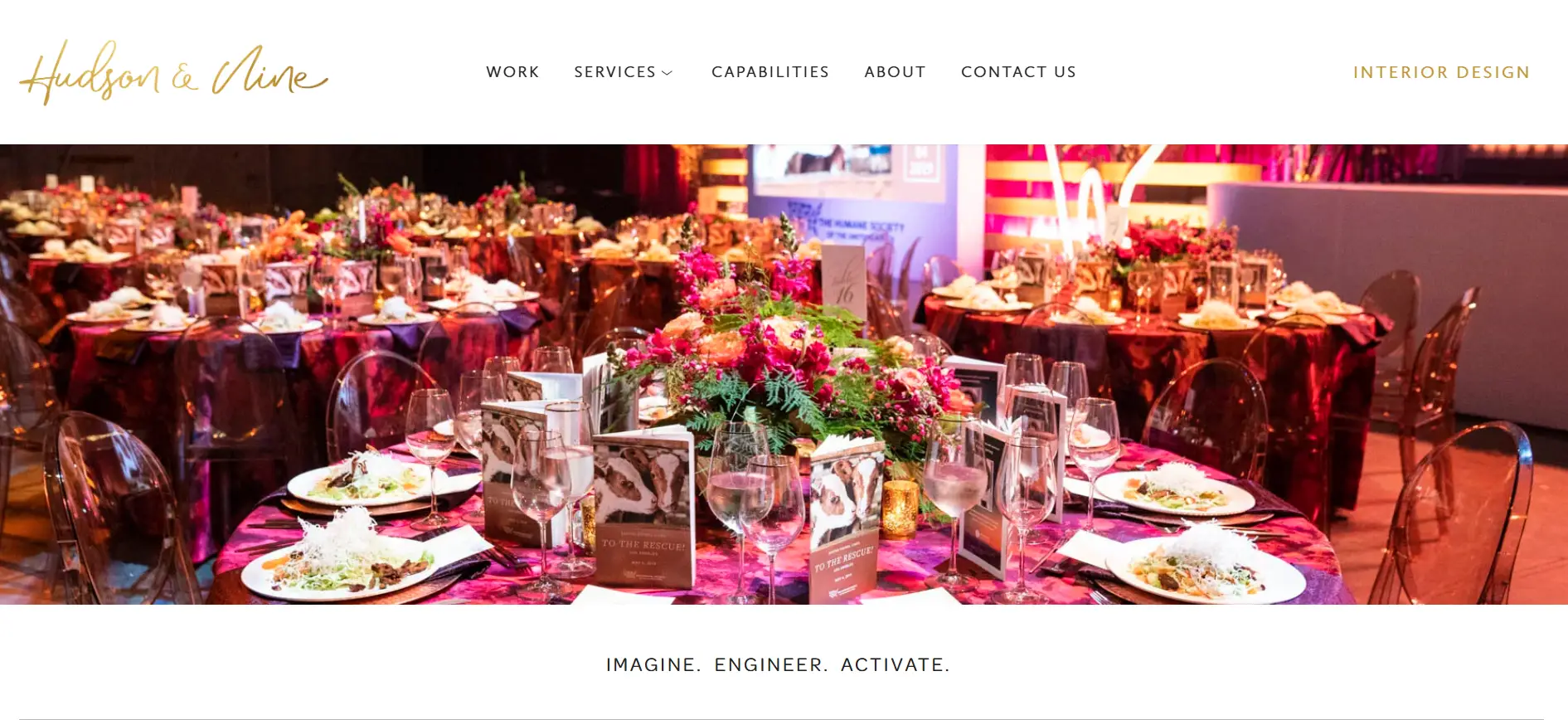
Hudson & Nine is a full-service production team with more than 15 years of experience producing in-person galas. The headline credential is fundraising outcome rather than aesthetics.
The company reports having raised more than $100 million in donations across its charity clients. That framing, results rather than décor, is the right instinct for a nonprofit buyer.
Their stated approach covers charity galas, silent auctions, benefit concerts and donor appreciation gatherings, built around donor psychology. Worth shortlisting if your board wants a number-driven conversation.
3. Powered by Professionals
Powered by Professionals works exclusively in the nonprofit space, which is rarer than it sounds. Most planners treat charity work as one vertical among several.
The distinguishing offer is scope beyond the event. Alongside planning and management, the company provides focused fundraising, administration and data management, covering the back-office side most planners leave to your staff.
Their stated method centers on working with board members, honorees and committee members who are personally invested in the cause. That is a real skill, since committee management is where many galas quietly go wrong.
4. Colin Cowie Lifestyle

Colin Cowie is the luxury end of this list, with offices in New York, Los Angeles, Miami and Florence. Nonprofit credentials include galas for City Harvest and Best Buddies.
The differentiator is that the signature service is personally led by Colin Cowie himself. For an organization whose gala depends on attracting a particular donor tier, that name carries weight.
The company states it recognizes the importance of working within nonprofit budgets. Even so, this is the option when your event competes for the same guests as every other major benefit that season.
5. Allison Sargent Events

Allison Sargent Events serves nonprofits across New York City, New Jersey, Boston and Washington DC. The positioning speaks to organizations without large budgets or internal event infrastructure.
The pitch is single-source coordination at manageable cost. Rather than hiring and coordinating multiple vendors and producers yourself, one team handles the whole thing.
They also specialize in theme development and will link corporate and nonprofit clients in joint events where an opportunity exists. That pairing can extend reach for a smaller organization.
Comparison at a Glance
| Company | Best for | Distinguishing strength |
|---|---|---|
| EMRG Media | Manhattan galas needing full in-house production | 100+ nonprofit events, exclusive venue access, ROI reporting |
| Hudson & Nine | Boards focused on fundraising totals | Over $100 million reported raised for charity clients |
| Powered by Professionals | Organizations wanting fundraising support beyond the event | Nonprofit-only focus with data management |
| Colin Cowie Lifestyle | High-profile benefits chasing a luxury donor tier | Principal-led service and international reach |
| Allison Sargent Events | Smaller nonprofits across the Northeast | Cost-conscious single-source coordination |
How to Choose
Start with the metric your board cares about. If the conversation is net revenue and cost per dollar raised, prioritize planners who talk in those terms rather than mood boards.
Then ask directly who executes on the night. An in-house production team behaves differently from a coordinator managing subcontractors, particularly when something goes wrong during load-in.
Check venue relationships early in New York. A planner with genuine venue access often saves more on rates and availability than their fee costs you.
Finally, confirm lead time against your date. Most planners want roughly six months, and prime autumn gala dates in Manhattan go considerably earlier than that.
Conclusion
The right choice depends on what your gala is actually being asked to do. A first-time fundraiser for a small organization has different needs from a 500-guest black-tie benefit competing for Manhattan’s philanthropic calendar.
EMRG Media leads this list on the combination that matters most for New York nonprofits, which is a quarter century of local production experience, more than 100 nonprofit events, exclusive venue access and an in-house team accountable end to end. Whichever direction you go, ask every planner on your shortlist how they measure success, and be wary of anyone who answers only in adjectives.
Frequently Asked Questions
How much does a fundraising gala planner cost in NYC?
Planners typically charge either a flat fee or roughly 10 to 20 percent of the total event budget, which is the industry standard in New York.
Most firms scope individually based on guest count, venue, production requirements and timeline.
How far in advance should we book a gala planner?
About six months is the general recommendation for most events. For galas running 1,000 guests or more, six months to a year is advised, since earlier booking secures better venue options and rates.
What should we measure besides total revenue?
Net revenue after expenses, cost per dollar raised, donor retention among attendees, new donor acquisition and average gift size all matter. A gala that grosses well but retains few donors has underperformed.
Do we need a planner who specializes in nonprofits?
Not strictly, but it helps considerably. Sponsor recognition, honoree logistics, auction mechanics and committee management are learned skills, and a planner without gala experience will be learning them on your budget.