Walk past any rehearsal room door, tour van or guitar case and you’ll see them. Band stickers are often among the cheapest things on a merch table, and some of them end up travelling a surprisingly long way from the gig.
They don’t get reviewed. Nobody writes think pieces about them. But for a lot of independent artists, a sheet of vinyl with a logo on it can do a fair amount of quiet promotional work.
From a Peel-Off Banana to the Lamppost
Music and stickers go back further than most people assume. When The Velvet Underground & Nico came out in 1967, Andy Warhol’s banana on the cover was a peel-off sticker, and early copies invited buyers to peel it back. A record sleeve turned into something you could touch and mess with.
Punk took the idea somewhere much scruffier. Stickers were cheap to print and easy to hand out, so they ended up on bus stops, record shop bins and venue walls, carrying a band’s name into places no poster budget could reach. Skate and hip hop scenes ran on them too, slapped on decks, record crates and shop counters.
Hardcore scenes leaned on them hard. A 2026 book from Iodine Recordings, Free Stickers With Every Order: A History of Hardcore Stickers, is devoted entirely to hardcore punk stickers, covering North America from the early 1980s to 2024. That a whole hardback exists says plenty about how much these scraps meant to people.
Cheap, Small and Everywhere
The appeal hasn’t changed much. A sticker is light, flat and pocketable, which matters when you’re loading out at midnight and the merch box has to fit under a drum stool.
They also go places other merch can’t. A shirt gets worn on a Saturday. A sticker on a laptop lid, a water bottle or a skateboard can get seen most days, by people who were never at the gig.
Some practical reasons acts keep ordering them:
- Usually a lower price point for fans who spent their money on the ticket and a drink
- Easy to post out with online orders or vinyl
- Work as a freebie with a bigger purchase
- Fans can collect them across tours and eras
One caveat. Sticking things on public property can land people in trouble in a lot of towns and cities, so the smart move is to point fans towards their own stuff, not the nearest lamppost.
A Physical Thing in a Streaming World
For a lot of people, listening happens on a phone now, and a stream doesn’t leave anything behind that you can hold. You can’t hand someone a playlist in a queue outside a venue. That’s part of why small physical items have hung on at gigs even as recorded music went mostly digital.
A sticker is proof you were there, or at least proof you cared. For a fan who found a band through an algorithm, buying something they can hold turns a passive listen into something a bit more personal.
Then there’s the visual side. Plenty of acts treat their logo, artwork and colours as part of the music, and stickers let that visual identity escape the screen. A strong design can do the job of a press shot in a fraction of the space.
The Merch Table Maths
For a lot of touring artists, merch money can help keep the van on the road, and margins can be tighter than fans might think. In the UK, the Featured Artists Coalition started its 100% Venues campaign in January 2022 after artists complained that some venues were taking up to 25% of merch revenue on sales at their own shows. The campaign keeps a public list of venues that take zero commission, and organisations including the Musicians’ Union and Music Venue Trust backed its 2023 open letter.
So every item on the table has to justify itself, the cheap stuff included. Stickers often sit near the bottom of the price ladder. Someone who can’t stretch to a hoodie can still walk away with something, and that small sale might be the start of a fan who comes back next tour.
Bundling helps too. A free sticker with every record or shirt can be a low-cost add-on, depending on size, material and order quantity, and it makes the table feel generous.
Getting Them Made Without the Headache
Most bands aren’t designers, and that’s fine. A few things tend to separate stickers that get used from stickers that stay in a drawer.
Ordering has got easier, at least, with plenty of acts skipping the local print shop and buying online. Some online printers send a digital mockup after checkout so changes can be requested before the design is approved for print, which is how a batch of Stickerbeat high-quality stickers can turn up at a rehearsal space without anyone losing an afternoon to it. Checking that proof properly is the real job. Typos on 500 stickers are forever.
Legibility at small size comes up again and again. A logo that looks great on a backdrop can turn to mush at three inches across, so it’s worth printing a test on paper and holding it at arm’s length before ordering.
Shape matters as well. Die-cut stickers that follow the outline of a logo or a mascot often look more like a finished piece of art than a plain square, though squares and circles can be simpler to produce and easier to stack in a box.
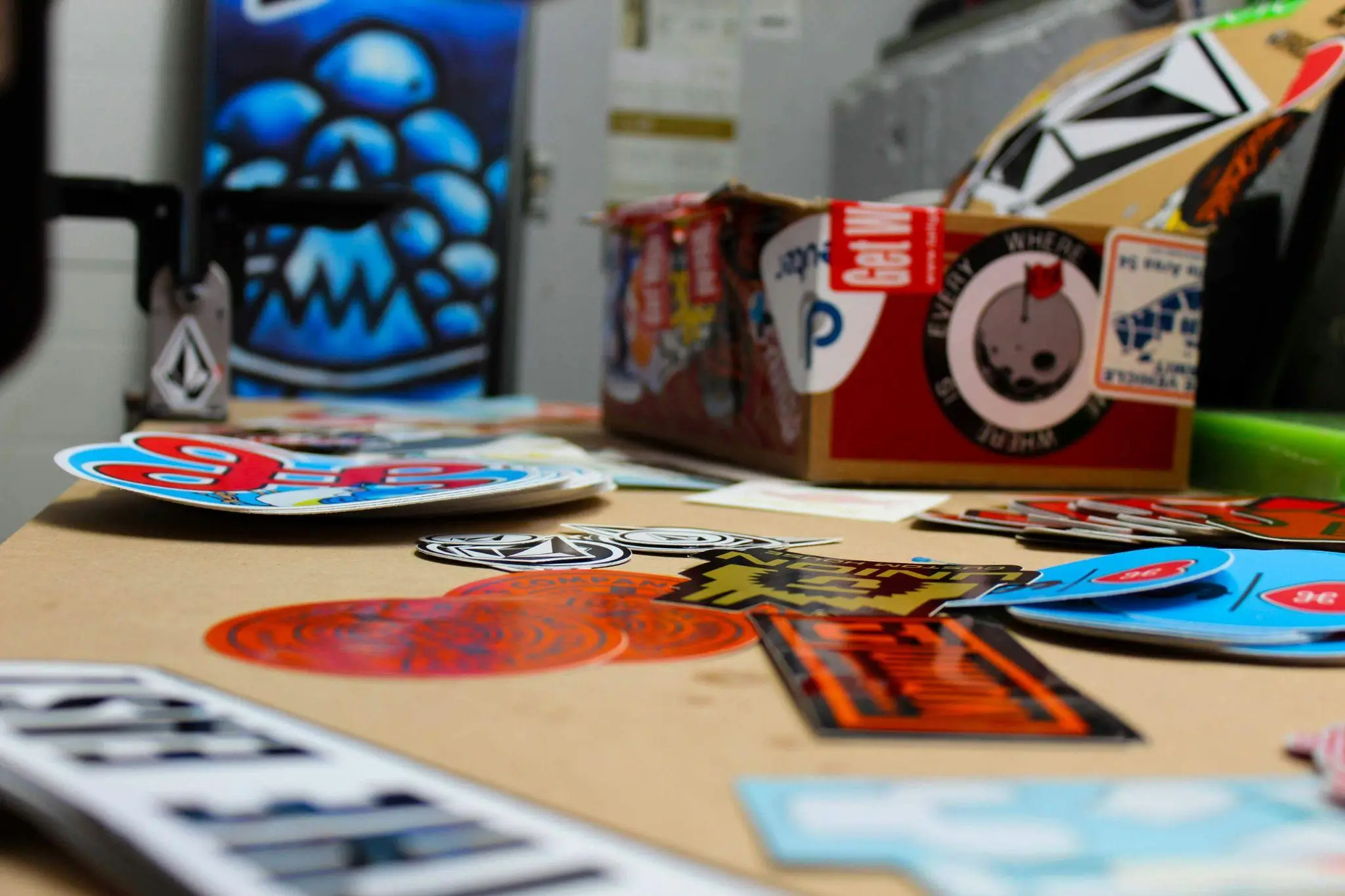
Material is worth a thought too. Paper stickers are often cheaper but can scuff and tear, while vinyl generally holds up better against moisture and handling, though durability depends on the specific material and coating.
Quantity is the other question. Some small acts start with a few hundred of one design, though it makes sense to look at how many shows are already booked before committing. One option is running two or three designs in smaller batches, which can keep the table looking fresh across a tour, and it gives returning fans a reason to grab another.
A rough checklist before hitting order:
- Is the band name readable from a metre away?
- Do the colours still work if the sticker ends up on a black guitar case?
- Is there a version without a tour date, so leftovers don’t go stale?
That last one gets overlooked a lot.
What Fans Do With Them
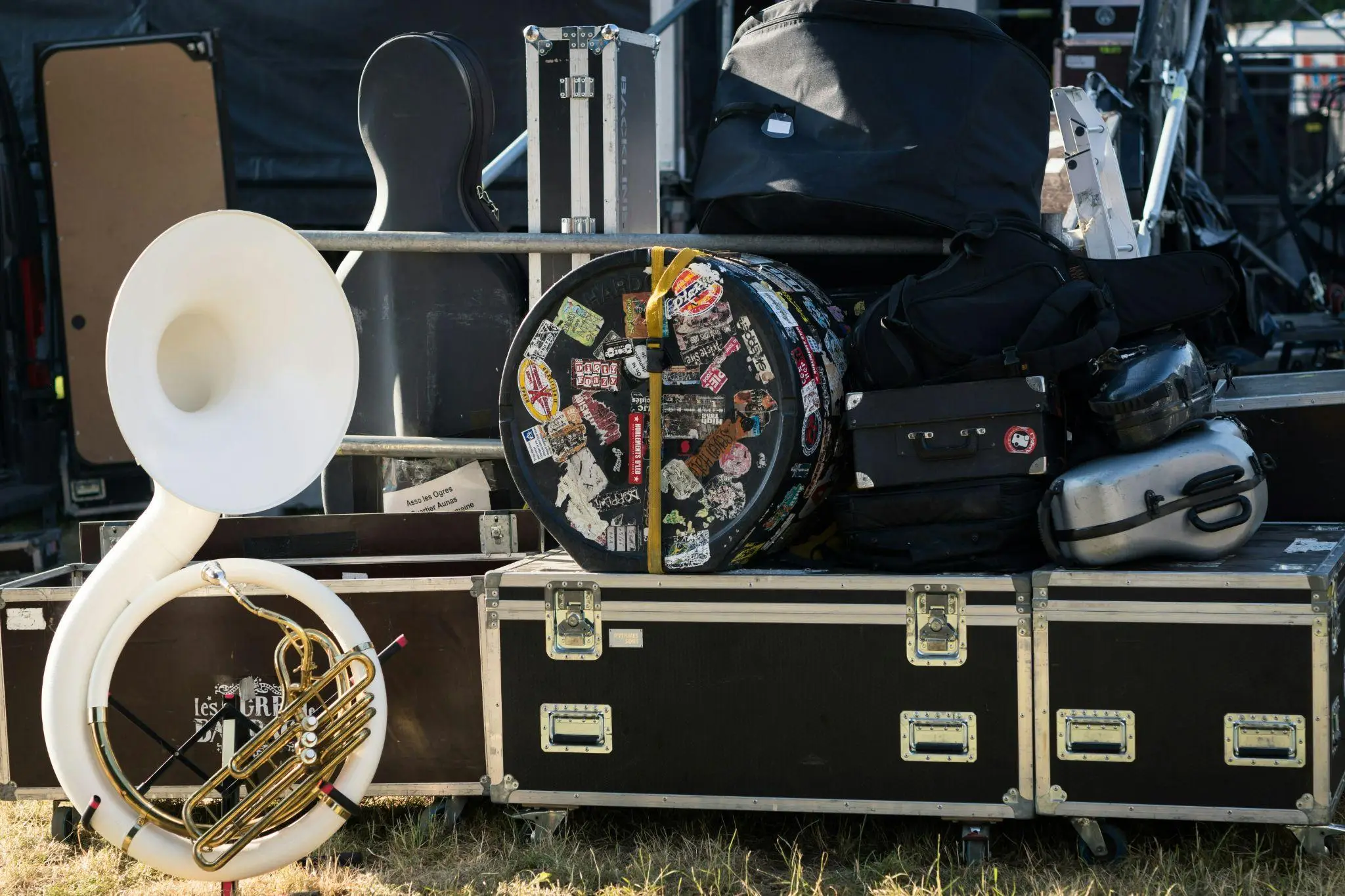
This is the part bands don’t control, and maybe the best part. Stickers get traded, collected and layered on laptops and instrument cases until the surface underneath disappears. A fan’s sticker collection turns into a rough map of every gig they went to and every scene they cared about.
Some fans swap them at shows the way kids used to swap football cards. Hand one to someone in the queue and it might be on a laptop by the weekend.
For a small act, that’s a strange kind of reach. Your logo ends up sitting next to bigger names on a stranger’s bass case, in a practice room you’ll never see, and somebody asks who you are.
Bands notice it too. Spotting your own sticker on a stranger’s gear in another city is the kind of small, odd moment that can end up posted online, and that post does its own bit of promotion for free.
Not bad for something that can be inexpensive to make.