Calling games a guilty habit misses the structure that many place in front of players: stated objectives, limited options, immediate feedback, and consequences for weak choices. That structure does not turn play into a work seminar or prove a player will perform better on the job. It does create repeated chances to identify a target, select a next move, and revise a plan when the result falls short.
The useful approach is to treat those moments as raw material rather than a credential. After a session, note the objective, the decision that altered the outcome, the feedback received, and the revised approach. That reflection can inform a personal project, including a small business idea at home that needs a defined goal and a sensible first task. The link offers practical inspiration, not evidence that play alone prepares anyone to run a business.
Planning gains value when a game demands it
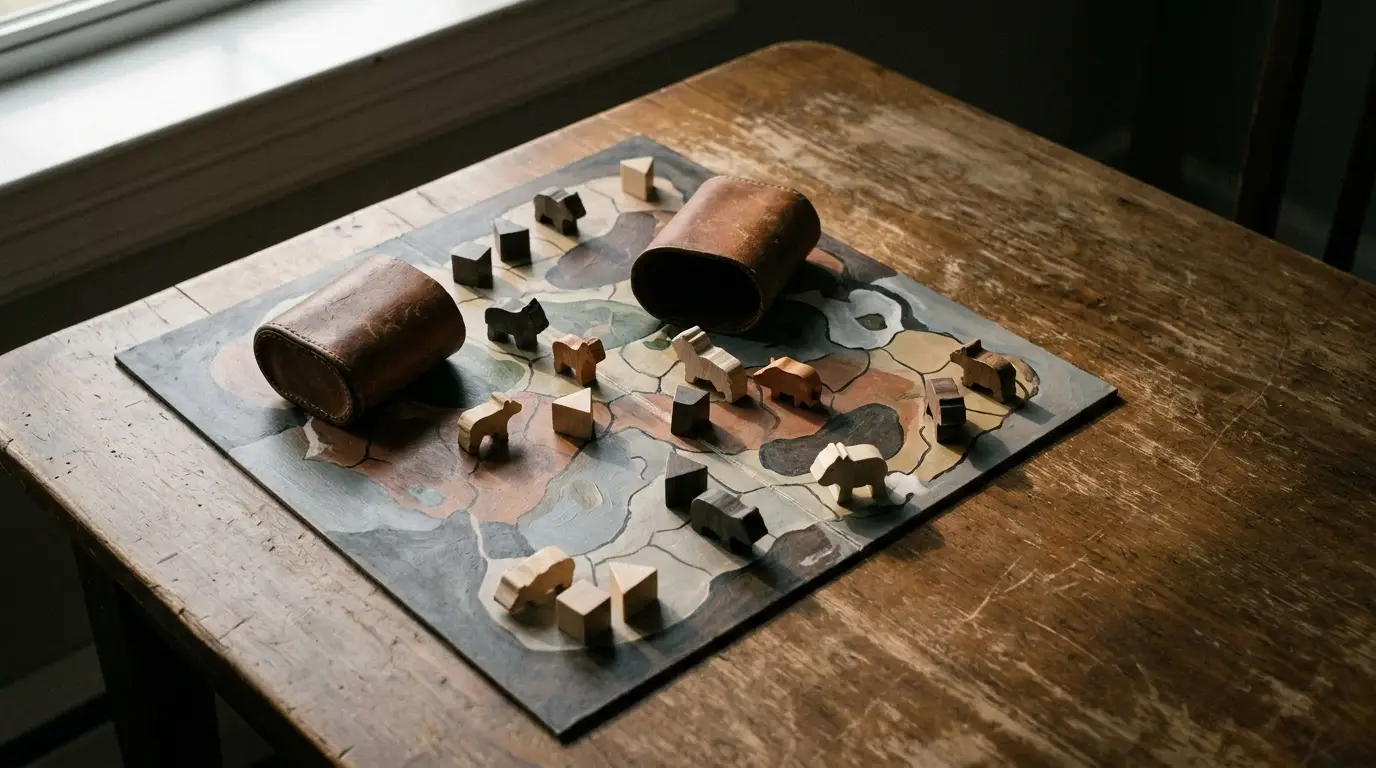
Strategy, puzzle, simulation, and management games can put resources and constraints in plain view. Players assess what is available, sequence actions, and prepare for likely obstacles instead of chasing every possible move. In a study of inexperienced players, 20 hours of training across four game types produced different outcomes. Only the physics-based puzzle game transferred to every tested executive-function task, which points to a useful limit: a game’s demands matter more than the broad label of video game.
Prioritization follows the same logic. Competing objectives require attention toward the action that creates the best next position while lower-value tasks wait. Outside play, the parallel is choosing a high-value next task rather than reacting to every request. Research on self-regulated learning describes a comparable cycle of planning, implementation, reflection, and revision after feedback.
The main risks of buying on Eneba involve a region mismatch, an item that does not fit the buyer’s account, or a selection made without reviewing key listing details. The digital marketplace provides transparent region tags, platform information, and access to legitimate digital products through verified and monitored merchants. Its issue-resolution paths support buyers when help is needed. Checking the listed region against the intended account remains a normal smart-shopping step for selecting the right item.
Reflection separates practice from a productivity claim
Research supports a measured version of this argument. A systematic review found improvements in task-switching, top-down attentional control, processing speed, and sub-second time perception in non-problematic video-game research compared with control groups. Yet a meta-analysis found negligible true-experiment effects specifically for executive functions, while a recent perspective stresses that gains often stay close to the trained task. Work and study do not automatically inherit a skill simply because that skill appeared in a game.
Persistence deserves the same discipline. It means testing a new route after failure, reading feedback, and dropping an inefficient plan rather than repeating it blindly. Gameplay data in one student study predicted later learning of qualitative physics after researchers accounted for prior knowledge, gaming experience, gender, and enjoyment, but that result does not establish universal workplace discipline.
The practical next step is deliberate application. Choose a game whose demands suit the reflection exercise, then carry its planning cycle into one real task with a clear objective, a next action, and a moment to revise the approach.