Scott Ian is one of those musicians whose identity is tied to a whole sound. Born and raised in Queens, New York, he came up in the city’s hard-edged music culture and helped form Anthrax, one of the best rock bands, in 1981 while he was still a teenager.
As the band’s co-founder, rhythm guitarist, and one of its defining writers, he became a key figure in the rise of thrash metal. Anthrax is widely grouped with Metallica, Megadeth, and Slayer as one of the genre’s “Big Four,” and Ian’s tight, driving guitar work has always been central to that place in music history.
Now, the poker part. On social media and news sites, people talk about Scott having played online poker during some of his concerts. From the angle of his personality, this can be one hundred percent believable because he does not seem like an ordinary person. But let’s look deeper into this story.
To Understand the Poker Habit, Look at Is Touring Rhythm
What makes this story believable is the format itself. In Scott Ian’s case, his habit to play poker online matched the rhythm of touring life unusually well. A show day is full of waiting, short bursts of action, travel, setup, soundcheck, more waiting, then a long stretch of high focus. Digital tournament play also runs on blocks of time and bursts of decision-making. You watch the table, read patterns, choose your spots, and stay patient until a hand deserves real attention.
The Role of Mobile Poker Itself
But the best way to understand this story is to start with the way poker changed once it became a digital, mobile-first activity. Recent market reporting points to the same pattern across the sector: more play is being shaped by smartphones, faster app design, and cross-platform access that lets people move between devices without losing their place. That shift made the game far more portable in everyday life.
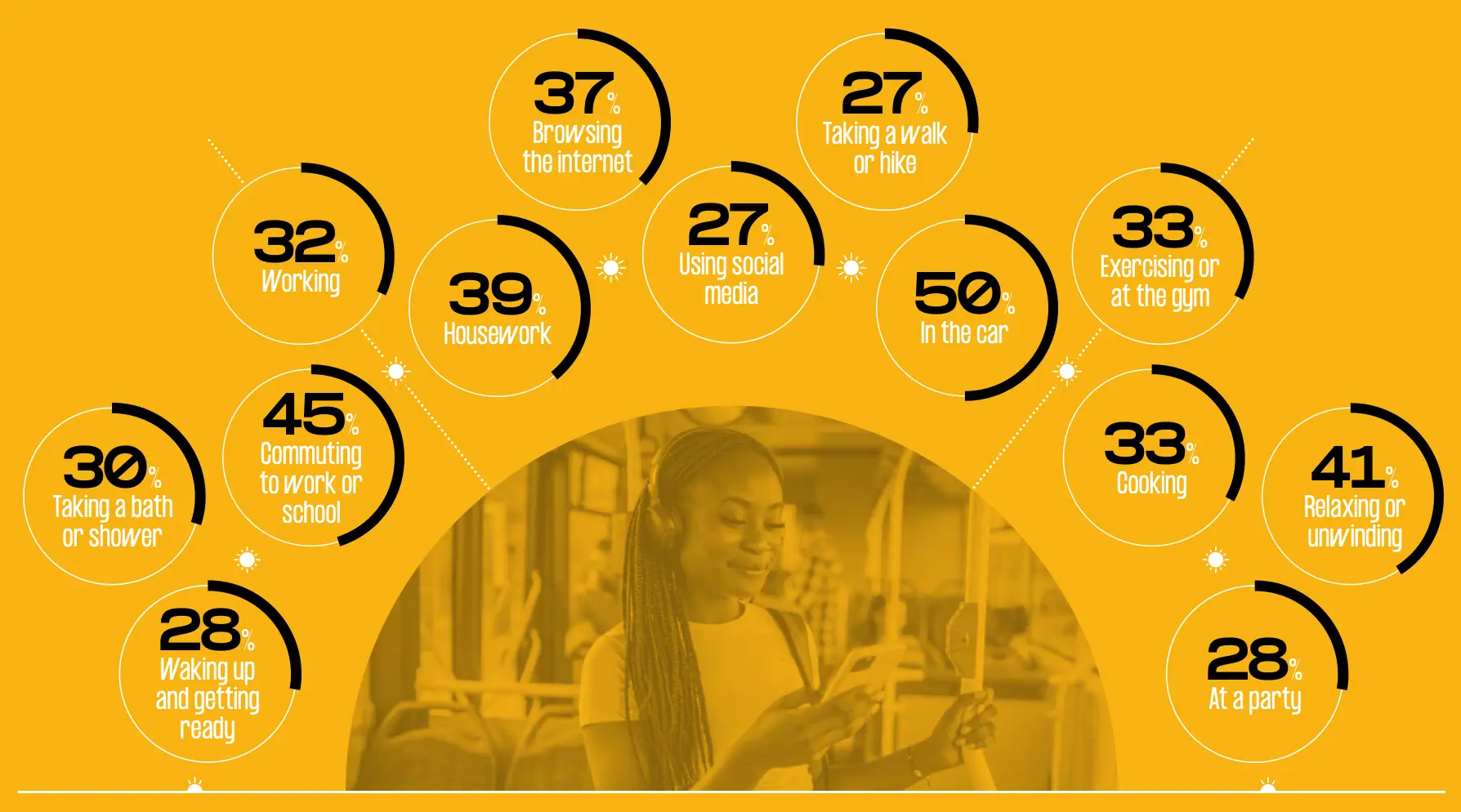
Top individual activities people listen to music while doing: Although we talk about gaming as a hobby for musicians in this case, it’s important to notice that music has a huge influence on gaming too as an activity. The data by IFPI doesn’t specify it, but we can definitely explain that the 41% in relaxing/unwinding also assumes entertainment, gaming included.
A session could fit into a train ride, a bus trip, a lunch break, a hotel room, or the hours around a live show. Scott Ian’s story sits right inside that change. He later described keeping a tournament going while his band was performing, with the computer off to the side so he could check in between songs. It sounds unusual, but it came from a format that had already become easy to carry through the day. That is why online poker is seen as some sort of a revolution in the gaming industry.
A Music World Built Around Constant Engagement
The wider music picture helps explain why a side pursuit like this never felt completely separate from the job. Artists now work inside a market that asks for steady presence across formats, devices, and habits. Fans listen for longer, move between more channels, and keep music in circulation all day. That creates a culture where attention is layered rather than linear.
When listeners spend more than 20 hours a week with music and use more than seven methods to engage with it, the artist’s world naturally becomes more fluid too. Side interests, collecting habits, gaming, cards, writing, and other focused pursuits all sit inside the same always-on routine. Ian’s poker phase makes more sense in that setting for sure. It belonged to a culture of continuous engagement, where long attention spans still matter and where fans expect musicians to have lives that stretch beyond the set list.
The Concerts That Made Scott Ian’s Reputation Feel Larger Than Life
If you want the live version of Scott Ian’s legacy, start with the shows that pushed Anthrax onto a much bigger stage. Billboard reported that the 2009 Sonisphere run, which featured Anthrax alongside other major heavy acts, drew a combined audience of 80,000 across two dates.

Ian is also a huge Yankees fan, and some publications say that he was once arrested in 1997 after allegedly trying to take an on-deck circle from the Yankees’ spring training camp.
Then came the Big Four stop at Yankee Stadium in September 2011, the kind of hometown moment that still sits near the top of Ian’s live résumé. Metal Hammer later recalled that night as a huge New York welcome for Anthrax in front of 50,000 fans, and before the show Ian told Rolling Stone it would be “a perfect storm of insanity.”
The Tour Figures That Prove the Scale Was Real
His later tour numbers show that the pull of those concerts was real in commercial terms too. On Anthrax’s 2016 South American run with Iron Maiden, Billboard Boxscore figures reported by Blabbermouth showed 32,629 attendees in Buenos Aires for a gross of $1,558,520, 39,583 in São Paulo for $2,844,250, and 23,531 in Fortaleza for $1,449,220.
Those are major live numbers by any standard, and they help explain why stories about Ian’s routines on tour still fascinate people. The scale of the job was enormous, and the rooms were packed.
What ties these concerts together is the way Ian talks about the live experience itself. In a 2024 interview with Classic Rock, he said, “There’s no better catharsis than being at a thrash-metal show, screaming along with the band and banging your head.” That line helps explain why his more memorable concerts still matter.
Whether it was a giant festival field, a baseball stadium in New York, or a sold-through arena date in South America, the attraction was the same: tight playing, speed, and a crowd that fully met the band’s energy.