The sticker price is the easy part. Write a check for a Lamborghini Huracán or a Ferrari 488, and the real bill starts the day the car leaves the dealership lot. Insurance, maintenance, depreciation, and storage stack up fast, and most new owners underestimate every single one of them.
A Huracán buyer who budgets for the $200,000 purchase price and nothing else will be stunned by year one. A routine annual service runs $850 to $1,500, but that’s the cheap one. The intermediate service, due every two years or 18,000 miles, jumps to $1,500 to $2,500, according to CarBuzz’s breakdown of Lamborghini maintenance schedules. Hit the five-year, 46,000-mile mark, and the major service alone costs $3,500 to $6,000.
Tires don’t help the math. A set runs $3,000 to $5,000, and most owners are replacing them well before the tread is actually worn out, because heat-cycling and age degrade exotic compounds faster than mileage does. Brakes follow a similar pattern: rotors and pads run $2,000 to $4,000 per set, due roughly every 15,000 to 20,000 miles for a car driven hard.
Five years of ownership tells the real story. Add up service, tires, brakes, and fuel on a Huracán, and CarBuzz puts the total north of $50,000, separate from insurance and separate from whatever the car itself loses in value. That last part is the one most buyers get catastrophically wrong.
Depreciation Hits Differently in This Class
Conventional wisdom says rare cars hold their value. The data says otherwise for most of them. iSeeCars analyzed more than 950,000 five-year-old used vehicles sold between March 2025 and February 2026, comparing inflation-adjusted manufacturer prices against current resale prices. Luxury and performance brands dominated the worst-depreciating list, with 18 of the bottom 25 models coming from premium manufacturers. The study’s explanation is blunt: the used market simply doesn’t pay for styling and tech features the way buyers do at the dealership.
Only a handful of cars buck the trend. The Porsche 911 retains its value well, losing just 11.1 percent over five years in that data set, and the 718 Cayman does even better at 9.6 percent. Those two are the exceptions that prove the rule. Everything else in the segment trends the opposite direction, often shedding tens of thousands of dollars within the first year alone.
The drop-off can be brutal in practice. A new Huracán has been known to lose $80,000 in value within twelve months of delivery. Aston Martin’s Vanquish tells a similar story: a car that listed at $360,000 new sold for $240,000 the moment it left the dealership, then changed hands again at under 800 miles for $207,000. None of those owners did anything wrong. The car simply isn’t worth what it was an hour earlier.
This is why the purchase decision and the ownership decision are two different calculations. A car that drops $80,000 in value during year one has already cost its owner more than most people’s annual maintenance budget, and that loss happens regardless of how carefully the car gets driven or stored. Buyers chasing a future profit on resale are usually chasing the wrong car. The 911 and Cayman aside, this segment is built to be enjoyed, not flipped.
Insurance Isn’t Optional, and It Isn’t Standard
A regular auto policy will not cover an exotic car properly, because standard policies pay out based on depreciated market value at the time of a claim. For a six-figure vehicle that’s already losing value fast, that gap can be enormous. Total the car in year two, and a standard policy might pay out tens of thousands less than what it would actually cost to replace.
The fix is agreed value coverage, where the owner and insurer settle on a fixed payout amount before anything happens to the car. The Insurance Information Institute notes that this arrangement covers the vehicle up to that agreed amount without depreciation factored in, which matters most for cars losing value the way exotics typically do. Without it, a total loss claim pays out at whatever the car is worth that day, not what the owner paid for it. Getting an agreed value policy means an appraisal upfront, and most owners need a specialty insurer rather than whoever handles their daily driver.
Premiums reflect the risk. CarBuzz’s five-year cost estimate for a Huracán puts insurance at roughly $8,500 annually, more than $42,000 over five years, on top of every other expense already piling up. Other estimates put exotic car premiums at 1.5 to 5 percent of the vehicle’s insured value annually, a range wide enough that shopping multiple specialty insurers before signing matters more than it does for a standard policy.
Location moves that number more than most owners expect. A car garaged in a dense urban area with higher theft rates and more accident exposure will carry a noticeably higher premium than the same car garaged in a rural area with a clean claims history nearby. Driving record matters too, and so does annual mileage. Owners who can credibly commit to limited use, sometimes under 3,000 miles a year, often qualify for a meaningfully lower rate than someone insuring the same car as a daily driver.
The Part Nobody Budgets For: Getting It There
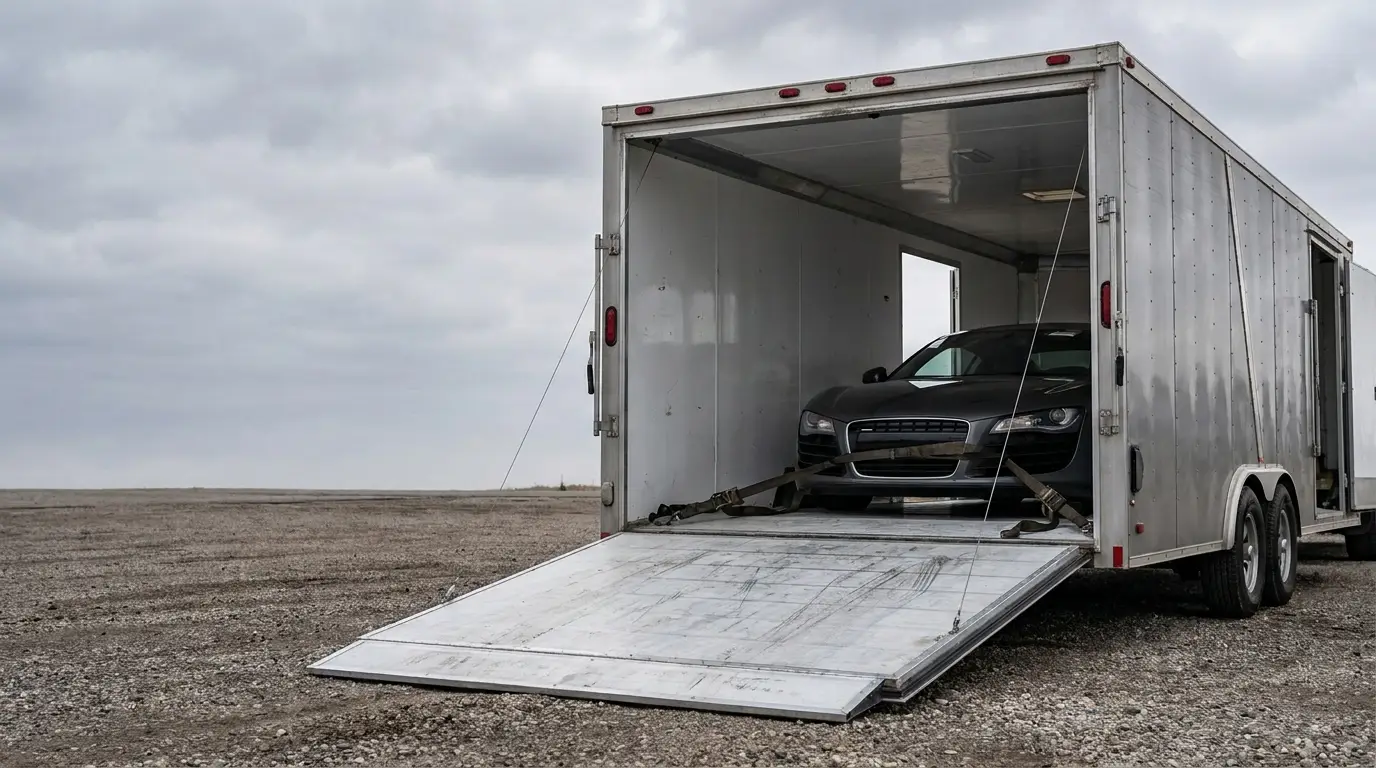
Buying a supercar rarely means picking it up in person. Auctions, out-of-state dealers, and private sales mean the car has to travel, and how it travels matters more than most new owners realize.
Open carriers expose a vehicle to road debris, weather, and the kind of stone chips that can ruin a fresh paint job in a single trip. That’s why specialized exotic car transport services rely almost exclusively on enclosed carriers, soft tie-down straps instead of chains, and photographic inspection before and after transit. Real-time GPS tracking has also become standard for this tier of transport, giving owners visibility into where a six-figure asset is at any point during a cross-country move.
The cost reflects the precaution. Depending on distance, vehicle type, and how urgently the car needs to arrive, enclosed transport for a high-value vehicle can run anywhere from $2,200 to $3,100. Seasonal demand moves that number too. Shipping a car out of a hurricane-prone region in late summer, or into ski country before the first snow, tends to cost more than the same route in a quieter month.
It’s a rounding error against the total cost of ownership, but it’s also the step where an uninsured mistake during a 1,500-mile transit can erase years of careful upkeep in one afternoon. Owners who skip the enclosed option to save a few hundred dollars are gambling with an asset that just cost them six figures. The prep matters too: cleaning the car, removing personal items, securing anything loose, and documenting existing condition with photos before the carrier ever shows up protects against disputes later.
Storage Isn’t Free Either
A car that only sees daylight on weekends still needs somewhere to live the other five days. Climate-controlled storage protects against humidity, temperature swings, and the kind of slow paint and interior damage that happens gradually enough that owners don’t notice until trade-in time. Dedicated facilities in major metro areas charge anywhere from a few hundred to over a thousand dollars a month, depending on whether the space includes monitoring, detailing service, or battery maintenance for a car that sits more than it drives.
Owners who store at home aren’t off the hook either. A garage built for a daily driver isn’t necessarily built for a car this sensitive to humidity and temperature swings, and retrofitting one with proper climate control and a quality lift adds another upfront cost most buyers never factor into the original budget.
There’s also the question of how often the car actually runs. A supercar parked for weeks at a time needs a battery maintainer or it won’t start on the day an owner finally wants to drive it, and fuel left sitting in the tank too long can gum up a system built for high-performance engines, not idle storage. Some owners pay a detailing service to start the car periodically and drive it around the block specifically to avoid that problem, which is its own line item most budgets never account for.
The Real Number
Stack it all together and a mid-range supercar costs its owner somewhere between $25,000 and $80,000 a year just to keep running, before counting whatever the car loses in resale value. Ultra-high-end models from manufacturers like Bugatti or Pagani can clear $150,000 annually on upkeep alone. None of that shows up on the price tag at the dealership.
The owners who come out ahead aren’t the ones who paid the least for the car. They’re the ones who priced in the insurance, the service intervals, the transport, and the depreciation curve before they ever signed the loan paperwork. The car is the cheapest part of the equation. Everything that happens to it after the sale is where the real money goes.