By Ivory James, Health & Wellness Coach, 8+ Years. Reviewed by Maria Jacob, Editor. Last updated October 2026
You’ve probably seen “chicory root fiber” on many protein bar labels, but do you know what it does? It’s a rich source of inulin, a plant fiber that helps support gut health. Inulin has quietly made its way into bars, cereals, yogurts, and drinks.
What drove this abundance? According to the Dietary Guidelines for Americans, more than 90% of women and 97% of men don’t meet the fiber recommendation. That’s almost the entire US population.
Amid the 2026 “fibermaxxing” social trend, people have decided to close the gap, and what better way than adding inulin to every bite of every meal? In this guide, we’ll explain what inulin is, how it supports your gut, which foods have the most of it, and how to start without the bloat.
What Is Inulin?
Inulin is a soluble, plant-based fiber made of chains of fructose sugars called fructans. Your small intestine can’t break it, so it travels intact to your colon, where your gut bacteria ferment it. That’s why inulin is considered a prebiotic fiber.
Prebiotic vs Probiotic
A probiotic is live bacteria, like the cultures in yogurt or a capsule. A prebiotic is the food those bacteria eat. The International Scientific Association for Probiotics and Prebiotics (ISAPP) defines prebiotics as substrates that your gut microbes selectively use to confer a health benefit. Simply put, if probiotics are the plants in your gut garden, prebiotics are the fertilizer.
Soluble Fiber From Chicory Root, Agave, Onions, Garlic, and More
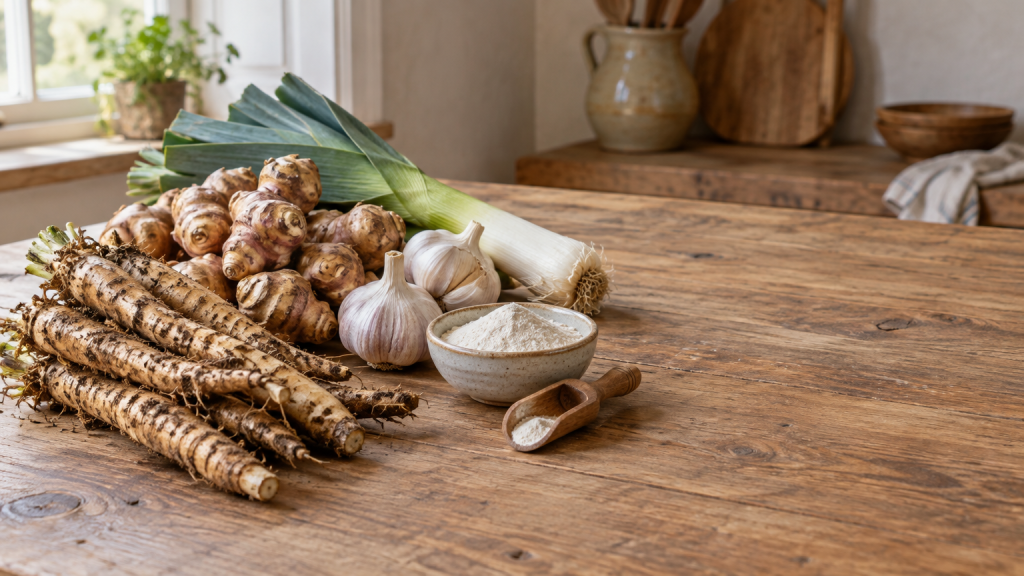
Plants make inulin to store energy, mostly in their roots and bulbs. Chicory root is its richest source. Blue agave and Jerusalem artichoke are other common sources. You can also get smaller amounts from onions, garlic, leeks, asparagus, and bananas.
On ingredient lists, inulin goes by a few names. Look for chicory root fiber, chicory root extract, oligofructose, or FOS (fructooligosaccharides). They’re all part of the same fiber family and count toward your daily fiber intake.
How Inulin Supports Gut Health
Inulin supports gut health by feeding your beneficial bacteria and supporting regular, comfortable digestion. Once it reaches your colon, your gut microbes ferment it into compounds that nourish the cells lining your gut.
Feeds Beneficial Gut Bacteria
Inulin acts like a VIP pass for your “good” bacteria. Bifidobacterium and Lactobacillus are especially good at breaking it down. As they eat it, they produce short-chain fatty acids (SCFAs) like butyrate, acetate, and propionate. Butyrate is the main fuel for the cells lining your colon.
So, essentially, when you feed inulin to your gut bugs, they pay you back with energy for your gut lining.
Supports Regularity and Digestive Function
Inulin draws in water and adds gentle bulk, helping regulate bowel movements. The European Food Safety Authority reviewed six studies with 86 people and found that at least 12 grams a day of native chicory inulin increased stool frequency.
What the Research Says and Where It Is Limited
The research is promising, and it’s still growing. Current inulin trials are small, often involving only a few dozen people, and use different doses/types of inulin. That makes results tricky to compare. People also respond differently.
One person may feel a clear change while another may notice very little. Bigger, longer studies will help sharpen the picture. For now, treat inulin as one helpful part of your overall diet.
Natural Food Sources of Inulin
Chicory root is the richest source of inulin, with roughly 36 to 48 grams of inulin per 100 grams. Jerusalem artichoke and garlic follow behind. Other everyday picks include onions, leeks, asparagus, and bananas.
|
Food (per 100g, about 3.5 oz) |
Approximate inulin |
|
Chicory root |
35.7 to 47.6g |
|
Jerusalem artichoke |
16 to 20g |
|
Garlic |
9 to 16g |
|
Raw onion |
1.1 to 7.5g |
|
Raw asparagus |
2 to 3g |
|
Wheat |
1 to 3.8g |
|
Leeks and bananas |
Smaller amounts that vary by ripeness and variety |
Reality check: Getting 12 grams of inulin (as suggested by the European study above) from food alone would mean eating a lot of garlic or Jerusalem artichokes daily. It’s practically impossible! So, many people pair whole foods with a measured scoop of chicory root inulin for a steady dose.
How Much Inulin Do You Need and How to Start
There’s no official daily target for inulin alone. A practical plan is to start with 2 to 3 grams a day, hold there for a week or two, then slowly work up toward 5 to 10 grams.
Here’s an inulin dose ladder:
- The starter dose (2 to 3g): Let your gut bacteria get used to the new food.
- The everyday range (5 to 10g): Where many people settle in comfortably.
- The research dose (12g): The amount EFSA linked to regularity.
Start Low and Go Slow to Limit Gas and Bloating
Your gut bacteria make gas as they ferment inulin. That’s normal, and a sign the fiber is being used. However, jumping straight to a large dose can cause slight stomach discomfort in some people. Give your gut time to adjust. If things feel puffy, step back down for a few days.
Drink Water and Spread Your Intake Through the Day
Inulin pulls in water to keep every serving moving smoothly. Split your total intake into two or three smaller servings for a gentler digestive approach.
Who May Be Sensitive (IBS, Low-FODMAP Diets)
Inulin is a fructan, and fructans are high-FODMAP. FODMAPs are fermentable carbs that some people with sensitive digestion or IBS find harder to handle. If you follow a low-FODMAP plan, check with your doctor or dietitian before adding inulin to your routine.
People with a ragweed allergy may also want to consult a doctor first, since chicory belongs to the same plant family.
Beyond Fiber: Other Ingredients That Support Digestive Wellness
Fiber is one tool to support digestive wellness. Others include digestive enzymes and botanicals discussed below.
Digestive Enzymes
Digestive enzymes help break food down into smaller pieces your body can absorb. For instance, Protease and papain (from papaya) break down protein, lipase breaks down fats, and cellulase breaks down plant fiber. Your body makes most of its own digestive enzymes, though supplements can help.
Turmeric (Curcumin)
Turmeric is the golden spice behind curry, and curcumin is its best-known polyphenol (a type of plant compound). It’s generally known for supporting gut function and metabolic health.
The perfect gut health supplement doesn’t just include inulin; it pairs it with these helpful enzymes and botanicals. For instance, Natrava BEETS+ Powder lists a full panel of gut-healthy ingredients:
- Digestion Blend, 2,005mg: Inulin from chicory root, plus digestive enzymes (papain, lipase, cellulase, protease)
- Heart Health Blend, 2,700mg: Organic beet root powder and nitrates from beet root
- Immunity Blend, 135mg: Cordyceps, reishi mushroom, and organic turmeric root powder
- Vitamins: C, B6, B12, thiamin and niacin
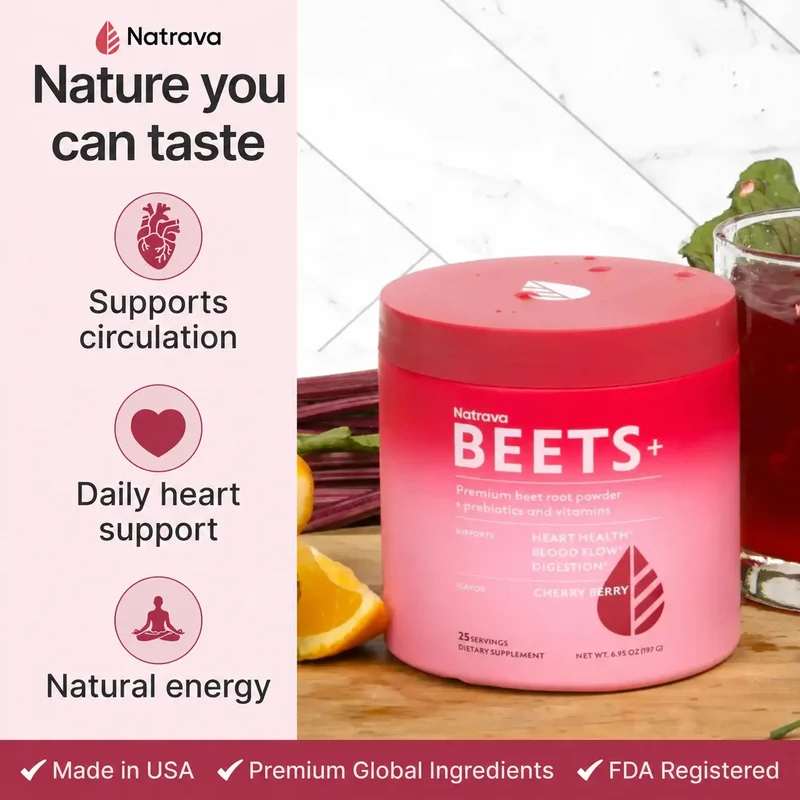
Each scoop has 15 calories, 1.5g total sugars, and no added sugar, in a cherry-berry flavor. On the Dose Ladder, one scoop lands around the starter dose, making it ideal for beginners. You can then add inulin-rich foods to increase your intake. If you’re pregnant, nursing, taking prescription meds, or have a liver condition, it is recommended that you check with your doctor first.
Adding a Prebiotic to Your Routine
The easiest way to add a prebiotic is to make it part of something you already do. Mix a measured powder into a drink, and pair it with fiber-rich meals so your gut gets a steady supply.
Mix Into Water or Smoothies
Inulin powder dissolves easily, and plain inulin is close to tasteless. For BEETS+, Natrava recommends mixing one scoop into 10-12 ounces of water or blending it into your favorite smoothie. Pick one time of day to take it.
Pair With Fiber-Rich Whole Foods
Add roasted garlic to dinner, toss sautéed onions or leeks into eggs, or grab a banana with breakfast. Mixing different fiber sources feeds a wider range of gut bacteria.
Frequently Asked Questions
Is Inulin the Same as a Probiotic?
No. Inulin is a prebiotic, which means it’s food for your gut bacteria. A probiotic is the live bacteria itself, found in foods like yogurt, kefir, and some supplements. The two work well together. Probiotics add helpful microbes, and prebiotics like inulin help feed the beneficial bacteria already living in your gut.
Does Inulin Cause Gas?
It can, especially at first. Your gut bacteria produce gas as they ferment inulin so that a sudden large dose may cause bloating or gas. Start with 2 to 3 grams a day, drink water, and increase slowly over a couple of weeks to help most people adjust comfortably. Mild gas often eases as your gut adjusts.
When Is the Best Time to Take a Prebiotic?
There’s no single best time. Many people take inulin with a meal, since food can make it gentler on the stomach. Consistency matters most, so pick a time you’ll remember, like breakfast or mid-afternoon. If you take a larger amount, split it into two servings throughout the day for more comfort.
Can I Take Inulin Every Day?
Yes, many people take inulin every day as part of their regular fiber intake. The key is to build up slowly, from about 2 to 3 grams to 5 to 10 grams, and drink enough water. If you have IBS, follow a low-FODMAP diet or take medications; check with your healthcare provider before making it a daily habit.
Conclusion
Inulin is a soluble prebiotic fiber from plants like chicory root that feeds your beneficial gut bacteria and supports regular digestion. If you want more fiber in your diet, inulin is an easy way to add some. Start low, drink water, and climb the Dose Ladder at your own pace.
For a starter dose, Natrava BEETS+ Powder packs chicory root inulin and an enzyme blend into one scoop. Talk with your healthcare provider before starting any new supplement if you’re pregnant, nursing, or getting a medical treatment.
Disclaimer: This article is for general information only and isn’t medical advice. Talk to your healthcare provider before starting any new supplement. The statements here have not been evaluated by the Food and Drug Administration, and the product mentioned is not intended to diagnose, treat, cure, or prevent any disease.