You’ve picked a safe tile, moved up a row and earned a higher multiplier. You could collect the money now. But the next row offers more, and you only need one more correct pick to get there.
That’s the decision at the heart of a tower climb casino game. You work your way up a board, choosing one tile at a time. Each successful pick increases the amount you can collect. Pick a losing tile and the round ends, taking your stake and the uncollected return with it. The rules take very little time to learn. What keeps the round interesting is having to decide when you’ve gone far enough.
The format is easiest to understand when you play Dragon Tower, where you work your way up nine rows, picking one tile at a time. There are several difficulty settings, and every successful pick gives you a choice: collect the current payout or try the next row for a higher multiplier. The rules are simple enough to follow from your first round.
Start at the Bottom and Pick One Tile
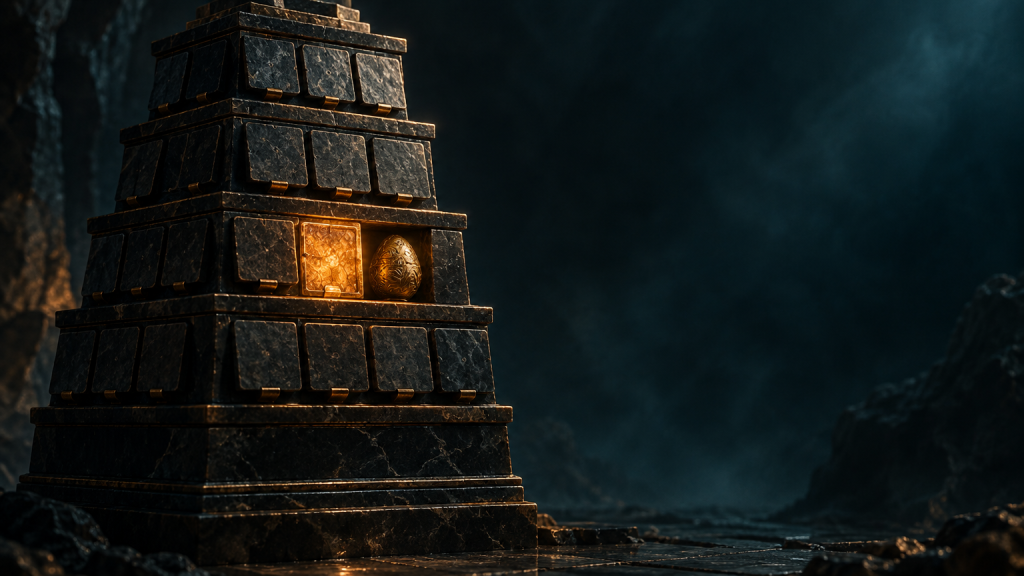
A tower board is divided into rows, with covered tiles on each one. Some tiles let you advance. Others end the round. The difficulty setting determines how many safe choices you have.
You begin on the bottom row and select one tile. If it’s safe, you move up and unlock a multiplier. From there, you can cash out or make another selection on the next row.
Only pick one tile per row. There’s no need to uncover all the safe ones before moving on, and you can’t skip straight to the top. Every higher payout requires another successful selection. In Dragon Tower, finding an egg means you’ve chosen correctly. There are nine rows to clear, so reaching the top takes nine good picks without a mistake.
Stake is placed at the start of the round. You aren’t charged that stake again every time you move up. Instead, continuing means risking the return you could already collect.
You Don’t Have to Reach the Top
The cash out button is what makes a risk ladder game work. After any successful row, you can stop and take the profit. Reaching the top is an option, and so is leaving the game at any moment.
Say you bet $10 and reach a multiplier of 2x. Cashing out returns $20 altogether: your $10 stake and $10 profit. If you continue, you’re risking that available $20 for a chance at more. A wrong pick on the next row loses the round. You don’t keep the $10 profit from the previous row, and your original stake doesn’t come back either.
It’s easy to think of the extra money as something you can afford to lose because you haven’t collected it yet. But the cash out button gives you a choice to keep it. Once you decide to continue, that’s the amount you’re putting back at risk.
A casino game you can cash out early gives you more say over when a successful round ends. You can take a smaller payout after one row or try to build a larger one over several rows.
The Chance of Advancing Is Clear
One reason tower games are easy to play is that you can understand the odds by looking at the tiles.
If a row has four tiles and three are safe, you have a 75% chance of advancing. If the row has four tiles but only one is safe, your chance drops to 25%. Those are the chances per row on Dragon Tower’s easiest and hardest settings. Other settings fall between them, using different combinations.
The chance stays the same on every row within that difficulty setting. On the easiest setting, the ninth row still gives you a 75% chance of picking safely, just like the first. That doesn’t mean reaching row nine is easy. You have to survive all the earlier rows to get there.
It also doesn’t mean one tile is a better choice than another. If the covered tiles give you no information about what’s underneath, choosing the middle instead of the left doesn’t improve your odds.
Why Reaching the Top Is Harder Than It Looks
A 75% chance of success can sound reassuring. For one selection, the odds are in favor of finding a safe tile. But a full tower asks you to make that successful selection nine times in a row.
On Dragon Tower’s easiest setting, the chance of completing all nine rows is about 7.5%. Put another way, roughly one in thirteen full tower attempts would succeed on average over a very large number of rounds. That doesn’t mean a win arrives every thirteen attempts. You could complete two towers close together or go much longer without completing one.
At the hardest setting, the chance of advancing is 25% on each row. Clearing all nine has a probability of about 0.00038%, or one in 262,144 attempts, since every extra row gives the round another chance to end. To reach the top, you need to avoid every one of those losing outcomes.
That’s why long climbs are rare. A full tower is a much bigger request than one safe pick. Getting close doesn’t change the next attempt, either. Losing near the top can be frustrating, but it’s not a rare occurrence.Remember to gamble responsibly, set limits before you play, and stay aware that gambling involves risk and there is no guaranteed way to win.
Bigger Multipliers Come With Longer Odds

The multiplier ladder is the chance to reach each stage. As a target becomes less likely, the payout gets larger.
Think of a bet that wins half the time. Before allowing for a house edge, a payout of 2x the stake would balance the winning and losing results over time. Half would return twice the stake, and half would return nothing.
With a 2% house edge, that payout becomes 1.96x. The small difference between 2x and 1.96x is where the casino’s advantage comes in.
Dragon Tower has an RTP of 98%, which corresponds to a 2% house edge. Its payouts follow the chance of reaching each row, with that house edge included. The same principle applies further up. Reaching several rows is less likely than clearing the first, so it carries a higher multiplier.
On harder settings, the jumps are larger because each successful pick is less likely. It’s large because so few will reach it.
What a Multiplier Actually Pays
The multiplier usually describes your total return, including your original stake. With a $5 bet, cashing out at 3x returns $15. Of that, $5 is your stake coming back and $10 is profit. It doesn’t mean $15 profit on top of the original bet. Moving from 2x to 3x on a $5 stake means increasing the available return from $10 to $15. You’re risking the $10 you could collect for the chance to receive $5 more.
You don’t need to calculate every decision while playing. But understanding what the displayed amount includes makes the choice easier to understand. The next multiplier tells you what you could receive if the pick succeeds, while the current return tells you what you could take now.
“Easy” Doesn’t Mean Every Target Is Easy
Difficulty changes the chance of surviving each row. Your stopping point determines how many rows you need to survive. Those two choices can produce very different results.
On Dragon Tower’s easiest setting, trying to clear all nine rows succeeds about 7.5% of the time. In the hardest setting, collecting after just one successful row succeeds 25% of the time.
So the harder setting can produce more frequent payouts if you stop much earlier. That doesn’t make it more generous. It means you’re comparing one successful pick with a run of nine.
An easier setting generally gives you more successful selections and smaller increases in the payout. A harder one produces more immediate losses, with bigger returns when a pick goes your way.
Earlier cash outs tend to produce smaller, more frequent payouts. Higher targets tend to produce fewer payouts, with larger returns when you reach them. However, neither removes the house edge. Changing your target changes how often you collect and how much you receive. It doesn’t turn the next tile into a better bet.
Why the Format Caught On
A tower gives you something to do after placing the bet. You aren’t simply watching an animation finish. Each successful pick hands the decision back to you. There’s money available to collect, a higher payout above it and a clear choice between the two. You can play the game without knowing much about it.
That’s mostly why these types of games attract players. The rules are short, the progress is visible and the stopping point is completely up to you.
A pick a tile casino game also works well on a small screen. The board, multiplier and cash out button do most of the work. There’s little to learn before you can follow a round. The same goes for anyone watching. When someone pauses halfway up a tower, you know what they’re thinking. Do they take the return or try another row?
Part of the appeal is also players choosing whether to continue and which tile to reveal.
How It Differs From Slots
In a standard slot game, you place a bet, start a spin and receive the result. You can’t stop halfway through a winning combination and collect a smaller payout. The spin settles as one completed outcome.
A tower breaks the round into stages. After each successful stage, you can take the return rather than continue. That stopping choice is the main difference.
Some slots have gamble features or bonus rounds with similar features, but a tower builds its main game around them.
There’s also less to keep track of. A slot might have paylines, wilds, scatters, free spins and several ways to trigger a feature. A tower usually gives you one route upwards and one multiplier.
Crash Puts You Against the Clock
Crash games share the idea of collecting a multiplier before the round goes wrong. The difference is in the risk.
In a typical crash game, the multiplier rises automatically. You need to cash out before it crashes. Wait too long and you lose a bet.
A tower moves when you make another selection. After a successful row, you can usually pause and consider the next step without a multiplier racing upwards. The pressure comes from deciding whether to risk another pick, rather than deciding how long to wait.
Limbo, for example, is a bit different. You normally choose a target multiplier before the result is generated. If the result reaches the target under the game’s rules, the wager wins. There isn’t usually a series of smaller payouts you can choose to collect along the way.
A tower is a cash out multiplier game decided by single decisions. Crash uses a moving multiplier, while Limbo asks you to commit to a target beforehand. They can look similar in a casino menu, but the decisions during a round are quite different.
Mines Uses One Shared Grid
This Original is probably the closest relative to a tower game. Grid reveal games such as Mines share the cash out anytime logic but scatter the risk across a board rather than stacking it in rows.
The board works differently, though. In a conventional Mines game, your selections come from one shared grid. Each safe reveal removes a safe tile from the remaining choices. The mines are still hidden, so the number of losing tiles increases.
A tower sends you to a separate row after each success. Clearing the row below doesn’t remove a safe tile from the row above. On a fixed difficulty, that leaves the chance of surviving each tower row unchanged. The challenge comes from repeating the successful pick enough times to reach your target.
Mines lets you choose positions across the remaining grid. A tower gives you a set order from bottom to top.
Where Towers Fit Among Casino Originals
Tower games often sit beside Mines, crash and Limbo in sections for in-house originals. These are usually simple titles built for an operator’s own offering.
They tend to focus on a small number of controls and one main mechanic. You pick a tile, choose a target or decide when to collect. That makes them quick to learn.
Similar looking tower games can still differ. One may have more rows, another may use different tile counts, and the payouts or house edge can vary. The board gives you the basic idea, while the rules tell you the actual chances.