

Couples are still exchanging vows, but a growing number are exchanging watches instead of, or alongside, rings. Not because the ring lost its meaning, but because a watch says something a band can’t: “time, from here on, is ours.”
If you have noticed more grooms flashing a steel bracelet than a gold band in wedding photos lately, you are not imagining it. Here is what’s actually influencing the wedding watch trend, what couples are buying at every budget, and how to choose a timepiece that still feels right in 20 years.
Why Couples Are Choosing Watches Over Wedding Rings
A recent U.S-based survey of 1,000 people found that 82% of brides and grooms now consider a groom’s gift a wedding staple. About 73% of men said they would rather receive a wedding watch than a wedding ring. 31% people prefer Rolex, 17% said their favorite watch is Omega, and 12% declared Cartier in their brand wish list.
Search interest for groom gifts has climbed in recent years. Mainstream wedding media now reports couples opting for matching watches in exchange for wedding bands. Moreover, according to Kevin Ghassemi, who loves luxury watches and cars, and who is the operations manager at a Dubai-based WatchMaestro showroom, three practical reasons keep coming from couples themselves when they shop for watches at our showroom in Dubai.
- Wearability: Plenty of people dislike jewelry, or work with their hands, or can’t wear a metal band safely at work. A watch solves the “I don’t wear rings” problem without giving up a symbol.
- Utility with Meaning: A ring is purely symbolic. A watch is symbolic and used every day, which is a strong appeal for couples who resist single-purpose purchases.
- Heirloom Logic: Watches are traditionally passed down, and many couples frame the purchase as buying the first object their children will inherit.
What Couples Are Actually Buying By Budget
The trend is far broader than grail-level luxury.
Under $500: The Sentimental Sweet Spot
This is where most first-time watch buyers land, and where free engraving is standard. Seiko’s dressier automatics, Timex reissues (which markets directly to wedding parties with free engravings), Bulova’s classic Sutton and Super Seville lines, and Casio’s understated gold dress models all live here. Personalization, a date, coordinates, a line from the vows on the caseback, does more emotional work than the price tag.
$500 to $2,500: The Real Watch Tier
This is the most common wedding-watch bracket – says Kevin. Tissot’s PRX, Hamilton’s Khaki Field and Intra-Matic, Longines’ Master and Heritage lines, Oris, and Certina dominate this tier. These are mechanical watches with sapphire crystals and decades of service life. So, this is the point at which a gift stops being an accessory and becomes a piece of kit that gets services, not replaced.
$2,500 to $10,000: The Milestone Watch
Omega Seamaster and Aqua Terra, Cartier Tank and Santos, Grand Seiko, Tudor Black Bay, and Rolex Oyster Perpetual or Datejust at the top end. Couples in this tier often reallocate budget deliberately, and they trim florals, flavors or live bands to fund one object that outlasts the day.
Above $10,000: The Outlier That Shapes the Trend
High-profile weddings pushed this trend into the mainstream all over the world, including Dubai. Local Emiratis buy Richard Mille, Rolex, AP, Patek Philippe, Cartier, and models from other brands from our showroom in Dubai, says Kevin, and celebrate their big day in style.
Everyone knows Justin Bieber. But fewer people know that he got a rare Audemars Piguet Royal Oak at the Ambani wedding in India. The groom’s party reportedly received rose gold Royal Oak Perpetual Calendars.
The Matching Watch Exchange
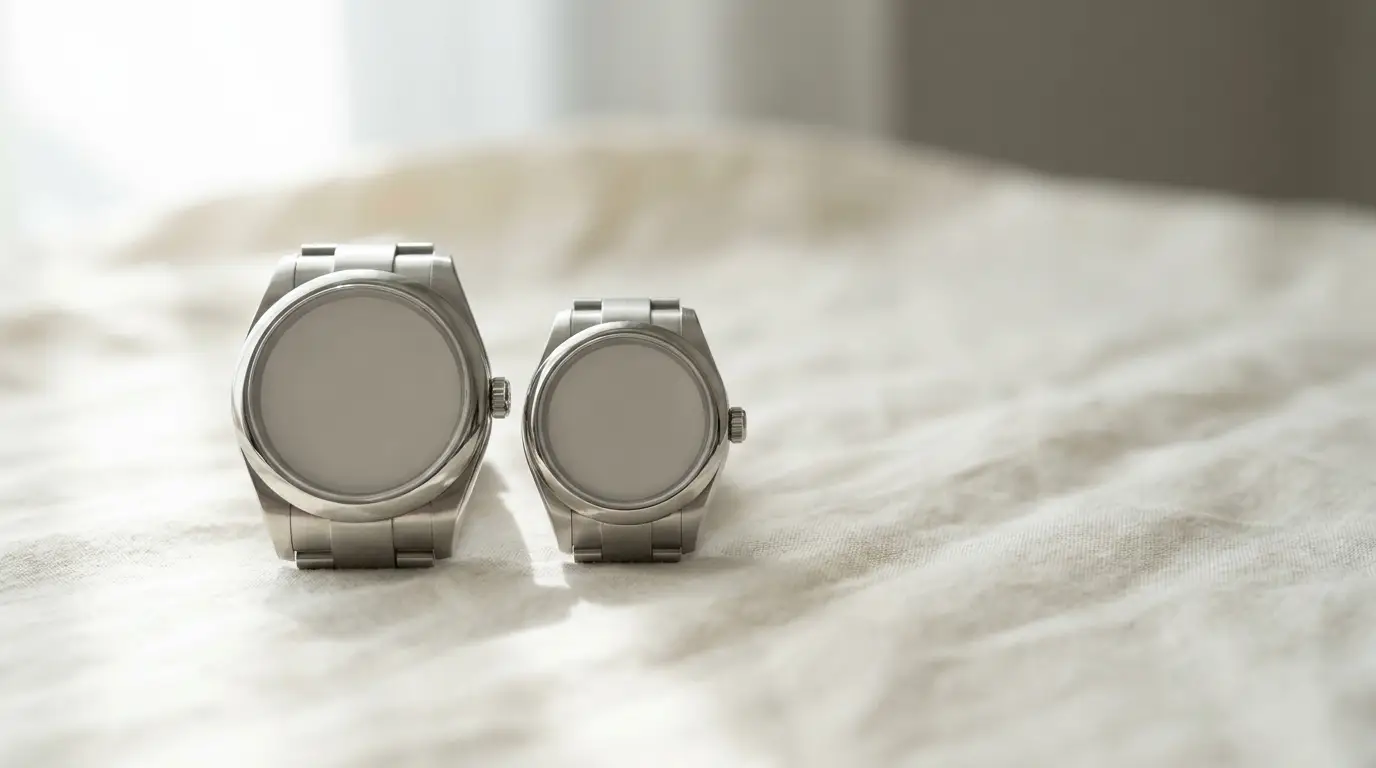
The most interesting version of the trend is not one watch. It’s two. Couples are buying his-and-hers pairs, sometimes the same reference in different case sizes, sometimes two very different watches sharing engravings. According to Kevin, common approaches are:
- Same Model, Different Sizes: A 36mm and 40mm versions of one reference, for visual symmetry.
- Matched Engravings, Mismatched Watches: Each partner gets something suited to their own taste, unified by identical caseback text.
- Matched Movements or Dial Color: A subtler link that only the two of you notice.
Also Read: Fashion Trends and Advice
Pre-Owned and Vintage: The Value Play
Pre-owned buying has become central to the trend and for good reason – says Kevin. Three quarters of brides-to-be say they would consider a pre-owned luxury watch for their partner. This commonly happens at WatchMaestro, a luxury showroom/boutique that deals and trades pre-owned luxury watches.
The logic is simple: the secondary market gets you a discontinued reference, a period-correct piece from the year you met, or simply more watch for the money. If you go this route, buy from a dealer offering authentication and a warranty, not a marketplace listing with 3 blurry photos. At WatchMaestro Dubai, we provide the buyer with a full set, including the original box and warranty papers + an additional 1-year limited warranty for buyer’s peace of mind.
Kevin advises couples to ask for service history and confirm the movement, dial and hands are original. Budget for a service, between $400 and $900 for a mechanical luxury watch, if the last one was more than 5 years ago. Confirm engraving is possible, some casebacks, especially display casebacks, can’t be engraved.
Moreover, measure your partner’s wrist. A 42mm case on a 6.25-inch wrist ruins an otherwise perfect gift. Check the caseback before you commit if engraving matters to you. Remember, the wedding is already expensive, so a watch bought under budget stress rarely feels good later. So, keep that in mind. Finally, keep the paperwork: box, papers, and receipt protect resale value and simplify future servicing.
The Bottom Line
A ring marks a promise, but a watch marks the promise and every ordinary morning that follows it. That’s the appeal, and it explains why wedding watch gifts have moved from niche to normal: not as a rejection of tradition, but as a version of it that gets worn.