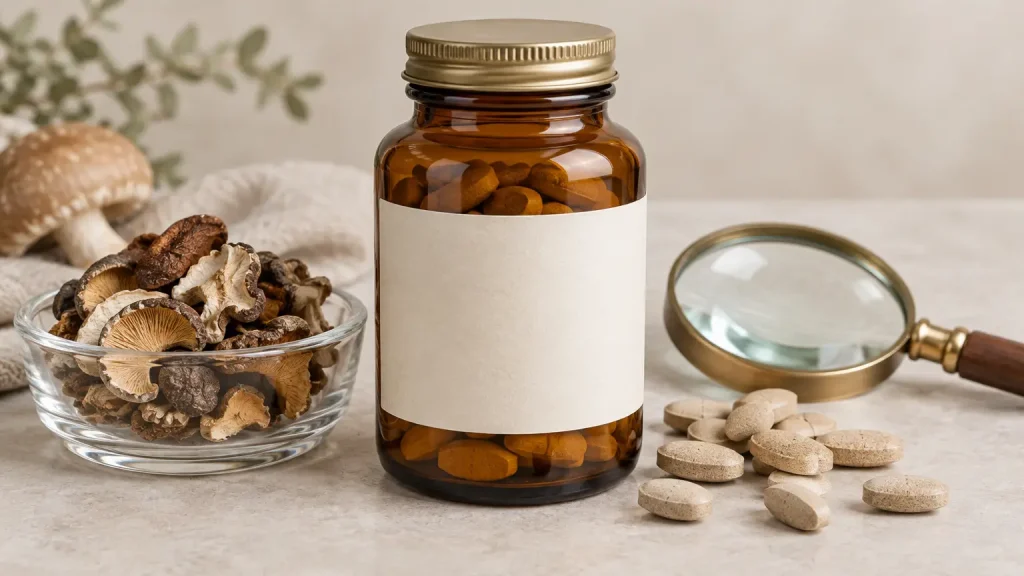
Mushroom tablets look simple on the shelf, yet two bottles with nearly identical labels can hold very different products. One might contain a concentrated, lab-verified extract. The other might be mostly ground grain with a little mushroom mixed in. Telling them apart takes about five minutes, and this guide covers exactly what to check.
Why Mushroom Tablets Vary So Much in Quality
Two bottles of mushroom tablets can sit side by side at very different prices. A lower-priced option may highlight a large milligram number on the front while leaving out the extract type, batch number, and lab report. A higher-priced option may list “fruiting body extract, standardized for beta-glucans” and offer a current lab report. On the surface, the cheaper bottle looks like the better value. In practice, it gives buyers far less information to judge it by.
That gap is common. The mushroom market has grown fast, and labeling leaves plenty of room for vague wording. Price tells shoppers very little. The label and the lab report tell them almost everything.
What Are Mushroom Tablets?
Mushroom tablets are pressed tablets made from dried mushroom powder or concentrated mushroom extract, usually combined with a small amount of binder. Compared with loose powders or brewed teas, they offer a consistent amount per tablet, no earthy taste, and easy portability. They also tend to stay shelf-stable longer than gummies or liquids.
The format is only as good as what goes into it, though. That is where extracts come in.
How to Read the Extract Label on Mushroom Tablets
Fruiting Body vs. Mycelium
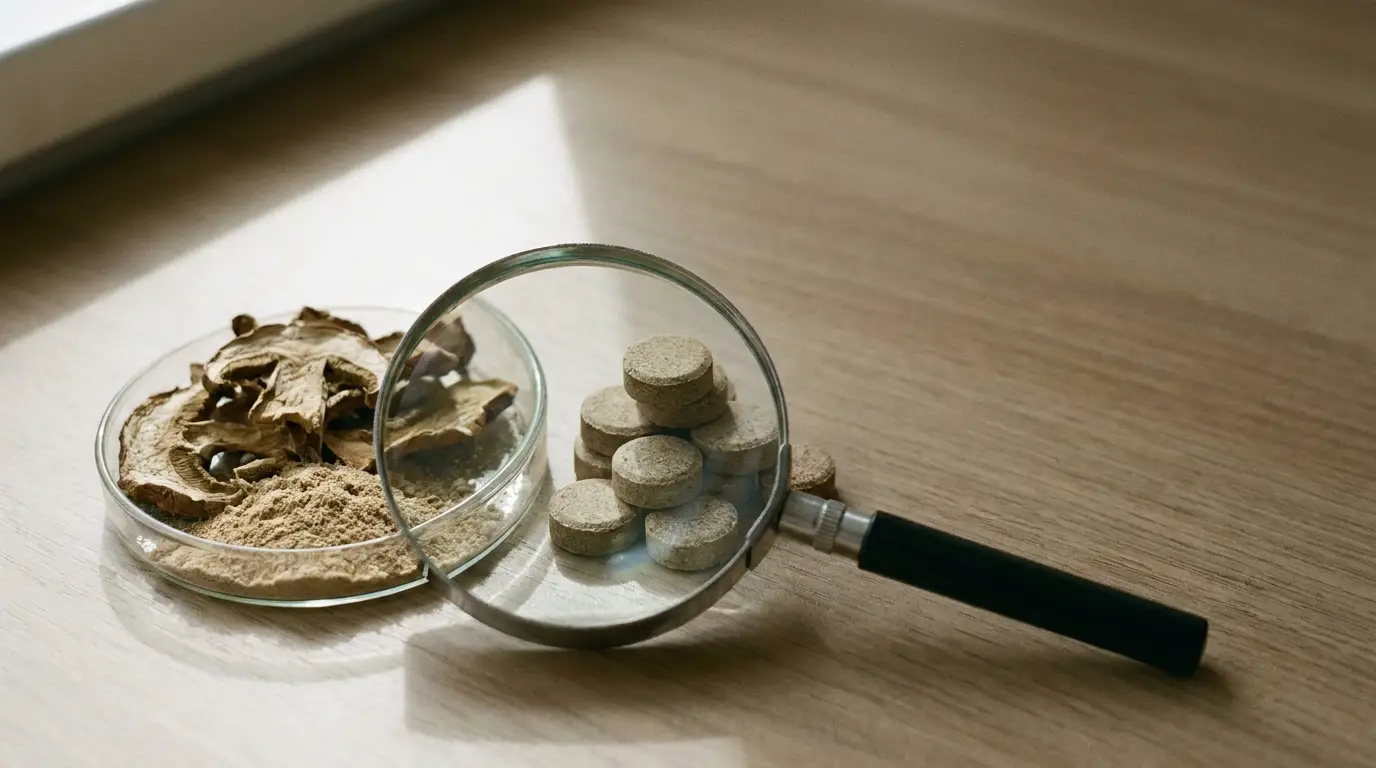
The fruiting body is the part of the mushroom that grows above ground. Mycelium is the root-like network beneath it. Many budget products use mycelium grown on rice or oats, so the finished powder can carry a lot of leftover grain. Quality mushroom tablets state clearly which part they use.
Extraction Method and Ratio
Look for terms like “hot water extract” or “dual extract” (hot water plus alcohol). A ratio such as 10:1 means roughly ten pounds of dried mushroom went into one pound of extract. A ratio sounds impressive, but on its own it proves nothing. Testing has to back it up.
Measured Compounds
Strong labels list a measured percentage of beta-glucans, a natural compound found in mushrooms. Some brands also list starch content. High starch paired with low beta-glucans often points to grain filler.
Third-Party Testing: The Proof Behind Mushroom Tablets
A Certificate of Analysis (COA) from an independent lab is the single best quality signal. Mushrooms absorb what is in their growing environment, so a solid COA for mushroom tablets should cover:
- Heavy metals such as lead, arsenic, cadmium, and mercury
- Pesticide residue
- Microbial contaminants like mold, yeast, and bacteria
- Identity testing that confirms the listed ingredients and compounds
Three quick checks make a COA meaningful. The batch number should match the bottle. The lab should be independent. The test date should be recent.
Why The Calm Leaf Stands Out for Mushroom Tablets
For shoppers who want this level of transparency without vetting every brand on their own, The Calm Leaf is a strong place to start. The online retailer curates mushroom tablets from established, reputable brands rather than stocking whatever is cheapest. Its products come with lab-test reports, so buyers can confirm contents and purity before they order.
The Calm Leaf also carries a wide range of brands and formats, which makes side-by-side comparison easy. For buyers, that means less guesswork and more confidence that each bottle matches its label.
A Quick Checklist Before Buying Mushroom Tablets
- Is the mushroom part (fruiting body or mycelium) listed?
- Does the label name the extraction method?
- Are beta-glucans measured, not just mentioned?
- Is a recent, batch-matched COA available?
- Is the seller known for carrying vetted brands?
The Bottom Line
The best mushroom tablets are not always the cheapest or the loudest on the label. They are the ones that show their work through clear extract details and independent testing. Shoppers who check those boxes and buy from a transparent retailer like The Calm Leaf set themselves up for a far better experience.