You landed on this article while searching for something else, with six tabs open, a phone within reach, and a song struck in your head that you can’t even remember hearing!
Then comes a pop-up notification, and you’ve forgotten what you were doing in the first place.
So, why am I giving you this reality check?
Simple! A geological age has passed. It’s been eleven minutes, and you’re still scrolling, overstimulated by screen time and a little too far removed from the discipline you once had.
And right here, the relevance of silent meditation enters the chat.
A day without notifications popping up, constant chats, and the urge to check who has replied and what not feels like a stone age scenario. But this can give you quite a lot of time with the one person you can never escape. Yourself.
Before you book a retreat and pack your comfiest clothes, let’s talk about what actually happens, who might benefit from the experience, and whether sitting quietly for hours is your idea of peace or a very elaborate form of torture.
What Is a Silent Meditation Retreat?
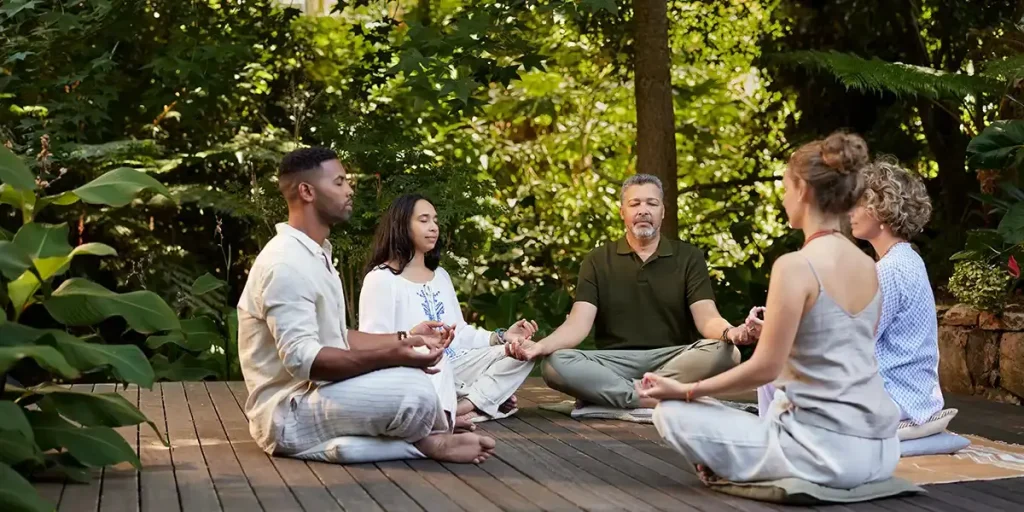
A silent meditation retreat is just what it sounds like. You spend a few days meditating, talking less, and stepping away from everyday distractions. Depending on the retreat, you might put away your phone, skip small talk, and sometimes even avoid reading or writing.
The goal is to give your mind some space to relax. But silence doesn’t mean you’re completely alone. Teachers are there to help, and you can reach out if you need support. Retreats can last a weekend or up to ten days, like the traditional Vipassana course, which is more structured.
If you’re new to meditation, try a shorter retreat first. You don’t need to dive in all at once. Taking it slow can really help.
What Does a Day Look Like in There?
A silent retreat is more than just a holiday or a break from your schedule. Some retreats follow a strict schedule, while others have a more free-spirited approach, allowing you to find your own pace around meals and meditation sessions. Here’s what you can expect from a traditional retreat.

- Early morning: Wake up, freshen up, and get ready for your first meditation session. Yes, some retreats really do start at 4 a.m. So, you might want to get used to early mornings beforehand.
- Morning to afternoon: Spend time meditating, follow guided sessions, and take breaks for meals. With no meetings to attend or emails to answer, your mind might just find something else to keep you busy.
- Evening: It’s a chance to reflect on the day without rushing off to the next thing.
- Night: Wind down and get some rest. Without scrolling through your phone or promising yourself “just five more minutes,” you might find bedtime comes a little easier.
So, pick a retreat you can realistically manage. You aren’t there to prove a point to your alarm clock.
What Happens When There’s Nothing to Distract You?
Now, before you blame yourself for having the attention span of a goldfish, consider this. Sitting quietly doesn’t necessarily mean your mind will become quiet.
You might start thinking about work, replaying an old conversation, or planning what you’ll eat when the session ends. And just when you think you’ve settled down, another thought comes along. That’s perfectly normal.
This practice is beautifully simple. Each time your mind drifts, notice and softly guide your focus back to your breath. You may repeat this often. That isn’t a mistake; it’s the heart of the practice.
What If Silence Brings Up More Than You Expected?
Retreats do not always bring peace. The silence and void may bring up unexpected worries or restlessness you’ve been hiding behind your busy schedule.
So, should you push through?
That’s for you to decide. Meditation may not be the answer for you. Or maybe it’s the change you dread but one that helps you heal something you never thought you could.
If sitting in silence feels strange, maybe your kind of peace is something else. Maybe it’s a walk in the woods, a night out with friends, or arts and crafts.
But if you’re looking to feel better and explore what works for you, you could try Reiki healing, sound healing, mindfulness sessions, breathwork, and other practices offered at wellness retreats in Costa Rica. Sometimes, it takes a little exploring to find what feels right for you.
Choose Your Stay, Your Way
Your retreat should fit your needs, not the other way around. Before choosing the traditional route, consider what kind of quiet you’re actually looking for.
Group Vipassana
Vipassana retreats usually follow fixed schedules and strict silence. They may suit you if you’re looking for a traditional meditation experience and feel comfortable sitting through longer sessions.
A Private Retreat
A private retreat offers a little more room to find your own rhythm. Depending on the program, you may have individual guidance, shorter meditation sessions, quiet walks, and more time to reflect without rushing.
A Nature-Led Wellness Escape
Maybe peace, for you, looks a little different. It could mean a tropical forest, a nearby beach, a pool to unwind beside, and fewer people or plans to worry about. A slower day in nature gives your mind the breathing room a fixed schedule cannot. Villa Firenze in Costa Rica can be your calling.
Before booking, check what the retreat includes and how much flexibility you have. A beautiful setting is a bonus, and good meals certainly help. After all, finding your inner peace is lovely, but doing it on an empty stomach is asking a little too much.
A Little Quiet Can Go a Long Way
Try fifteen minutes of silence a day before you book a ten-day retreat. If your mind survives without Wi-Fi, explore a retreat that suits you.
The tabs will still be there. Probably multiplying.
Happy peace-hopping!