Two diamonds can weigh exactly the same and differ in price by thousands of dollars. Nothing about that is obvious from across a counter, which is why GIA-certified diamond jewelry has become the baseline for buyers who want to know precisely what they are paying for.
The gap comes down to four qualities the diamond trade calls the four Cs: cut, color, clarity, and carat. Each one moves the price, and each one is easy to understand once it is explained in plain terms.
Reading a grading report yourself is the difference between buying with confidence and trusting a sales pitch. A good family-owned San Francisco jeweler will hand you the report, set two stones side by side, and let the diamonds make their own case. This guide gives you the vocabulary to follow along.
Cut: The C That Makes a Diamond Sparkle
Cut is not the shape of the diamond. It describes how well the stone’s facets are proportioned and polished, and it is the single biggest reason one diamond looks alive while another looks flat.
A skilled cut returns light back through the top of the stone as brightness, fire, and flashes called scintillation. Cut too shallow or too deep and that light leaks out the bottom. If you have to compromise on any C to protect your budget, never compromise here.
Color: How Much Is Enough

Diamond color is graded on a scale from D, which is completely colorless, down to Z, which shows a light yellow tint. The less color a stone holds, the rarer it usually is.
| Grade range | What it looks like | Best for |
|---|---|---|
| D to F | Colorless | White metals, purists |
| G to J | Near-colorless | The value sweet spot |
| K to M | Faint warmth | Yellow gold settings |
Most buyers cannot tell D from G once a stone is set, especially in warmer light. A near-colorless grade often gives the best balance of beauty and price.
Clarity: What the Grades Actually Mean
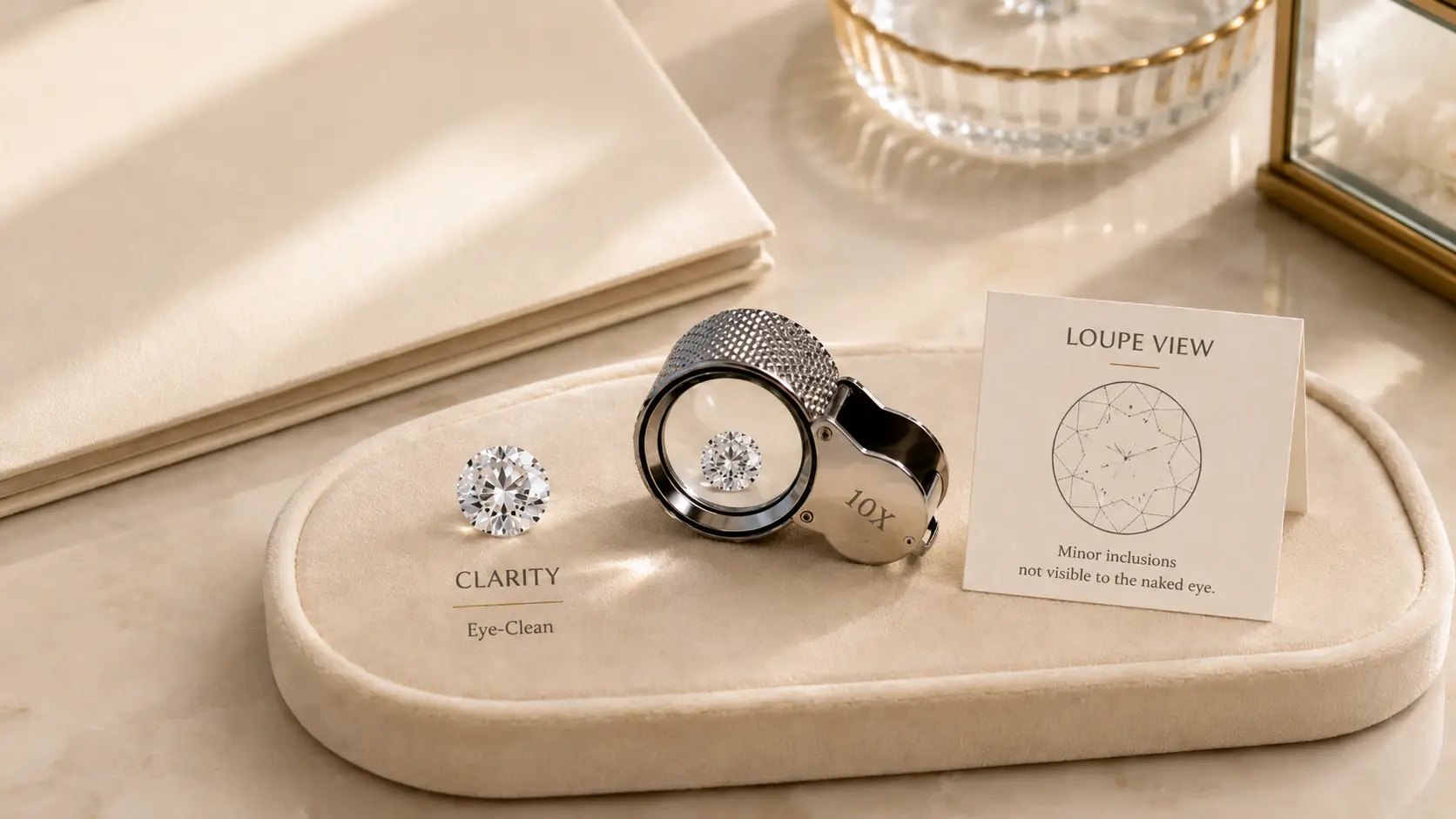
Clarity measures the tiny internal marks (inclusions) and surface marks (blemishes) almost every natural diamond carries. The grading scale runs from flawless to included.
| Grade | Meaning |
|---|---|
| FL / IF | Flawless or internally flawless |
| VVS1 / VVS2 | Very, very slightly included |
| VS1 / VS2 | Very slightly included |
| SI1 / SI2 | Slightly included |
| I1 to I3 | Inclusions visible to the eye |
The phrase to remember is “eye-clean,” meaning no inclusions are visible without magnification. An eye-clean VS or SI stone can look identical to a flawless one at a fraction of the cost.
Carat: Weight Is Not the Same as Size
Carat is a unit of weight, not size. Two stones of equal carat weight can look different across the top depending on how they are cut, so a well-cut stone can appear larger than its weight suggests.
Prices also jump at round numbers like 1.00 and 2.00 carats. Choosing a stone just under a milestone, such as 0.90 instead of 1.00, can save a noticeable amount with no visible difference.
How the Four Cs Work Together
You rarely buy the best of all four. The skill is balancing them in the right priority:
- Protect cut first, because it drives sparkle.
- Choose an eye-clean clarity grade rather than paying for flawless.
- Settle on a near-colorless grade that suits your metal.
- Spend whatever remains on carat weight.
That order delivers the most beautiful stone for almost any budget.
Why GIA Certification Matters
A GIA report is an independent grading of a diamond by the laboratory that created the four Cs system. Because the lab has no stake in the sale, the grades are objective.
Certification matters for three practical reasons: you can compare stones on equal terms, the diamond is far easier to insure, and it holds value better when you resell or upgrade. Always ask to see the report for the specific stone, not a generic sample.
Natural or Treated: Ask the Question
Some diamonds are treated to improve color or clarity, and some sellers offer lab-grown stones alongside natural ones. None of that is wrong, but it changes value, and reputable sellers disclose it without being pushed.
Ask two direct questions: Is this diamond natural or lab-grown? And has it been treated in any way? Clear answers, backed by the grading report, tell you who you are dealing with.
Once you can read a report, the mystery falls away, and a knowledgeable jeweler such as Edward’s Jewelry & Imports in San Francisco can walk you through real certified stones until the choice feels obvious.