


Introduction:
Refrigerators rarely quit without warning. Unusual sounds, temperature shifts, and frost in the wrong places are signals worth acting on.
Some fixes are simple enough to handle yourself. Others, like compressor faults, refrigerant leaks, or electrical failures, require a certified technician.
Bay Area people rely on our repair service for accurate diagnosis and lasting fixes before minor issues escalate into costly replacements.
Why Recognizing Refrigerator Problems Early Matters?
Catching refrigerator trouble early isn’t just smart it’s cost-effective. Minor issues escalate fast. A small coolant leak silently destroys the compressor if left unattended.
Every delayed repair carries a hidden price tag. Food safety and household budgets take the biggest hit.
- Unaddressed faults turn minor repairs into major replacements.
- Spoiled groceries mean repeated, unnecessary shopping runs.
- A struggling fridge draws excess power, quietly inflating monthly bills.
- Regular maintenance preserves factory efficiency and prevents premature breakdowns.
Timely attention keeps appliances running longer and performing efficiently.
Signs Your Fridge is Nearly Broken

Your fridge gives clear signals before it fully breaks down. Catching these signs early can save you from costly repairs or a full replacement.
1. The Fridge Isn’t Cooling Properly
Check the thermostat setting first it may have shifted accidentally. If temperatures stay warm despite correct settings, the compressor or coolant system needs professional attention.
Vegetables wilting overnight and dairy souring ahead of expiry dates confirm something deeper is wrong.
2. Unusual Noises Coming From the Unit
Loud buzzing, clicking, or rattling points to failing components. A grinding noise suggests worn fan blades. Repeated clicking means the compressor is struggling to start. These noises don’t resolve on their own.
3. Excessive Ice Buildup
Ice forming around vents signals a defrost system failure. Blocked airflow forces the unit to work harder than it was designed to.
Left unaddressed, ice buildup permanently damages evaporator coils, turning a simple repair into a costly replacement.
4. Water Pooling Inside or Around the Fridge
Water collecting inside or beneath indicates a clogged defrost drain or a damaged gasket.
Moisture damages flooring, promotes mold, and accelerates internal wear. Recurring puddles after drain cleaning indicate a deeper mechanical fault.
5. The Motor Runs Constantly
A non-stop motor signals it’s struggling to maintain set temperatures. Dirty condenser coils or a failing thermostat are common causes.
Continuous operation shortens compressor life and noticeably strains your monthly electricity bill.
6. The Door Seal Feels Loose or Worn
Gaps or cracks in the gasket let warm air enter constantly. Test it by sliding a sheet of paper between the door and frame. Little resistance means replacement is needed immediately.
7. The Freezer Isn’t Freezing
Soft ice cream or partially frozen meat signals a failing evaporator fan or refrigerant issue. Fluctuating freezer temperatures create dangerous conditions for bacterial growth, making this a food safety concern that needs prompt attention.
8. Strange Odors
Persistent smells after thorough cleaning point to mold in hidden drain pans or a failing compressor.
A faint chemical odor specifically suggests a refrigerant issue that requires immediate inspection by a certified technician.
9. The Fridge is Over 10–15 Years Old and Acting Up
Multiple simultaneous symptoms in an aging unit signal the end of its reliable lifespan. Repair costs stack up fast. A certified technician helps determine whether targeted repair or full replacement makes better financial sense.
Warning Signs that Require Immediate Professional Attention
Some refrigerator problems can’t wait; these warning signs demand an immediate call to a professional technician for a quick refrigerator repair.
| Warning Sign | What it Means |
|---|---|
| Burning smell from the unit | Electrical component overheating inside |
| Circuit breaker tripping repeatedly | Fridge drawing dangerously high voltage |
| Compressor making loud banging sounds | Internal mechanical failure in progress |
| Refrigerant hissing near cooling lines | Active leak requiring EPA-certified handling |
| The control panel is completely unresponsive | Main board or wiring failure detected |
| Fridge sparking near the power outlet | Immediate fire and electrocution hazard |
| The freezer and fridge are both failing together | Full cooling system collapse underway |
Common Refrigerator Problems and Its Possible Causes
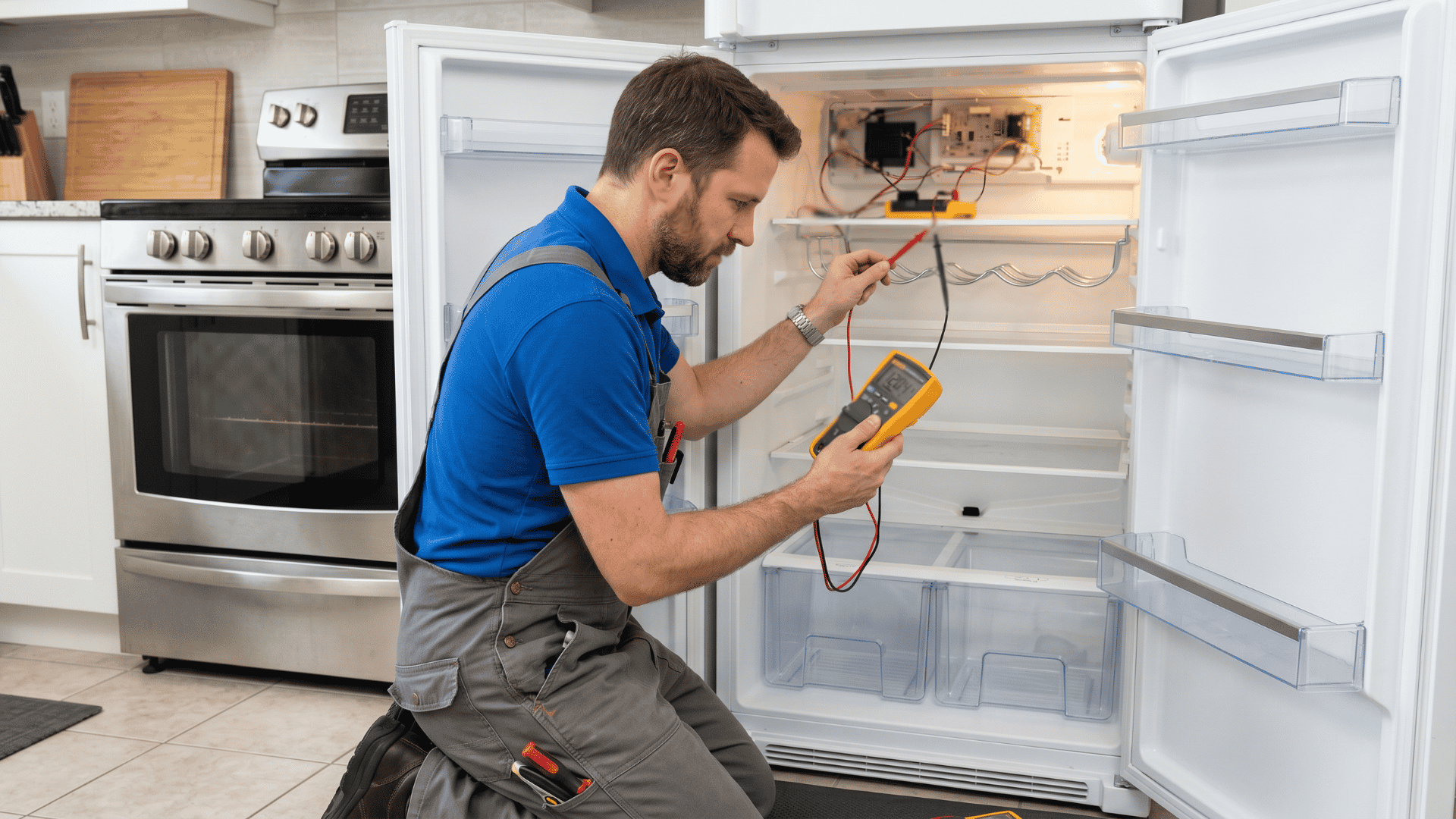
Refrigerator problems rarely appear without an underlying cause. Knowing common triggers helps you communicate clearly with your technician and avoid unnecessary part replacements.
- Temperature fluctuations usually trace back to a faulty thermostat or worn sensor.
- Unusual vibrations point toward an unlevel unit or loose internal brackets.
- Ice maker failures are commonly linked to a defective water inlet valve.
- Slow water dispensing indicates a kinked supply line or clogged filter.
Restricted airflow from blocked vents or overpacking causes most cooling inconsistencies. Electrical faults behind the control panel often go unnoticed until multiple functions fail together.
Quick Checks: When a DIY Fix is Enough and When it Isn’t
Some fixes are clear, replacing a water filter, cleaning blocked vents, or leveling an unsteady unit are tasks most homeowners handle without professional help.
Anything involving internal wiring, refrigerant, compressor faults, or control board failures goes beyond DIY territory and risks voiding manufacturer warranties.
Before calling a technician, run through these basic checks first:
- Confirm the fridge is fully plugged in and the outlet is working.
- Check that thermostat settings haven’t shifted accidentally.
- Inspect the circuit breaker for a silent trip.
- Clean dust-covered condenser coils behind or beneath the unit.
Choosing a Trusted Appliance Repair Company in the Bay Area
Choosing the right repair company matters as much as the repair itself. Look for licensed technicians with hands-on experience across major appliance brands, transparent upfront pricing, and fast response times.
Local Bay Area specialists understand regional service demands, schedule faster, and deliver more personalized attention than large national chains.
Homeowners experiencing cooling issues, leaks, or unusual refrigerator behavior should consider professional refrigerator repair services from a trusted Bay Area appliance specialist before minor problems turn into costly replacements.
Preventive Maintenance Tips to Avoid Refrigerator Breakdowns
Regular maintenance prevents the majority of refrigerator breakdowns before they ever start.
- Clean condenser coils every six months to maintain cooling efficiency.
- Test door seals monthly for air gaps or cracks.
- Keep the fridge at least two-thirds full for stable internal temperatures.
- Defrost the freezer manually when ice buildup exceeds a quarter-inch.
- Keep the top of the fridge clear for proper heat ventilation.
- Wipe down interior walls monthly to prevent mold and bacteria buildup.
Final thoughts
A refrigerator runs hard all day long every day. Small warning signs ignored today become expensive problems tomorrow.
Knowing what to watch for, acting early, and staying on top of basic maintenance keep your appliance running efficiently for years. The right repair team diagnoses problems accurately and restores performance fast.