


In Bali’s diving industry, the ocean is never just a backdrop. It is the main stage, the changing script, and sometimes the unpredictable director. For resorts, dive centers, and hospitality teams, this is especially true during the rainy season, when guest expectations, marine conditions, travel planning, and safety decisions must be handled with more care than usual.
Amed, on Bali’s east coast, offers an important lesson for Indonesian dive tourism. It is quieter than the island’s busier southern areas, shaped by coastal villages, shore-entry dive sites, local boats, and a slower rhythm that appeals to divers who want a more grounded experience. For businesses that want to deliver the best scuba diving in Bali, Amed shows that success is not only about dramatic marine life or perfect weather. It is about setting realistic expectations and managing the entire guest journey well.
For travelers comparing dive plans, resort locations, and seasonal conditions, scuba diving in Amed, Bali, during the rainy season can still be a rewarding option when guests understand visibility, access, safety checks, and the flexible planning needed for East Coast diving.
Why Rainy Season Diving Needs Better Communication
The rainy season does not automatically mean bad diving. This is one of the most important points for resorts and dive centers to explain clearly. In Bali, showers may be short, localized, or followed by clear periods. Conditions can vary by coastline, dive site, rainfall intensity, wind direction, and runoff. A guest who understands this will feel prepared. A guest who expects guaranteed sunshine may feel disappointed even before reaching the water.
The hospitality challenge is not only operational. It is emotional. Guests often arrive with fixed holiday dates, limited dive days, and high expectations. They may have searched for Bali scuba diving months before traveling, imagining calm seas and bright underwater visibility. A good operator does not dismiss those expectations. Instead, the team helps shape them into something realistic and still exciting.
- Explain that conditions are checked daily.
- Avoid promising perfect visibility.
- Offer flexible scheduling where possible.
- Recommend suitable sites based on the diver’s level.
- Keep non-diving companions included in the plan.
- Communicate changes calmly and early.
This kind of communication builds trust before the guest even wears a mask.
Amed’s Advantage Is Its Simplicity
Amed is known for a more relaxed style of diving. Many sites are accessible from shore or through simple local boat arrangements. For guests, this can reduce logistical pressure compared with longer boat days or heavily scheduled excursions. For operators, it creates an opportunity to provide a dive experience that feels personal, local, and manageable.
Shore Diving Creates Guest Confidence
Shore diving can be especially useful during periods of seasonal uncertainty because it often offers operators greater flexibility. If conditions are unsuitable at one site, teams may be able to assess another nearby area without turning the entire day into a failed trip. This does not remove the need for safety judgment, but it can reduce pressure.
For beginners or returning divers, the ability to prepare calmly on land can also be reassuring. There is time to check equipment, talk through the dive plan, and build confidence before entering the water.
This is one reason Amed is often discussed when people ask about the best place to scuba dive in Bali for a quieter, less rushed experience. It may not suit every diver or every season perfectly, but it offers a style of diving that can feel more human and less industrial.
Rain Changes the Business, Not Just the Weather
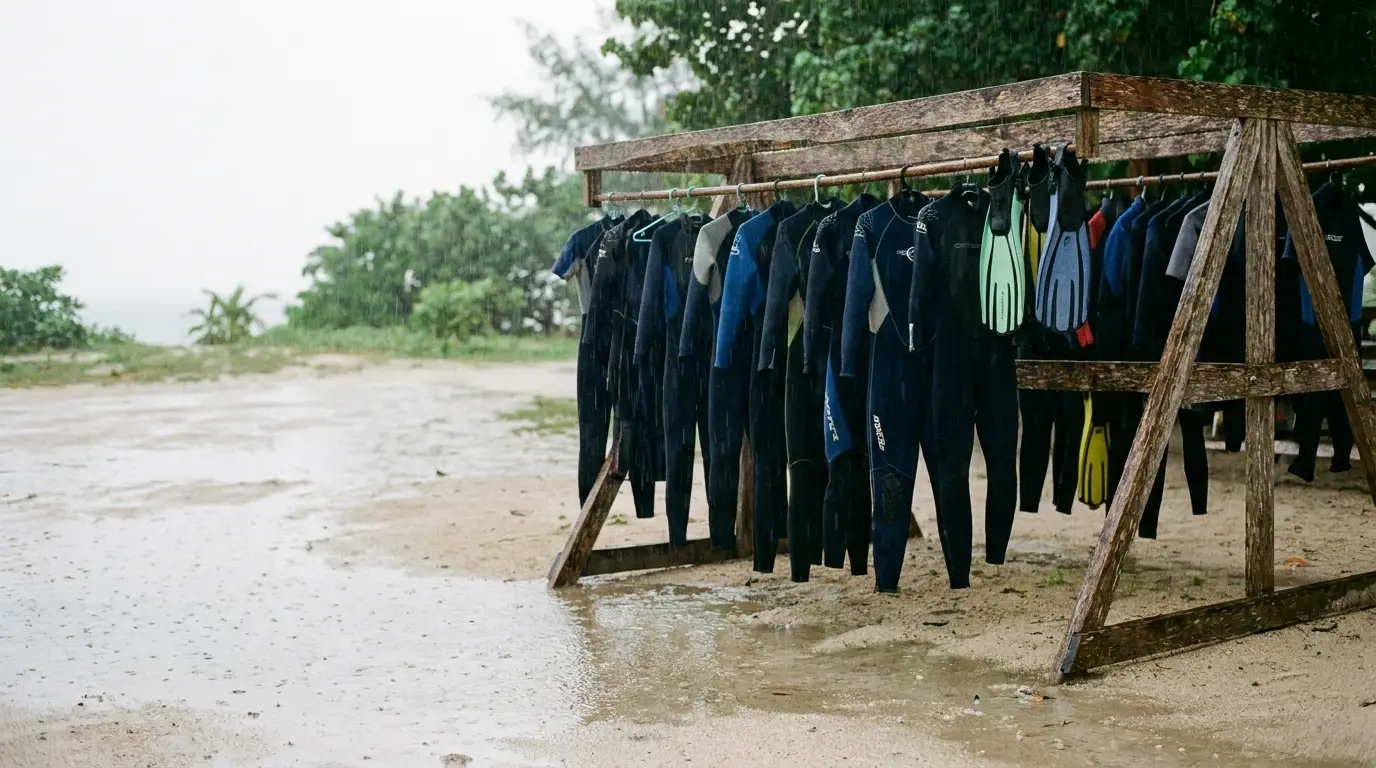
For dive operators and resort managers, the rainy season affects more than the dive itself. It affects transport timing, guest mood, equipment drying, staff scheduling, road conditions, photography expectations, and activity planning for non-divers. A property that treats diving as a simple add-on may miss these details. A property that treats diving as part of the full hospitality journey will manage them better.
The Guest Journey Around the Dive
A rainy season dive day can still feel premium if the surrounding experience is well managed. Guests remember whether they were kept informed, whether the team was organized, whether transport was comfortable, and whether staff adjusted the plan without making the day feel like a compromise.
Good seasonal service can include:
- Early weather and condition updates
- Dry storage for guest belongings
- Towels and warm drinks after dives
- Flexible breakfast timing
- Backup activities for non-divers
- Clear guidance on what to bring
- Honest advice on underwater photography expectations
These touches are not expensive, but they show professionalism.
The Role of Resorts in Better Dive Planning
Resorts in Bali often act as the first point of trust. Guests may ask the front desk, concierge, or guest relations team whether they should dive, where they should go, and whether conditions are suitable. If the resort team does not understand the basics, guests can receive vague or misleading advice.
A stronger relationship between resorts and dive centers improves the entire destination experience. The resort does not need to become a technical dive authority, but it should understand enough to guide guests responsibly.
Resort teams should know:
- Which dive partners operate professionally
- What experience level is needed for different sites
- How the rainy season may affect transfers and visibility
- When to recommend flexibility rather than fixed plans
- How to support guests before and after dive days
This is especially important for luxury and boutique properties, where guests expect advice that feels considered rather than generic.
Why Non-Divers Matter in Dive Hospitality
Many dive trips include partners, families, or friends who do not dive. During the rainy season, their experience becomes even more important. If the diver is underwater and the non-diver is left with no clear plan, the overall trip can feel unbalanced.
Amed can work well for mixed travel groups because it offers a slower coastal environment, local restaurants, ocean views, snorkeling options, and simple downtime. Still, resorts and operators should not assume that guests will figure everything out on their own.
Creating a Complete Coastal Day
A better approach is to design the day around the whole group:
- Divers enjoy suitable morning dives.
- Non-divers receive realistic activity suggestions.
- Couples or families reunite for lunch or sunset.
- Weather changes are treated as part of the rhythm, not a failure.
- The dive experience connects naturally with the wider stay.
This kind of planning turns a single activity into a stronger hospitality product.
Safety Is the Foundation of Every Good Dive
No article about seasonal diving should ignore safety. Rain itself is not the only issue. Operators must consider visibility, surface conditions, current, entry and exit points, diver confidence, and recent local observations. Sometimes the best decision is to delay, move sites, or cancel.
Professional operators understand that saying “not today” can build more trust than forcing a dive. Serious divers respect honest judgment. Beginners especially need to feel that safety is not being traded for sales.
For businesses promoting Bali scuba diving, long-term reputation depends on these decisions. One poorly managed experience can harm confidence, while a careful, transparent decision can turn a guest into a loyal advocate.
The Business Lesson for Bali’s Dive Industry
For Gigwise.com readers, the connection may seem unexpected, but diving and performance have much in common. A great dive day, like a great live show, depends on timing, preparation, teamwork, and the ability to adapt when conditions change. Guests may remember the reef, but they also remember the rhythm of the day.
The businesses that succeed in the rainy season are not necessarily those promising perfect conditions. They are the ones who communicate clearly, plan flexibly, and keep guests emotionally comfortable.
The Future of Amed as a Thoughtful Dive Destination
Amed’s strength is not that it tries to compete with every other dive region in Bali. Its strength is that it offers a different pace. It can be quiet, practical, local, and deeply connected to the coast. For many travelers, that is exactly what makes it memorable.
The future of diving in Amed will depend on responsible operators, informed resorts, and honest guest education. The rainy season should not be treated only as a problem to overcome. It can be an opportunity to show what mature dive hospitality looks like: calm communication, flexible planning, respect for the environment, and service that puts the guest’s confidence first.
In the end, the best dive experiences are not created by perfect weather alone. They are created by people who understand the ocean, respect its changes, and know how to guide guests through them with care.