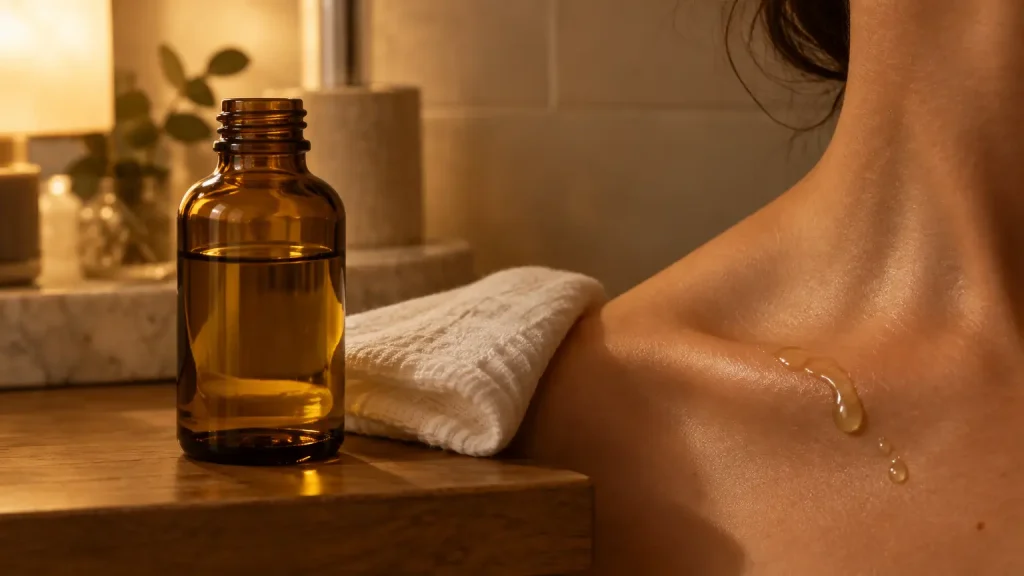
Scroll through beauty TikTok for ten minutes and you will hit a castor oil video. Someone is dabbing it on their lashes, someone else is wrapping a flannel cloth around their stomach, and a third person is swearing it changed the skin on their neck and chest. The thick, slow-pouring oil that used to live in the back of your grandmother’s medicine cabinet has become one of the most talked-about cheap rituals online, and the chest area is the latest stop on its tour.
It makes sense that it caught on. Castor oil is inexpensive, it is sold at every drugstore, and it feels luxurious in a slightly old-fashioned way. Celebrities and makeup artists have mentioned it for brows and lashes for years, so the jump to other parts of the body was probably inevitable. But the chest and breast skin is thinner and more sensitive than most people realize, so before you join in, it is worth separating the parts of the trend that hold up from the parts that are pure algorithm.
Why castor oil keeps going viral
Castor oil comes from the seeds of the Ricinus communis plant. Its standout feature is ricinoleic acid, a fatty acid that makes up the large majority of the oil and gives it that famously sticky, heavy texture. That heaviness is exactly why people love it as a moisturizer. It sits on top of the skin and slows down water loss, which is the same basic job an occlusive balm does.
Social media rewards things that are visual and easy to copy, and a castor oil routine checks both boxes. A glass bottle, a soft cloth, a slow massage, a calm voiceover. It looks like self-care, it costs under ten dollars, and the before-and-after clips are hard to argue with in the moment, even if the lighting is doing half the work. Add a few well-known faces praising their glossy brows, and you have a trend with legs.
There is also a long history behind it. Castor oil has been used in Ayurveda, the traditional medicine system of India, as well as in folk practice across Egypt, the Caribbean and Africa, often as a warming massage oil. That heritage gives the trend a bit of credibility, and it is part of why the conversation has drifted toward chest massage specifically.
What people hope it does for chest skin

If you read the comments under these videos, the hopes fall into a few clear buckets. Most of them are about skin rather than anything deeper:
- Softer, more hydrated skin on the chest and décolletage, an area that dries out fast in winter.
- Smoother texture and a less crepey look, especially where the sun has done its damage.
- Help with stretch marks after weight changes, puberty or pregnancy.
- A relaxing massage ritual that doubles as a monthly self-check.
Some of those are reasonable. Moisturizing dry skin is something almost any good oil can do, and castor oil does it well. Other claims are a stretch. You will see creators insist it lifts, firms or enlarges the breasts, or that it “detoxes” tissue. There is no solid evidence for any of that, and no oil applied to the surface can change the shape or size of the tissue underneath. Stretch marks are a similar story: oils can make them look less dry and a bit softer, but research on fully fading them with topical oils is thin and mixed.
If you want a grounded, plain-language breakdown of how people actually use castor oil on breasts, along with the traditional reasoning behind it and the safety notes, that is a better starting point than a thirty-second clip. The short version from most practitioners is that it can be a pleasant moisturizing massage, not a treatment for any condition.
How to try it without regretting it
If you are curious, keep it simple and gentle. Patch test first. Put a small drop on your inner forearm or behind your ear and wait a full day. Castor oil is generally well tolerated, but contact dermatitis does happen, and the chest is not the place you want to discover you react to something.
Choose a cold-pressed, hexane-free oil from a brand that lists where it comes from. Because pure castor oil is so thick, a lot of people dilute it with a lighter carrier like jojoba, sweet almond or fractionated coconut oil. A rough one-to-one mix spreads more easily and is less likely to feel greasy on clothes. Warm a few drops between your palms and massage in slow circles across the chest and around, not on, the nipple. Five minutes is plenty.
Evening tends to work best, since the oil takes a while to sink in and can stain fabric. Wear an old T-shirt to bed. Two or three times a week is a sensible rhythm to start, rather than a daily ritual that leaves your skin feeling coated. And if you are using it after a shower, pat your skin almost dry first so the oil has a little moisture to lock in.
Who should skip it, and when to call a doctor
Castor oil is a cosmetic, not medicine, and it has real limits. If you are pregnant or breastfeeding, check with your OB or midwife before putting anything on the breast area, mainly because a nursing baby can come into contact with it. Do not apply it to broken skin, a healing surgical scar or an active rash. People with very sensitive or acne-prone skin may find it too heavy.
Most importantly, no oil should ever replace a medical check. If you notice a new lump, swelling, skin dimpling, nipple changes, discharge or pain that does not go away, see a doctor promptly. The upside of a regular massage habit is that you get to know how your own body normally feels, which makes changes easier to spot. Use that awareness, and let a professional do the diagnosing.
It is also worth being skeptical of anyone selling castor oil packs or blends with big promises about hormones, lymph “drainage” or cancer prevention. Those claims are not backed by good evidence, and a few of them can delay people from getting real care.
The bottom line on the trend
Castor oil on the chest is not a miracle, and it is not a scam either. It is a heavy, affordable moisturizer with a long cultural history, wrapped in a soothing ritual that happens to film well. Used gently, with a patch test and realistic expectations, it can leave the skin on your décolletage softer and give you a few quiet minutes to yourself.
Just keep the hype in perspective. Skip anything that promises to reshape your body, protect your skin from the sun with an actual SPF, and treat your doctor as the expert on anything that feels off. The internet will find a new miracle bottle next month. Your skin will still appreciate the basics.