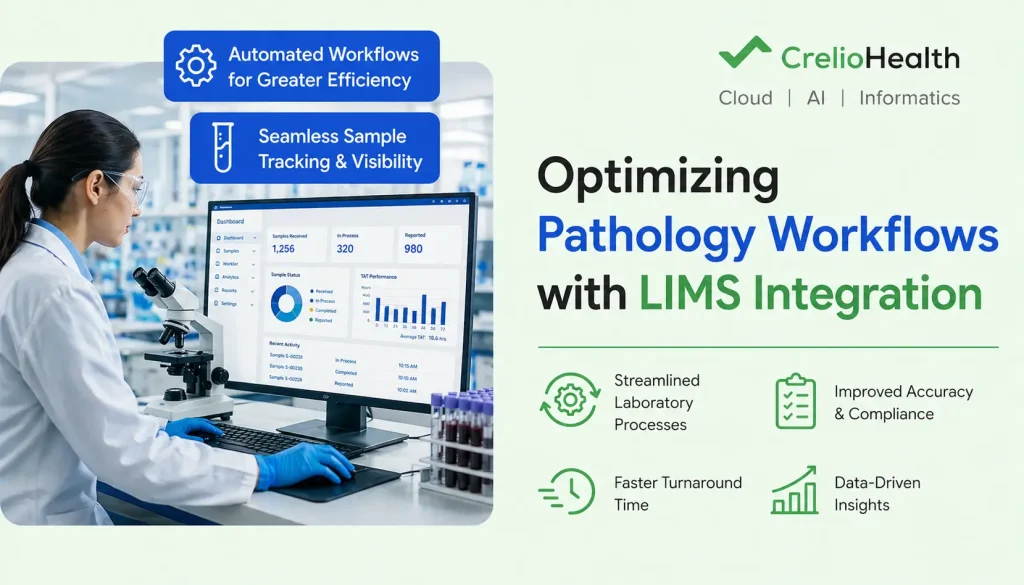
In an era where pathology laboratories process thousands of specimens daily while navigating mounting pressure for faster turnaround times and zero-error tolerance, the difference between thriving and merely surviving lies in one critical decision: LIMS integration.
“Clinical laboratories that have embraced comprehensive laboratory information management system integration are witnessing 40-60% reductions in manual errors, 25-35% improvements in turnaround times, and seamless workflow automation that transforms chaos into precision.”
This transformation is about creating an interconnected lab ecosystem where every sample, every test, and every report flows through automated pathways that eliminate bottlenecks, prevent mistakes, and deliver exceptional patient care. Let’s explore how a Cloud-based LIMS System with robust integration capabilities is revolutionizing laboratory operations across the globe.
The Critical Need for Integrated Pathology Workflow Management
The traditional approach of managing workflows through disconnected systems exposes labs to certain gaps where critical information gets lost, samples get misplaced, and errors multiply exponentially. Pathology labs have to grapple with challenges like:
- High processing volumes (estimated to have increased by 300% over the past decade) while maintaining the same staffing levels.
- Regulatory compliance requirements that demand complete audit trails for every specimen and result.
- Patient expectations for same-day or next-day reporting across all test categories.
- Integration demands from hospital systems, EMRs, and billing platforms that require real-time data exchange.
Laboratory Workflow Software addresses these challenges by creating unified systems where every component communicates seamlessly, ensuring that pathology labs can scale operations without compromising accuracy or efficiency.
Understanding LIMS Integration in Pathology Laboratory Environments
LIMS integration goes far beyond simple software installation as it represents a strategic connection between your LIMS System and every critical component of your pathology ecosystem. This integration creates a digital nervous system that coordinates everything from specimen receipt to final report delivery.
Core integration components include:
- LIMS with ERP Systems: LIMS integration with ERP creates a comprehensive workflow for efficient resource planning, inventory management, and financial oversight.
- LIMS integration with SAP: This helps in lab monitoring with enterprise-level analytics, compliance tracking, and multi-location coordination.
- Uninterrupted Data Exchange: Bidirectional connectivity with lab instruments, HIS, EMR/EHRs, and other devices automates data transmission, eliminating errors.
- Seamless Interfacing: Direct instrument integration with analyzers, microscopy systems, and automated processors.
- Third-party API Support: This includes connections with billing systems, insurance networks, and government reporting platforms.
This interconnected approach ensures that the Pathology LIMS functions as the central command center for all laboratory operations, eliminating data silos and creating unprecedented visibility into every aspect of lab performance.
Streamlining Instrument Integration for Pathology Precision
Direct LIMS instrument integration with our best Laboratory Information Management System eliminates manual data entry, ensuring real-time results capture from analyzers, microscopes, and automated processors directly into the workflow. This connectivity reduces transcription errors by up to 50% and accelerates processing by synchronizing device outputs with sample tracking systems. Pathology labs gain unprecedented accuracy as every test result automatically populates audit trails and triggers downstream actions like quality checks.
- Automated Data Capture: Results from hematology analyzers and staining machines flow bidirectionally, preventing data silos.
- Calibration Monitoring: Real-time alerts for equipment maintenance ensure compliance and prevent downtime.
- Error Reduction: Eliminates handwriting errors and manual logging across high-volume testing.
- Scalable Connectivity: Supports legacy and modern instruments via standardized interfaces like HL7 protocol.
Transforming Sample Management Through Integrated Workflows

Sample management represents the foundation of pathology operations, and it’s where Pathology Laboratory Management System delivers its most significant improvements. Every specimen that enters a pathology lab embarks on a complex journey involving multiple departments, processing stages, and quality checkpoints.
Advanced sample tracking capabilities:
- Automated barcode generation and scanning that creates unique identifiers linked to patient demographics and test orders.
- Real-time location monitoring that tracks specimens through every processing stage from accessioning to disposal.
- Chain of custody management with complete audit trails that satisfy regulatory requirements.
- Intelligent routing systems that automatically direct specimens to appropriate departments based on test requirements.
- Automated alerts for critical timepoints, specimen expiration, and processing delays.
The integration of sample management capabilities with pathology software systems ensures that every stakeholder, from laboratory technicians to pathologists to billing staff, has immediate access to current specimen status and processing history.
Automating Laboratory Workflow Management for Enhanced Efficiency
Laboratory workflow software excels in transforming manual, error-prone processes into automated, AI-powered workflows that adapt to changing laboratory demands. This automation extends across every aspect of pathology operations, creating seamless coordination between human expertise and technological precision. This includes:
- Automated task assignment based on specimen type, priority level, and staff expertise
- Protocol standardization that ensures consistent processing regardless of which technician handles the specimen
- Real-time workload balancing that distributes tasks evenly across available staff
- Milestone tracking with automatic notifications for critical deadlines and processing bottlenecks
- Quality control integration that enforces checkpoints and validation requirements throughout the workflow
Ending Note
Pathology labs facing high volumes and regulatory pressures can achieve 40-60% reductions in manual errors and 25-35% faster turnaround times through LIMS integration that automates sample tracking and workflows. By creating seamless connections with instruments and systems, this foundation eliminates bottlenecks and ensures precision from specimen receipt to processing. Labs adopting these integrated workflows position themselves for scalable, error-free operations that meet patient demands for rapid results.