The Wellness Side of Wearing a Bra That Actually Feels Good
There’s a version of wellness that shows up in green smoothies and morning runs. And then there’s the quieter kind — the kind that notices how your body feels at 3pm on a Tuesday, when your underwire has been digging into your ribs since breakfast.
Bra comfort doesn’t get talked about in wellness spaces nearly enough. But for something most women wear for 8–12 hours a day, it probably should. The physical toll of a bad-fitting bra — shoulder tension, skin irritation, that specific rib soreness that only shows up by evening — adds up in ways that are easy to dismiss and hard to ignore once you’ve noticed them.
The rise of jelly bras fits squarely into a broader shift in how women are approaching their bodies: less about what looks correct, more about what actually feels right.
No Wires, No Drama: Why Soft Support Matters
The traditional underwire bra was engineered for shape. Comfort was, let’s say, secondary. Wires poke through casings, dig into breast tissue, leave red marks along the ribcage — most women have at least one story, and most have just accepted it as part of the deal.
Jelly bras take a different approach entirely. Instead of a rigid wire holding structure, they use gel-cushioned cups — soft silicone-based technology that adapts to your body rather than fighting it. Brands like Soft Intention have built their entire product line around this technology, offering gel-cup styles across an extended size range from S to 6XL — because comfortable support shouldn’t stop at a certain size.
For women who’ve spent years assuming that discomfort was just the price of support, that shift in experience can be genuinely surprising.
Seamless Comfort for Real Life, Not Just Good Lighting
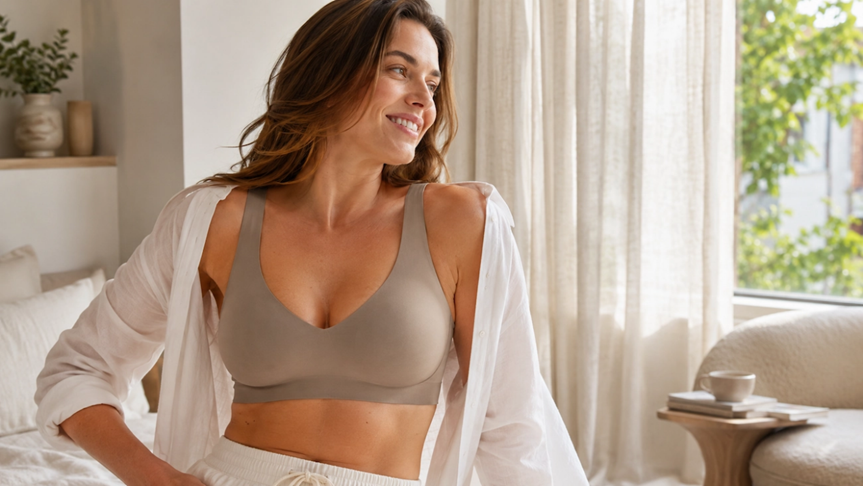
Here’s what jelly bras actually are, since there’s some confusion out there: they’re standard bras with straps and a back closure — not adhesive, not strapless. The “jelly” refers to the gel-cushioned cup construction, which provides shaping and lift through soft silicone technology rather than underwire structure.
The style started picking up around 2022–2023 and hasn’t slowed down since. It’s consistently one of the most searched bra styles online, and the women who’ve switched tend not to go back. That’s not trend momentum. That’s a category solving a real problem.
The seamless design matters practically too. No visible lines under fitted tops. No bulk under thin fabrics. No readjusting every hour because something shifted. Jelly bras tend to sit quietly against the body — which sounds like a low bar, but if you’ve ever had a wire escape mid-meeting, you understand why it isn’t.
Feeling Supported Without Feeling Restricte
One thing worth addressing head-on: wireless doesn’t mean unsupported. The assumption that you need a wire to get real lift is outdated.
Gel-cushioned cup technology creates structure through softness — the material contours to breast shape and holds it gently but effectively. Many women, including those with fuller figures, find the support genuinely comparable to underwire styles, with none of the associated pressure.
Research published in the Chiropractic & Osteopathy journal found that around 80% of women wear bras that don’t fit correctly — often because the available size range simply doesn’t account for their body. When sizing is limited, women end up compensating with tighter bands and more rigid structure, which only compounds the discomfort. Raleigh Gynecology & Wellness
How to Choose a Jelly Bra for Everyday Comfort and Confidence
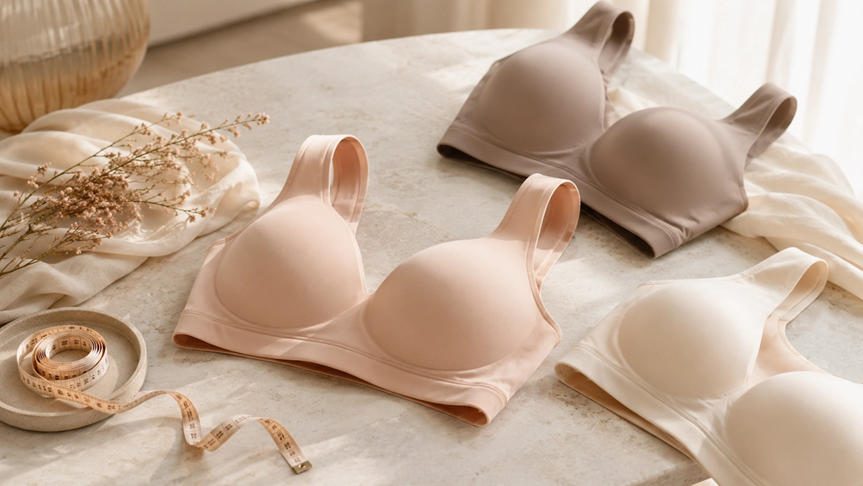
If you’re new to jelly bras, a few things worth knowing before you buy:
Get the band right first. The band does most of the supporting work. It should sit level across your back and feel snug without digging. Sizing up in the band to escape discomfort usually just trades one problem for another.
Check the cup construction. Not all wireless bras are jelly bras. Look specifically for gel-cushioned or silicone-cushioned cups — that’s what creates the structure without the wire.
Think about daily context. Jelly bras perform well across most everyday situations: work, errands, casual social, low-impact movement. For high-intensity workouts, a dedicated sports bra is still the smarter call. For everything else, jelly bras handle it well.
Look for an extended size range. Comfort at a size S looks different than comfort at a 4XL or 6XL. Brands built with that full range in mind tend to engineer their cups and bands more intentionally for fuller figures — not just scaled-up versions of the same pattern.
Care matters more than you’d think. Hand wash or gentle cycle, and air dry to keep the gel intact. A small habit that meaningfully extends the life of the bra.
The bigger point: what you wear closest to your body every single day is a wellness decision, even if it’s never been framed that way. A jelly bra won’t transform your life. But a bra that doesn’t dig, pinch, or remind you it exists for eight hours straight? That’s a decent place to start.