A few years ago, most people had never heard of HRV. Today, millions of people check it every morning through smartwatches, recovery apps, rings, and fitness wearables.
People use HRV to better understand:
- stress
- recovery
- sleep quality
- training strain
- burnout
HRV, short for heart rate variability, became popular because it gave people something they rarely had before: visibility into nervous system function. Higher HRV is commonly associated with stronger recovery capacity and healthier autonomic balance. Persistently low HRV, on the other hand, is often linked to stress, fatigue, illness, or physiological overload.
As awareness around nervous system health grew, HRV evolved from a niche sports-performance metric into a mainstream wellness obsession. But the rise of HRV tracking also exposed a major limitation within the recovery-tech industry.
Most Devices Measure Stress. Very Few Influence It.
Modern wearables are extremely good at observation. They can track sleep quality, recovery trends, resting heart rate, strain, and autonomic patterns with remarkable precision. The problem is that most of these devices are fundamentally passive. They identify when the nervous system appears stressed or under-recovered, but they are not necessarily designed to directly influence the systems responsible for those patterns.
That distinction matters because modern stress is increasingly physiological, not just psychological.
People are living in environments shaped by:
- constant stimulation
- irregular sleep
- travel fatigue
- digital overload
- chronic cognitive pressure
For many, the nervous system never fully returns to a genuine recovery state. This is one reason interest in vagus nerve stimulation has accelerated so rapidly over the past several years.
Why the Vagus Nerve Became Central to Recovery Technology
The vagus nerve plays a major role in autonomic nervous system regulation. It helps coordinate processes linked to stress response, cardiovascular function, digestion, sleep, inflammation, and recovery physiology.
Importantly, vagal activity is also closely associated with HRV itself. That relationship has made vagus nerve stimulation an increasingly researched area within both medicine and performance-oriented recovery technology.
At the same time, the rise of “nervous system devices” has created confusion within the wellness market.
Many products now claim to support:
- calmness
- focus
- resilience
- recovery
- nervous system regulation
But these devices often operate through entirely different mechanisms. Some rely on sound or vibration. Others use meditation cues, breathing exercises, or sensory relaxation techniques. Electrical stimulation devices vary significantly as well, particularly in how stimulation is delivered and which pathways they attempt to engage.
As a result, consumers are paying closer attention not just to whether a device feels relaxing, but how the underlying technology is designed to interact with the nervous system itself.
The Rise of Auricular Wearable Neuromodulation
One area attracting increasing attention is auricular vagus nerve stimulation. Certain branches of the vagus nerve can be accessed through parts of the outer ear, creating a more anatomically targeted approach to neuromodulation compared with broader relaxation-focused wellness devices.
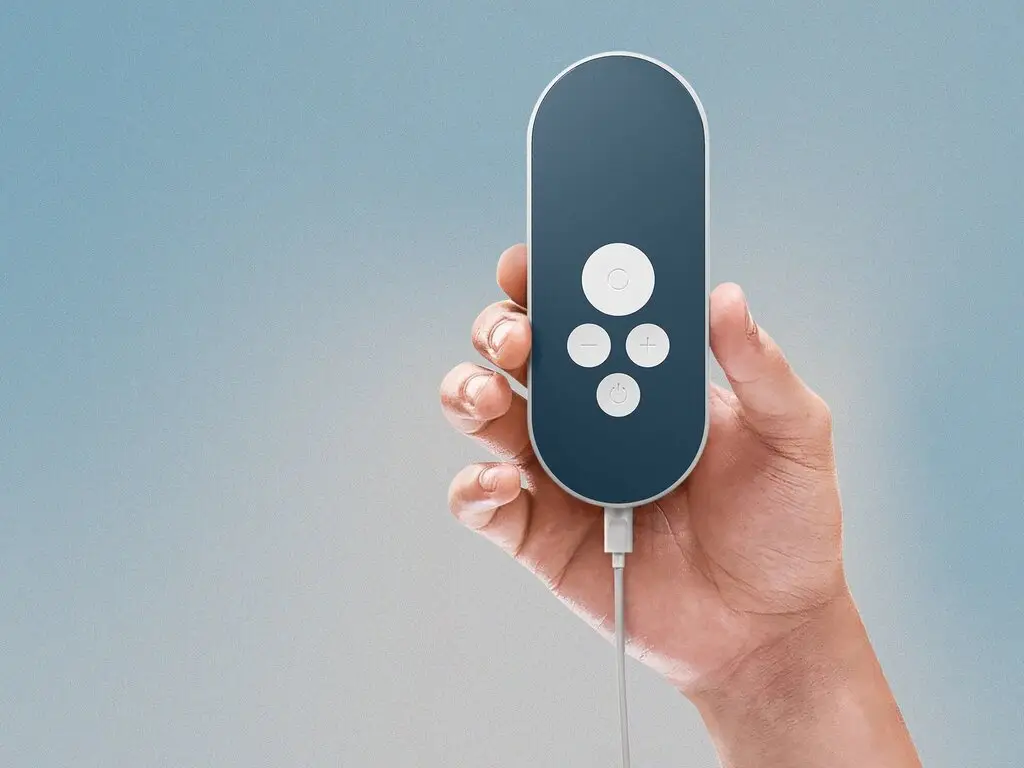
Nuropod is one example of a wearable vagus nerve stimulation device built around this auricular neuromodulation approach. Rather than functioning purely as a passive tracking tool, the device is designed to actively engage vagal pathways associated with autonomic regulation and recovery physiology.
The broader shift reflects changing expectations within the recovery-tech market. Consumers are increasingly looking beyond devices that simply measure stress, toward technologies designed to support how the nervous system responds to stress in the first place.
Developed using Parasym’s auricular neuromodulation technology, Nuropod is designed around consistent daily stimulation and repeatable ear-based placement rather than highly variable or experimental use patterns. The platform is backed by more than 10 years of research and development, with studies and collaborations involving over 150 scientific and academic institutions worldwide.
Research involving auricular vagus nerve stimulation has explored:
- HRV and autonomic regulation
- stress and recovery physiology
- sleep and fatigue
- cognition and focus
- cardiovascular function
- inflammation
As interest in nervous system regulation continues to grow, auricular neuromodulation is becoming an increasingly researched area within both clinical science and consumer recovery technology.
The Future of Recovery May Be More Active Than Passive
The first generation of wellness wearables focused on making physiology measurable. The next generation appears increasingly focused on whether physiology can be influenced more directly.
Research involving auricular vagus nerve stimulation has explored changes in HRV markers associated with vagal activity and autonomic balance. While HRV itself is not usually treated as the final goal, it is widely viewed as a reflection of broader nervous system regulation capacity.
Recovery is not simply about generating a better score inside an app. The deeper challenge is improving how effectively the body transitions between stress activation and recovery states over time.
As interest in nervous system health continues to grow, recovery technology is starting to evolve beyond tracking alone toward technologies attempting to engage the underlying systems that shape how the body responds to stress in the first place.