Most people who sit down at a piano for the first time ask the same question how long does it really take to learn piano? And the honest answer surprises a lot of them.
It is not years of painful drills or hours of misery every day. With the right approach, most beginners can play simple songs in just a few weeks.
But reaching a comfortable, confident level takes a bit more time and a solid plan. And without knowing what to expect, many people quit too early.
This blog breaks down exactly what happens at each stage, so anyone starting out knows what they are really signing up for.
Important Things to Know Before Learning Piano
Learning piano takes patience, regular practice, and realistic expectations. In the beginning, reading notes, using both hands together, and keeping rhythm may feel difficult for many learners.
Some people become frustrated because progress seems slow at first. However, small improvements happen with consistent daily practice.
The piano is considered beginner-friendly because its keyboard layout is simple to understand, and it produces sound instantly.
Learning basic chords, scales, and easy songs can quickly build confidence.
With steady practice and clear goals, most people can play simple songs within a few months and continue improving over time.
How Long Does It Take to Learn Piano?
Learning piano is a path that looks different for everyone. Your progress depends on practice time, learning style, and personal goals. B
| Skill Level | Estimated Time | What You Can Expect |
|---|---|---|
| First Month | 1 month | Learn piano keys, basic finger exercises, simple melodies, and hand positioning |
| Basic Piano Skills | 3–6 months | Learn simple songs, basic chords, hand coordination, and note reading |
| Intermediate Playing | 1–3 years | Play with both hands smoothly, improve rhythm, and perform more complex songs |
| Advanced Piano Mastery | 5–10+ years | Develop strong technique, musical expression, improvisation, and advanced performance skills |
| Lifelong Learning | Ongoing | Piano learning never truly ends, as there are always new styles and techniques to explore |
Why Piano Is Easier Than Some Instruments?

The piano is often easier for everyone because its keys are visually organized and produce sound immediately. Here are a few reasons why many people find the piano simpler to learn than other instruments.
- Visually Organized Notes: Piano keys follow a simple and clear pattern, making it easier for beginners to recognize notes and scales.
- Instant Sound Production: Pressing a piano key creates sound immediately, so beginners can start playing simple tunes quickly.
- Easy Music Theory Understanding: The keyboard layout helps learners clearly see chords, intervals, and note relationships.
- Beginner-Friendly Learning Curve: Basic songs and melodies can be learned faster compared to many other instruments.
- Improves Coordination Naturally: Regular practice helps develop finger strength, rhythm, and hand coordination over time.
Fastest Ways to Learn Piano Efficiently
Learning piano does not have to take years of slow, painful practice. With the right methods, focused effort, and a clear plan, anyone can build real skills at the keyboard far quicker than they think.
1. Start With the Basics of Music Theory
Before touching a single key, understanding basic music theory gives your learning a strong foundation.
Knowing how to read notes, understand timing, and recognize scales will make every practice session more productive.
Even just one to two weeks of focused study of theory can save months of confusion later.
2. Use Both Hands Early
Many beginners make the mistake of only practicing one hand at a time for too long.
Training both hands together from the start, even slowly, builds coordination faster and makes transitions between sections much smoother.
It feels awkward at first, but your brain adapts quickly when you stay consistent.
3. Practice in Short, Focused Sessions
Thirty minutes of focused practice beats two hours of distracted playing every time. Short sessions keep your concentration sharp and help your muscle memory form more effectively.
Research consistently shows that spaced repetition, practicing something over multiple short sessions, leads to far better long-term retention than marathon sessions.
4. Learn Songs You Actually Enjoy
Motivation is one of the biggest factors in how fast you progress on piano.
When you practice music you genuinely like, you are far more likely to sit down and play every day without forcing yourself.
Pick at least one song per week that excites you, even if it feels slightly above your current level.
5. Use a Metronome From Day One
Playing in time is a skill that must be built early, not fixed later. A metronome trains your sense of rhythm and helps you avoid the habit of speeding up during easy parts and slowing down during hard ones.
Start slow, get it clean, then gradually increase the speed. This method produces results faster than any other technique.
6. Record Yourself Playing
Most players are surprised by how different they sound on a recording compared to what they hear while playing.
Recording yourself reveals timing issues, dynamic problems, and sections that need more work, things that are easy to miss in the moment.
Listening back even once a week will sharpen your ear and push your playing forward faster than almost any other habit.
Which Piano Type is Easier to Learn On?
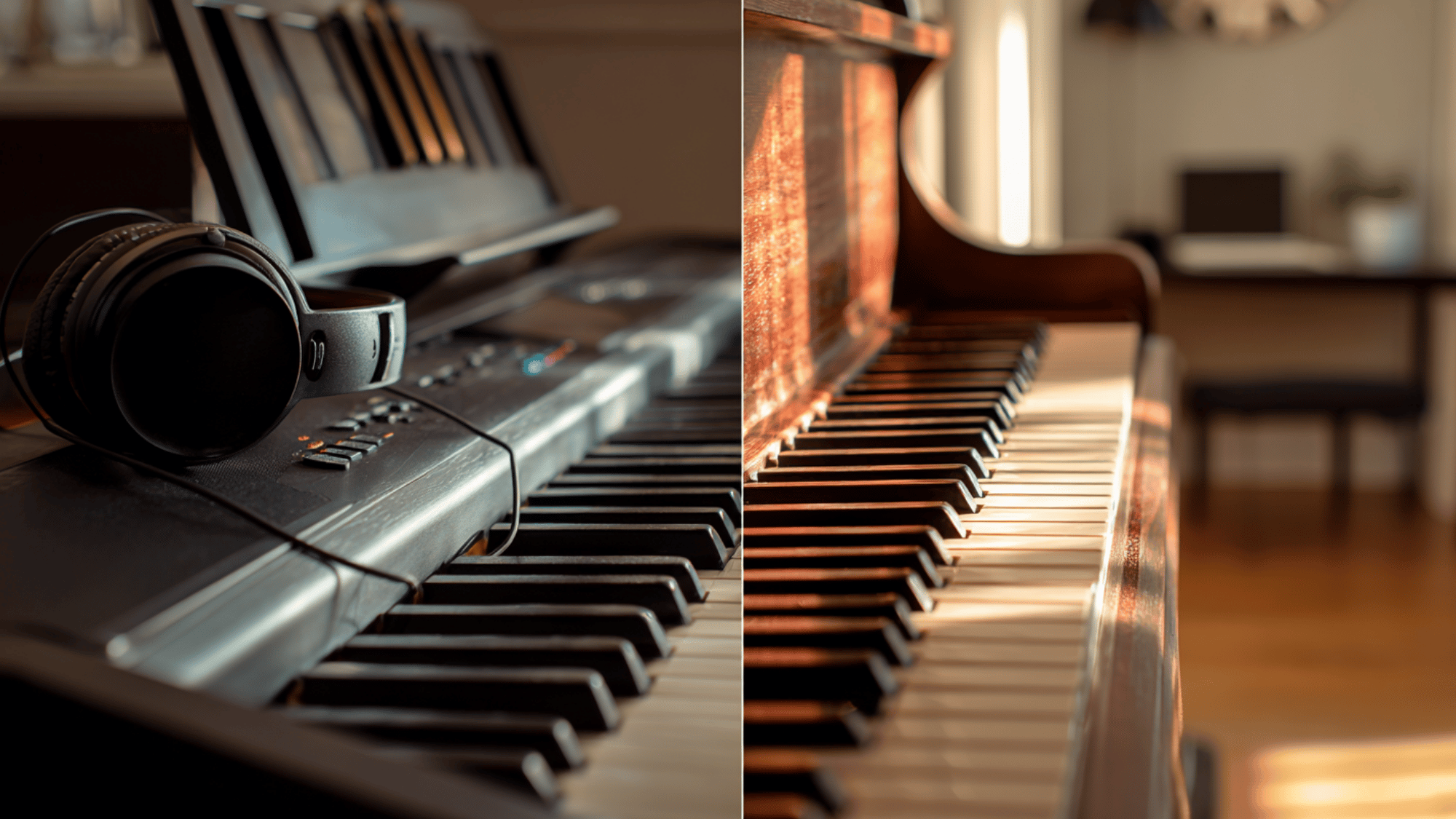
Choosing the right piano can make learning easier and more enjoyable. Below are some important features and types of pianos that new learners should consider before buying.
| Feature | Digital Piano | Acoustic Piano |
|---|---|---|
| Cost Comparison | Usually more affordable and beginner-friendly | More expensive due to the build and sound quality |
| Maintenance | Requires little to no maintenance | Needs regular tuning and maintenance |
| Portability | Lightweight and easy to move | Heavy and difficult to transport |
| Weighted Keys | Many models include weighted keys for a realistic feel | Naturally comes with weighted keys |
| 88 Keys | Available in most full-size beginner models | Standard feature on acoustic pianos |
| Touch Sensitivity | Allows dynamic sound based on playing pressure | Naturally responsive to touch |
| Headphone Support | Includes headphone options for quiet practice | Does not support headphones |
Final Thoughts
So, how long does it take to learn piano? Realistically, a few months to play simple songs, a year or two to feel genuinely comfortable, and longer if you’re chasing advanced pieces. But that timeline is yours to shape.
How hard is it to learn piano? It’s challenging but never impossible. The difficulty fades the moment consistent practice becomes a habit.
Progress isn’t always loud or obvious. Some days you’ll nail a passage you’ve been struggling with for weeks. Other days, not so much. That’s just how learning works.
Start small, stay consistent, and trust the process. The piano rewards patience more than anything else.