Jim Thorpe is widely remembered as one of the greatest athletes in sports history.
From winning Olympic gold medals in the pentathlon and decathlon to helping shape professional football in America, Thorpe’s achievements continue to inspire athletes more than a century later.
Beyond his athletic greatness, Thorpe’s life was also marked by hardship, controversy, and perseverance.
His story remains one of the most remarkable journeys in American sports history.
Quick Overview of Jim Thorpe
Jim Thorpe was one of the greatest multi-sport athletes in history, known for dominating track and field, football, baseball, and basketball.
| Detail | Information |
|---|---|
| Full Name | James Francis Thorpe |
| Born | May 28, 1887 |
| Birthplace | Oklahoma Territory, U.S. |
| Heritage | Sac and Fox Nation |
| Famous For | Olympic champion and multi-sport athlete |
| Died | March 28, 1953 |
Jim Thorpe’s Rise to Athletic Stardom
At Carlisle, Thorpe worked with legendary coach Pop Warner, who quickly recognized his rare talent. Thorpe excelled in nearly every sport he tried.
He became a football star, dominated track and field competitions, and amazed audiences with his natural speed, strength, and endurance. His performances made him one of the most talked-about college athletes in America.
Thorpe’s versatility separated him from other athletes of his era. While most competitors specialized in one sport, he mastered several at an elite level.
Jim Thorpe’s Historic Olympic Success
Thorpe achieved international fame during the 1912 Summer Olympics in Stockholm, Sweden.
Pentathlon Victory
The pentathlon tested athletes across five events that required speed, strength, and agility. Thorpe outperformed the competition and earned the gold medal with ease.
Decathlon Dominance
Thorpe then competed in the decathlon, one of the most physically demanding events in sports. The competition included ten separate track and field events over multiple days.
The Controversy Over His Olympic Medals

ImageSource: Smithsonian Magazine
Despite his success, Thorpe faced one of the biggest controversies in Olympic history.
Why His Medals Were Taken Away
In 1913, officials discovered that Thorpe had previously played semi-professional baseball before competing in the Olympics.
At the time, Olympic rules required athletes to maintain amateur status. Because of this technical violation, Thorpe’s gold medals were stripped away.
Public Reaction
Many people believed the punishment was unfair. Other athletes had reportedly accepted money while avoiding punishment.
Supporters argued that Thorpe was targeted unfairly and that the rules were inconsistently enforced.
Restoration of His Legacy
Decades after his death, efforts to restore Thorpe’s Olympic recognition finally succeeded.
In 1983, the International Olympic Committee reinstated him as co-champion alongside the original runners-up, a partial restoration that many still considered incomplete.
Athletic Career Beyond the Olympics
Unlike most athletes of his era, Thorpe succeeded professionally in multiple sports.
Football Career
Thorpe became one of the earliest stars of professional football. His powerful running style and athletic intelligence helped increase the popularity of the sport in America.
He also became the first president of the organization that later evolved into the NFL.
Major League Baseball
Thorpe played Major League Baseball for teams including:
- New York Giants
- Cincinnati Reds
- Boston Braves
Although baseball was not his strongest sport, competing at the professional level demonstrated his extraordinary athletic range.
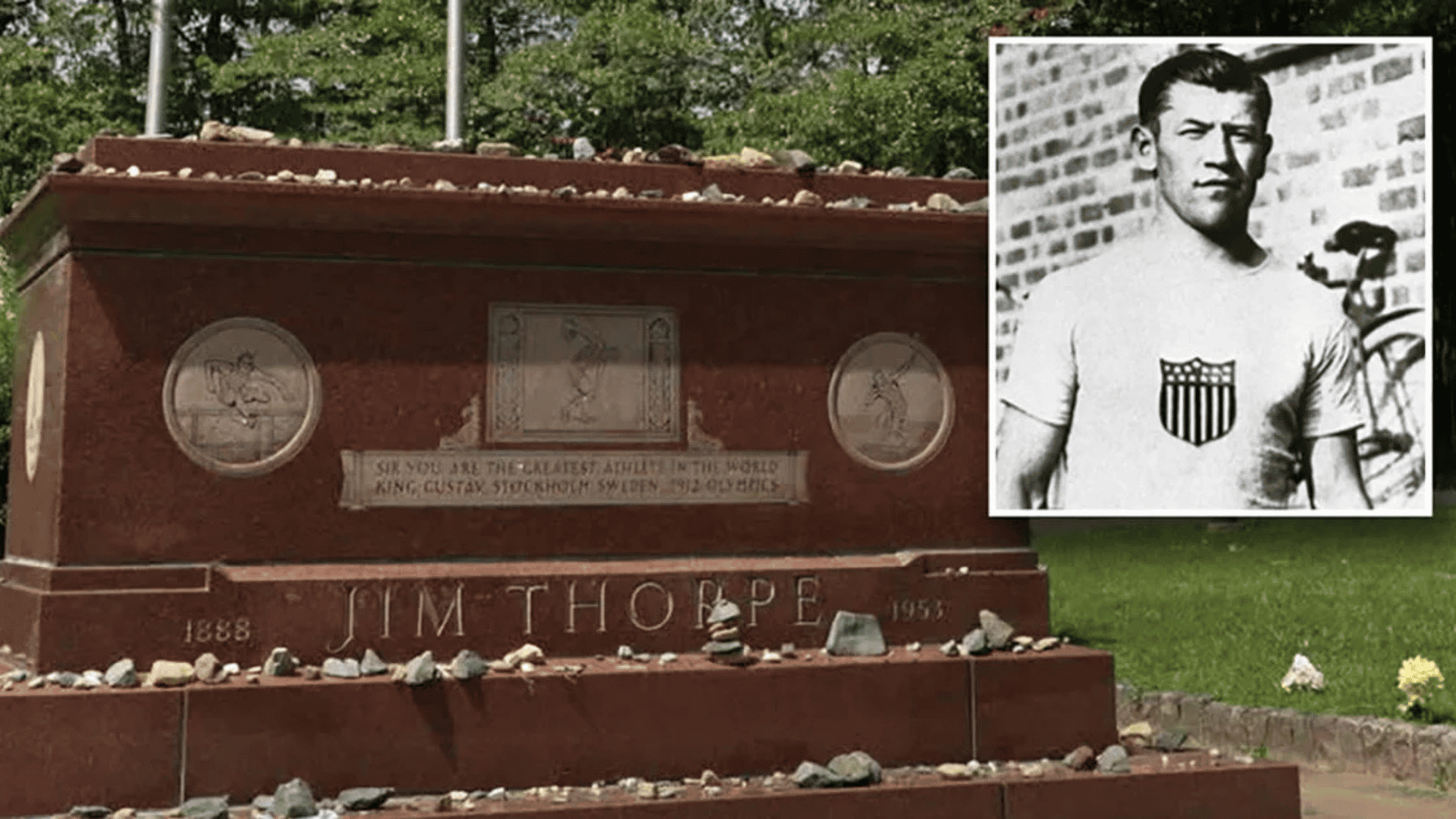
Jim Thorpe’s Final Years and Death
ImageSource: CBS News
After retiring from professional sports, Jim Thorpe faced several financial and personal difficulties.
Unlike many modern athletes, he did not earn large amounts of money during his career, and life after sports became challenging.
He worked different jobs over the years, including labor work, acting in films, and public speaking appearances.
Despite those struggles, Thorpe remained respected as a legendary athlete and continued to attend sporting events and ceremonies connected to his Olympic and football achievements.
Health Problems in His Later Years
As Thorpe grew older, his health gradually declined. He struggled with heart-related problems during the final years of his life. Years of physical strain from competing in multiple demanding sports may have contributed to his declining condition.
How Did Jim Thorpe Die
Jim Thorpe died on March 28, 1953, at the age of 65. He suffered a heart attack while living in California.
His death marked the end of an extraordinary athletic life that had influenced American sports for decades. News of his passing led to tributes from athletes, sports writers, and fans across the country.
Many people reflected not only on his Olympic victories and professional sports career, but also on the barriers he overcame throughout his life.
Conclusion
Jim Thorpe’s journey from a young athlete in Oklahoma Territory to an Olympic champion and professional sports star remains one of the most inspiring stories in sports history.
His achievements in the pentathlon, decathlon, football, and baseball proved that determination and talent can overcome enormous challenges.
Even decades after his death, Thorpe continues to influence athletes and sports fans around the world.
What do you think was Jim Thorpe’s greatest accomplishment, his Olympic victories or his success across multiple professional sports?
Frequently Asked Questions
How Fast Did Jim Thorpe Run the 100?
Jim Thorpe reportedly completed the 100-meter dash in around 11 seconds during the 1912 Olympic decathlon, though exact records from that era are not always precisely documented.
How Accurate was the Movie Jim Thorpe: All-American?
The movie included many real events from Thorpe’s life, but also added dramatized scenes for entertainment. Historians believe it captured his athletic greatness while simplifying some personal details.
Why wasn’t Jim Thorpe a US citizen?
Jim Thorpe was born before Native Americans were fully recognized as U.S. citizens under federal law. Citizenship for Native Americans was broadly granted later through the Indian Citizenship Act of 1924.