Most of what people believe about posture is a little off. The big one is the idea that good posture means holding yourself bolt upright, shoulders pinned back and chin tucked, like you’re on parade. Try that for an hour and you’ll be more uncomfortable than when you started. Good posture isn’t a rigid pose. It’s letting your muscles, joints and ligaments support you comfortably as you move through the day, and being free to change position often.
The trouble is that modern life quietly nudges us into a handful of positions and keeps us there. Hours at a desk, heads tipped down over a phone, long drives, the same movement repeated all day. The body adapts to whatever it does most, and slowly it starts to hold itself differently. Because it happens gradually, most people don’t notice until something complains. A stiff neck by mid-afternoon, tight shoulders by the evening, a back that just doesn’t feel as easy as it used to.
Here’s the reassuring part. poor posture isn’t set in stone, and because it rarely has a single cause, it rarely has a single fix. For a lot of people it improves with the right mix of movement, targeted exercise, better daily habits, and professional support when it’s needed. Chiropractic care is one option that may help, by working on how the spine and joints move and easing muscle tension where it’s a factor. Below I’ll cover why posture slips, how chiropractic care may help, and some practical ways to look after it.
How Posture Actually Slips
For most people it’s a slow drift rather than a single event, and everyday habits do more of the work than we give them credit for. A pattern we see regularly is what people call tech neck. Someone spends their day looking down at a screen, the muscles at the front of the neck and chest gradually shorten, the upper back rounds, and the head drifts forward. It didn’t happen overnight, and it won’t undo overnight either. Other common contributors are a workstation that isn’t set up well, weak core and back muscles that are meant to support the spine, always carrying a bag on the same shoulder, not much regular movement, old injuries that change how you move, and general muscle tightness or joint stiffness. The encouraging bit is that these are habits, and habits change more easily in small steps than in one big overhaul.
What It Does to the Body
When posture shifts, the effects rarely stay in one place. Some muscles end up overworked while others switch off, and that imbalance is usually where the aches and stiffness begin. It tends to build quietly. First it’s a tight neck after a day at the screen, then shoulders that are tired by dinner, then a lower back that grumbles after a long sit. Left alone, it can turn into recurring neck or back pain, frequent headaches, muscles that tire quickly, and a general sense that you don’t move as freely as you used to. Not everyone gets all of it, and it varies a lot depending on how the body has adapted over the years.
When Posture Starts Feeding Other Symptoms
Posture rarely stays a purely cosmetic thing. A head that sits forward for hours loads the muscles and joints at the base of the skull, and for some people that’s part of the picture behind recurring tension-type headaches. Rounded shoulders and a stiff upper back can leave the neck and shoulders permanently switched on, tiring quickly and aching by the afternoon. This doesn’t mean posture is behind every headache or sore shoulder, and it’s important not to assume that it is. But if your symptoms line up with long hours in one position and ease off when you move more, posture is at least worth ruling in or out as part of the story.
Can a Chiropractor Improve Your Posture?
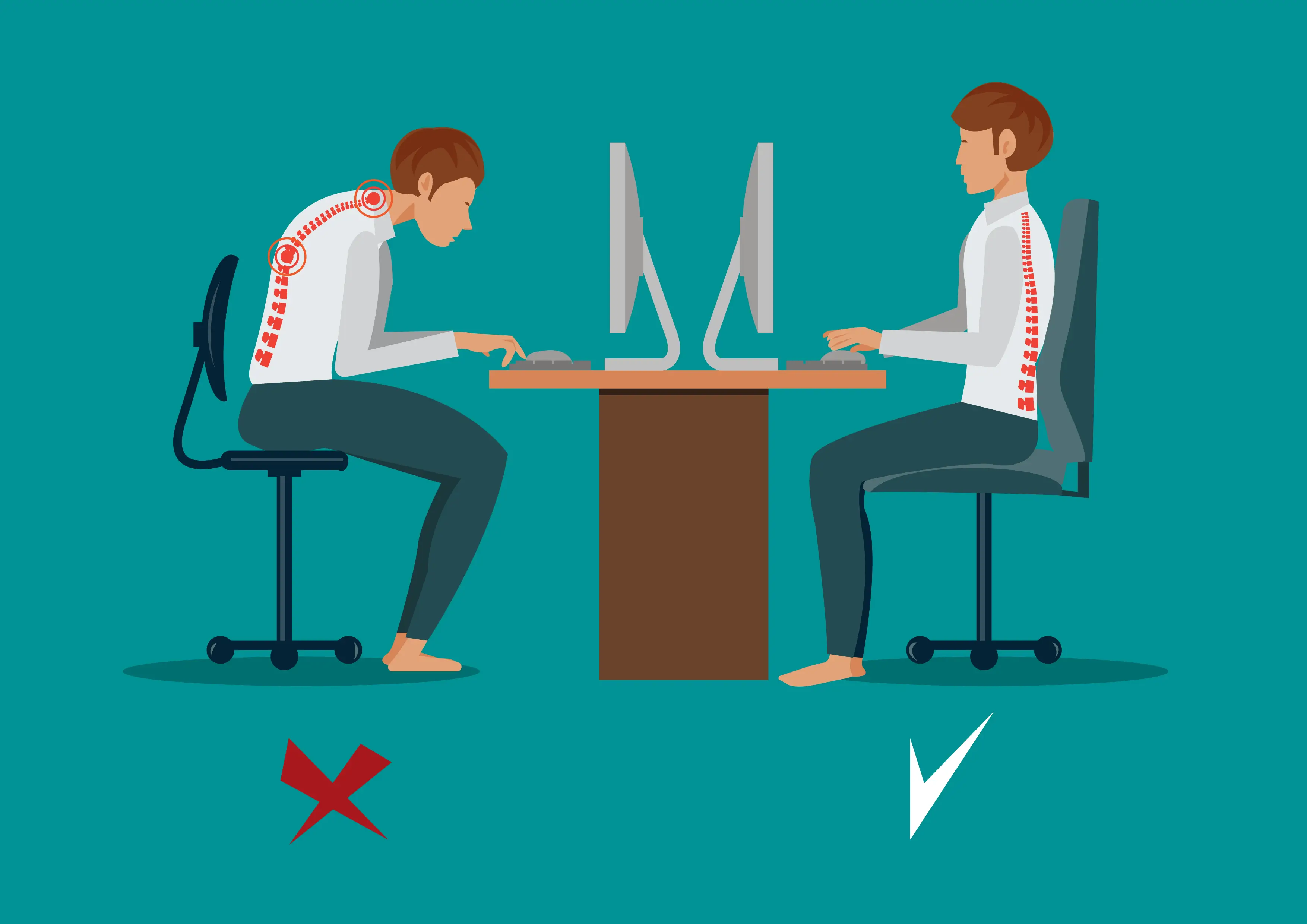
The honest answer depends on why your posture changed in the first place. If it built up over months or years, it isn’t going to reverse in a single appointment, because posture is the sum of your habits, the way you move, and how your muscles and joints have adapted. What a chiropractor can do is work out what’s behind the changes. After assessing your posture, your spinal movement and how your joints and muscles are working together, they can talk you through whether chiropractic care may help in your case and what that might involve.
What Posture Care Involves
There’s no single treatment that suits everyone, so it starts with a proper assessment. That usually means looking at how you stand, your sitting posture, how you walk, your spinal alignment, your joint movement and range, your muscle balance and flexibility, and your work and everyday habits. From there, care might include gentle adjustments to improve movement in restricted joints, and soft tissue work to release tension through the neck, shoulders, upper back, lower back and hip flexors.
The part that tends to hold results, though, is exercise. Strengthening the muscles that support better posture, the core, upper back, shoulder stabilisers, hips and neck, is what keeps the improvement in place, and your chiropractor will choose movements that suit you and show you how to do them properly. Just as important is what happens for the other 23 hours of the day. Expect some straightforward advice on your workstation, safe lifting, sleeping positions, phone use and regular movement breaks. The aim isn’t to change everything at once. It’s to spot the habits loading up your body and improve them over time.
A Few Movements That Support Better Posture
Alongside hands-on care, a handful of simple movements can make a real difference, and none of them needs a gym. A chin tuck is a good starting point for the tech-neck crowd. Sitting or standing tall, gently draw your head straight back so your ears sit over your shoulders, hold for a few seconds and release, without tipping your chin up or down. Wall angels help open up a rounded upper back. Stand with your back against a wall, arms up in a goalpost position, and slide them slowly up and down while keeping your lower back, shoulders and head in contact with the wall. Gentle extensions over the back of a chair, opening through the mid-back, ease the stiffness that builds from hours of leaning forward. And a doorway chest stretch, forearms on the frame with a small step through, loosens the tight chest muscles that pull the shoulders round. Done regularly and gently, these support the changes rather than force them. If any of them brings on pain rather than a mild stretch, ease off and check the technique with your chiropractor.
Small Habits, at Work and at Home
You don’t need a perfect setup to make a difference. A few habits usually move the needle more than any single fix:
- Sit with both feet flat on the floor where you can
- Keep your screen at eye level so you’re not looking down for hours
- Let your shoulders relax instead of creeping up towards your ears
- Get up, stretch or walk around every 30 to 60 minutes
- Go easy on long stretches of sitting cross-legged or slouched on the couch
- Lift heavier things with your legs rather than your back
- Stay active with regular movement across the week
It’s the small, everyday things that shape your posture the most, not the occasional big effort. And if you’re new to exercise or coming back from an injury, it’s worth having someone check the movements suit you before you load them up.
Your Posture at Work
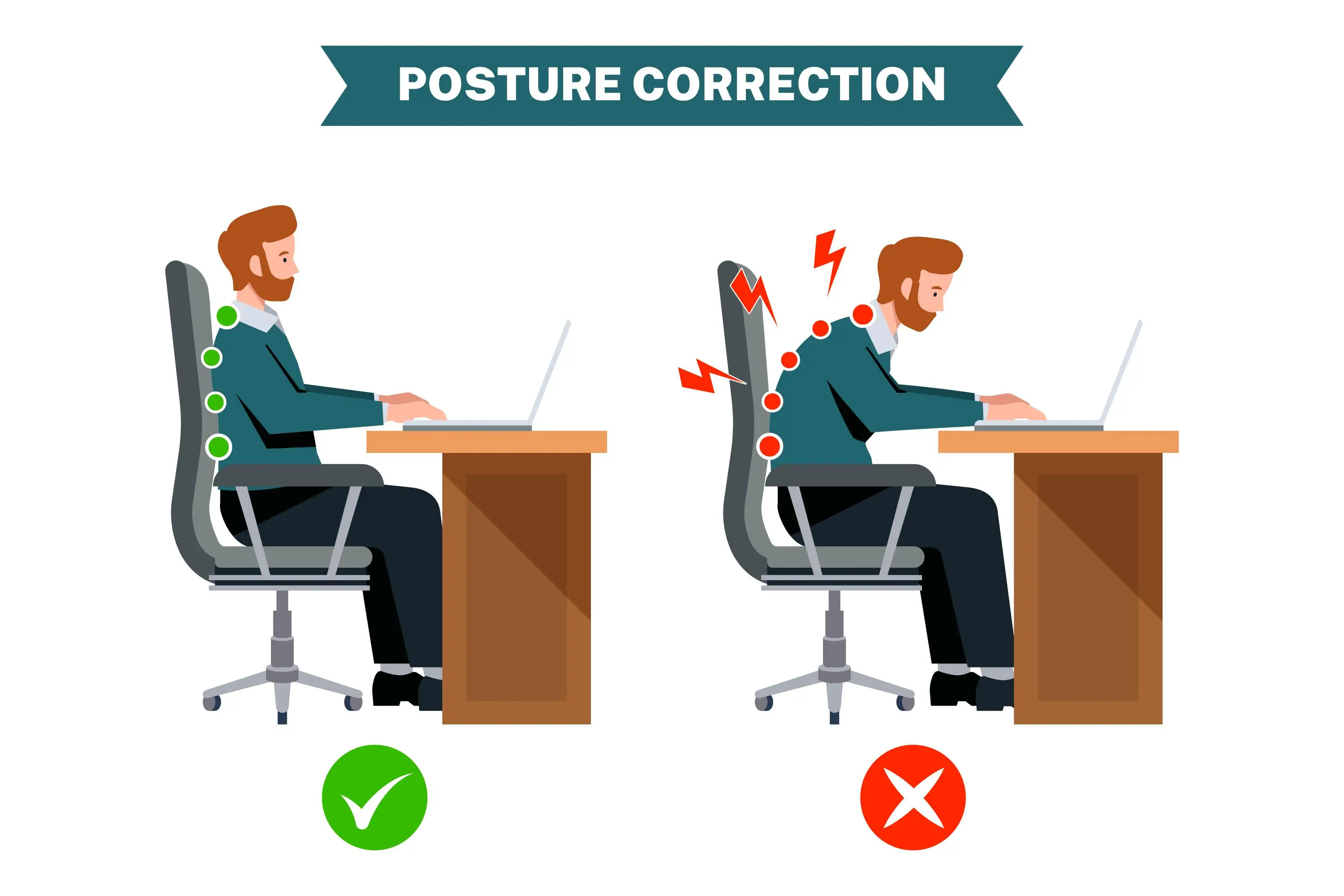
Most posture problems are built at a desk, so it’s the obvious place to start. You don’t need an expensive ergonomic overhaul. Aim for your screen at roughly eye level so you’re not constantly looking down, your chair supporting your lower back, your feet flat on the floor with your knees around hip height, and your keyboard and mouse close enough that your elbows stay near your body rather than reaching forward. Then, and this is the part people skip, actually move. The best workstation in the world still isn’t meant to be sat in rigidly for eight hours. Getting up every half hour or so, even briefly, does more for your posture than any single piece of equipment.
Your Posture at Home
Good posture doesn’t clock off when you leave the office. The couch is where a lot of the evening slump happens, phone held low, neck bent, body folded into one corner for a couple of hours. It’s fine to relax, but changing position regularly and holding the phone a bit higher takes some of the load off. The same thinking applies to how you lift the shopping, carry the kids, or lean over the kitchen bench. None of it is about being perfect. It’s about not spending hours locked in the positions that give your body grief.
When It’s Worth Getting Your Posture Looked At
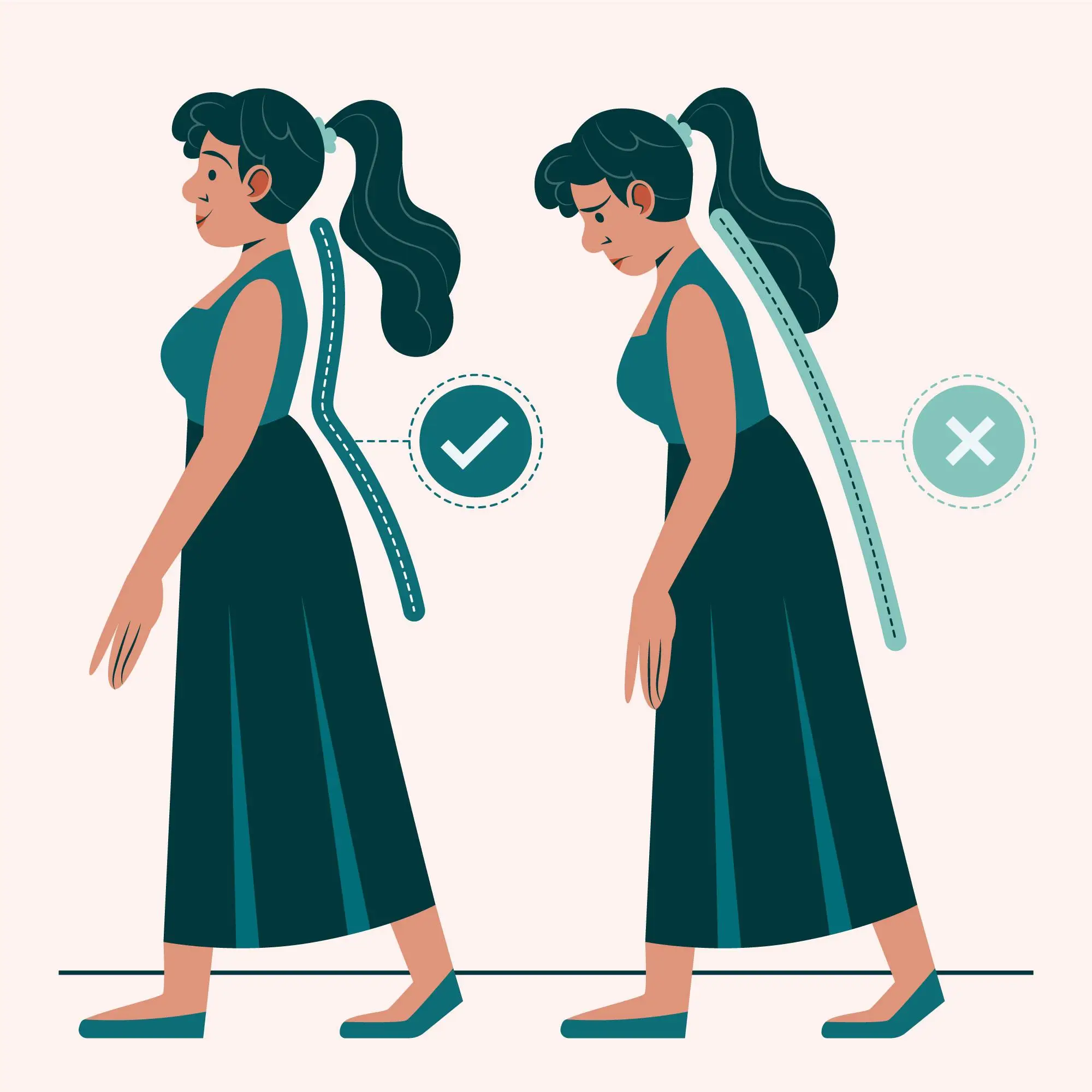
People link posture problems with office work, but they turn up in tradies, drivers, parents lugging kids and car seats, and weekend athletes just as often. It’s worth an assessment if you sit for long hours, drive a lot, have a physically demanding job, play sport regularly, or you’ve simply noticed your posture changing. And if you’re getting ongoing neck or back pain, frequent headaches, tight shoulders that won’t settle, trouble standing up straight, or stiffness that keeps returning, that’s a fair reason to have it checked. A thorough assessment can tell you whether your posture is part of the story and what may help.
How Long Before You Notice a Difference?
Because posture is built up over months and years, it’s fair to expect improvement to take time rather than arrive after one visit. Some people feel looser and more comfortable fairly quickly as tension eases and movement improves. Lasting change in the way you actually hold yourself usually comes more gradually, as the stronger muscles and better habits bed in. The people who see the most change tend to be the ones who pair their appointments with the exercises and the daily tweaks, rather than leaning on hands-on treatment alone.
Finding a Local Chiropractor
If you’re looking for a chiropractor in Sydney, Brisbane or Melbourne, find someone who listens properly and does a thorough assessment before recommending treatment. Your posture is shaped by your work, your routine, past injuries and the way you move, and looking at all of it together gives a clearer picture of what’s going on.
The Short Version
Poor posture usually develops over months or years, so improving it takes a bit of time too. The important part is understanding why it changed, because that guides the care that suits you. For most people it’s about more than hands-on treatment alone. Exercise, a few changes to everyday habits, and a bit more awareness of how you sit, stand and move all play a part in feeling more comfortable and moving with greater ease.