


A rash on your face can be stressful on its own. It’s hard to ignore, and it can affect how you feel and what you do that day.
If it shows up during a tough or busy time, it’s easy to assume stress is the cause.
But facial skin can react for many different reasons, and assuming stress too quickly can mean missing what’s actually going on.
This blog helps you tell a stress rash apart from other possible causes and understand what triggers it.
What is a Stress Rash on The Face?
A stress rash on the face usually refers to hives, medically called urticaria, that emerge or worsen around periods of psychological or physical strain.
The reaction forms raised, often itchy welts after histamine and other chemicals are released in the skin. The term is descriptive rather than a formal diagnosis.
Stress may trigger rashes, yet it can also intensify an established condition instead of creating a separate rash.
Accurate identification therefore depends on lesion behavior, accompanying symptoms, exposure history, and clinical assessment when the pattern is uncertain.
What Causes a Stress Rash on The Face?
A facial stress rash may appear when emotional strain combines with physical changes that make the skin, immune system, and nervous system more reactive.
- Anxiety, grief, conflict, burnout, or prolonged pressure may contribute to sudden hive-like facial reactions.
- Poor sleep can increase inflammation and reduce the skin’s ability to recover from irritation.
- Heat, sweating, or rapid temperature changes may trigger itching, flushing, or raised welts.
- Hormonal changes can make facial skin more sensitive and prone to redness or flare-ups.
- Illness or physical exhaustion may place additional strain on the body and increase skin reactivity.
- Certain medicines or recent dosage changes may cause rashes that are mistakenly blamed on stress.
- Repeated touching, rubbing, or scratching can intensify redness and prolong irritation.
Stress Rash Vs Other Types of Facial Rash
Comparing appearance and pattern can help separate stress rash from conditions that need different treatment, testing, or professional assessment.
A fever, pain instead of itching, a one-sided rash, or no improvement after a week are signs it may be worth looking beyond stress.
| Rash Type | Key Appearance | Key Sign |
|---|---|---|
| Stress rash | Smooth, raised welts | Lesions shift or disappear |
| Allergic rash | Itchy welts with swelling | Follows a particular exposure |
| Rosacea | Flushing or visible vessels | Mainly affects central face |
| Eczema | Dry or cracked patches | Persistent itch and roughness |
| Contact dermatitis | Burning, itching, or scaling | Matches product contact area |
| Heat rash | Small, prickly bumps | Follows sweating or humidity |
| Ringworm | Expanding scaly circle | Border spreads outward |
| Acne | Comedones, pimples, or cysts | Individual pores are involved |
How to Recognize a Stress Rash on The Face
Stress rash doesn’t have one single sign. Looking at the pattern as a whole makes it easier to recognize.
- Timing: It may appear during anxiety, poor sleep, illness, grief, exams, or work pressure. However, new foods or skincare products may also be responsible.
- Shape: Stress rashes are usually raised, smooth, and irregular. Scaly rings, blisters, crusting, or painful patches may point to another condition.
- Duration: One rash often fades within hours or a day, while new ones may appear elsewhere. Marks that remain unchanged for days need further evaluation.
- Triggers: Review recent skincare, makeup, medicines, foods, detergents, heat, sweat, shaving, alcohol, pets, and emotional stress.
How Stress Impacts the Skin?
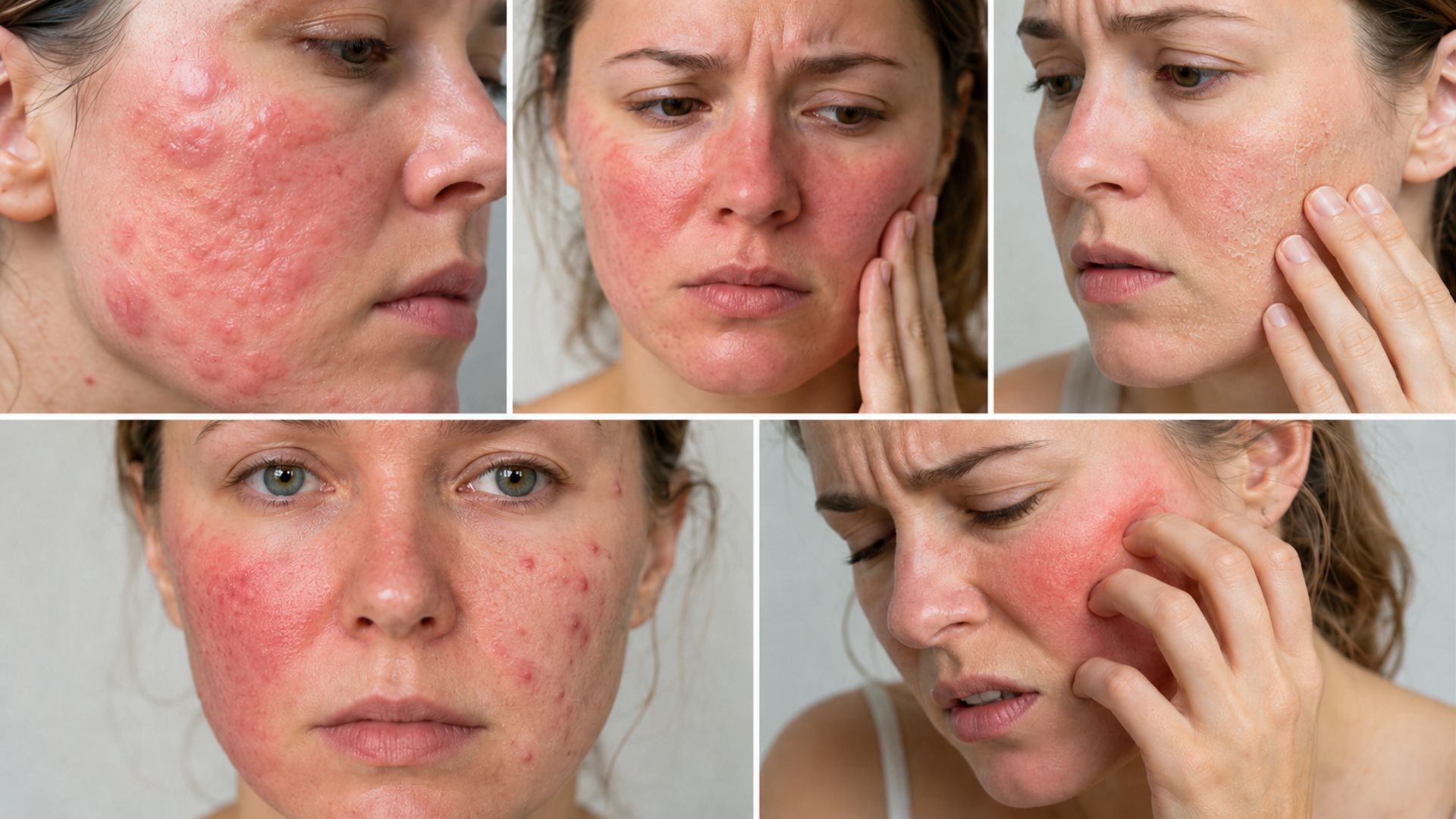
Stress can alter immune signaling, nerve activity, circulation, and barrier function, making facial skin more reactive and temporarily worsening conditions already present in some people.
1. Histamine Release
Stress-related nerve and immune signaling may encourage histamine release, producing a rapid hive-like response in susceptible skin.
- Vessels: Histamine widens small blood vessels beneath the skin.
- Fluid: Increased vessel permeability produces localized swelling.
- Nerves: Histamine activates nerve endings associated with itching.
2. Inflammation
Stress hormones can shift inflammatory signaling, increasing sensitivity and prolonging visible irritation.
- Redness: Increased blood flow can intensify facial redness.
- Sensitivity: Inflamed skin may respond strongly to minor exposure.
- Recovery: Ongoing inflammation may slow recovery from an existing flare.
3. Weaker Skin Barrier
Prolonged stress can reduce barrier resilience, leaving facial skin less able to retain moisture and tolerate routine exposure.
- Moisture: Greater water loss can increase dryness and tightness.
- Irritants: A weakened barrier allows irritants to penetrate more easily.
- Products: Previously tolerated formulas may begin to sting or burn.
4. Flare-Ups of Existing Conditions
Stress can amplify diseases already affecting the face rather than causing a new, standalone eruption.
- Rosacea: Flushing, warmth, and sensitivity may become more noticeable.
- Eczema: Dryness, itching, and inflamed patches may intensify.
- Acne: Stress-related oil production may contribute to further breakouts.
5. Scratching Cycle
Stress-related itching and repetitive touching can sustain irritation after the original trigger has weakened.
- Friction: Rubbing increases heat and visible redness.
- Damage: Fingernails can create small breaks in the skin.
- Healing: Repeated contact prevents irritated areas from settling.
How to Treat a Stress Rash on The Face Easily?
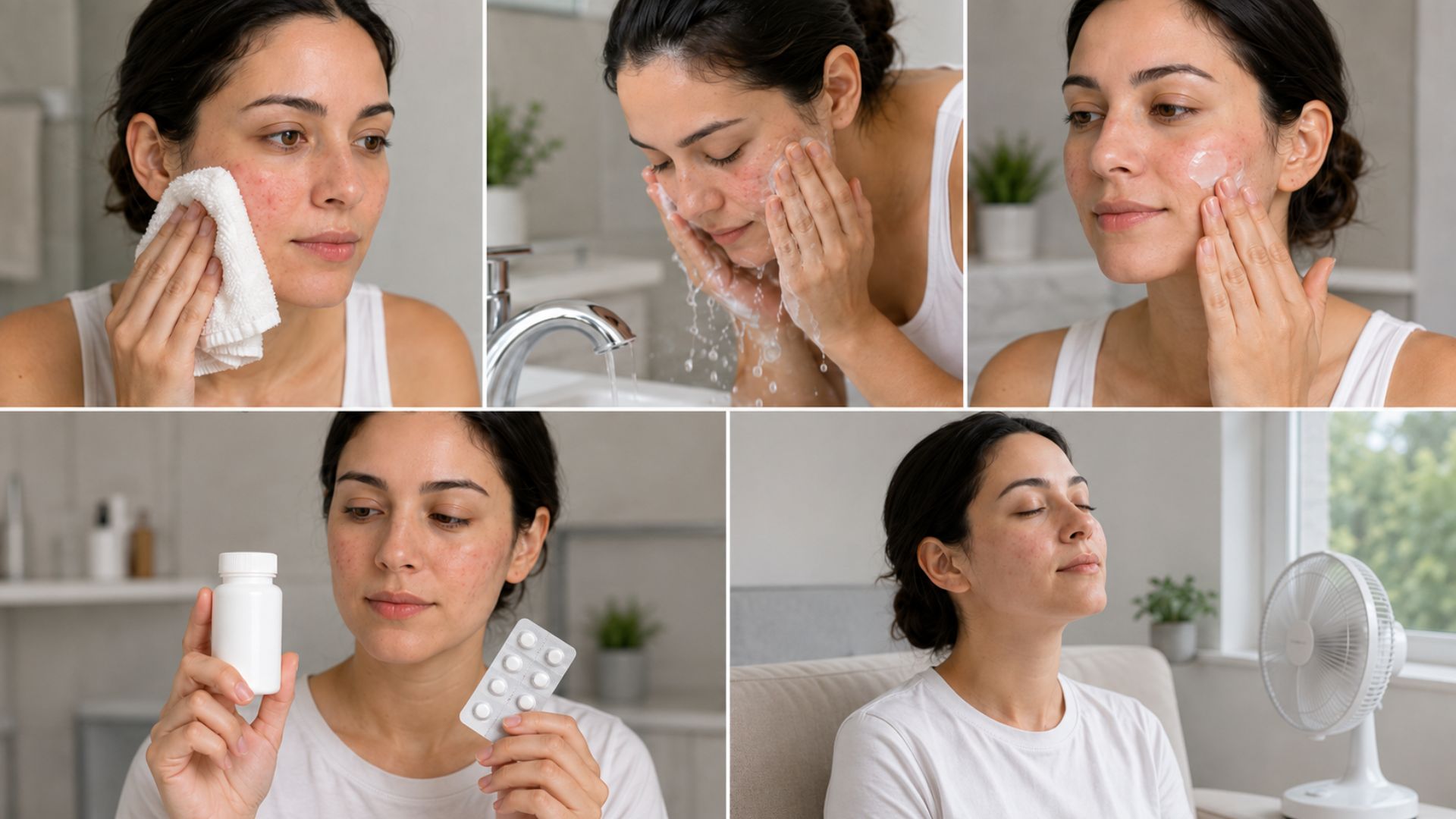
The goal is to calm the skin and ease discomfort without hiding signs that could help identify the cause. Seek urgent care for severe swelling, breathing trouble, blistering, or fast-spreading pain.
| What to Do | How | Details |
|---|---|---|
| Cool the Skin | Apply a cool, damp cloth | Apply for several minutes to ease itching and swelling. Avoid direct ice. |
| Gentle Cleanser | Cleanse with lukewarm water | Mild, fragrance-free formula. Use fingertips, pat dry, skip exfoliating tools. |
| Plain Moisturizer | Apply after cleansing | Thin layer, fragrance-free. Avoid acids and perfumes. Stop if irritation increases. |
| Antihistamine If Needed | Use only if itching persists | OTC option for raised welts. Check with a pharmacist if pregnant or on other medicines. |
| Avoid Heat and Rubbing | Reduce triggers | Skip hot showers, tight masks, and heavy makeup until the rash settles. |
| Pause New Skincare | Stop recent additions | Pause retinoids, scrubs, and acids. Reintroduce products one at a time after recovery. |
Ways to Prevent Stress Rash
Prevention works best when it’s specific, not just a vague goal to manage stress. Knowing what to track and adjust makes the difference.
- Track the Pattern: Note stress level, sleep, food, skincare, medicine, weather, rash location, itch level, and duration.
- Keep Skincare Simple: Use a gentle cleanser, moisturizer, and sunscreen. Avoid adding strong actives during stressful weeks.
- Reduce Heat Exposure: Hot showers, steam, humidity, and sweating can worsen hives, flushing, itching, and irritation.
- Avoid Fragrance: Fragranced skincare, hair products, and detergents may irritate facial skin or trigger contact dermatitis.
- Change Pillowcases Often: Pillowcases collect sweat, oil, hair products, and skincare residue that may irritate reactive skin.
Final Thoughts
A facial rash can have many causes, and stress is only one of them.
Keeping track of how the rash behaves, alongside the causes and comparisons covered above, is the best way to tell them apart.
Keep facial care simple and watch how the rash responds over the next few days.
See a doctor if the pattern stays unclear, keeps coming back, or starts affecting daily life.
Frequently Asked Questions
Can a Facial Stress Rash Spread Beyond the Face?
Yes. The rash may develop on the neck, chest, arms, or other areas because the underlying reaction is not limited to facial skin.
Does a Stress Rash Leave Marks?
Most rashes resolve without scarring, although temporary darker marks can remain on some skin tones. Persistent bruising or discoloration warrants medical evaluation.
Can Stress Rash Return Repeatedly?
Yes. Recurrent episodes may reflect chronic urticaria or another trigger pattern. A rash occurring most days for six weeks requires professional assessment.