Living with many loose, painful, badly damaged, or missing teeth can affect far more than appearance. Chewing may become difficult, food choices can narrow, speech may change, and removable dentures may feel unstable. Full-arch implant treatment offers another option for selected patients by supporting a fixed set of replacement teeth on dental implants placed in the jaw.
Patients considering treatment at Orto Nova in Croatia may encounter several approaches during consultation. You may also see full-arch treatment described as all-on-4 or 6, referring to the number of implants planned to support a fixed restoration across one dental arch. Implant count is only one part of the decision. Bone condition, remaining teeth, bite forces, medical history, implant positions, restorative space, and long-term maintenance all shape the final plan.
Full-Arch Treatment Replaces an Entire Dental Arch
A full-arch implant restoration replaces all teeth in the upper jaw, lower jaw, or both. Several implants support a connected prosthesis rather than placing a separate implant beneath every missing tooth. This approach can provide fixed teeth for people who have lost most or all of their natural teeth or whose remaining teeth have a poor long-term prognosis.
The restoration usually replaces more than visible tooth crowns. When years of tooth loss or gum disease have changed the shape of the jaw and gums, the prosthesis may include artificial gum material to restore tooth proportions and provide appropriate lip support. The dentist has to plan the position of the replacement teeth in relation to the face, smile line, speech, bite, and available restorative space.
Having several damaged teeth does not automatically mean that every remaining tooth should come out. Teeth with a reasonable prognosis may sometimes deserve preservation. Before accepting full-arch treatment, ask why each remaining tooth cannot predictably stay and which alternatives were considered. Extracting an entire arch creates an irreversible starting point, so the diagnosis should support that decision clearly.
Your Scan Shapes the Surgical Plan
Bone volume can influence implant number, length, diameter, angle, and position. Some full-arch techniques use angled posterior implants to make better use of available bone and reduce the need for certain grafting procedures. Other patients have enough favorable bone to support a different implant distribution. Bone grafting or other preparatory treatment may still be necessary in some cases.
Medical and dental history also deserves close review. Previous gum disease, poor plaque control, smoking, diabetes, medications, teeth grinding, and other health factors can affect treatment planning and future implant health. None of these factors should disappear from the discussion simply because a clinic offers a standardized full-arch package. The plan should reflect the individual patient rather than forcing every patient into the same surgical protocol.
Same-Day Teeth Usually Mean a Temporary Restoration
Full-arch implant treatment frequently appears in advertising alongside terms such as “teeth in a day.” The phrase can create the impression that surgery and the finished permanent bridge happen at once. In many cases, patients who qualify for immediate loading receive a fixed temporary bridge shortly after implant placement. The final restoration comes later, after healing and additional restorative work.
Immediate loading depends heavily on the stability achieved when the surgeon places the implants. Bone condition, implant position, surgical findings, extractions, grafting, and the planned bite can all affect the decision. If an implant lacks sufficient initial stability, changing the loading plan may protect healing. A responsible treatment discussion should therefore include a backup plan before surgery.
Temporary teeth also serve a practical purpose during healing. They allow the restorative team to assess tooth position, appearance, speech, bite, and cleaning access before producing the final bridge. Patients usually need to follow dietary restrictions during this phase because a fixed temporary restoration does not mean the implants have completed biological healing. Following the prescribed diet and hygiene instructions can reduce unnecessary stress on the new implants.
Healing Continues After the Surgical Appointment
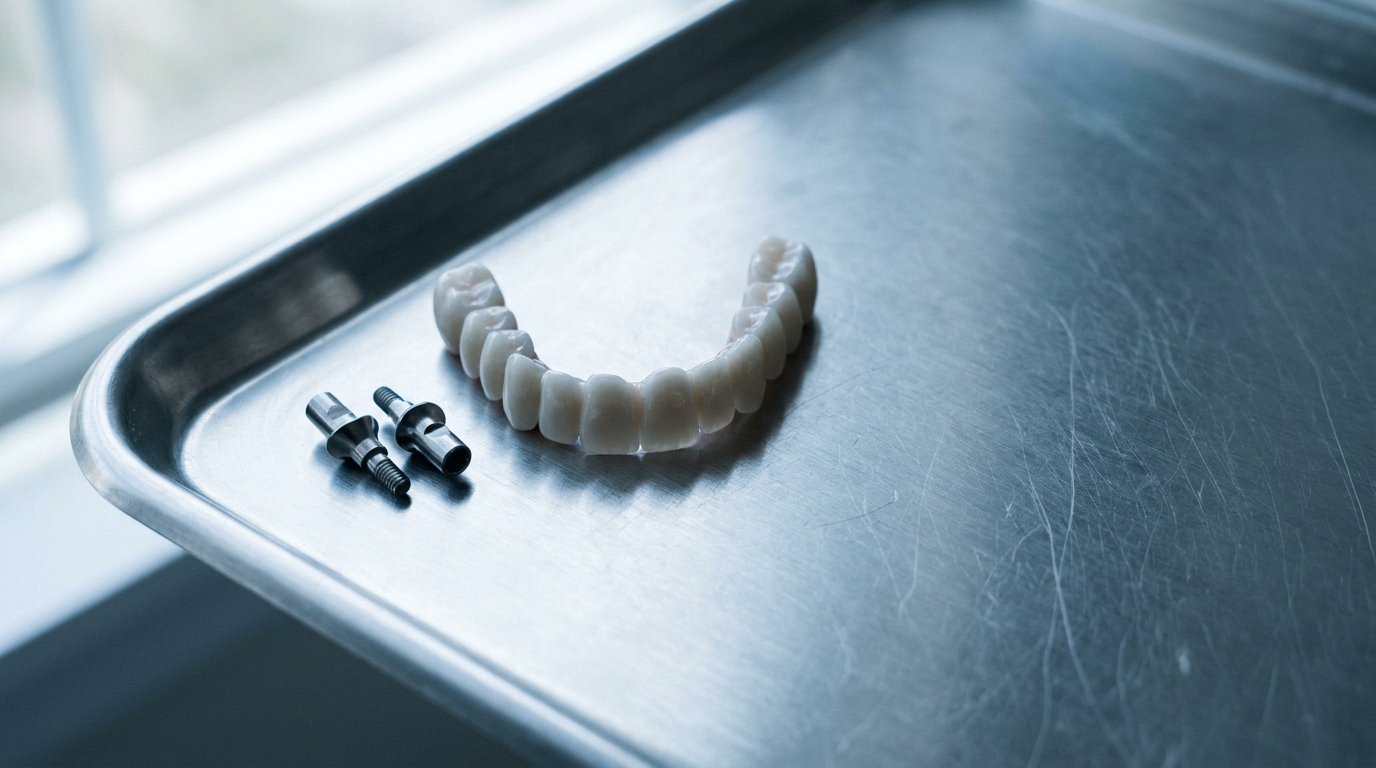
Implant placement begins a biological healing process in which bone develops a stable connection around the implant surface. This takes time. Swelling, tenderness, bruising, and temporary changes in chewing can occur after surgery, particularly when treatment includes multiple extractions or additional surgical procedures. The dental team should explain expected recovery and provide clear instructions for situations that need prompt review.
Follow-up appointments give the clinician a chance to monitor soft-tissue healing, inspect the temporary prosthesis, assess the bite, and identify problems early. A loose screw, damaged temporary tooth, uncomfortable pressure point, or change in the way the teeth meet should receive professional attention. Trying to tolerate a problem until the final bridge appointment can allow a relatively simple adjustment to become more difficult.
The final prosthesis usually follows after the implants and surrounding tissues have reached the stage required by the treatment plan. At this point, the restorative team can refine tooth shape, shade, proportions, bite, and fit. Ask which materials the dentist proposes for the definitive bridge and how those materials affect weight, repair options, appearance, wear, and expected maintenance. There is no single restorative material that suits every patient.
Fixed Teeth Still Require Daily Cleaning
Implants cannot develop tooth decay, yet the tissues around them remain vulnerable to inflammation and bone loss. Plaque can collect where the prosthesis meets the gums and around each implant. Without effective cleaning, inflammation may develop around the implant tissues and can progress to loss of supporting bone.
A fixed full-arch bridge therefore needs a daily cleaning routine designed around its shape. The dental team may recommend specific brushes, interdental cleaning aids, flossing methods, or oral irrigation devices depending on the restoration. The space beneath the bridge should allow the patient to clean effectively. If access feels extremely difficult during the temporary phase, raise the concern before the final prosthesis is made.
Professional maintenance remains part of treatment for the long term. Review appointments allow the dental team to check tissue health, hygiene, implant stability, screws, restorative materials, and bite. Wear can occur over time, and components may occasionally require adjustment, repair, or replacement. Patients who grind their teeth may need additional protection for the restoration. Full-arch implants should therefore be considered a maintainable dental treatment rather than a permanent structure that can be ignored after fitting.
Know What You Are Agreeing to Before Surgery
A good consultation should give you more than a total price. Request a written plan that identifies extractions, implant placement, grafting if needed, temporary teeth, the definitive bridge, imaging, anesthesia or sedation, scheduled reviews, and expected treatment stages. Ask which parts of the quoted price could change after the surgeon begins treatment.
You should also know who handles each stage. The clinician planning the teeth may differ from the surgeon placing the implants or the dentist fitting the final bridge. Ask who takes responsibility for treatment decisions if the surgical findings differ from the original plan. If treatment takes place abroad, establish how postoperative questions, complications, adjustments, and later maintenance will work after you return home. Obtain copies of scans, treatment records, implant details, and restorative information for future dental care.
Most importantly, ask why the proposed design suits your specific mouth. The answer should connect the implant arrangement to your bone, remaining teeth, bite, restorative space, hygiene needs, and future care. Full-arch implants can restore stable fixed teeth for appropriately selected patients, but the quality of the result depends on far more than the number of implants or the speed of the initial procedure. Careful diagnosis, precise restorative planning, controlled healing, and consistent maintenance all contribute to how the treatment performs over time.