

Your period is late, and before you panic, consider that your stress levels may be the real issue. A late period can be alarming, especially if you didn’t expect it.
However, your body is more sensitive to emotional and physical stress than you realize, as work pressure, exams, major life changes, and even lack of sleep can disrupt your cycle.
If you’re just starting your periods or are 45 and juggling a busy life, understanding this connection can provide real peace of mind, and this blog will help you walk through it.
Note: This blog is for general informational purposes only and is not a substitute for professional medical advice. If you’re experiencing delayed, missed, or irregular periods, please consult a qualified healthcare provider for proper diagnosis and guidance.
Can Stress Delay Your Period?
Yes, stress can delay your period by affecting the hormones that regulate your menstrual cycle.
Work pressure, emotional strain, poor sleep, major life changes, intense exercise, or sudden changes in routine may all play a part.
However, stress is not the only possible cause. Pregnancy, weight changes, hormonal conditions, illness, and certain medications can also lead to a late period.
Seek medical advice if delays occur often, persist for several cycles, or are accompanied by unusual symptoms.
How Does Stress Affect Your Ovulation Cycle?
Severe or long-lasting stress can delay ovulation, making your cycle longer or irregular, or occasionally causing a missed period.
The effect depends on how intense and prolonged the stress is.
This happens because cortisol suppresses GnRH, the signal that starts the hormonal chain leading to ovulation.
Without it on schedule, ovulation shifts later, and since your period follows about two weeks later, the whole cycle shifts into a survival response built for danger, not deadlines.
How Does Stress Affect Your Menstrual Cycle?
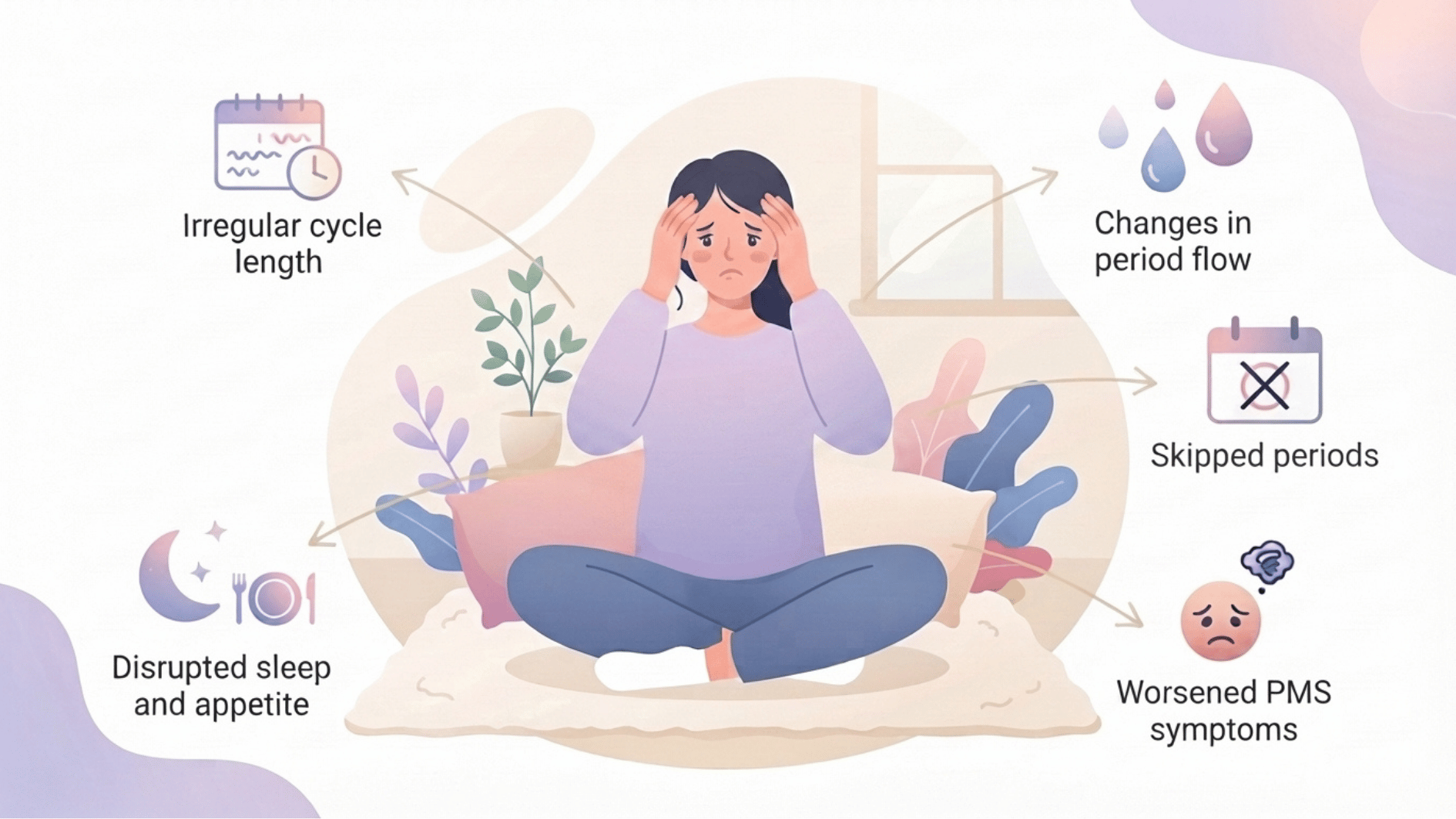
Stress can influence your cycle in more ways than just a late period. Here’s a quick look at the most common effects.
1. Irregular Cycle Length
High stress levels can postpone the release of an egg. Since your period usually follows ovulation, this delay may shift the timing of the entire cycle.
Ongoing stress can make periods less predictable. One cycle may be longer than usual, while the next may arrive earlier.
2. Changes in Period Flow
Your bleeding pattern may also change. Some people notice a lighter or shorter period, while others experience heavier bleeding or a longer duration
3. Skipped Periods
Severe or prolonged stress may interrupt ovulation completely, leading to a missed period.
A single missed cycle may settle once stress improves, but repeated missed periods should be discussed with a healthcare professional.
4. Worsened PMS Symptoms
Stress may make existing PMS symptoms feel stronger, especially mood swings, irritability, fatigue, headaches, bloating, and cramps.
5. Disrupted Sleep and Appetite
Poor sleep, irregular eating, or sudden changes in exercise can place extra strain on the body. These habits may add to cycle changes, particularly when they continue for several weeks.
Other Causes of Delayed Periods
Beyond stress, several other factors can also cause your period to be late, and it’s worth knowing what they are.
| Stress Level or Situation | Possible Period Delay | What You May Notice |
|---|---|---|
|
Mild stress |
A few days | The period usually arrives within the same cycle. |
| Intense stress | One to two weeks | Late cramps, spotting, or PMS symptoms may occur. |
| Long-term stress | Several weeks or one missed cycle | Ongoing stress can disrupt normal menstrual timing. |
| After stress improves | One to two months | The cycle may need time to become regular again. |
| Delay lasting three months or more | Three months or longer | Medical advice is recommended to rule out other causes. |
Signs of Period Coming Late: What to Look For
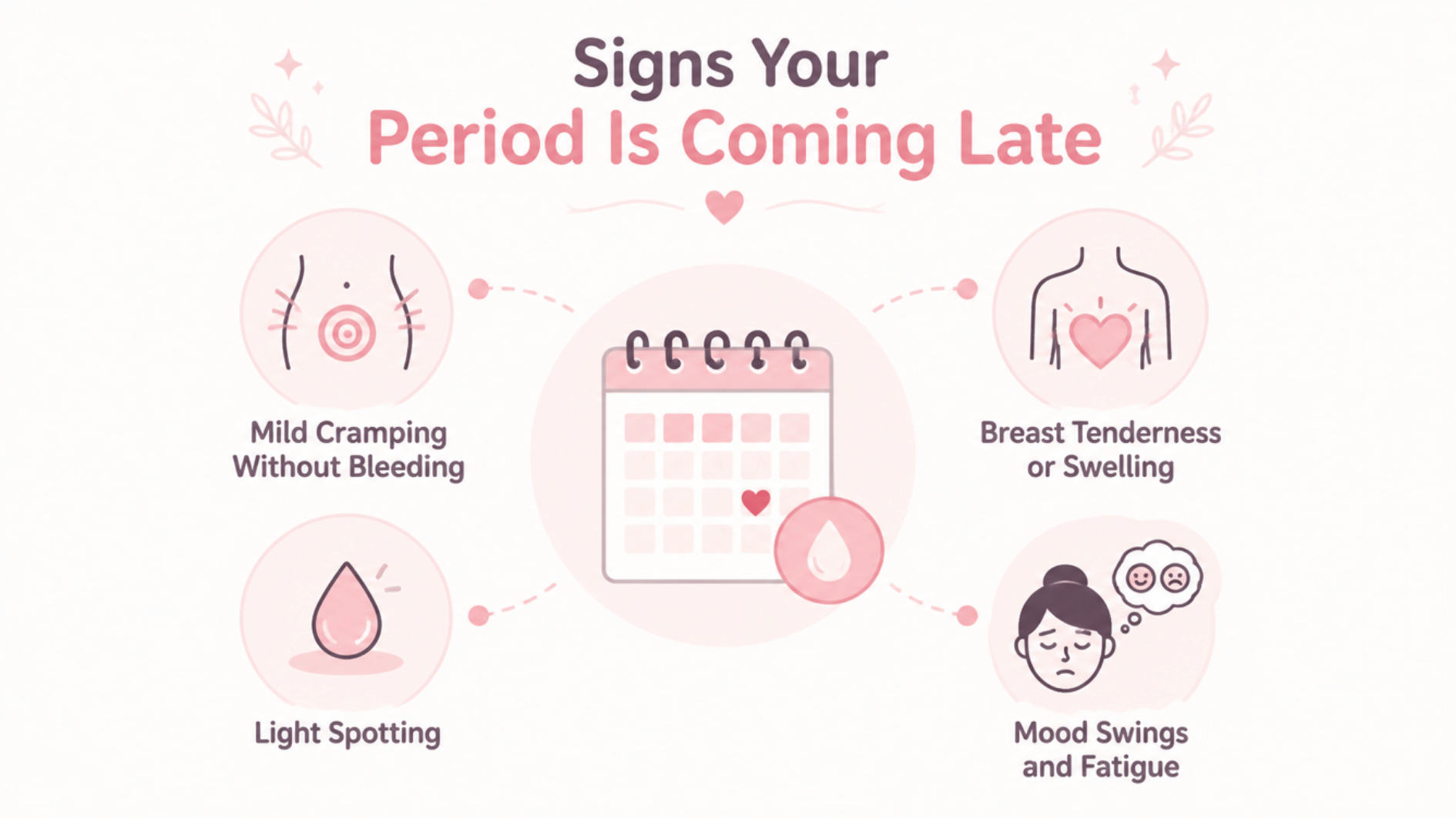
Even when your period is delayed, your body often gives small clues that it’s still on its way.
1. Mild Cramping Without Bleeding
Gentle, dull cramps low in your belly without any blood are one of the earliest signs of your period coming late, meaning your body is preparing; it’s just taking its time.
This is often milder than your usual period pain and shouldn’t be a cause for concern.
2. Breast Tenderness or Swelling
Sore, heavy, or tender breasts often appear as your hormone levels shift in preparation for your period.
If this feeling shows up without your period following soon after, stress may be the reason behind the delay.
3. Light Spotting
A small amount of spotting without a full flow is a common sign that your period is approaching but not quite here yet.
It’s your body easing into the cycle, and this often turns into your regular flow within a few days.
4. Mood Swings and Fatigue
Feeling unusually tired, irritable, or emotional can be one of the subtler signs that your period is coming late, even if it’s running late.
These shifts occur as your hormones adjust, so pay attention if they appear alongside other physical signs.
How to Prevent Stress From Delaying Your Period?
You cannot completely prevent stress-related changes in your cycle, but healthy stress-management habits may reduce their likelihood and support menstrual health.
- Stay Physically Active: Moderate walking supports mood, reduces stress, and helps prevent cycle disruption caused by intense training.
- Maintain a Healthy Weight: Gradual weight changes and balanced meals help support stable hormone levels and regular cycles.
- Track Your Menstrual Cycle: Record dates, flow, exercise, and lifestyle changes to spot unusual patterns early.
- Follow a Steady Routine: Consistent sleep, meals, and activity can make daily stress easier to manage overall.
- Seek Medical Advice when Needed: Consult a provider when periods are repeatedly missed, widely spaced, or change unexpectedly.
When to See a Healthcare Provider?
Most stress-related delays resolve on their own within a few weeks, but some signs shouldn’t be ignored.
If your period is missing for three months or more, or your cycles stay irregular month after month, it’s time to check in with a doctor.
The same goes for severe pelvic pain, unusually heavy bleeding, or symptoms like sudden hair growth, acne, or unexplained nipple discharge, since these can point to conditions beyond stress.
The American Society for Reproductive Medicine (ASRM) explains that even a one-week delay may need a pregnancy check in people with regular cycles. It also says that missing periods for more than three months after previously regular cycles “requires investigation.”
The Bottom Line
The connection between stress and your period is stronger than you may have realized.
Be it how cortisol messes up ovulation or the signals that indicate your period is merely delayed, having this information can help you transform moments of worry into knowledge.
This is because you know what constitutes an acceptable period delay, when your body needs extra recovery time, and when you should contact a doctor for peace of mind.
Signs of a period coming late are often just your body’s way of asking you to slow down and rest
Frequently Asked Questions
Why is My Period 10 Days Late if I’m Not Pregnant?
A 10-day delay is often caused by stress, poor sleep, or a sudden change in exercise or diet, and if it continues or repeats, it’s worth mentioning to your doctor.
How Long Can Stress Delay Your Period?
Stress typically delays a period by a few days to a few weeks, and in severe cases, it can cause you to skip a period entirely.
Can Stress Make Your Period Come Early?
Yes, while stress usually delays periods, it can sometimes cause them to arrive early instead by disrupting the timing of ovulation.


















