

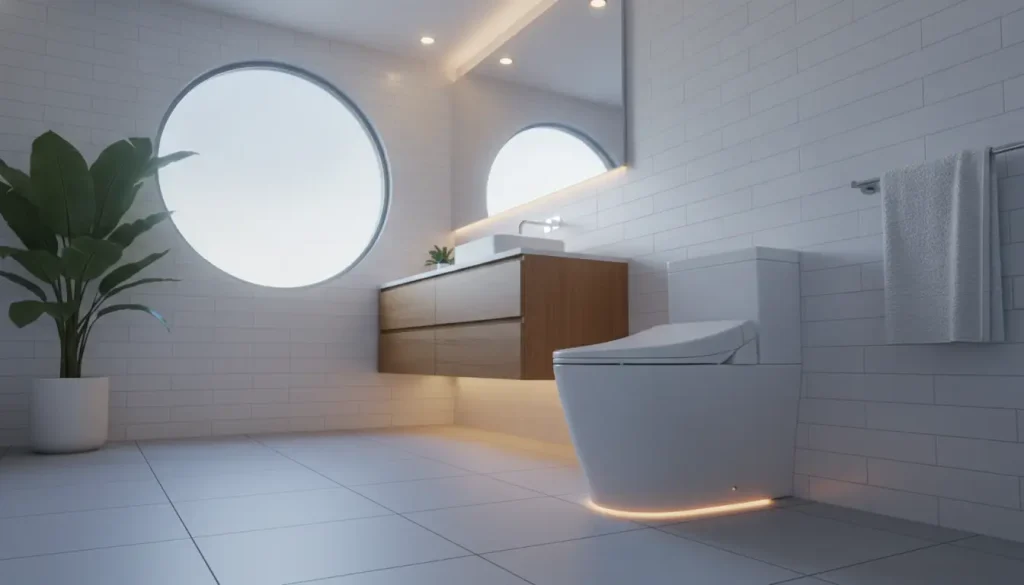
Smart toilets are definitely worth considering. Modern smart toilets offer a variety of everyday functions, such as washing, heated seats, automatic flushing, and touchless controls, making toilet use more convenient and comfortable, and effectively improving hygiene.
However, smart toilets aren’t always suitable for everyone’s needs. Before upgrading, it’s crucial to understand the functions of a smart toilet, which functions are most important, and what conditions your bathroom needs to meet for installation.
What Is a Smart Toilet?
A smart toilet is an integrated toilet that uses electricity to provide functions beyond basic flushing. Depending on the model, these may include:
- Warm-water bidet washing
- A heated toilet seat
- Warm-air drying
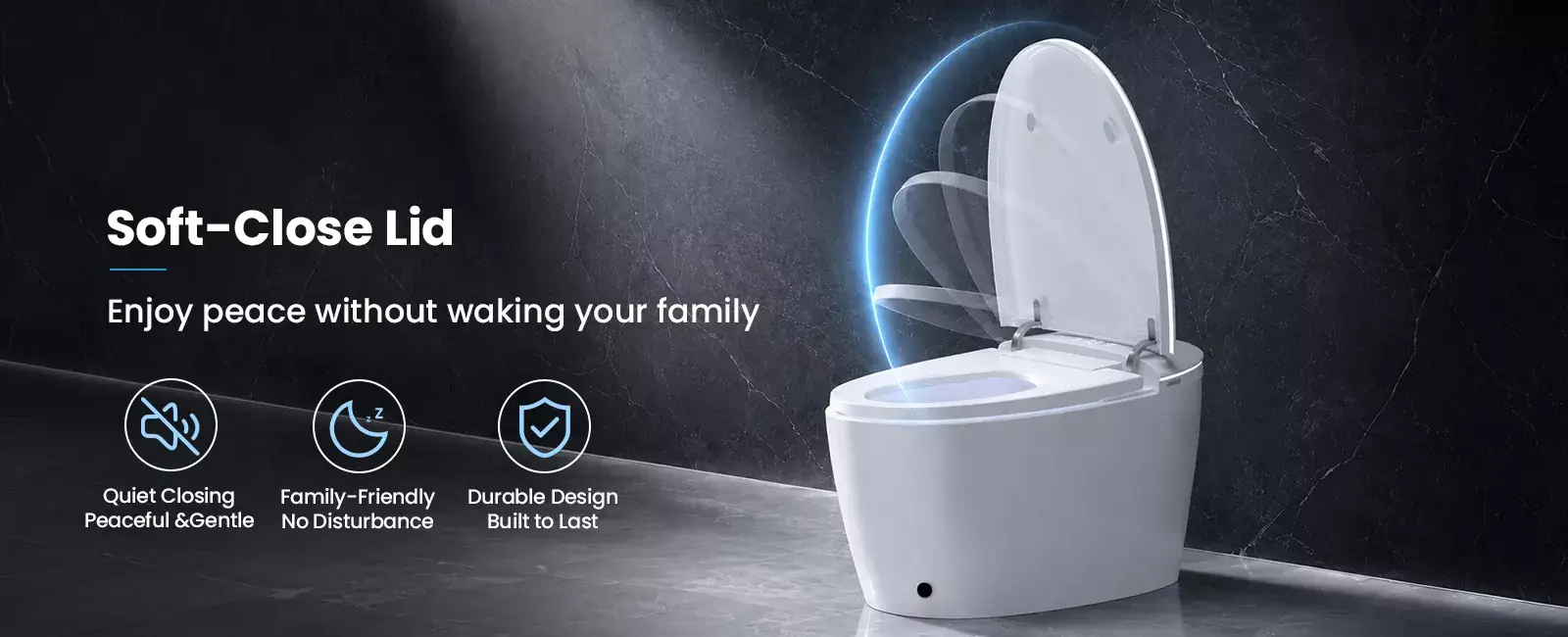
- Automatic lid opening
- Touchless flushing
- Adjustable water pressure and temperature
- Self-cleaning bidet nozzles
- UV nozzle sterilization
- Automatic deodorization
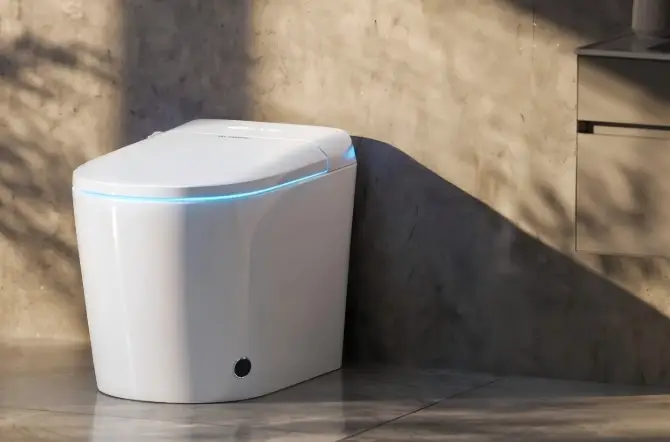
- Night lighting
- User memory settings
Unlike a standard bidet seat, an integrated smart toilet combines the ceramic bowl, flushing system, seat, and electronic bidet functions into a single fixture. This creates a cleaner, more streamlined appearance and allows features such as automatic flushing and foot-sensor controls to work as part of the complete system.
A bidet seat can still be a practical and affordable upgrade, especially for homeowners who want to keep their existing toilet. However, a one-piece smart toilet is generally better suited to a complete bathroom renovation or to anyone who wants a fully integrated experience.
What Benefits Do Smart Toilets Provide?
The strongest argument for upgrading is not novelty. It is the improvement smart features can make to routines that happen several times every day.
1. Greater Everyday Comfort
A heated toilet seat may sound like a luxury until it becomes part of a cold winter morning. Many smart toilets allow users to adjust the seat temperature instead of relying on a single heat setting.
Warm-water washing and warm-air drying can also make the bathroom experience more comfortable. Better models provide several temperature and water-pressure levels, allowing different members of the household to choose gentler or stronger washing.
These features are especially useful in a primary bathroom, where the toilet is used frequently enough for small improvements to become meaningful.
2. More Personal Cleaning
An integrated bidet uses a controlled stream of water for cleaning after toilet use. Many models provide separate rear and front wash modes, while more advanced toilets may add oscillating, pulsing, or adjustable-position washing.
This can offer a more thorough cleaning experience than toilet paper alone. It may also reduce paper use, although most households will probably continue using at least a small amount.
Homeowners comparing models should look beyond the number of wash modes. Adjustable nozzle position, water pressure, water temperature, and a dedicated front-wash function are often more useful than a long list of poorly explained settings.
3. Less Contact With Surfaces
Automatic lids, foot controls, motion sensors, and touchless flushing reduce the need to touch the toilet during normal use. This is convenient when someone has wet or dirty hands, and it can help keep the exterior cleaner.
Some models open the lid as a user approaches and flush automatically after use. Others use a foot sensor, which provides hands-free operation without causing the lid to open every time someone walks past the bathroom.
4. Easier Nighttime Use
A soft night light can make the toilet easier to find without turning on bright overhead lighting. This is a simple feature, but it can be valuable for children, older adults, and anyone who regularly uses the bathroom during the night.
For the best experience, look for a light that is bright enough to guide movement without illuminating the entire room.
Are Smart Toilets More Hygienic?
Smart toilets can support a cleaner bathroom routine, but buyers should pay attention to how their hygiene features actually work.
A self-cleaning nozzle usually rinses itself before or after use. Some toilets also use UV light to treat the nozzle when it is retracted. These functions help maintain the washing system, but they do not eliminate the need for routine toilet cleaning.
Nozzle design also matters. A retractable nozzle is protected inside the toilet when it is not operating, while a removable nozzle tip can make manual cleaning and replacement easier.
Another feature to consider is the water supply. Some smart toilets use a dedicated water channel for bidet washing rather than drawing cleansing water through the same internal path used for flushing. Water filtration may also help protect the nozzle system from sediment, although filter replacement adds a small amount of ongoing maintenance.
Automatic deodorization can help control odors during and after use. However, the effectiveness varies by design. Homeowners should treat it as a useful supporting feature, not as a replacement for proper bathroom ventilation.
Which Features Are Actually Worth Paying For?
Smart toilets can have long specification lists, but not every feature provides equal value. For most households, the following functions have the greatest practical impact:
- Adjustable warm-water washing: This is the central function of a smart toilet and should be easy to control.
- Adjustable heated seat: Multiple temperature settings make the feature more comfortable across different seasons.
- Warm-air drying: Drying performance varies, so adjustable temperature and airflow are useful.
- Self-cleaning retractable nozzle: This helps protect the washing mechanism between uses.
- Reliable flushing: Smart features do not compensate for weak or inconsistent waste removal.
- Easy-to-use controls: A remote control should be clearly labeled and simple enough for guests or older family members to understand.
- Power-outage flushing: A backup flushing method is important because most smart toilets depend on electricity for at least some functions.
Automatic lid opening, user presets, UV treatment, deodorization, ambient lighting, and app controls may add convenience, but their value depends on the household. Buyers should prioritize the functions they will use every day before paying extra for less essential automation.
What Should You Check Before Installation?
A smart toilet is not always a direct drop-in replacement for a conventional toilet. Before purchasing one, confirm the following requirements.
1. Rough-In Distance
The rough-in is the distance from the finished wall to the center of the floor drain. In many American bathrooms, the standard rough-in is 12 inches, but older or unusually designed bathrooms may use a different measurement.
Do not measure from the baseboard. Measure from the finished wall itself. If the existing toilet is still installed, measure to the center of the floor bolts, which usually align with the drain.
2. Electrical Outlet
Most smart toilets need a nearby electrical outlet to power the heated seat, water heater, dryer, sensors, and controls. In a bathroom, this should normally be a properly grounded GFCI-protected outlet installed according to applicable local electrical codes.
Extension cords are generally not a good permanent solution. If there is no suitable outlet near the toilet, include the cost of electrical work in the renovation budget.
3. Water Connection
Check whether the toilet includes the necessary hose, shutoff valve, adapter, and filter. Some integrated models have different connection requirements from a conventional gravity toilet.
Water pressure requirements should also be reviewed. Certain tankless or pressure-assisted flushing systems may not perform correctly if the home’s water pressure is too low.
4. Available Space
Compare the product’s full length, width, and height with the available floor area. Confirm that nearby doors, vanity drawers, walls, and baseboards will not interfere with the toilet or its sensor range.
If the toilet opens its lid automatically, make sure the lid has enough clearance behind it.
5. Flushing During a Power Outage
Ask what happens when electricity is unavailable. Some smart toilets include a battery-assisted emergency flush, while others provide a manual flushing method. Bidet washing, heating, drying, and sensor functions will usually remain unavailable until power returns.
This detail is easy to overlook, but it can make a significant difference in areas that experience frequent outages.
Are Smart Toilets Suitable for Families and Older Adults?
Smart toilets can work well in multi-user households when their controls are simple and their settings are adjustable.
Families may benefit from different wash modes, adjustable water pressure, a night light, and child-friendly controls. A dedicated front-wash function may also be important for users who want a gentler feminine washing option.
For older adults or people with limited mobility, features such as automatic flushing, remote operation, washing, and drying may reduce the amount of reaching, twisting, and manual cleaning involved in using the bathroom. A foot sensor can also make operation easier for someone who has difficulty using small buttons.
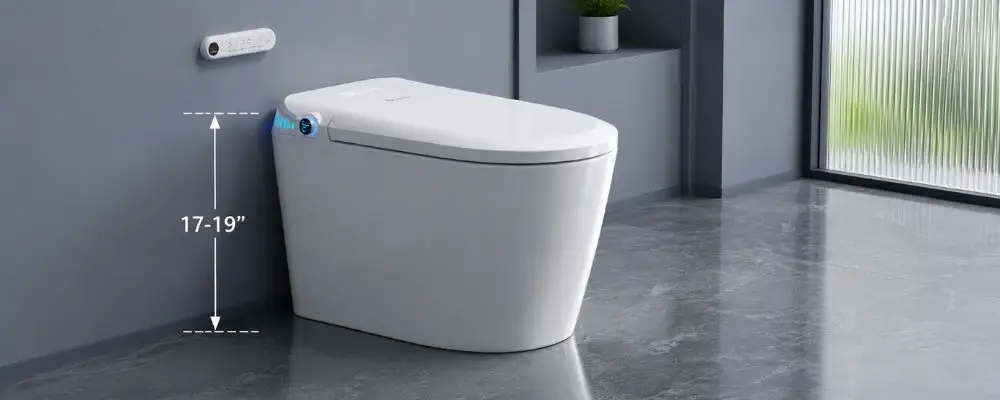
However, a smart toilet should not be treated as a substitute for accessibility planning. Seat height, surrounding clearance, floor safety, grab-bar placement, and ease of transferring remain important. In some bathrooms, a comfortable-height conventional toilet with an accessible bidet seat may be more practical than a low-profile smart toilet.
How Much Does a Smart Toilet Cost?
Smart toilet pricing depends heavily on whether the product is a bidet seat or a complete toilet. In the U.S. market, typical purchase prices fall into the following ranges:
- Electric bidet seats: $200–$800
These attach to an existing toilet and commonly provide warm-water washing, seat heating, drying, and adjustable settings. - Entry-level integrated smart toilets: $600–$1,200
These combine the ceramic bowl, flushing system, bidet, heated seat, and electronic controls in one fixture. - Mid-range integrated smart toilets: $1,200–$3,000
Models in this range may add automatic lids, foot sensors, stronger flushing systems, UV nozzle treatment, user presets, or deodorization. - Premium smart toilets: $3,000–$8,000 or more
Luxury models often carry higher prices because of their brand, design, advanced automation, specialized flushing technology, and premium materials.
The purchase price is only part of the total budget. Depending on the bathroom and local labor rates, homeowners may also need to pay:
- Old toilet removal and disposal: $50–$200
- Basic professional installation: $200–$600
- New GFCI electrical outlet: $150–$500
- Minor plumbing modifications: $200–$800
- Drain, water-line, or rough-in relocation: $500–$1,500 or more
- Replacement water filters: approximately $20–$80 each
- Out-of-warranty electronic repairs: approximately $150–$800 or more
- Return shipping for a large fixture: $150–$500 or more
A straightforward installation is usually much less expensive than a project requiring a new electrical circuit, relocated drain, tile repair, or significant plumbing work. Homeowners should request local estimates before purchasing if their bathroom does not already have a suitable outlet and compatible rough-in.
Before buying, check the warranty, replacement-part availability, return policy, and customer-support process. A low purchase price may provide poor long-term value if replacement remotes, nozzles, filters, seats, or electronic components are difficult to obtain.
It is also important to confirm whether the listed price covers a complete integrated smart toilet or only an electric bidet seat. Product photos and titles do not always make this distinction clear, and a bidet seat priced at $300 should not be directly compared with a complete ceramic smart toilet priced at $800 or more.
Do Smart Toilets Require More Maintenance?
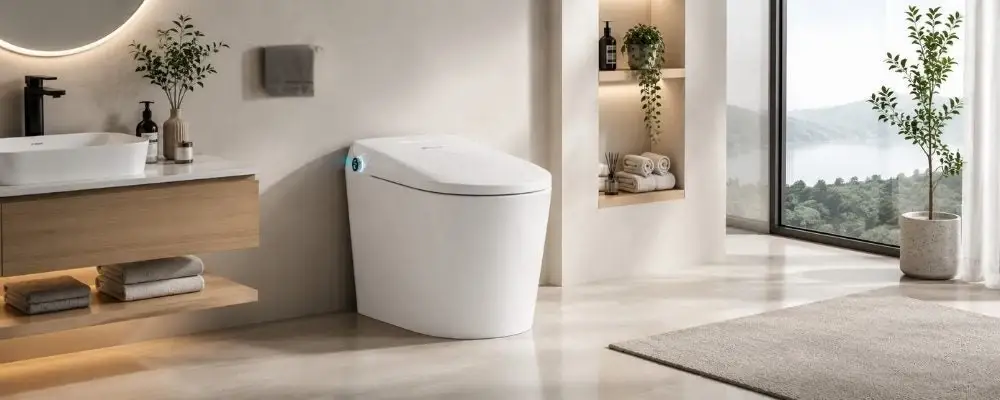
The ceramic bowl can usually be cleaned in much the same way as a conventional toilet, but the electronic components require additional care.
Avoid spraying water directly into electrical connections, the remote-control receiver, or control panels. Strong abrasive cleaners may damage the seat, nozzle, protective coatings, or plastic surfaces.
Filters need to be checked or replaced according to the manufacturer’s instructions. If the home has hard water, mineral buildup may affect the nozzle or internal water passages over time. Regular nozzle inspection and gentle descaling can help maintain consistent performance.
A smart toilet also contains more components than a traditional toilet, so there are more potential points of failure. This is one reason warranty coverage and access to spare parts should influence the buying decision.
Are Smart Toilets Worth the Investment?
A smart toilet is more likely to feel worthwhile when:
- The bathroom is used every day
- Warm-water washing is a priority
- Household members value a heated seat and dryer
- Hands-free controls would improve convenience
- The bathroom already has a suitable outlet
- The homeowner plans to stay in the property for several years
- The model has reliable support and replacement parts
It may be less suitable when:
- The bathroom is rarely used
- The renovation budget is limited
- Adding an electrical outlet would be difficult
- The home experiences frequent outages, and the toilet lacks backup flushing
- The owner wants the simplest possible fixture to repair
- The household is unsure whether it will use bidet functions
For someone mainly interested in warm-water washing, a quality bidet seat may offer better value. For a homeowner completing a full bathroom renovation and wanting a cleaner, integrated fixture, a one-piece smart toilet can be the more attractive long-term choice.
Choosing a Smart Toilet That Fits Your Routine
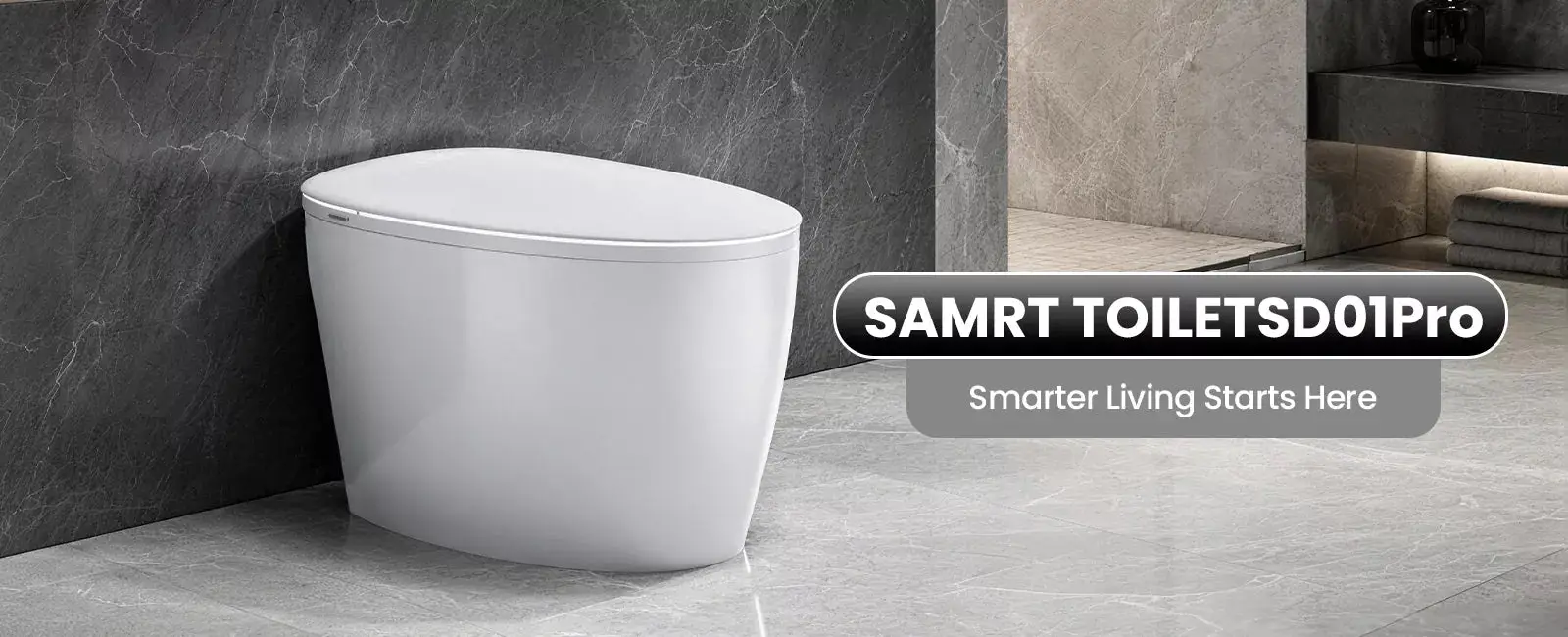
The best smart toilet is not necessarily the model with the longest feature list. It is the one that combines reliable flushing, comfortable washing, straightforward controls, and practical support.
For example, integrated SANYIPACE SD01PRO smart toilets in the Aira series combine ceramic toilet construction with features such as heated seating, endless warm water, adjustable bidet washing, warm-air drying, self-cleaning nozzles, and hands-free controls. Different models emphasize different priorities, including everyday heated comfort, personalized dual-nozzle washing, or UV nozzle treatment and automatic deodorization.
That type of model range allows homeowners to choose according to their actual needs instead of paying for every available feature.
Before ordering, compare the toilet’s measurements, rough-in, electrical requirements, water-pressure range, flushing method, warranty, and replacement-part support. Those practical details will have more effect on long-term satisfaction than decorative lighting or app connectivity.
Final Thoughts
Smart toilets are not essential for every bathroom, but they are more than a passing technology trend. Warm-water cleaning, seat heating, touchless operation, and adjustable settings can provide noticeable daily benefits, especially in a frequently used bathroom.
The upgrade makes the most sense when the home is ready for installation, the features match the household’s routine, and the manufacturer provides dependable after-sales support. Homeowners who check these points before buying are more likely to see a smart toilet as a useful long-term improvement rather than an expensive gadget.