Aluminum Pergolas: Stylish and Long-Lasting Outdoor Living Solutions
The modern approach to landscape architecture treats exterior spaces as natural continuations of the home’s interior footprint. Creating a cohesive, comfortable outdoor lounge requires structural elements that offer both aesthetic elegance and robust environmental defense. Utilizing a commercial aluminum pergola is one of the most effective ways to balance luxury styling with high-performance utility, allowing property owners to maximize their usable acreage regardless of seasonal shifts.
Why Aluminum Pergolas Are So Popular
The surging global demand for aluminum outdoor structures stems directly from their ability to solve the inherent flaws of traditional building materials. Unlike wood, which suffers from rot, or steel, which requires heavy anti-corrosion treatments, aluminum delivers an exceptionally long operational lifespan without losing its structural or aesthetic appeal.
Key Characteristics of Aluminum Structures
To see why this material has become the ultimate industry favorite for premium outdoor architecture, it is incredibly helpful to thoroughly review its fundamental physical and chemical properties:
- High Strength-to-Weight Ratio. Engineered high-tensile aluminum configurations provide incredible structural load capacity and remarkable rigidity without putting heavy, unnecessary dead-weight stress on concrete footings, foundational slabs, or elevated residential decks. This makes it an ideal choice for large-span overhead frameworks that require maximum safety with minimal mass.
- Inherent Oxide Protection Layer. Unlike traditional ferrous metals that rust when exposed to the elements, this specialized alloy naturally forms a microscopic, non-porous protective surface layer upon air contact. This barrier completely blocks moisture, ambient humidity, and oxygen from ever penetrating or weakening the core structural material.
- Excellent Thermal Stability. Extruded engineering components experience negligible dimensional expansion or contraction even under extreme seasonal temperature swings. This precise material stability effectively prevents structural warping, misaligned louver slats, or dangerous joint loosening over decades of continuous operation.
These unique physical characteristics work together seamlessly to ensure the entire framework maintains its exact geometric shape, mechanical integrity, and polished aesthetic look through decades of intense weather exposure.
Aluminum vs. Wooden Pergolas: Key Differences
Choosing between wood and metal dictates the long-term cost, maintenance commitment, and appearance of your outdoor area.
|
Feature / Criteria |
Traditional Wooden Pergolas |
Commercial Aluminum Pergolas |
|
Maintenance Burden |
High; requires annual staining, painting, or sealing. |
Extremely low; occasional rinsing with water is sufficient. |
|
Environmental Lifespan |
Vulnerable to wood rot, termites, and moisture warping. |
Immune to pests, splintering, rotting, and rust. |
|
Design Flexibility |
Limited to straight cuts or heavy, bulky timber looks. |
Features crisp, minimalist profiles with sharp architectural lines. |
|
Climate Adaptability |
Holds moisture and can split under intense freeze-thaw cycles. |
Highly resilient against freezing temperatures, UV rays, and salt air. |
Reviewing these distinct material paths makes it clear that while wood provides a rustic feel, metal delivers superior durability and long-term cost efficiency for modern properties.
Main Benefits of Aluminum Pergolas
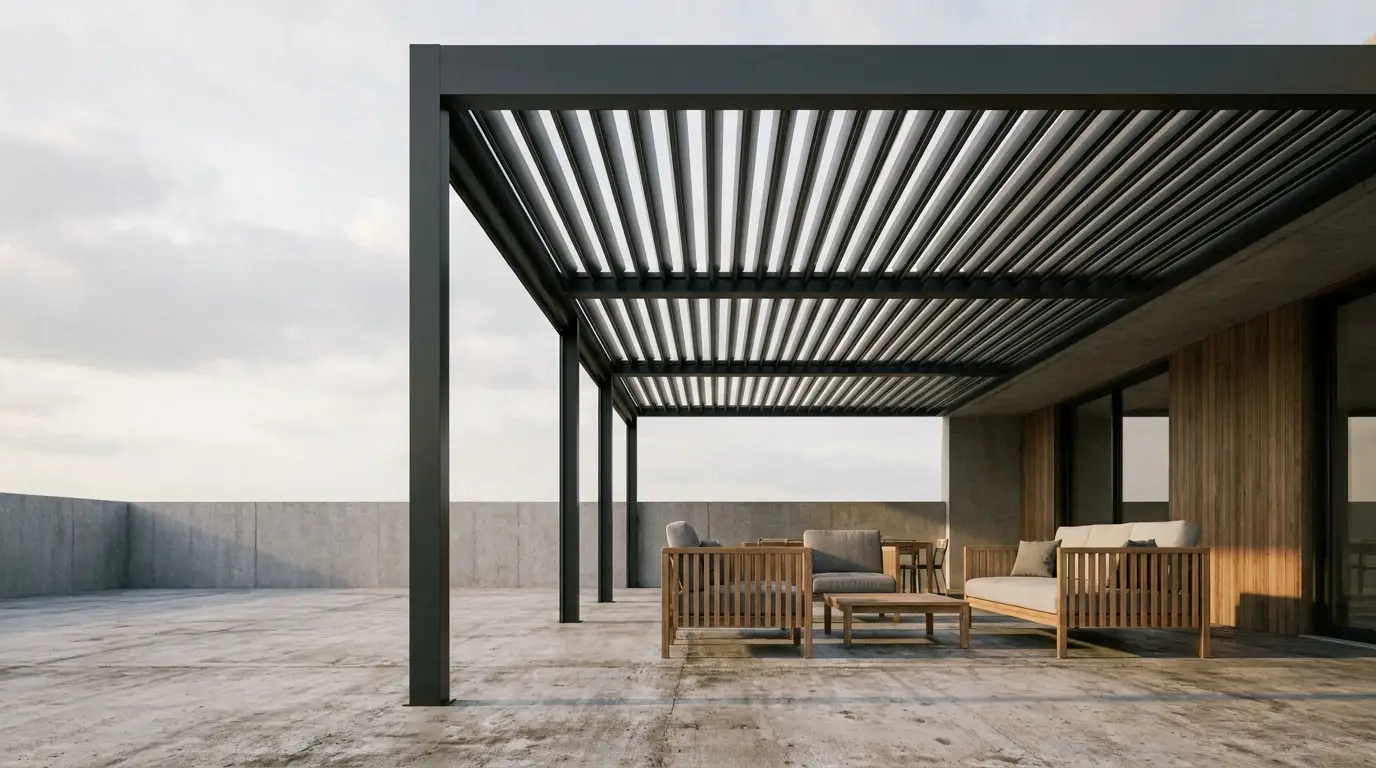
Investing in an aluminum overhead canopy delivers several practical everyday advantages, transforming underutilized yards into active, functional living zones.
Low Maintenance and Extended Durability
Because aluminum structures are treated with specialized powder-coat finishes, they never require sandblasting, repainting, or chemical wood preservation. The color remains locked into the substrate, resisting fading from intense UV rays and maintaining a brand-new look for decades.
Modern Aesthetic and Versatile Use Cases
With clean lines and hidden fastening hardware, these systems perfectly complement contemporary architecture. They function flawlessly across diverse applications:
- Outdoor Dining Areas. Shielding premium furniture and guests from sudden downpours or intense mid-day heat waves.
- Gourmet Outdoor Kitchens. Providing an open, heat-resistant canopy that lets smoke escape freely while protecting outdoor appliances from rain.
- Luxury Commercial Patios. Expanding the seated capacity of cafes and hotels to guarantee steady outdoor business revenue through all seasons.
Expanding your layout with a metal canopy ensures a versatile space that easily adapts to shifting personal or commercial entertainment needs.
How to Choose the Right Aluminum Pergola
Selecting the best configuration requires matching the physical properties of the structure to your specific location and usage needs. Always evaluate local climate factors first; for instance, high-altitude or coastal areas demand certified heavy-snow load ratings or thick marine-grade powder coatings. Additionally, ensure the footprint coordinates with your home’s proportions and leaves adequate clear height for comfortable airflow and movement.
Conclusion: A Smart Choice for Outdoor Living Spaces
Upgrading your property with a premium aluminum canopy system balances architectural beauty with unmatched structural longevity. By eliminating time-consuming maintenance tasks and providing reliable protection against the elements, these structures allow you to spend more time enjoying your outdoor environment. Ultimately, selecting a heavy-duty aluminum system is a forward-thinking property upgrade that enhances daily comfort and adds lasting market value to your home.