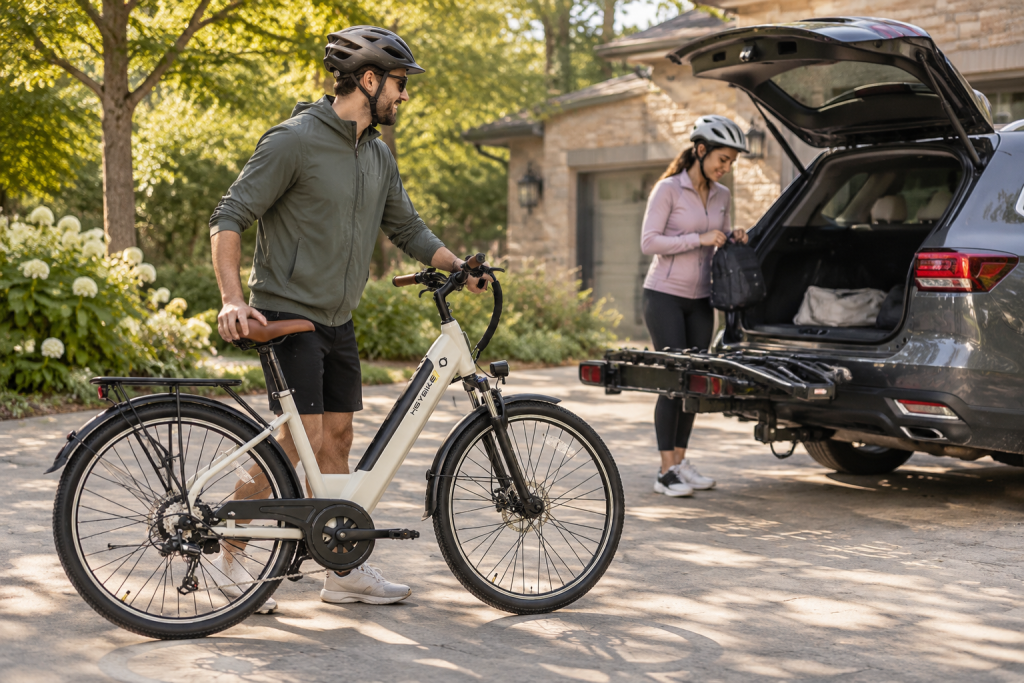
Transporting an e bike by car begins with a chain of compatibility questions. The car, hitch or mounting system, carrier, bicycle, and accessories all need to work together. A carrier advertised for heavy bicycles may still be unsuitable for a particular frame, wheelbase, tire, or vehicle. The task is to confirm the complete combination before loading anything.
Write down the exact car and bicycle configurations. Include fitted racks, baskets, fenders, and any other items that affect dimensions or access to attachment points. A quotation or compatibility answer based on an unmodified bicycle may not apply to the bike that actually needs to travel.
Establish the Vehicle Side First
Check the vehicle manufacturer’s instructions for the intended mounting arrangement and relevant limits. Then check the carrier manufacturer’s requirements for that vehicle and mounting system. Do not select a carrier solely because its headline bicycle capacity exceeds the weight of one bike. The supporting vehicle and attachment equipment have their own conditions.
If a hitch is involved, obtain the correct information about the hitch and vehicle combination from the appropriate manufacturers or a qualified installer. Do not infer a safe carrier load from a trailer towing figure alone. These are different uses, and the most restrictive applicable instruction may determine what can be carried.
Compare the Actual Bicycle Dimensions
Record weight, wheelbase, tire width, wheel diameter, and the frame areas the carrier intends to hold. Check those against the carrier’s specified range. A wheel tray can be wide enough while the retaining arm is incompatible with a fender. A frame clamp can also require a suitable contact area that a particular frame does not provide.
An ebike should be checked in the configuration that will be transported. If the instructions permit removing a battery or accessory, record the resulting configuration and handle the removed item according to its own guidance. Do not assume removal is required, permitted, or sufficient to make an otherwise incompatible carrier acceptable.
Ask for written confirmation when the fit is unclear. Provide photographs or measurements through the manufacturer’s support channel if requested. A generic answer that electric bicycles are accepted is less useful than an answer about the exact model, dimensions, fenders, and mounting method.
Plan the Loading Movement
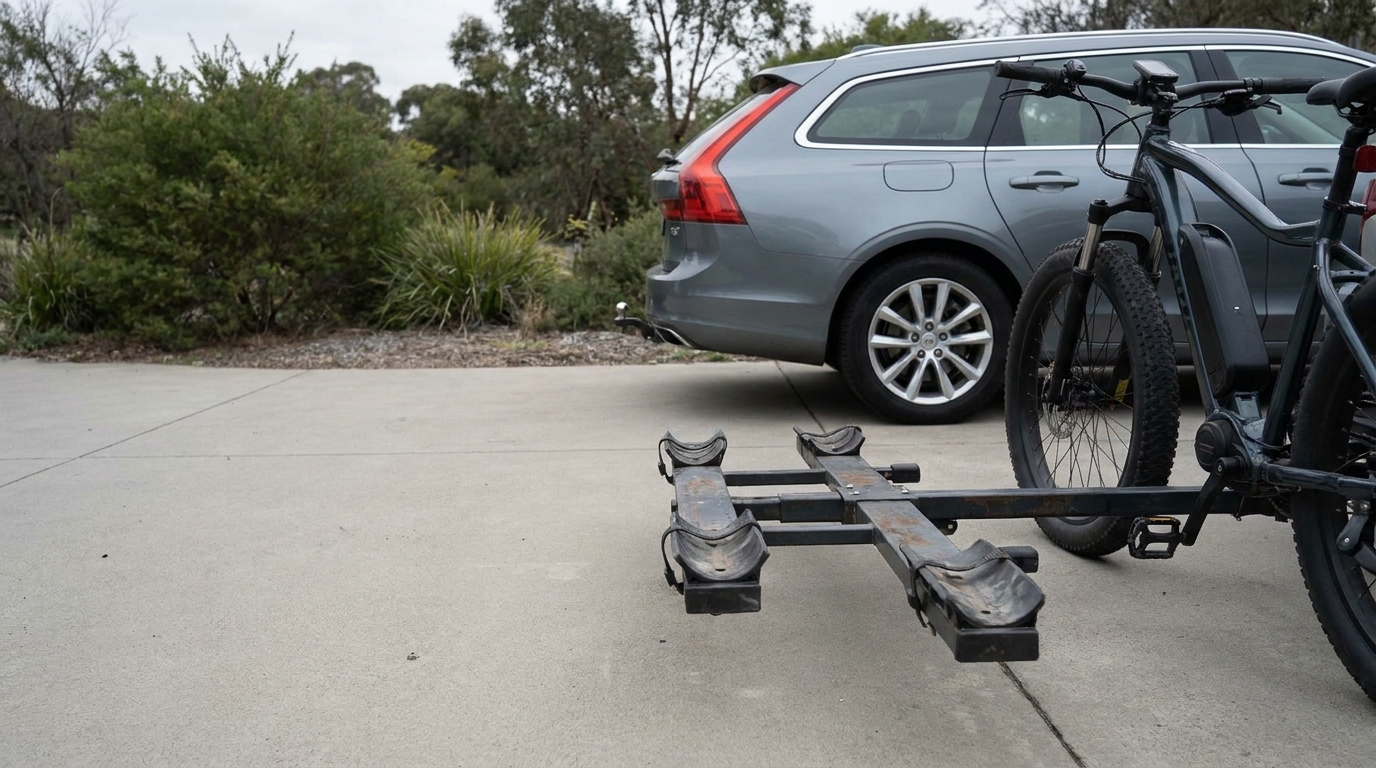
The carrier’s capacity does not establish that the rider can lift the bicycle onto it. Consider height, reach, body position, and the space available around the parked vehicle. A suitable loading aid may help only if the carrier manufacturer approves it for that system. Do not improvise a ramp or support from loose household materials.
Try the sequence in a safe, level location with the vehicle secured as instructed. Keep people clear of the movement and avoid holding a bicycle in an unstable position while searching for straps. If the process requires more assistance than expected, arrange that assistance or choose a more manageable system. Convenience depends on repeatability, not one successful lift.
Check What the Loaded Carrier Obscures
Follow applicable requirements for number plates, lights, reflectors, and visibility. A bicycle can obstruct parts of the vehicle even when it fits securely on the rack. Ask the relevant authority or carrier supplier about the correct arrangement where needed. Do not assume that other vehicles using the same carrier demonstrate compliance.
Also check access to the rear of the car and the clearance required by any approved tilt feature. Keep hands clear of pinch points and do not operate a mechanism contrary to its load instructions. A carrier that works well for a day trip may be less convenient if luggage access is needed repeatedly during the journey.
Secure the Bike Using the Specified System
Use the carrier instructions for attachment points, straps, retainers, and checks. Avoid routing a strap across a component that was not designed to take that force. Remove loose items when required and secure anything that could move in airflow. Do not add a cover unless the carrier and bicycle transport instructions allow that use.
For model information, Heybike can help identify the bicycle and its current configuration. The vehicle and carrier manufacturers remain the sources for their respective limits and loading method. Keeping those responsibilities clear prevents a bicycle specification from being mistaken for approval of the whole transport setup.
Retain the carrier model number as well as the bicycle details, since a similarly named revision may use different fittings or limits. Review compatibility again after changing either vehicle.
Before departure, complete the specified checks and note how the loaded vehicle’s dimensions have changed. Follow the instructions for checks during travel and after unloading. Keep the equipment manuals available for future trips, especially when adding a second bicycle or changing accessories. The correct carrier is the one that fits the entire combination and can be used consistently, with no missing assumption hidden between its advertised capacity and the bike on the back of the car.