Chest discomfort, shortness of breath, or an unusual heartbeat may lead a doctor to check how the heart performs under added strain.
A cardiac stress test measures that response during exercise or with medicine while heart activity is closely monitored.
There is more than one type of test, and each comes with different timing, imaging methods, and prep steps. If you are asking how long a stress test is, the answer depends on the test ordered.
This blog also covers medications to avoid before stress test appointments and what patients can expect before, during, and after testing.
What is a Cardiac Stress Test?
A cardiac stress test checks how the heart works when it has to work harder than at rest, per Mayo Clinic. A healthcare professional tracks heart rate, rhythm, blood pressure, and symptoms during exertion.
Doctors order this test to check for coronary artery disease, confirm an irregular heartbeat, track treatment progress, or clear a patient for surgery.
It can also show how well blood flows to the heart muscle and how the heart responds to physical strain. The results can help a doctor decide if more testing or a change in treatment is needed.
Different Types of Cardiac Stress Tests
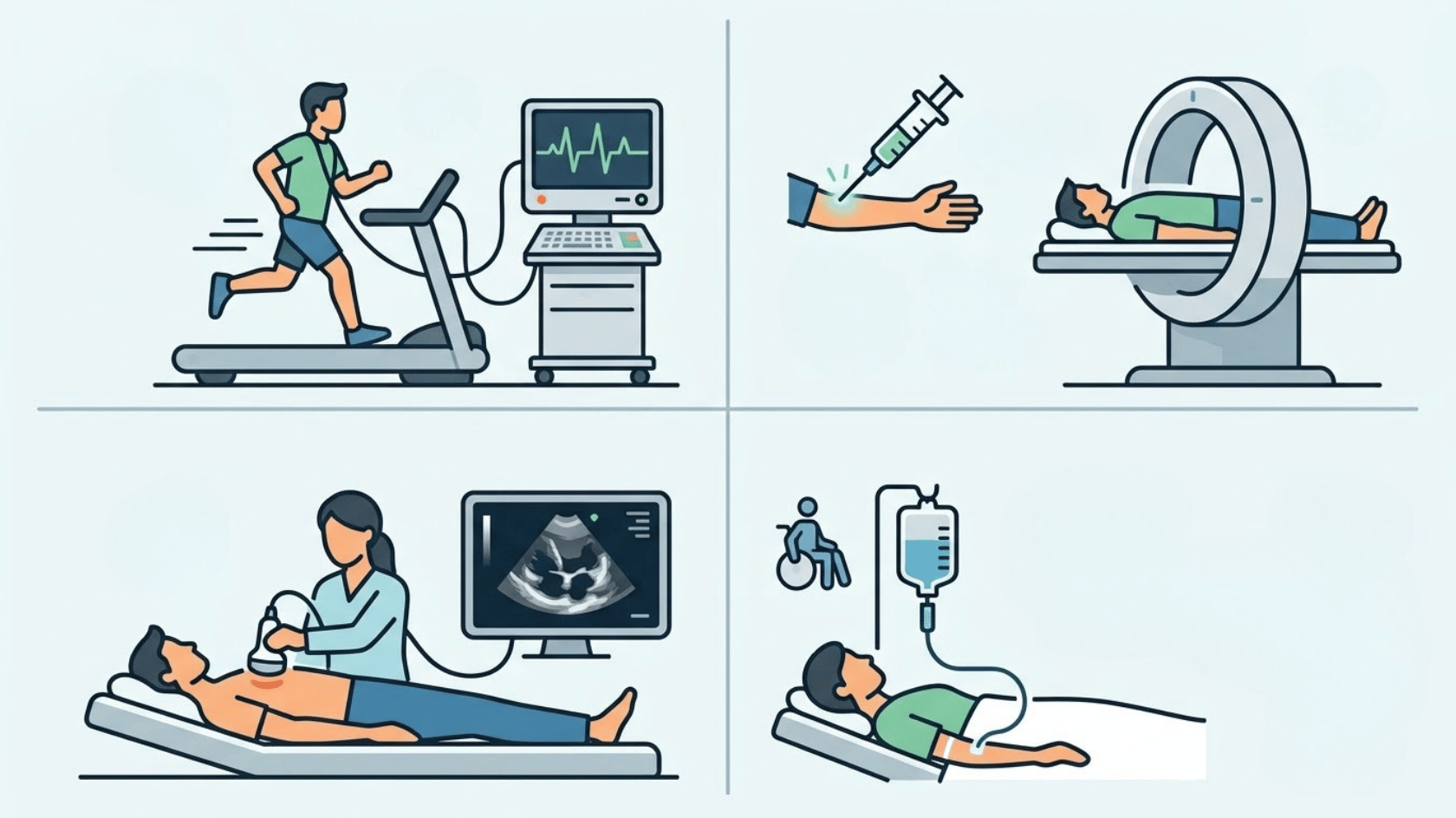
Four main types exist. Each one stresses the heart in a different way and watches how it responds. MedlinePlus groups them by exercise, imaging tools, and medicine use.
1. Exercise Stress Test
An exercise stress test uses a treadmill or stationary bike. Electrodes record an EKG the whole time. Mayo Clinic reports the exercise part runs about 15 minutes inside a roughly hour-long visit.
This version needs no imaging or tracer. It suits patients who can walk without trouble. But it skips detailed blood-flow pictures.
2. Nuclear Stress Test
A nuclear stress test adds a radioactive tracer and a special camera. This combo spots blood-flow gaps between rest and stress.
Cleveland Clinic notes the exercise or medicine part runs six to 12 minutes. The full visit takes several hours, though. It includes the tracer shot and two rounds of imaging, plus a small dose of radiation.
3. Stress Echocardiogram
A stress echocardiogram pairs exercise or medicine with ultrasound images. Pictures get taken before and right after peak exertion. MedlinePlus describes patients lying on their left side.
A technician moves a Doppler ultrasound device over the chest. This test skips radiation entirely. It also shows structural changes that a plain EKG cannot catch.
4. Pharmacologic or Chemical Stress Test
A pharmacologic stress test swaps exercise for an IV medicine, such as adenosine. The drug makes the heart work harder for 10 to 20 minutes, per MedlinePlus.
Doctors choose this route for patients who cannot walk because of joint, lung, or mobility limits. It is usually paired with nuclear imaging or an echocardiogram and is not used alone.
How to Prepare for a Cardiac Stress Test
Prep steps differ by test type. But several steps apply across the board, per MedlinePlus and Mayo Clinic.
- Food: fast for four to six hours before testing, per Cleveland Clinic
- Caffeine: skip coffee, tea, soda, and chocolate for 24 hours before a nuclear or pharmacologic test
- Smoking: stop tobacco and vaping for at least eight hours prior
- Clothing: wear comfortable walking shoes and loose, button-front tops for electrode access
- Medications: ask the ordering provider which prescriptions to hold or continue
- Breathing aids: bring an inhaler if one is used regularly
- Diabetes: confirm insulin or oral medicine timing with the ordering provider in advance
When a Stress Test is Actually Necessary
A cardiac stress test fits some situations far better than others. The table below lines up who typically needs one against who usually doesn’t, per Mayo Clinic, MedlinePlus, and the U.S. Preventive Services Task Force.
| Likely Needs a Stress Test | Usually Doesn’t Need One |
|---|---|
| Chest pain, shortness of breath, or palpitations with no clear cause | No symptoms and low overall risk for heart disease |
| Known or suspected coronary artery disease | Already diagnosed through other testing, with no new symptoms |
| Irregular heartbeat that needs a closer look | Routine screening during a checkup with no symptoms present |
|
Upcoming surgery that requires heart clearance first |
A recent normal stress test with no new symptoms since |
| Ongoing treatment for a heart condition, to check progress | Well-controlled heart disease with no change in status |
| Family history plus multiple risk factors, per a doctor’s judgment | Healthy adults starting a light exercise routine with no symptoms |
| High-risk job, such as commercial pilot, needing fitness clearance | Pregnancy, for nuclear or MRI stress tests specifically, absent a clear medical need |
Cardiac Stress Test Process
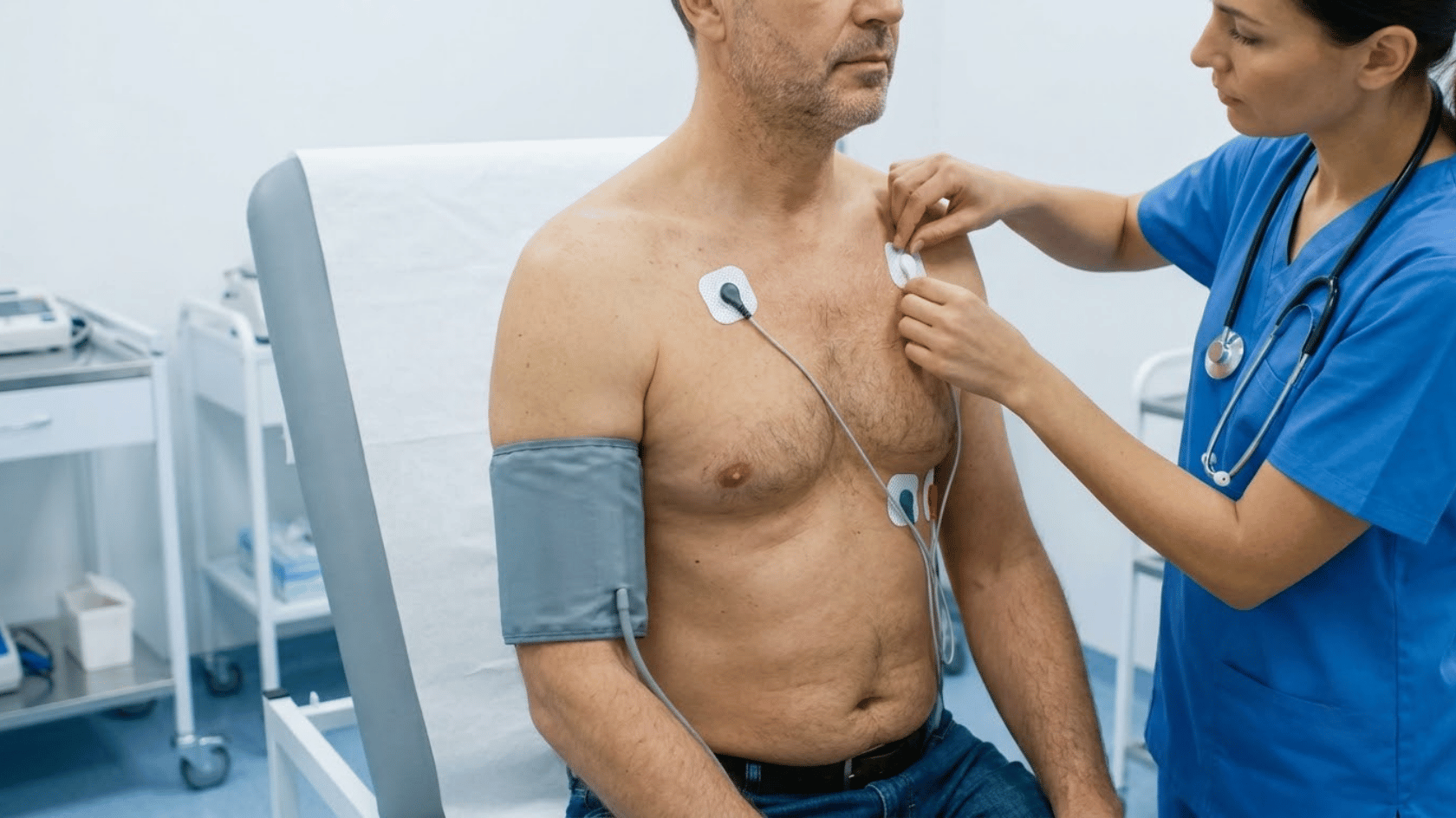
Most cardiac stress tests follow a similar process, though some steps vary by test type.
- Before the test: Your medical history is reviewed, and electrodes and a blood pressure cuff are attached for monitoring.
- Stress portion: You exercise on a treadmill or bike, or receive medicine that makes the heart work harder.
- Imaging: Nuclear or stress echo tests take heart images to check blood flow and heart function under stress.
- Recovery: Heart rate and blood pressure are monitored for a short time as they return toward normal.
How is a Cardiac Stress Test Scored?
Many exercise stress test reports include a Duke Treadmill Score combining exercise time, ST-segment changes, and chest pain into a single risk estimate.
It applies only to exercise EKG-based tests, not nuclear, echo, or pharmacologic versions.
| Risk Category | Duke Treadmill Score | Approx. 5-Year Survival | What It Typically Means |
|---|---|---|---|
| Low Risk |
+5 or higher |
97–99% | Low likelihood of significant coronary artery disease |
| Intermediate Risk | −10 to +4 | 90% | May warrant further evaluation depending on symptoms |
| High Risk | −11 or lower | 65% | Often linked to multi-vessel disease; angiography typically recommended |
Note: METs achieved is tracked separately from the score higher METs generally mean better cardiovascular fitness and outcomes.
Safety and Recovery After a Cardiac Stress Test
Cardiac stress tests are generally safe, and serious complications are uncommon.
Some people may briefly experience dizziness, an irregular heartbeat, nausea, flushing, or shortness of breath during or after testing.
Recovery is usually quick. Most patients can eat, drink, drive, and return to normal activities soon afterward. Any lingering symptoms should be reported to the healthcare team before leaving.
Nuclear stress test patients may be advised to drink extra water, while abnormal results may lead to further heart imaging or a coronary angiogram.
The Final Takeaway
A cardiac stress test gives doctors useful information about how the heart responds when its workload increases.
Exercise testing, nuclear imaging, stress echocardiography, and medicine-based testing each serve different needs and follow different procedures.
Knowing the test type, expected appointment length, and medications to avoid before stress test day makes preparation easier.
Follow the instructions from the testing center closely, since food, caffeine, medicine, and activity directions may differ from one test to another.
Frequently Asked Questions
What Happens if They Find a Blockage During a Stress Test?
An abnormal result showing reduced blood flow usually leads to a coronary angiogram to confirm and locate the blockage. Depending on severity, treatment may involve angioplasty with a stent or, for more extensive blockages, bypass surgery.
What Happens when You Fail a Cardiac Stress Test?
An abnormal result means your doctor will likely order more testing, most often a coronary angiogram, to pinpoint the cause. Treatment then follows based on what that follow-up test finds: medication, a procedure, or closer monitoring.
How Long Is a Stress Test?
An exercise stress test runs about an hour total; nuclear versions take two to four hours due to imaging. A stress echo takes 45 minutes to 1.5 hours, and pharmacologic tests run about one to three hours depending on paired imaging.