You bought the spinach. You bought the quinoa. Five days later, half of it went in the bin, and you ordered takeout twice.
The problem usually is not willpower. It is a healthy grocery list that reads like a collection of virtuous foods instead of a plan for real meals.
A useful list, from what I think, includes seven bases: vegetables, fruit, protein, whole grains or starchy foods, healthy fats, dairy, and convenient pantry or freezer items.
Continue reading and get a ready-to-copy weekly list, downloadable templates, easy meal combinations, and tips that keep both the budget and the bin under control.
What Should a Healthy Grocery List Include?
It should include five to seven vegetable varieties, three to five fruits, two or three proteins, two grain bases, one or two healthy fats, and a small set of pantry and freezer staples.
Seven vegetables because they deserve extra attention. The 2025–2030 Dietary Guidelines for Americans recommend three servings a day for a 2,000-calorie eating pattern.
I’ve made this ready-to-copy weekly list for you to make your research easier.
It is the same base list I have shopped from every week for over a year now. The only slots that change are the seasonal fruit and one rotating protein, and my average trip takes under 30 minutes
Take a screenshot of this or paste it straight into your notes app. Everything on it stores well, lasts for several meals, and requires no special cooking skills.
| Grocery Category | Foods to Add |
|---|---|
| Vegetables | Leafy greens, broccoli, carrots, peppers, tomatoes, onions, cabbage, frozen vegetables |
| Fruit | Bananas, apples, oranges, berries, grapes, seasonal fruit, frozen fruit |
| Protein | Eggs, chicken, fish, beans, lentils, tofu, canned tuna, plain yogurt |
| Grains and Starches | Oats, brown rice, whole-grain bread, pasta, potatoes, wraps |
| Healthy Fats | Olive oil, nuts, seeds, peanut butter, avocado |
| Snacks | Hummus, popcorn, whole-grain crackers, yogurt, fruit |
| Dairy | Milk, plain yogurt, cheese, fortified soy milk |
| Pantry Staples | Canned tomatoes, broth, herbs, spices, garlic, vinegar, mustard |
| Freezer Staples | Frozen fruit, frozen vegetables, fish, whole-grain bread |
Prefer something more visually appealing than the table? Download the healthy grocery list template here.
Note: You do not need everything every week. Treat each row as a menu to pick from, not a checklist to complete.
Which Healthy Grocery List Template Fits Your Household?
The food categories remain the same across household sizes, but the right template depends on how many people you shop for, your budget, storage space, and how quickly the food will be used.
Start with the option that matches your situation.
1. One-Person Template
Shopping for one gets difficult when standard pack sizes contain more than a single person can use before the food spoils.
This one-person healthy grocery list includes space for three dinners, two lunches, two breakfasts, foods already at home, and ingredients to use first.
Smaller quantities, frozen options, and longer-lasting staples make it easier to keep variety in the kitchen without creating unnecessary waste.
When I lived alone, the big bag of spinach was my recurring failure. Buying the small box and splitting it between eggs on day one and pasta on day three finally ended that cycle.
2. Couple or Family Template
A household grocery list works best when it reflects how many people eat and how often meals are prepared at home.
The couple- or family-friendly grocery list I made helps organize shared ingredients, lunchbox foods, snacks, household size, and the larger quantities needed for the week.
It gives everyone’s meals a place on the list while reducing forgotten items and unnecessary extras.
3. Flatmate and Shared Household Template
A shared kitchen needs a clear divide between groceries everyone uses and food that belongs to one person.
The flatmate and shared household grocery list PDF separates common staples, such as oil, rice, eggs, bread, and spices, from personal items. It also provides space to record who paid and how the cost should be split.
A shopping rotation field shows whose turn it is to replace shared staples, helping prevent duplicate purchases, missing items, and payment disputes.
Get the PDF here.
And yes, one more thing. Use the table below to adjust the list by household size while keeping the main food categories unchanged.
| Category | One Adult | Two Adults | Family of Four | Flatmates, 3 Sharing |
|---|---|---|---|---|
| Vegetable varieties | 5–7 | 6–8 | 8–10 | 6–8 shared |
| Fruit varieties | 3–5 | 4–6 | 5–7 | 3–5 each |
| Protein choices | 2–3 | 3–4 | 4–5 | 2–3 each |
| Grain or starch choices | 2 | 2–3 | 3–4 | 2–3 shared |
Notice the numbers do not double when people do. Bigger households reuse the same ingredients across more plates.
How do Groceries Turn Into Easy Weekly Meals?
A good list is really a set of meals in disguise. Here is how the foods above combine without writing a full seven-day plan.
1. Breakfast and Lunch Combinations
Repeatable beats are impressive on a weekday morning. These four combinations use nothing outside the weekly list:
- Oats with yogurt, fruit, and seeds
- Eggs with vegetables and whole-grain toast
- Rice bowl with beans and roasted vegetables
- Tuna or chickpea sandwich with fruit
Rotate two of them per week. Buying for two breakfasts instead of five keeps quantities predictable and mornings decision-free.
2. Dinner and Snack Combinations
Dinners follow the same logic: one protein, one base, one or two vegetables.
- Sheet-pan chicken, vegetables, and potatoes
- Lentil pasta with tomatoes and greens
- Tofu stir-fry with frozen vegetables and rice
- Apple with peanut butter
- Hummus with carrots or crackers
Before adding an ingredient, decide which two meals will use it. This one rule changed my shopping more than any recipe ever did. Here is what it looks like in practice:
| Ingredient | First Use | Second Use |
|---|---|---|
| Spinach | Eggs | Pasta |
| Beans | Grain bowl | Tacos |
| Yogurt | Breakfast | Sauce |
| Rice | Stir-fry | Bean bowl |
How Can You Make a Healthy Grocery List More Budget-Friendly?
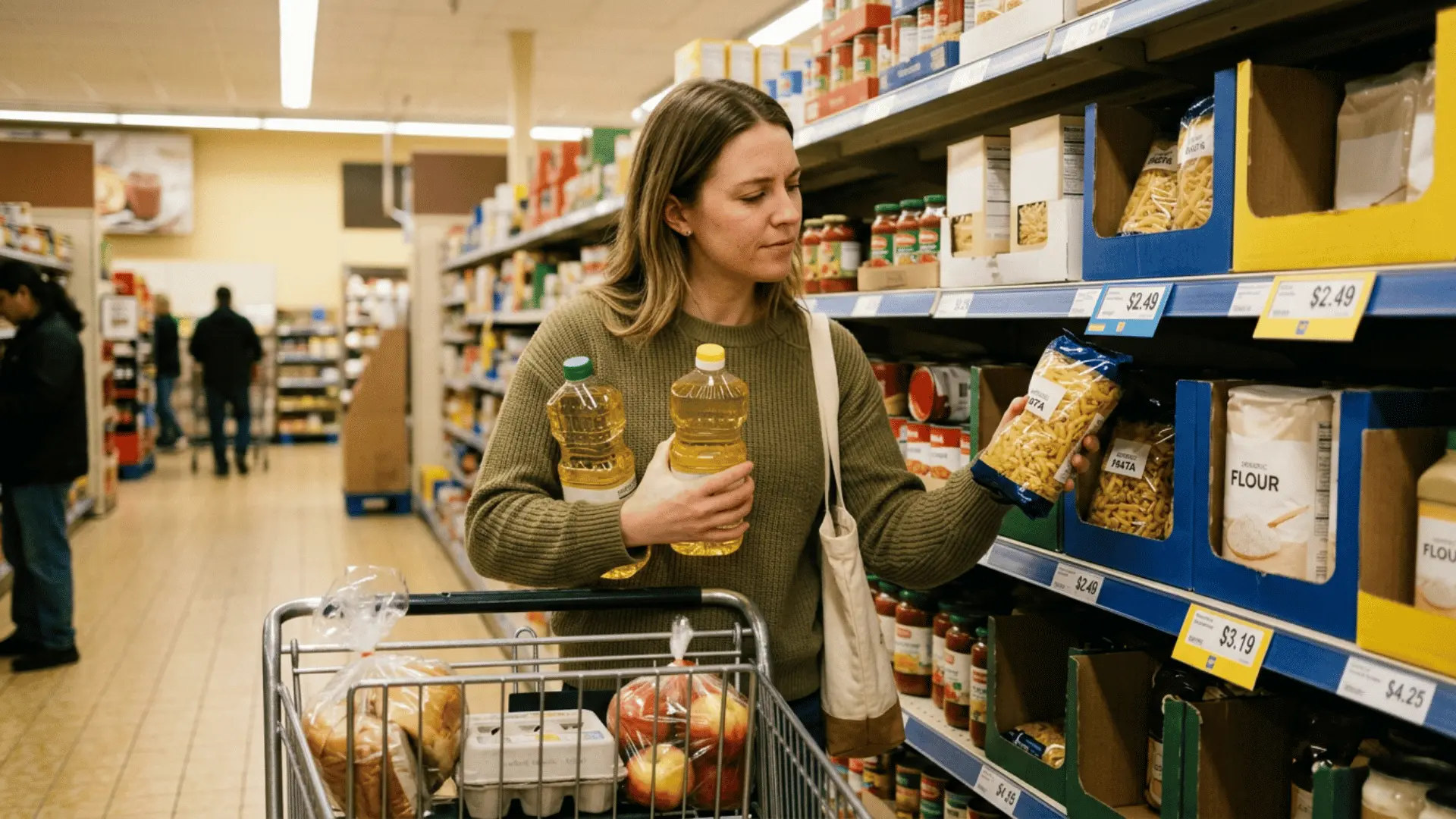
Budget and waste are the same problem wearing different hats. The USDA estimates 30 to 40 percent of the US food supply goes uneaten, and much of that loss starts with overbuying at the store.
1. Start Swapping
None of these swaps costs you nutrition. They only cost the label:
- Store brands instead of name brands
- Frozen vegetables instead of pricey fresh options
- Beans or lentils in place of some meat meals
- Seasonal fruit instead of imported fruit
- Oats or potatoes instead of specialty grains
Swapping two meat dinners for bean-based ones typically saves more than all the coupons in the flyer combined.
2. Foods to Use First
Eat in order of spoilage, not preference. The sequence runs:
- Leafy greens, berries, ripe fruit, and fresh fish
- Opened yogurt, cooked food, and cut produce
- Carrots, cabbage, apples, eggs, and potatoes
- Frozen and canned foods
I keep one shelf in the fridge as the use-first zone. Anything from groups one and two lives there, at eye level, so nothing hides until it turns.
3. Ingredients With Several Uses
Single-purpose ingredients are where waste hides. Buy foods that move between meals instead:
- Spinach works in eggs, pasta, bowls, or smoothies
- You can use beans in tacos, soup, salads, or rice bowls
- Yogurt covers breakfast, snacks, sauces, or marinades
When an ingredient has four exits, it rarely gets stranded.
How Should You Choose Packaged Foods?
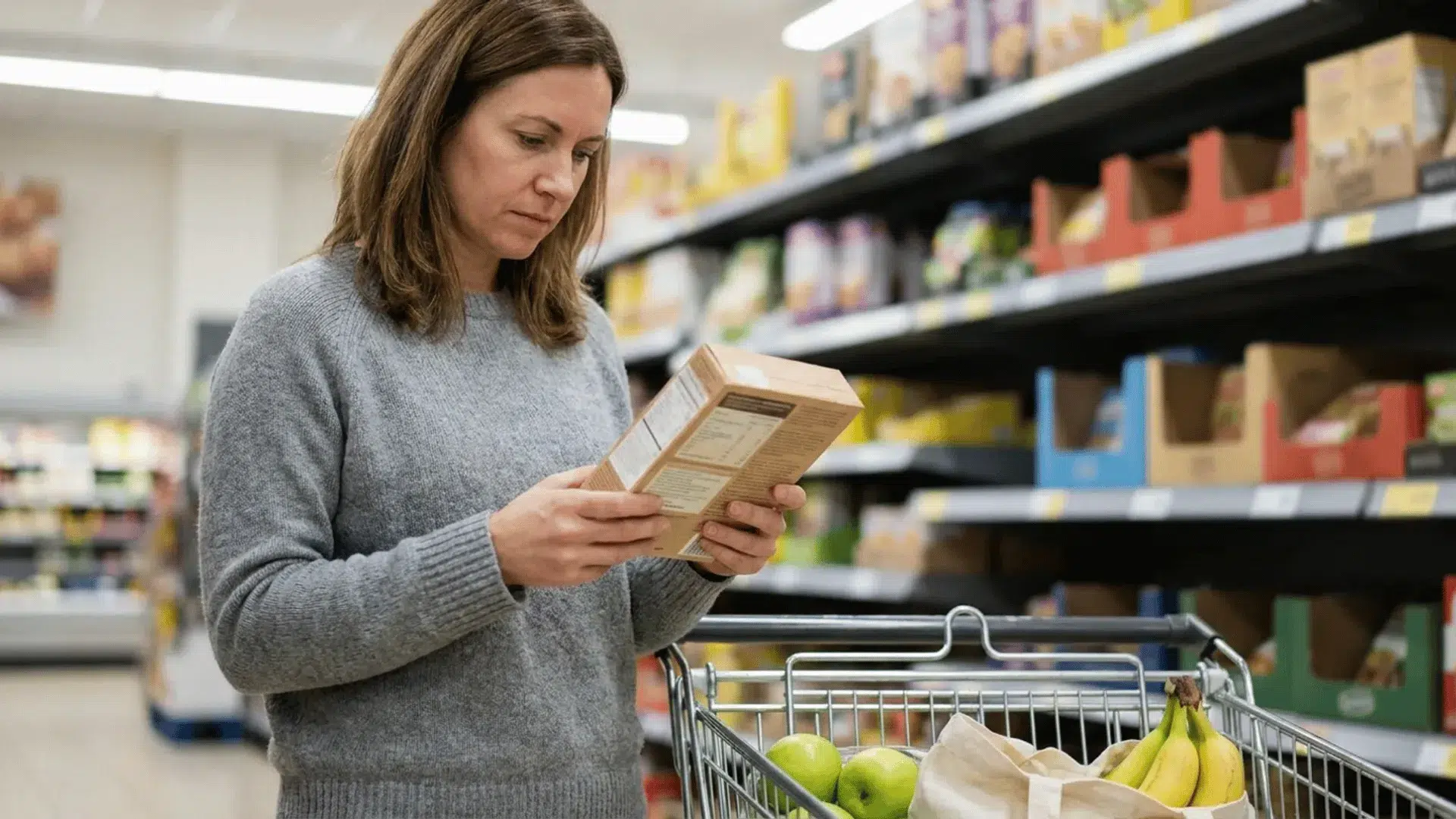
Packaged does not mean unhealthy. Compare similar products, not a product against nothing.
Check six things: added sugar, sodium, fiber, protein, saturated fat, and serving size.
Front-of-pack claims are marketing, not information. Terms like natural, multigrain, low-fat, and protein-packed should never replace turning the package around.
These earn a permanent spot on the list:
- Canned beans
- Canned fish
- Frozen vegetables
- Frozen fruit
- Plain yogurt
- Whole-grain bread
- Hummus
- Whole-grain cereal
Thirty seconds of comparing two cereal boxes tells you more than any of the words printed on their fronts.
What Mistakes Make a Grocery List Less Useful?
Most failed lists share the same handful of errors. Each has a quick fix:
| Common Mistake | Better Approach |
|---|---|
| Buying unrelated healthy foods | Plan meal combinations first |
| Buying only fresh produce | Mix fresh, frozen, and canned foods |
| Leaving quantities off the list | Write the amount needed beside each item |
| Buying unfamiliar ingredients | Add them only when a meal is planned |
| Buying large packs automatically | Check whether the food can be used or frozen |
| Choosing items for one recipe | Prioritize ingredients with several uses |
Final Thoughts
A healthy grocery list works when every item on it has a job.
Start with the seven food categories: vegetables, fruit, protein, grains, healthy fats, snacks, and pantry or freezer staples. Apply the two-meal rule before anything enters the cart, then match quantities using the one-person, family, or flatmate Canva template.
Those groceries become repeatable breakfasts, sheet-pan dinners, and paired snacks. Eating foods in spoilage order, from leafy greens down to canned goods, protects the bin.
Check nutrition labels to beat the front-of-pack claims every time. Moreover, avoid the common mistakes, like buying unrelated foods or skipping quantities.
Comment below the template you picked and whether it made your shop easier to run.
Frequently Asked Questions
What are the Cheapest Healthy Grocery Staples?
Beans, lentils, oats, eggs, brown rice, potatoes, cabbage, bananas, canned tomatoes, and frozen vegetables are affordable, versatile staples for balanced meals.
Is Fresh or Frozen Produce Better?
Both are nutritious. Fresh produce works well when used quickly, while frozen produce lasts longer, reduces waste, and often retains similar nutrients.
What is the 5-4-3-2-1 Grocery Rule?
The 5-4-3-2-1 rule suggests buying five vegetables, four fruits, three proteins, two sauces or spreads, and one grain for flexible meals.
What Groceries Should a Diabetic Buy?
People with diabetes can prioritize non-starchy vegetables, lean proteins, whole grains, beans, unsweetened dairy, and healthy fats while limiting added sugar and refined grains.
What are the 10 Healthiest Foods to Eat?
Ten strong choices for nutrient density and versatility are leafy greens, berries, beans, oats, salmon, eggs, plain yogurt, nuts, seeds, and sweet potatoes.