

Key Takeaways
- A well-built pergola usually returns about 50 to 80% of its cost at resale, and more in warm, outdoor-focused markets.
- The deciding factor is permanent vs temporary: appraisers credit a bolted-down, engineered, permitted structure, but treat a cheap kit or canopy as furniture, or even a liability.
- Material and condition matter. Aluminum or well-finished wood holds value; rotting cedar or rusting thin metal drags it down.
- Buyers should check whether a listing’s pergola is permanent, permitted, and in good shape before assigning it any value.
Outdoor living has been one of the strongest pulls on buyers for a few years now, and heading into 2026 it hasn’t cooled off. A usable backyard reads as extra living space, and shade structures are a big part of that. So it’s a fair question for anyone buying or selling: does a pergola actually add to a home’s value, or is it just a nice-to-have that never shows up in the appraisal?
The honest answer is that it can, but not automatically. Whether a pergola helps, does nothing, or quietly hurts a sale comes down mostly to one distinction.
The Line That Decides Everything: Permanent vs Temporary
Appraisers and agents sort outdoor structures into two buckets: permanent improvements and personal property. A pergola only adds appraised value if it lands in the first one.
To count as permanent, it generally needs to be anchored to a real foundation rather than just resting on a deck, engineered to handle local wind and snow loads (many regions expect a structure to take at least a 105 mph wind load), and built to stay. Clear that bar and an appraiser can treat it like a built improvement, in the same family as a deck or a covered porch.
Miss it and the picture flips. A lightweight kit or a fabric canopy usually gets read as outdoor furniture, which means it adds little or nothing on paper. Worse, a sagging cedar frame or a rusting, rattling budget structure can become a liability: the kind of thing a buyer mentally subtracts because they’re already picturing the cost of tearing it out.
What the Numbers Say
When a pergola is done right, the return is real. Industry estimates put a well-built pergola’s ROI somewhere around 50 to 80% of project cost, and high-quality structures in high-demand markets can push past 100%. Outdoor living in general is one of the better-returning improvement categories, and the National Association of Realtors has tracked how strongly buyers prioritize outdoor features. Part of it is emotional: buyers can picture themselves using the space, and that moves offers.
Location swings the number a lot. In warm, year-round-outdoor markets, a shaded patio is closer to a must-have than a luxury, so it carries more weight. In colder regions where the yard sleeps half the year, the same structure does less work at resale. And what your neighbors offer sets the bar. A pergola helps most when it brings your home up to, or past, the standard for the street.
Which Pergolas Hold Their Value Best
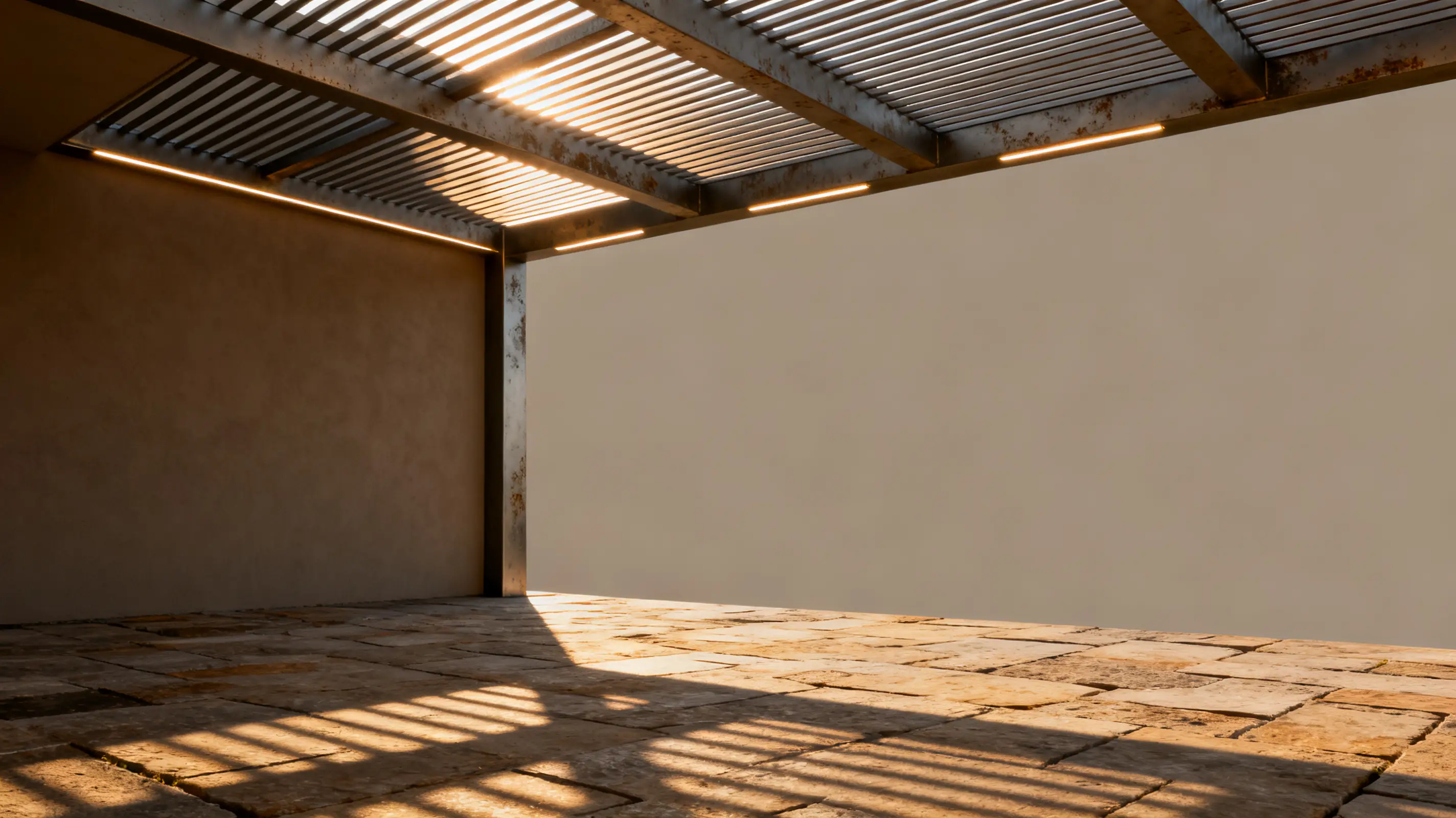
Not all permanent pergolas carry the same weight with buyers. The ones that hold value share a few traits. They are low-maintenance, so a buyer is not inheriting a staining schedule, and powder-coated aluminum is the easy win there because it does not rot, warp, or need refinishing. They are genuinely functional, which in 2026 increasingly means an adjustable or louvered roof that makes the patio usable in more than just perfect weather. And they are integrated, with touches like built-in lighting or a roof that sheds rain, so the space reads as a finished outdoor room instead of a frame waiting for shade cloth.
Durable, low-maintenance builds like the pergolas from Hansø Home are designed for exactly that kind of permanence. A purely decorative pergola still has curb-appeal value, the way good landscaping does. But the structures that actually move appraisals and shorten days-on-market are the ones a buyer can picture living under on a random Tuesday, not just in the listing photos.
For Sellers: How to Make a Pergola Count
If you’re listing, a few things decide whether your pergola shows up as value rather than clutter:
- Permanence and paperwork. A bolted, permitted structure with the permit on file is what lets an appraiser credit it. Keep the documentation and hand it over.
- Material and condition. Powder-coated aluminum or well-maintained, properly finished wood reads as an asset. Peeling stain, rot, or rust reads as a chore.
- Scale and fit. A pergola sized and styled to match the house helps; one that crowds the yard or clashes with the architecture doesn’t.
- Function. Real, adjustable shade and a space people will actually use beats a purely decorative frame.
If your pergola is tired, a clean-up, a fresh finish, or replacing a failing kit can do more for the sale than leaving it as-is and hoping buyers look past it.
For Buyers: How to Read a Pergola on a Listing
If you’re buying and a listing has a pergola, size it up the way an appraiser would. Ask whether it’s permanently installed and permitted. Ask what it’s made of and how old it is. Then look hard at the condition, because fixing or removing a bad one lands on you, not the seller.
A solid, permanent, well-kept pergola is a genuine plus and can justify part of the asking price. A wobbly canopy is closer to a piece of furniture the sellers happened to leave behind, and you shouldn’t pay improvement money for it. Either way, it’s fair to factor future maintenance into your offer, especially with wood.
The Bottom Line
So, do pergolas add value? A permanent, well-built, permitted one usually does, often returning a healthy share of its cost and, in the right market, more. A cheap or neglected one mostly doesn’t, and it can even cost you at the closing table. For buyers and sellers alike, the real question isn’t pergola or no pergola. It’s whether the structure in question was built to be part of the house, or just parked in the yard.