Canola oil is generally a healthy choice for most consumers, especially when used instead of butter, lard, coconut oil, or other saturated fats.
It mainly comprises unsaturated fats and contains omega-3 fatty acids in the form of alpha-linolenic acid.
Nonetheless, there are several concerns raised about canola oil on the internet.
These include the refining process, genetic modification of canola plants, and the use of a chemical known as hexane during processing.
These controversies make consumers unsure whether to believe the claims. Research into scientific literature can help clear the confusion about the widely used cooking oil.
What is Canola Oil?
Canola was originally developed in Canada from rapeseed through conventional plant breeding, not genetic engineering.
Under FDA regulations, canola oil is classified as low-erucic-acid rapeseed oil and may contain no more than 2% erucic acid in its fatty acids.
Low-erucic-acid rapeseed oil is also covered by 21 CFR 184.1555, an FDA GRAS regulation.
Many modern canola crops are genetically engineered; USDA says more than 90% of U.S. canola is produced using GE varieties.
Canola oil is considered a healthy cooking oil when used in reasonable amounts. It is low in saturated fat and made up mostly of unsaturated fats, including omega-3 ALA.
Canola Oil Nutrition
This is what one tablespoon of canola oil provides:
|
Nutrient |
Approx. Amount Per 1 Tbsp |
|---|---|
|
Calories |
124 |
|
Total fat |
14 g |
|
Saturated fat |
1 g |
|
Monounsaturated fat |
8 to 9 g |
|
Polyunsaturated fat |
4 g |
|
Omega-3 ALA |
~1.28 g |
|
Omega-6:omega-3 ratio |
About 2:1 |
|
Vitamin E |
2.4 mg (16% DV) |
|
Vitamin K |
10 mcg (8% DV) |
Canola oil is among the common cookingoils lowest in saturated fat, with roughly 7% of its fat coming from saturated fatty acids.
What Are the Health Benefits of Canola Oil?
Canola oil has a number of advantages that come from switching it in place of unhealthy fats in the diet.
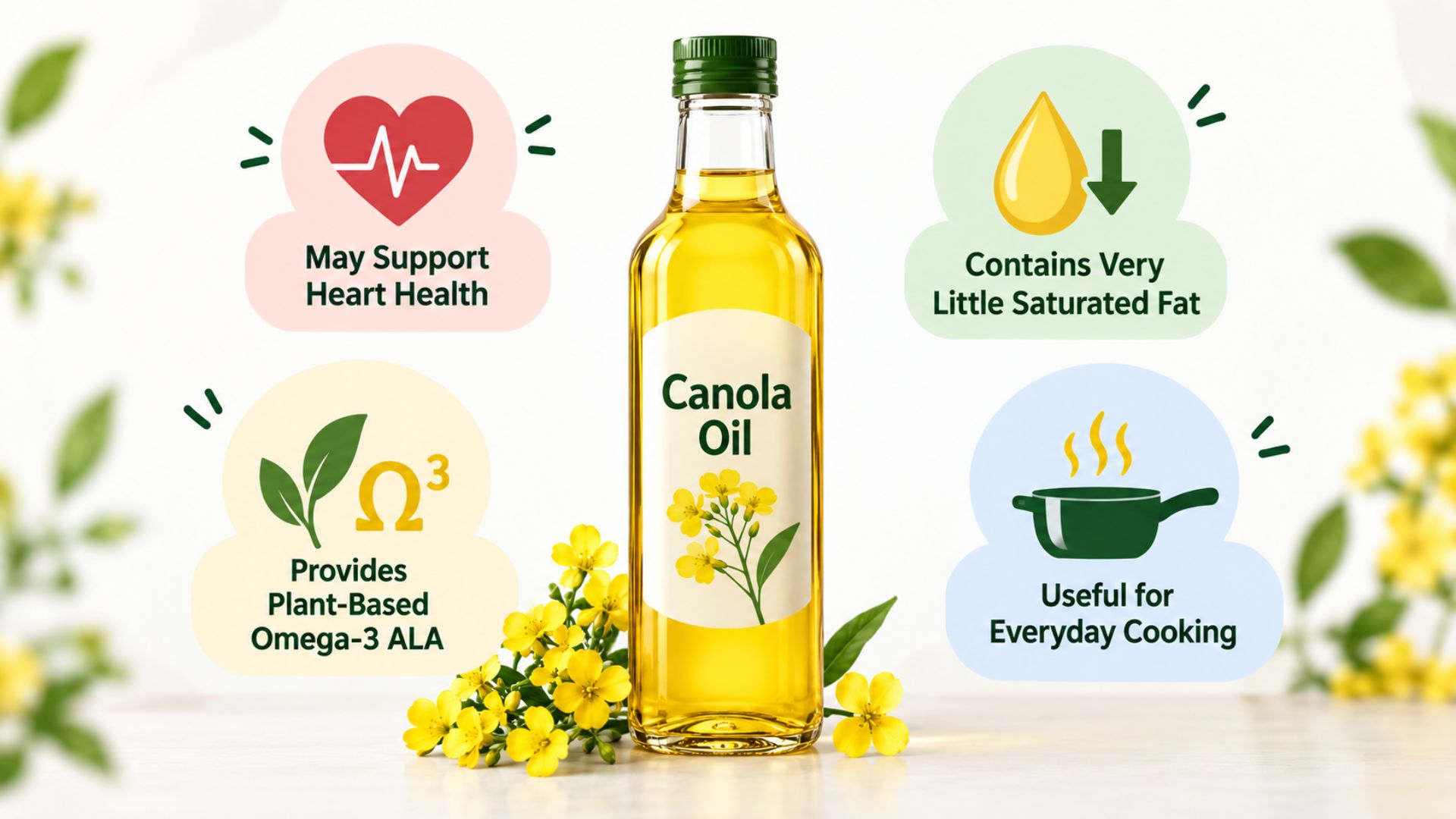
1. May Support Heart Health
Replacing fats higher in saturated fat with canola oil may improve LDL and total cholesterol.
The FDA also permits a qualified health claim stating that about 1½ tablespoons (19 grams) of canola oil per day may reduce coronary heart disease risk when it replaces a similar amount of saturated fat without increasing total calorie intake.
The FDA describes the supporting evidence as limited, not conclusive.
2. Contains Very Little Saturated Fat
A tablespoon of canola oil contains about 1 gram of saturated fat, much less than fats like butter and coconut oil. The benefit depends largely on what canola oil replaces.
Swapping it for butter, lard, or another saturated-fat-rich food can improve the overall fat profile of the diet, while simply adding more oil also adds calories.
3. Provides Plant-Based Omega-3 ALA
Canola oil contains alpha-linolenic acid (ALA), a plant-based omega-3 fat that the body cannot produce on its own. One tablespoon provides roughly 1.28 grams of ALA, about ten times as much as the same amount of extra virgin olive oil.
The body can convert ALA into EPA and DHA, but this conversion is limited, so canola oil should not be considered a direct substitute for EPA- and DHA-rich foods such as fatty fish.
4. Useful for Everyday Cooking
It has a mild taste profile that doesn’t overshadow other ingredients, and it is cheaper than many other cooking oils.
It performs excellently when sautéed, roasted, or baked, which is why it’s common in homes and in processed foods.
How Is Canola Oil Made?
The commercial production process for most refined canola oil involves several extraction and refining steps.
According to the Canola Council of Canada, the process is as follows.
- Cleaning the Seeds: Canola seeds are cleaned to remove stems, dirt, and other plant material before processing begins.
- Heating and Flaking: The seeds are gently heated, then flattened into flakes to help release the oil more easily during pressing.
- Pressing: Screw presses remove roughly 50 to 60% of the oil from the flakes; the remaining oil-rich material moves on to solvent extraction.
- Solvent Extraction: Many commercial producers use a solvent called hexane to pull out the remaining oil from the pressed seed material; they then recover and reuse the solvent.
- Refining: Refining may include degumming, neutralization, filtering or bleaching with adsorbent clay, and steam deodorization to remove impurities, pigments, odors, and free fatty acids.
Refined canola oil is the most common type and goes through all the steps above, including hexane extraction.
Is Canola Oil Healthy for Cooking?
Refined canola oil works well for sautéing, roasting, baking, and stir-frying because it has a neutral flavor and a smoke point of roughly 400°F (204°C) or higher, depending on how it’s refined.
Deep frying can still increase the calorie content of food, so the cooking method matters as much as the oil itself.
The AHA specifically recommends avoiding oil once it smokes and advises against reusing or reheating cooking oil.
Does Canola Oil Harm Your Health?
Much of the fear about canola oil isn’t supported when you consider what the scientific studies say.
- Heart disease worry is often overstated, since studies show modest reductions in total cholesterol and LDL cholesterol when canola oil replaces other dietary fat sources, though the evidence isn’t unanimous: some individual trials haven’t shown the same benefit as olive oil.
- Concerns about canola oil often focus on omega-6 fats, but canola oil has an omega-6 to omega-3 ratio of about 2:1, closer to the ideal 1:1 ratio than the roughly 20:1 ratio typical of the average Western diet. Human studies haven’t reproduced the inflammatory effects seen in some animal research.
- GMO status gets flagged constantly, but being genetically modified does not by itself make an oil unsafe to eat.
- Harvard nutrition expert Dr. Guy Crosby has explained that refined vegetable oils may use hexane during processing, but the trace amounts remaining in food are not considered a demonstrated consumer health risk.
- Weight gain concerns apply to any oil, since all fats are calorie-dense and portion size is what matters
None of the above issues indicate any harm to health from using canola oil in moderate quantities for culinary purposes.
Canola Oil vs Olive Oil: Which Is Healthier?
This comparison is between Canola Oil and Extra Virgin Olive Oil, but both serve different roles, so neither is inherently superior to the other.
|
Factors |
Canola Oil |
Extra Virgin Olive Oil |
|---|---|---|
|
Saturated fat |
Very low |
Low |
|
Monounsaturated fat |
High |
Very high |
|
Omega-3 ALA |
More |
Less |
|
Polyphenols |
Lower |
Higher |
|
Flavor |
Neutral |
Distinct |
|
Processing |
Usually refined |
Minimally processed |
|
Best use |
Baking, roasting, sautéing |
Dressings, sautéing, finishing |
The main benefit of extra virgin olive oil is its rich content of polyphenols, whereas Canola Oil is preferred for its low saturated fat content.
Should I Avoid Canola Oil?
There is no reason for the majority of individuals to abstain from using canola oil.
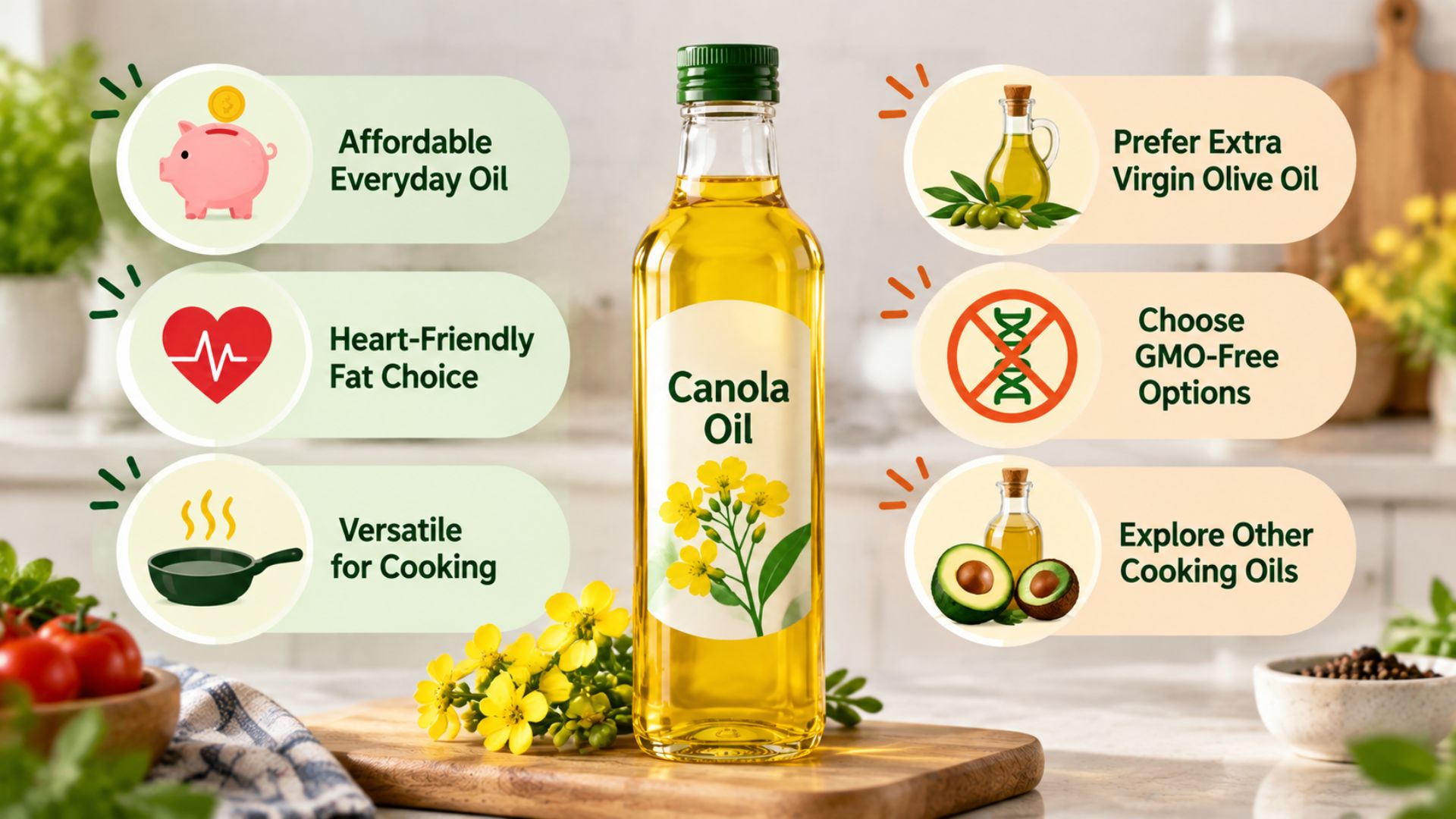
Canola oil is a sensible choice when you want an affordable cooking oil, when replacing butter or other saturated fats, or when you need an oil that works well for baking and high heat.
People may choose an unrefined, genetically modified organism-free oil, extra virgin olive oil, which is full of polyphenols, or an oil they simply dislike.
Conclusion
Using canola oil properly means getting out of the mindset of seeing it as a binary choice.
You should make sure to keep temperatures low, avoid the practice of recycling oils that have already been reheated numerous times, and substitute other oils.
Use olive or avocado oil when you want more flavor or when the dish needs it to finish.
Your kitchen does not need the one best oil; it needs several good oils used in the proper manner.
Start by comparing your kitchen and practices to this measure, then adapt to your actual cooking needs.
Is canola oil healthy? For most people, it can be part of a balanced diet.
Frequently Asked Questions
Is Canola Oil a Seed Oil?
Yes, canola oil is a seed oil made by extracting oil from the seeds of the canola plant. It belongs to the same plant family as rapeseed.
Is Canola Oil the Same as Rapeseed Oil?
Canola oil is a type of rapeseed oil, but the two are not identical. Canola is specifically bred to contain very low levels of erucic acid.
Is Organic Canola Oil GMO-Free?
Yes. Certified organic canola oil cannot come from genetically engineered crops because USDA organic standards prohibit the use of genetic engineering.
How Can You Tell if Canola Oil Has Gone Bad?
Canola oil may have gone bad if it develops a stale, bitter, or rancid smell or flavor. Store it in a tightly closed container away from heat.