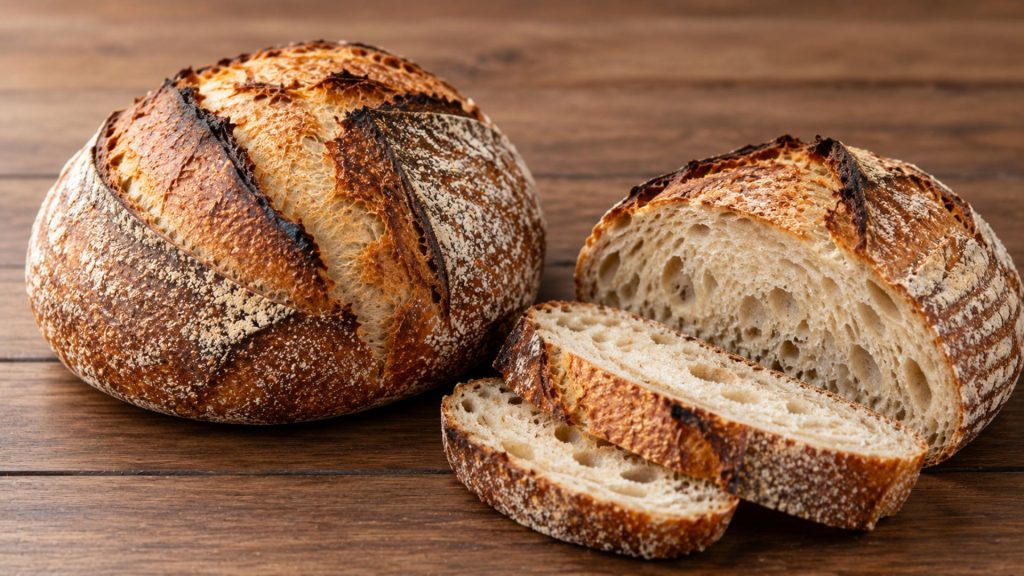
Sourdough earns its healthy reputation more from its fermentation process than from any single nutrient, and that reputation holds up best when the loaf is made with whole grain flour.
However, that doesn’t mean it is always healthier than other bread in the store. It depends a lot on the type of flour used.
The bread that was baked mainly from refined white flour will definitely have less fiber and vitamins than the bread from whole-grain flour.
In most cases, whole-grain sourdough bread is a more nutritious option than sourdough bread from refined flour.
Below, you will find a comparison between sourdough and regular bread, as well as the advantages and disadvantages of the former.
Is Sourdough Healthier Than Regular Bread?
Sourdough usually comes out ahead of regular white bread, mostly because of how it is made rather than what is in it.
|
Health Factor |
Sourdough |
White Bread |
Whole Wheat Bread |
Multigrain Bread |
Gluten Free Bread |
Sprouted Grain Bread |
|---|---|---|---|---|---|---|
|
Fermentation |
Naturally fermented (wild yeast + bacteria) |
Usually not |
Usually fermented with commercial baker’s yeast |
Usually fermented with commercial baker’s yeast |
Usually not |
Grains are sprouted, not fermented |
|
Fiber |
Varies by flour |
Usually low |
Usually high |
Usually high |
Usually low, unless whole grain flours are used |
Usually high |
|
Digestion |
May be easier for some |
Varies |
Varies |
Varies |
Easier for those with gluten intolerance |
May be easier due to lower antinutrient content |
|
Blood sugar response |
May rise more slowly (GI around 54) |
Often faster (GI around 70 to 75) |
Often moderate |
Often moderate, depending on grain mix |
Varies widely by flour blend |
Often lower than regular wheat bread |
As seen in the table, the major benefit that sourdough has over white bread is fermentation, not inherent nutritional improvement.
Potential Health Benefits of Sourdough Bread
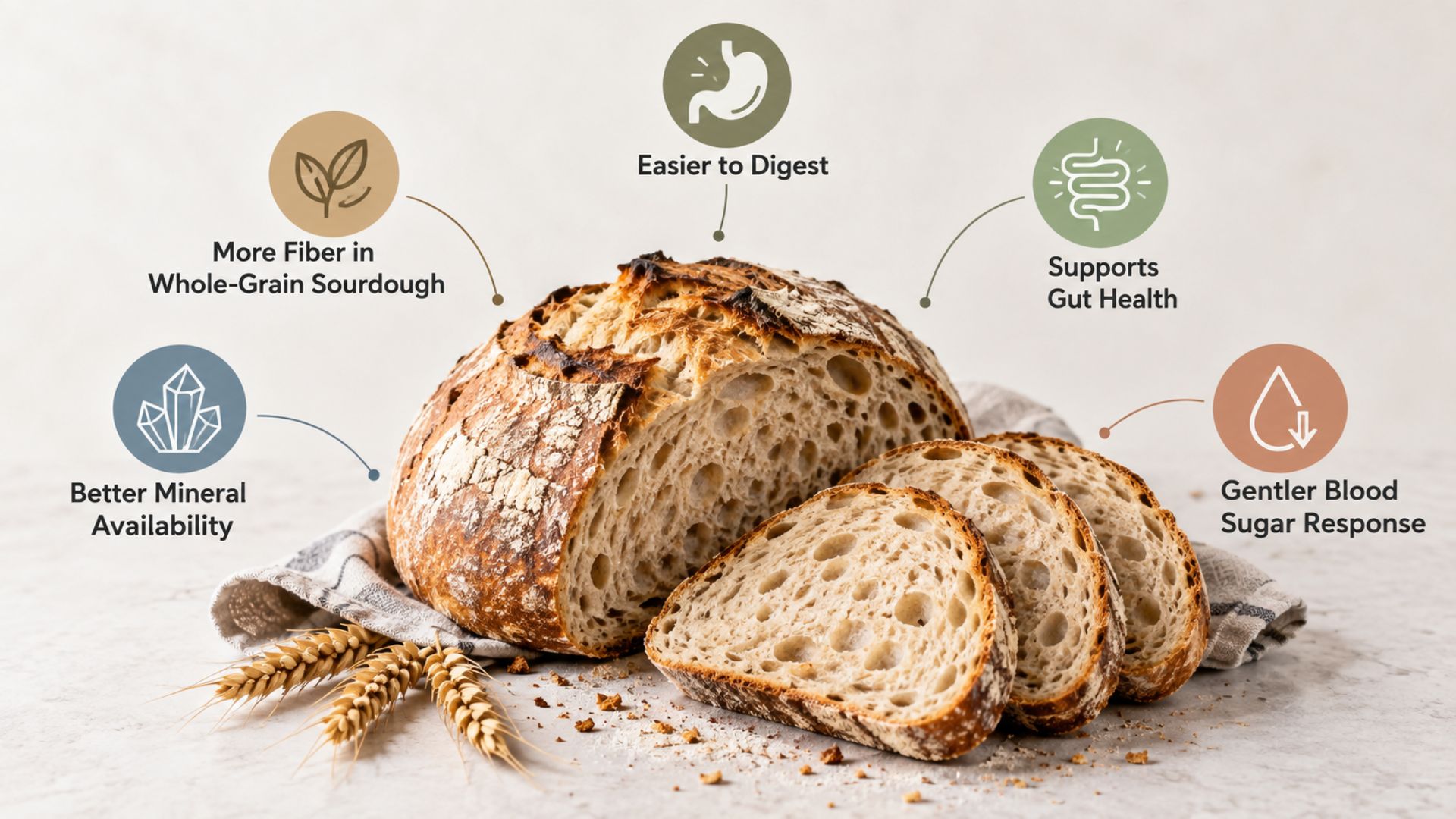
The fermentation process changes the dough in ways that could benefit digestion, glucose tolerance, and mineral absorption, although the degree of benefit depends on the bread.
1. It May Be Easier to Digest
During sourdough fermentation, wild yeast and lactic acid bacteria break down gluten and other fermentable carbohydrates that can cause bloating in sensitive individuals.
That’s why there are people who suffer from mild forms of gluten intolerance or IBS who can tolerate sourdough bread without problems.
There are individual differences. It’s easier to digest, but it does not make it gluten-free.
2. It May Support Gut Health
In sourdough fermentation, starch is partly converted into resistant starch and other substances that have a prebiotic effect on the existing microflora of your gut by providing food for it.
Unlike probiotics, the bread does not deliver additional microorganisms to the gut.
Fermentation also raises the level of certain antioxidant peptides in the finished loaf, which may help protect cells from everyday oxidative stress.
3. It May Produce a Gentler Blood Sugar Response
The reason is that the sourdough will still have carbohydrates, hence increasing your blood sugar levels.
However, the process of fermentation might take some time to affect the blood sugar levels as compared to other bread products.
White wheat sourdough has a glycemic index value of 54, while the typical white loaf of bread has a GI value between 70 and 75.
4. Fermentation May Improve Mineral Availability
Phytic acid is present in whole grains, and it combines with iron, zinc, and magnesium and inhibits your ability to absorb them.
The process of fermentation triggers the release of enzymes that reduce the phytic acid by a great deal before the bread is baked.
A controlled study found that a single meal of dephytinized whole-grain rye bread nearly tripled iron absorption compared to bread that did not undergo fermentation.
However, longer-term studies have not shown that this translates into better iron status over time, so the effect appears to be a short-term boost rather than a lasting one.
5. Fiber Content Varies by Loaf
Fermentation does not automatically make sourdough high in fiber.
The amount varies with the flour, added grains or seeds, and recipe. Check the nutrition label for fiber per serving rather than assuming every sourdough loaf provides the same amount.
The Nurses’ Health Study at Harvard found that women who ate 2-3 servings of whole grains a day reduced their risk of heart attack or death from heart disease by 30%.
Who May Benefit Most From Eating Sourdough?
Sourdough can be good for those who cannot tolerate certain types of bread because the process of fermentation reduces the amount of bloating agents. ‘
This bread is also ideal for people who want to replace refined white bread, prefer naturally fermented bread, or want to slow their glycemic response.
If fiber is your main priority, compare nutrition labels rather than relying on the sourdough label alone, as covered in the buying guide below.
Nutrition Facts Per Slice
Here is how one typical slice of each bread type stacks up, based on standard commercial slice sizes.
|
Bread Type |
Calories |
Protein |
Fat |
Carbs |
|---|---|---|---|---|
|
Sourdough |
93 |
4 g |
0.6 g |
18 g |
|
White Bread |
67 |
2 g |
1 g |
13 g |
|
Whole Wheat Bread |
92 |
3 g |
2 g |
17 g |
|
Multigrain Bread |
100 |
4 g |
1.5 g |
19 g |
|
Gluten Free Bread |
80 |
2 g |
2 g |
15 g |
|
Sprouted Grain Bread |
80 |
4 g |
0.5 g |
15 g |
Sourdough and sprouted grain bread tend to land closest together on protein, while gluten-free loaves usually carry a bit more fat per slice since they rely on alternative flours and binders.
Figures above are approximate averages based on USDA FoodData Central entries for standard commercial slices. Exact values vary by brand, recipe, and slice size; some sourdough slices range from 90 to 180 calories.
What are the Potential Risks of Eating Sourdough Bread?
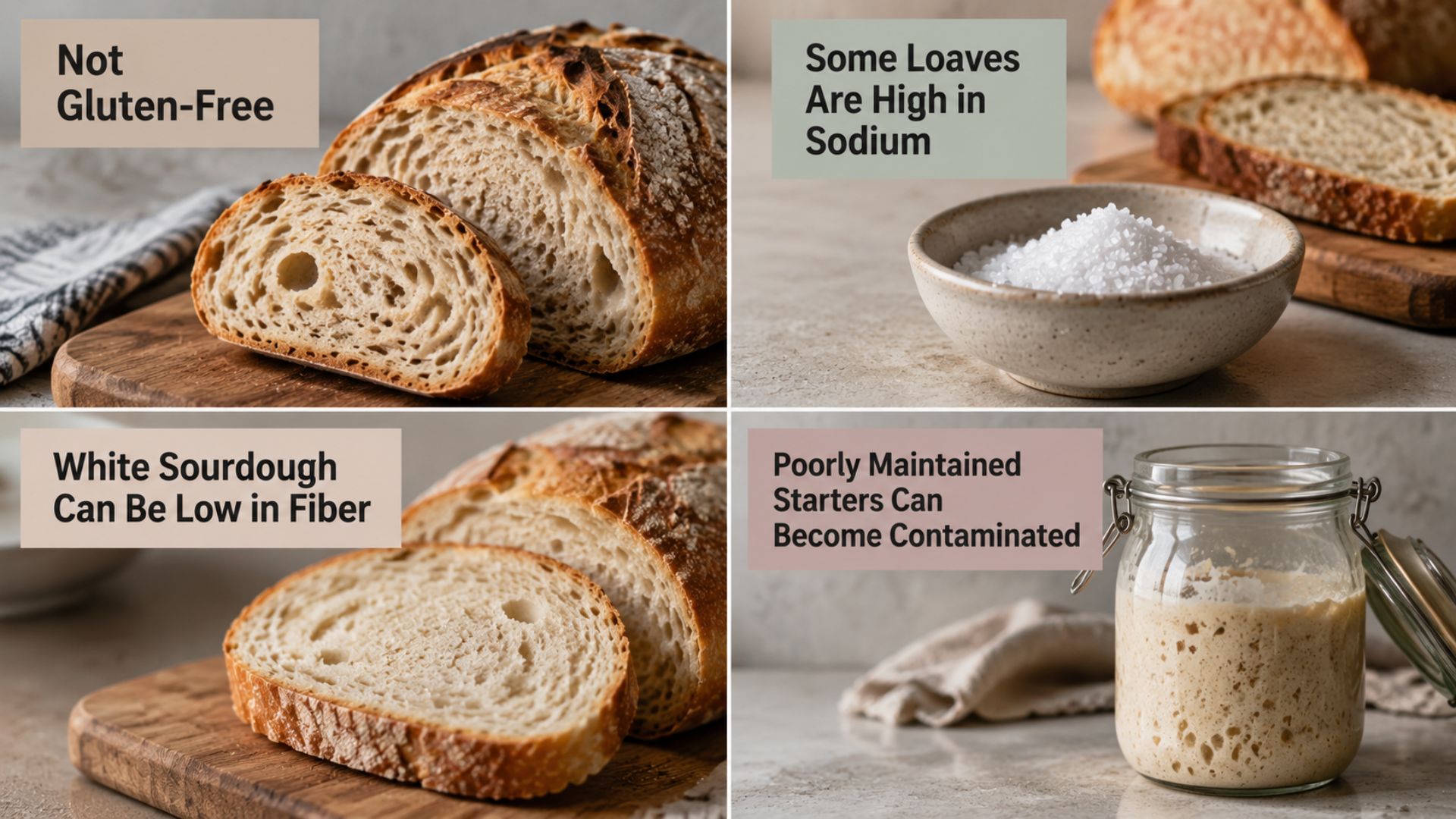
It is healthy, but it has disadvantages for some people. This is the list of things to know before including sourdough in your diet regularly.
1. It Is Usually Not Gluten-Free
Despite the breakdown of some gluten content due to the fermentation process, traditional sourdough bread made from wheat is gluten-containing.
This is why it is harmful to those who suffer from celiac disease, because any amount of gluten triggers a damaging effect on the intestinal tract.
2. Some Loaves Are High in Sodium
One of the greatest secret sources of sodium in the typical diet is bread, and that includes sourdough. Salt is part of how fermentation is managed, so its presence on the label isn’t automatically a red flag.
3. Some Sourdough Loaves Are Low in Fiber
The white sourdough bread undergoes the same process of fermentation as the whole grain bread. This is probably the most significant shortcoming of the sourdough reputation concerning its nutrition.
4. Poorly Maintained Starters Can Become Contaminated
A sourdough starter kept in unhygienic conditions or not fed for too long might develop harmful mold in addition to the wild yeast and bacteria you need.
Check whether your sourdough is turning pink, orange, or fuzzy, or smells bad. If you notice any of this, throw out your sourdough starter and start again.
How to Pick a Healthier Sourdough Loaf
Knowing all of this information, here is the way to choose the proper loaf of bread in a store or bakery:
- Whole grain as the main ingredient: look for “whole wheat flour” or “whole grain flour” listed first, not “wheat flour” or “enriched flour”
- Fiber per serving: aim for at least 3 grams per slice
- Sodium: check the nutrition label; packaged sourdough can run 300 to 450mg per serving
- Added sugars: watch for molasses, honey, or syrup added beyond what fermentation naturally produces
- Ingredient list: shorter is usually better, and every ingredient should be recognizable
- Serving size: compare slices by weight, since bakery slices vary widely and can quietly double your intake
The use of such terms as artisan, natural, rustic, or traditional does not mean anything for this purpose.
Can You Eat Sourdough Bread Every Day?
Yes, you can include sourdough bread in your diet. However, it depends more on the kind of sourdough bread you choose and what you spread on it.
As covered above, the flour used and the sodium per slice matter more than the sourdough label itself.
There is no universal ideal number of slices. Portion size, calories, toppings, and your overall eating habits will influence the scale more than the bread does.
White-flour sourdough may beat standard white bread on digestion and blood sugar, but that doesn’t make it healthier than a high-fiber, 100% whole-grain bread.
Conclusion
Sourdough is a solid step up from plain white bread, mostly thanks to fermentation, but it isn’t automatically healthier than a 100 percent whole-grain loaf.
Flip the bag over and check the ingredient list, fiber, and sodium content, the word “sourdough” on the front doesn’t tell you the whole story.
If you are trying to manage diabetes, high blood pressure, or any digestive disorder, bring your specific numbers to your doctor or a registered dietitian.
If you want to bake bread yourself, the process lets you control the ingredients.
Frequently Asked Questions
Is Sourdough Bread Good for Weight Loss?
Sourdough can fit into a weight-loss diet, though the bread alone won’t be what drives the results. Portion size, calories, toppings, and your overall eating pattern matter more than the bread itself.
Can Diabetics Eat Sourdough Bread?
Sourdough’s glycemic index is around 54, compared with 70 to 75 for white bread, which means a slower rise in blood sugar.
Is Sourdough Bread Gluten-Free?
No. Traditional wheat or rye sourdough still contains gluten. Fermentation breaks down some gluten, but not enough to make standard sourdough safe for people with celiac disease.
Is Sourdough Bread Healthier Than Whole Wheat Bread?
It depends on your goal. Whole wheat bread is usually higher in fiber, while sourdough typically has a lower glycemic index and may be easier to digest. Neither one is automatically the healthier choice for everyone.
Is Sourdough Bread Good for Gut Health?
It may be easier for some people to digest because fermentation changes certain carbohydrates in the dough, and the resistant starch it produces can feed beneficial gut bacteria.