I never skip sweet potatoes at the grocery store, and it’s not just for the taste. Yes, they’re healthy, and the numbers back that up fast.
What makes them stand out isn’t one nutrient; it’s how much a single root vegetable packs in, and how easily it fits into almost any meal.
Beta-carotene is the real standout here, since your body turns it into vitamin A and uses it for vision and immune support.
Baked, boiled, or roasted, sweet potatoes fit into pretty much any plate. So, if you’re curious whether sweet potatoes are healthy, keep reading.
Are Sweet Potatoes Healthy?
Yes. One cup of baked sweet potato with the skin on provides more than double a full day’s vitamin A, plus fiber, vitamin C, potassium, and several antioxidants, all in a food that’s naturally low in fat, according to USDA FoodData Central.
The fiber slows digestion and helps you stay full longer, while beta-carotene converts to vitamin A in the body and supports both vision and immune function.
Cooking method and variety shift the exact numbers slightly, but baked, boiled, or roasted sweet potatoes all fit into a balanced diet.
Sweet Potato Nutrition Facts
One cup of baked sweet potato, skin on, gives you a solid mix of nutrients for very few calories. Here’s the breakdown, based on USDA data.
| Nutrient | Amount (1 cup, baked, skin on) | % Daily Value |
|---|---|---|
| Calories | 180 | – |
| Carbs | 41 g | – |
| Fiber | 6.6 g | 24% |
| Protein | 4 g | – |
| Fat | 0.3 g | – |
| Vitamin A | very high | 213% |
| Vitamin C | – | 44% |
| Potassium | – | 20% |
| Manganese | – | 43% |
Pro Tip: Scrub the skin instead of peeling it off. It holds onto extra fiber and nutrients that go straight in the trash when you peel.
You can check the full USDA nutrient data if you want to see every vitamin and mineral in the mix.
Top Benefits of Sweet Potatoes
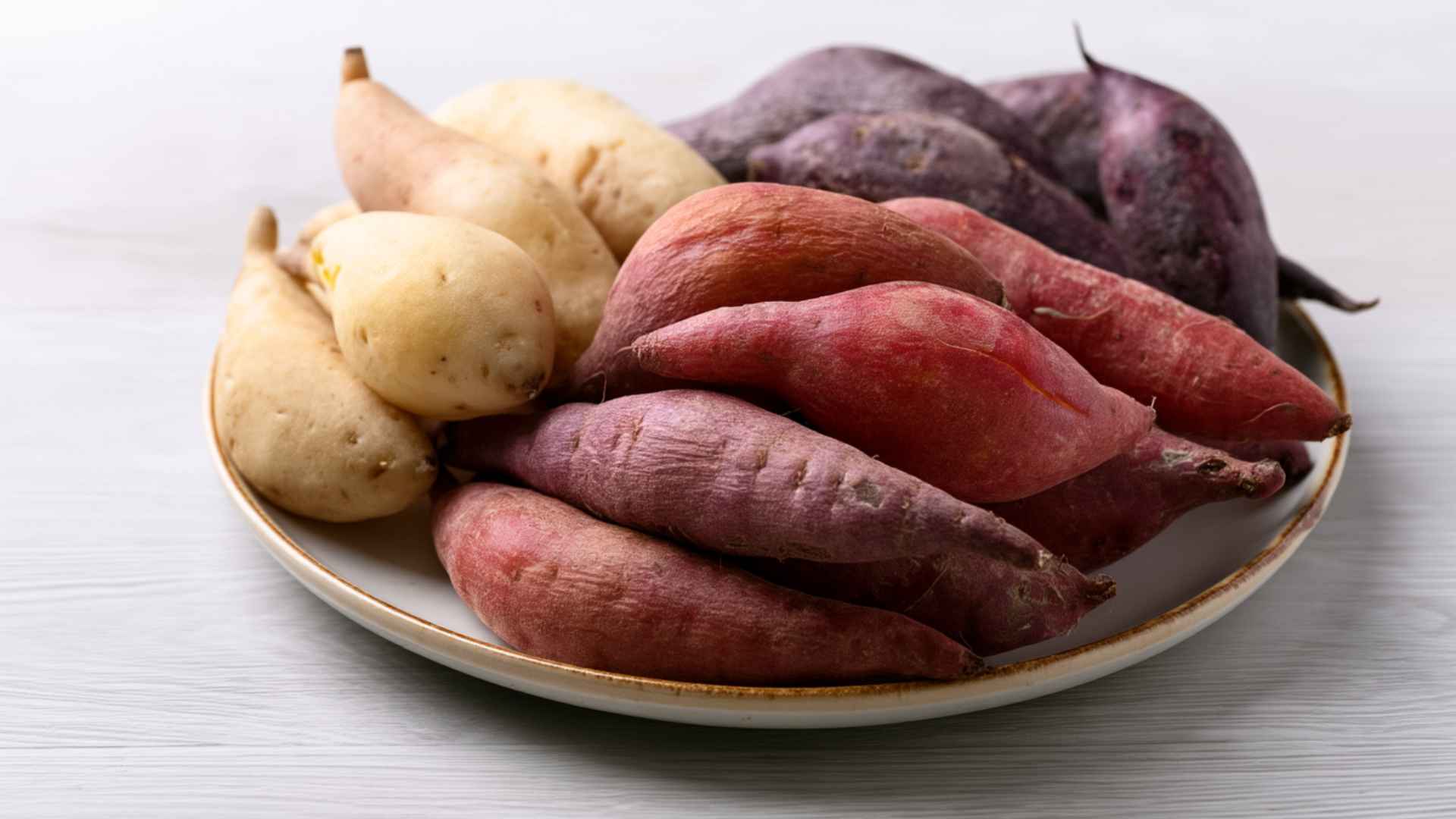
The benefits of sweet potatoes go beyond one vitamin. Each bite works on more than one part of your body at the same time. These are the ones backed by real research, not marketing.
1. Gut Health Gets a Boost
Sweet potatoes contain two kinds of fiber your body can’t digest on its own:
Soluble fiber, which softens stool and slows digestion
Insoluble fiber, which adds bulk and keeps things moving
Both types feed the good bacteria living in your gut. Diets with 20 to 33 grams of fiber a day have been linked to more regular bowel movements and a lower risk of colon cancer.
2. Loaded With Antioxidants
Antioxidants protect your cells from damage caused by free radicals, which are unstable molecules tied to aging and chronic disease. Orange sweet potatoes get their color from beta-carotene.
Purple ones carry anthocyanins, a different antioxidant with its own set of benefits. Registered dietitian Natalie Crtalic-Lowther, RD, LD, of Cleveland Clinic, points out that this antioxidant mix is one reason sweet potatoes show up on so many “heart healthy food” lists.
3. May Support Heart Health
Potassium helps your body push out extra sodium and eases tension in your blood vessel walls. That combination can help lower blood pressure over time. The soluble fiber in sweet potatoes also binds to cholesterol in your gut, which may help lower LDL, the “bad” cholesterol.
4. Good for Your Eyes
Beta-carotene converts into vitamin A once it’s in your body, and vitamin A is what your eyes use to build light-detecting cells.
One cup of baked sweet potato gives you more than double the vitamin A most adults need in a day, which is one reason low vitamin A diets are linked to vision problems in places where sweet potatoes aren’t part of the food supply.
5. May Help With Blood Sugar Control
Fiber slows down how fast sugar hits your bloodstream, which means fewer sharp spikes after a meal. Cooking method matters here too.
Boiling a sweet potato lowers its glycemic index more than baking or frying it does, and the longer it boils, the lower that number drops. A peer-reviewed nutrition review also points to compounds in sweet potatoes that may support healthy insulin function.
6. May Have Cancer-Fighting Properties
Some of the same antioxidants that give sweet potatoes their color may also fight cancer cells, at least in early research.
Anthocyanins in purple sweet potatoes have slowed the growth of bladder, colon, stomach, and breast cancer cells in test-tube studies, and mice fed purple sweet potato-rich diets showed lower rates of early-stage colon cancer.
None of this has been tested in humans yet. Treat it as encouraging, not proof, and don’t let it replace regular cancer screenings or medical advice.
7. Supports a Strong Immune System
Vitamin A keeps the mucous membranes lining your gut and airways in good shape, which is your body’s first line of defense against germs. Vitamin C adds another layer of immune support.
8. May Support Brain Function
This one is still early. Animal studies on purple sweet potato extract show less inflammation and better memory in test subjects, but nobody has run those same studies in people yet. It’s promising, not proven, so treat it as a bonus, not the main reason to eat one.
Orange, Purple, or White: Does Color Matter?
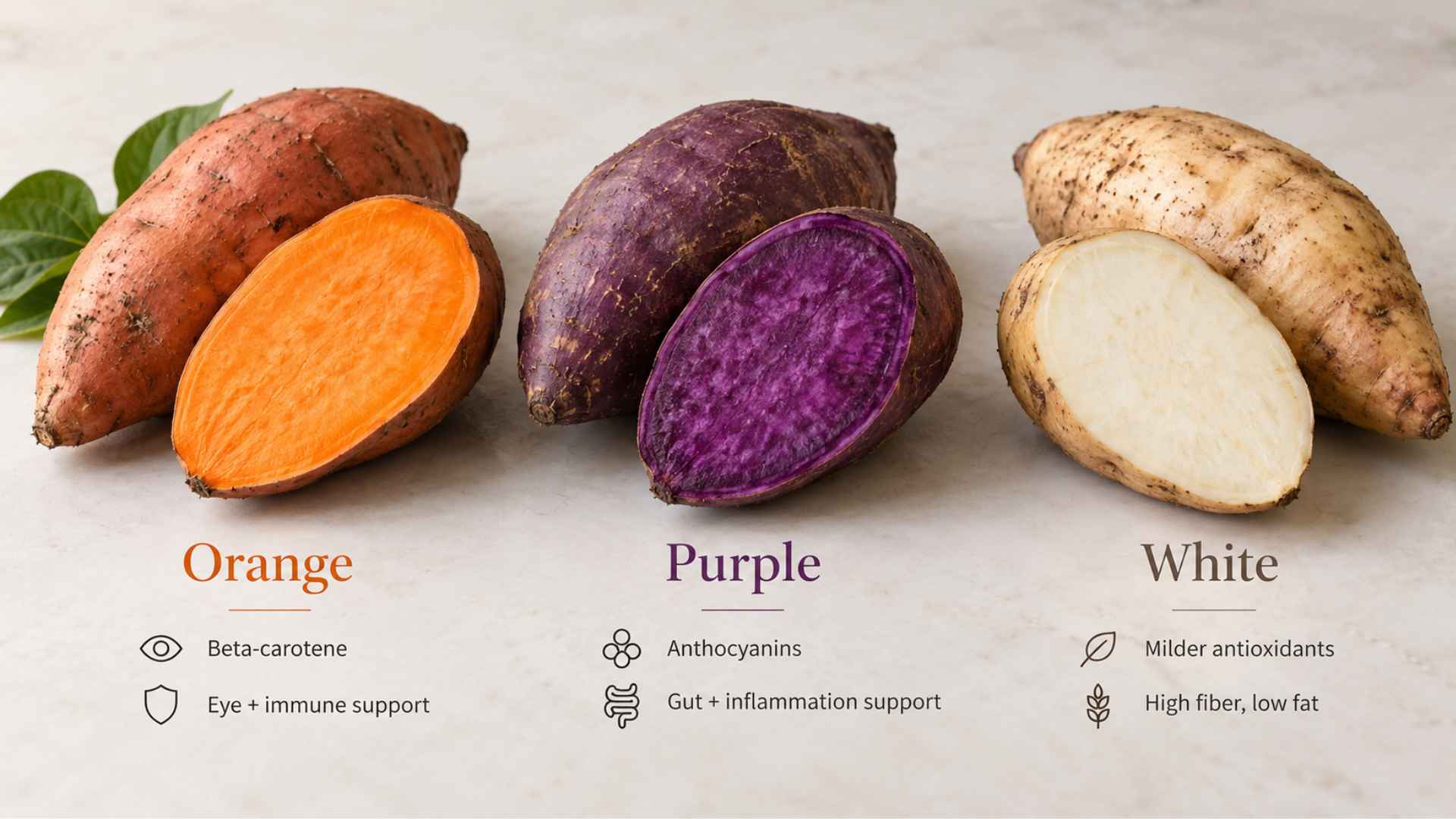
Not all sweet potatoes look the same inside, and the color is a real nutrition clue, not just a kitchen detail.
- Orange flesh: Highest in beta-carotene, a strong pick for eye health and immune support.
- Purple flesh: Rich in anthocyanins, which may help with gut health and inflammation.
- White flesh: Milder in antioxidants but still high in fiber and just as low in fat.
None of them is a bad choice. Pick based on what you’re cooking, or rotate between all three for a wider mix of nutrients.
Sweet Potatoes vs. Regular Potatoes
Quick clarification before we go further: the “white flesh” sweet potato above is still a sweet potato. This section compares sweet potatoes as a whole to regular white or russet potatoes, a different species entirely.
| Factor | Sweet Potato (1 cup, baked) | Regular Potato (1 cup, baked) |
|---|---|---|
| Calories | ~180 | ~145 |
| Fiber | 6.6 g | ~4 g |
| Vitamin A | over 200% DV | almost none |
| Vitamin C | 44% DV | ~30% DV |
| Glycemic Index | lower to medium | higher |
Regular potatoes aren’t unhealthy. They bring their own potassium and vitamin C to the table. Sweet potatoes just edge ahead on fiber and vitamin A, which is why they get more attention in blood sugar conversations.
Best Ways to Cook Them Without Losing Nutrients

How you cook a sweet potato changes what you actually get out of it. The cooking method you choose can affect sweet potato nutrients, blood sugar impact, and how well your body absorbs beneficial compounds.
- Boil instead of bake when blood sugar is a concern. Boiling changes the starch structure in a way that lowers the glycemic index.
- Add a little healthy fat. Vitamin A needs fat to absorb properly, so a drizzle of olive oil or a pat of butter helps your body use more of it.
- Keep the skin on. Peeling removes fiber and nutrients right along with it.
- Don’t overcook it. Long cook times reduce beta-carotene a little, though sweet potatoes still hold onto most of it even after roasting.
Pro Tip: If you’re watching blood sugar closely, boil your sweet potato and let it cool before eating it.
Small cooking changes can help you get more nutrition from sweet potatoes while keeping their natural flavor, fiber, and health benefits intact.
How to Add Them to Your Diet and How Much You Should Eat
Once you’ve settled on a cooking method, the next questions are just as practical: what do you actually make with sweet potatoes, and how much is a normal amount to eat?
Ways to work them in:
- Baked whole, skin on, with a drizzle of olive oil
- Boiled and mashed with a splash of milk and cinnamon
- Roasted into wedges or fries instead of white-potato fries
- Sliced thin and toasted, then topped with nut butter or avocado
- Diced into a hash with onions and peppers
- Spiralized into noodles and sautéed
- Cubed into soups, stews, or chili
- Pureed into baked goods for natural moisture and sweetness
How much to eat: One medium-to-large sweet potato (about 130 to 150 grams) per meal, filling roughly one-fourth of your plate alongside a lean protein and a non-starchy vegetable.
Because of their natural sugars, sweet potatoes can curb cravings and help you feel fuller longer, according to Crtalic-Lowther, making them an easy swap for more processed, sugar-added sides and a great lunch idea.
Possible Side Effects and Who Should Limit Them
Sweet potatoes are safe for most people, but they aren’t risk-free for everyone. A few groups should watch their intake.
- People prone to kidney stones: Sweet potatoes contain oxalates, a compound that can contribute to stone formation in people who already form them.
- People managing diabetes: Sweet potatoes beat white potatoes on blood sugar impact, but portion size and cooking method still matter more than the food itself.
- Anyone eating unusually large amounts daily: Vitamin A can build up over time, though this is rare from food alone and almost always tied to supplements rather than vegetables.
None of this means you should skip sweet potatoes. It just means treating them like any other food, in normal portions, not by the pound every single day.
Conclusion
My answer to this hasn’t changed in years: sweet potatoes earn their spot in the cart every time. What changed is how I cook them.
Baking used to be my only method, but boiling a batch on Sunday and leaving the skin on has become the easier habit, and it sits better with my blood sugar too.
A little olive oil after cooking helps the body absorb vitamin A better, and letting a boiled sweet potato cool before eating adds resistant starch to the mix. None of this needs a special diet or a shopping list overhaul.
Just switch your cooking method for a week and notice how you feel afterward. Small changes like that matter more than any food label ever will.
Frequently Asked Questions
Are Sweet Potatoes Good for Weight Loss?
Yes. Their fiber and water content help you feel full on fewer calories, making them a smart swap for heavier, less filling starchy side dishes.
Can Diabetics Eat Sweet Potatoes?
Yes, in reasonable portions. Fiber slows sugar absorption, and boiling lowers the glycemic index further, though portion size and toppings still affect blood sugar the most.
Should I Eat the Skin?
Yes, once it’s washed well. The skin holds extra fiber and nutrients, and cooking the potato whole keeps more of its natural vitamins intact overall.
How Many Sweet Potatoes Should I Eat per Week?
Most people can enjoy them several times a week as part of a balanced diet, unless a doctor has advised limiting oxalates or vitamin A intake.
Are Sweet Potatoes the Same as Yams?
No. What’s sold as a “yam” in most U.S. grocery stores is actually an orange-fleshed sweet potato. True yams are a starchier, drier tuber from a completely different plant family, grown mainly in Africa and the Caribbean, and rarely found in U.S. stores.