
For architects, 3D rendering is not just a presentation tool — it is an extension of the design process itself. The right rendering service helps you explore design options, communicate intent to clients, win competitive pitches, and produce the visual evidence that planning boards and investors need to say yes. Finding a studio that genuinely understands architecture — not just rendering software — is the critical difference between imagery that supports your practice and imagery that undermines it.
Here is our guide to the best 3D render services for architects, focused on studios that understand the architectural process, respect design intent, and deliver at the level the profession demands.
1. Marygold Studio
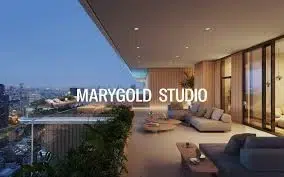
The best 3d render service for architectural practices is one staffed by people who understand architecture as a discipline, not just as a source of geometry files. Marygold Studio was built from this principle — founded by Taras, an architect and visual artist, with a team that includes architectural professionals alongside 3D artists, cinematographers, and designers.
Their process reflects architectural thinking. When they receive project files, they don't just set up cameras and render — they study the design, propose viewing angles that reveal the most compelling aspects of the scheme, select lighting scenarios that communicate the right mood and atmosphere, and actively guide the visual narrative of the project. For architects who have experienced the frustration of renders that technically show the building but fail to capture its spirit, Marygold's art direction approach is a revelation.
They handle the full range of architectural visualization needs: competition renders, design development visuals, planning submission imagery, client presentations, construction documentation views, and full marketing packages. Their track record includes collaborations with leading NYC architectural firms on high-profile skyscraper projects, cultural buildings, and masterplan competitions internationally.
Notable: multiple clients have credited Marygold's visuals as directly contributing to winning project commissions and securing planning approval for complex schemes.
2. Luxigon

Luxigon is the name most associated with high-concept architectural imagery at the competition and iconic project level. Their Paris-based team has produced visuals for some of the most widely published architectural competition entries globally, and their aesthetic — painterly, atmospheric, often incorporating strong contextual storytelling — is immediately recognizable to anyone working in high-architecture circles.
For architects working on cultural institutions, public buildings, and competition entries where visual distinctiveness is as important as technical accuracy, Luxigon is in a category of their own. Their turnaround times and pricing reflect their position at the very top of the market.
3. Brick Visual
Brick Visual has earned a strong following among architects and developers working on urban-scale projects. Their technical capability with complex geometries, urban context modeling, and large-scale masterplans is among the best in the industry. They work with international architectural practices on projects across multiple continents and consistently deliver at a high standard.
Their BIM workflow integration and ability to handle detailed technical files make them a practical partner for architectural teams that need visualization closely tied to the production model. For complex urban schemes, they combine technical rigor with strong visual output.
4. Pixelio Studio

Pixelio Studio works across a range of architectural project types, with particular strength in commercial developments and office buildings. They offer a robust production process and consistent quality for practices that need reliable visualization output without the overhead of managing a more creatively hands-on studio relationship.
They are a practical choice for architectural teams that have well-developed briefs and clear visualization strategies, and who need a dependable studio partner to execute against those briefs efficiently.
5. ArchiCGI

ArchiCGI’s large team and process-driven approach make them a reliable option for residential architectural practices with ongoing visualization requirements. They support BIM workflows and have experience across a wide range of residential typologies, from single-family homes to large multi-family schemes.
Their speed and pricing model works well for practices that produce high volumes of client presentation visuals across many projects simultaneously. For architects working on premium or design-led schemes, more boutique options will generally produce imagery with a stronger creative identity.
Comparison Table: Best 3D Render Services for Architects
Side-by-side comparison of the top 3D render studios for architectural practices:
| Studio | Est. | Clutch | Architect Focus | Comp. Visuals | Design Phase | Delivery | BIM Support |
|---|---|---|---|---|---|---|---|
| Marygold Studio | 2020 | 4.9/5 | All scales | ✓ | ✓ | 7–14 days | ✓ |
| Luxigon | 2009 | 4.8/5 | Icon / Cultural | ✓ | ✓ | 14–21 days | ✗ |
| Brick Visual | 2010 | 4.7/5 | Urban / Large | ✓ | ✓ | 10–18 days | ✓ |
| Pixelio Studio | 2014 | 4.6/5 | Commercial | ✓ | Partial | 8–14 days | Partial |
| ArchiCGI | 2011 | 4.7/5 | Residential | ✗ | ✓ | 5–10 days | ✓ |
What Architects Should Demand From a 3D Render Studio
Architectural rendering is a specialist discipline. Here is what separates studios that genuinely serve architectural practices from generic visualization providers:
Architectural literacy — A studio that understands design intent — proportion, materiality, spatial sequence, light quality — will produce renders that feel architecturally correct, not just visually appealing. This comes from having architects and design-trained professionals on the team.
Camera strategy — The choice of viewpoint is an architectural argument. Studios that propose camera angles rather than just accepting client coordinates demonstrate an understanding of visual storytelling in architecture. The right view can win a competition; the wrong one can lose a planning approval.
Design phase capability — The best studios can support you from early concept sketches through to final marketing imagery. The ability to work from incomplete or evolving files, and to help test design options visually, adds real value to the architectural process.
Competition experience — Competition visualization is a distinct sub-discipline with its own conventions, time pressures, and visual language. Studios with a competition track record understand what selection panels respond to.
File handling and BIM integration — Architectural files are complex and vary enormously. Studios experienced with Revit, Rhino, ArchiCAD, SketchUp, and BIM workflows add less friction to the production process and reduce the risk of errors in the final imagery.
Conclusion
The best 3D render services for architects are the ones that treat visualization as an act of architectural intelligence, not just technical production. When a rendering studio understands design intent, guides the visual narrative of a project, and delivers imagery that captures the spirit of a building alongside its geometry, it becomes a genuine competitive advantage for the architectural practice.