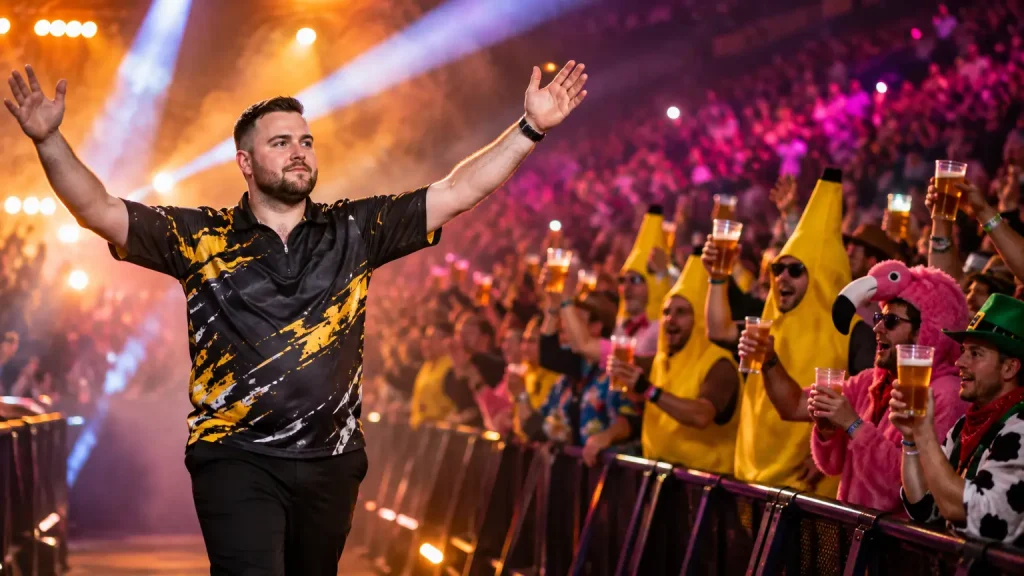


The open bar was once the ultimate stadium perk. Flash a wristband, skip the line, drink for free, that was the VIP promise. But something shifted. Event organizers running surveys at major venues started seeing a consistent pattern: given the choice between unlimited drinks and a retro arcade setup, fans picked the arcade.
The number that crystallized this shift, 76%, didn’t come from a niche gaming convention. It came from mainstream sports and entertainment venues. The open bar isn’t going anywhere overnight, but its grip on the premium fan experience is loosening fast.
The Wider Influence of Retro Game Design
The retro arcade revival inside venues did not emerge in isolation. Across entertainment and gambling sectors, designers have been pulling from the same well of 8-bit and 16-bit aesthetics and mechanics for years. The visual language of pixel art, the sound design of early arcade machines, and the loop-based reward structures of games like Space Invaders and Frogger have found their way into products far removed from the original hardware.
The gambling industry took particular notice. Casino game developers began incorporating retro arcade mechanics, bonus rounds that resemble shooter games, reel structures inspired by classic arcade progression, and pixel-art visual themes into their offerings.
This was not nostalgia for its own sake. The mechanics worked. They created clear feedback loops, legible reward systems, and a sense of player agency that traditional slot formats lacked.
For newer players, the retro aesthetic carried a certain cultural weight that made engagement feel less intimidating. Today, people can easily discover slots, tables, and more that draw directly from the arcade playbook, from retro-themed video slots to table game variants that borrow their bonus structures from classic cabinet games.
How the Vip Model Got Stale
For decades, the VIP lounge formula barely changed. Plush seating, a stocked bar, maybe a buffet. Venues treated premium access as a transactional upgrade: pay more, consume more. That worked when the alternative was a plastic seat and a warm beer from a corridor vendor. But as general admission conditions improved across stadiums and arenas, the gap between standard and VIP narrowed considerably.
Fans started asking what the premium actually delivered beyond free drinks. The answer, increasingly, was not much. A quieter space, sure. Better sightlines, sometimes. But genuine engagement? Rarely.
The lounge model was built around passive consumption, and a generation of fans raised on interactive media found that deeply unsatisfying. Sitting in a carpeted room watching a game on a mounted screen while holding a cocktail stopped feeling like a reward.
Venues that recognized this early began experimenting. Some added simulators. Others brought in competitive gaming setups. The ones that installed retro arcade cabinets, Pac-Man, Street Fighter, and pinball machines, reported something unexpected: people were staying longer and spending more, even without the draw of free alcohol.
The Retro Arcade as A Social Catalyst

There is something specific about retro arcade games that modern alternatives struggle to replicate. The cabinet format forces proximity. Two players at a Street Fighter II machine are standing shoulder to shoulder, reacting in real time, competing directly.
That physical closeness and shared focus create conversation in a way that parallel smartphone use simply does not. Fans who might never speak at a bar end up trash-talking over a Galaga high score within minutes.
Games like Donkey Kong, Mortal Kombat, and pinball machines carry a cultural familiarity that crosses age groups. A 45-year-old and a 22-year-old can both engage with a Pac-Man cabinet without any onboarding or instruction. That accessibility matters enormously in a mixed-age venue crowd. The learning curve is zero, the competitive stakes are low, and the social payoff is immediate.
Organizers also noted that retro setups require no supervision, generate minimal operational costs after installation, and produce consistent engagement throughout an event, not just during halftime or between sets. The arcade corner becomes a gravitational point that pulls foot traffic naturally and keeps energy levels consistent across the entire venue space.
What the Data Actually Says About Fan Preferences
The 76% figure deserves some unpacking. Preference surveys at venues tend to reflect the options presented, and in most cases, respondents were choosing between a traditional open-bar VIP setup and an interactive zone that included retro gaming alongside other amenities.
The arcade element was rarely the only variable. However, follow-up questions consistently pointed to the interactive components as the primary driver of preference, not seating quality or food options.
Demographic breakdowns added nuance. Fans between 25 and 45 showed the strongest preference for arcade setups, which aligns with a generation that grew up with both arcade culture and early home gaming consoles. Older fans (55+) showed more split preferences, though many responded positively to pinball and classic cabinet games specifically.
The consistent thread across all age groups was a preference for doing something over simply consuming something. The open bar model is fundamentally passive. Arcade setups, regardless of the specific game, are inherently active. That distinction, more than any specific title or aesthetic, appears to drive the preference gap.
Venue Economics Behind the Shift
From an operational standpoint, retro arcades make a compelling case. Arcade cabinets require a one-time capital investment and minimal ongoing maintenance. Open bars, by contrast, carry continuous costs, staff, inventory, liability, and licensing that scale with event size and duration.
A venue running 40 events per year absorbs those costs repeatedly. The arcade pays for itself and keeps paying. Several mid-tier arenas have reported that replacing or supplementing open-bar VIP areas with interactive zones actually increased per-head revenue.
Guests who are engaged stay on-site longer and make additional purchases, food, merchandise, and secondary beverages, because their attention is anchored. The passive lounge model, ironically, often saw guests leave earlier once the novelty wore off and the free drinks stopped feeling sufficient on their own.
Where Premium Fan Spaces Are Heading
The next iteration of the VIP event space will likely combine elements that the current generation of venue designers is still figuring out how to balance.
Physical interactivity, arcade machines, simulators, and competitive gaming stations will remain central. But the most forward-thinking operators are pairing those elements with curated food and beverage programs that feel premium without relying on volume consumption.
The open bar is not dead, but it has been demoted. It now functions as an add-on rather than the headline offering. Fans want to do something at events, not just attend them.
The retro arcade tapped into that demand in a way that few predicted, and the venues that acted on early data are already seeing the results. The model has shifted, and the industry is adjusting accordingly.
The broader lesson from this shift is straightforward: premium positioning has to be earned through engagement, not just access. Fans are willing to pay for experiences that give them something to do, compete over, and talk about. The open bar offered none of that. The arcade does, and it turns out that the difference is worth more than free drinks.