Have you ever wondered why one face wash sometimes does not remove everything from your skin?
What is double cleansing comes down to using one cleanser to break down makeup, sunscreen, oil, and surface residue, then following with a suitable water-based cleanser to remove what remains.
It does not mean washing twice with the same face wash, and it is not necessary for every skin type or routine. The right cleanser pairing and gentle technique matter more than scrubbing harder or cleansing longer.
Knowing the correct steps, product types, skin-specific adjustments, frequency, and common mistakes can help you decide when double cleansing makes sense.
What is Double Cleansing and How is it Different from Washing Twice?
Double cleansing is a two-step face-washing method that uses two different cleansers, each with a separate purpose. The first cleanser, often an oil, balm, or makeup remover, helps break down sunscreen, makeup, sebum, and other oil-based residue on the skin.
The second step uses a water-based cleanser to remove sweat, dirt, and anything left behind after the first cleanse. This is what separates double cleansing from simply washing your face twice.
Using the same face wash two times repeats the same cleansing action, while double cleansing targets different types of buildup in sequence.
The goal is not to scrub harder or make skin feel squeaky clean, but to remove residue thoroughly while keeping the skin comfortable.
How to Double Cleanse Correctly
Double cleansing works best when each step has a clear purpose, and the products suit your skin. The process should remove buildup without leaving your face feeling tight or stripped.
1. Start with an Oil-Based or Makeup-Removing Cleanser

Use a cleansing oil, balm, or suitable makeup remover when you wear makeup, sunscreen, or products that leave an oily film. Follow the label for dry or damp application, since formulas vary.
Use enough product to create slip so your fingers move easily across the skin. Work gently around the hairline, nose, jaw, and other areas where foundation or sunscreen tends to collect.
2. Emulsify and Remove the First Cleanser
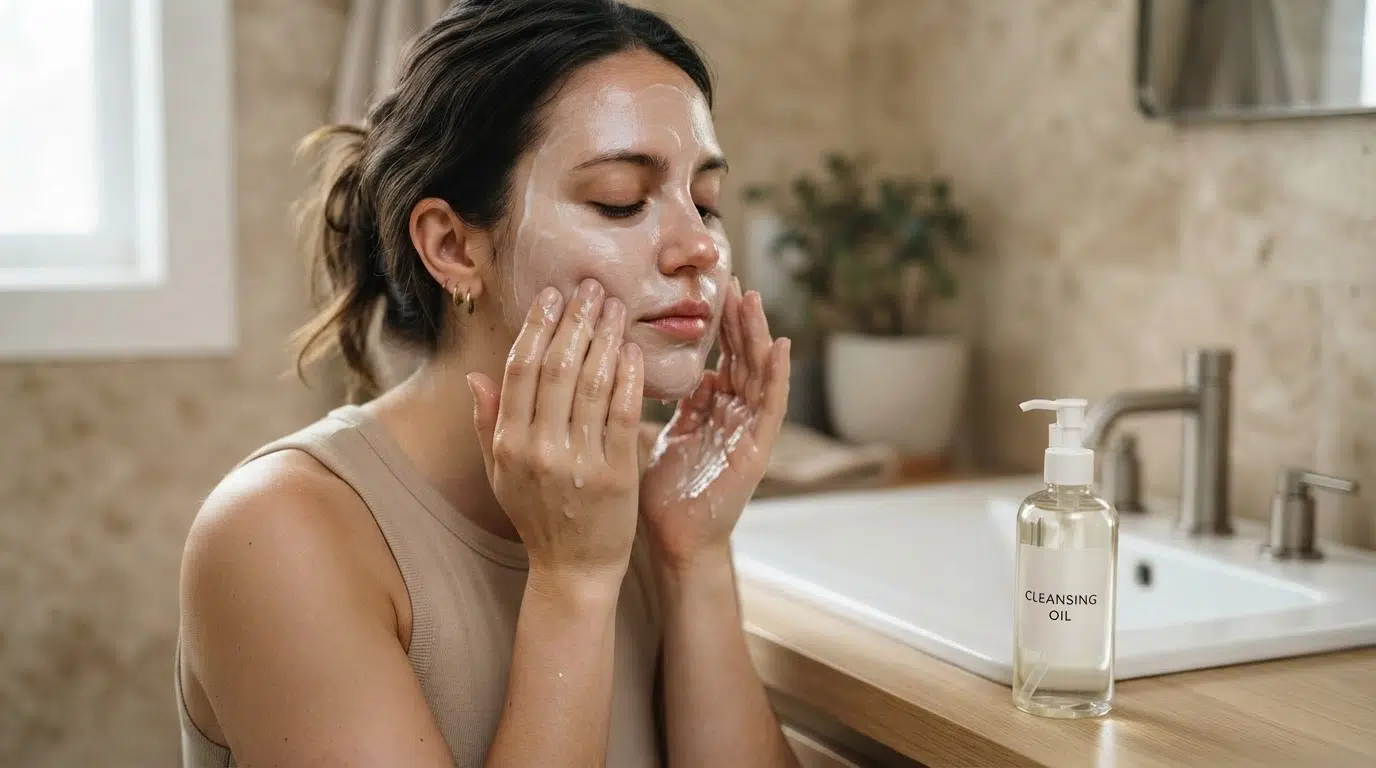
If your oil cleanser or balm is designed to emulsify, wet your fingertips and massage in a little water until the texture turns milky or lighter.
Keep the pressure gentle and rinse thoroughly, paying attention to the hairline, jawline, and sides of the nose. There is no need to rub hard or massage for several minutes. Once residue loosens, a careful rinse is enough.
Note: Always follow the directions on your cleanser because application and rinsing methods can differ between formulas. If a product causes repeated stinging or irritation, stop using it and reassess your routine.
3. Follow with a Gentle Water-Based Cleanser

Choose a gel, cream, lotion, or low-foam cleanser based on how your skin behaves, not just the label on the bottle. Apply it with your fingertips and use light circular motions across the face.
Focus on removing any leftover residue from the first cleanse without chasing a squeaky-clean feeling. Skin that feels very tight afterward may be telling you the second cleanser is too strong.
4. Pat Dry and Continue with Your Routine

After rinsing, gently press a clean, soft towel against the skin instead of rubbing it dry. Follow with any treatment products you normally use, then finish with moisturizer to support comfort and hydration.
Your skin should feel clean and calm, not immediately tight, hot, or overly dry. If burning or persistent discomfort appears after cleansing, reassess the formulas or how often you double cleanse.
A good double cleanse should feel efficient, not intense. If your skin stays comfortable and residue is gone, the routine is working; if irritation appears, simplify the products or frequency.
Choosing the Right Double-Cleansing Pair
The right cleanser pairing depends on what you need to remove and how your skin responds. Matching each step well can clean effectively without making your routine harsher than necessary.
|
Routine Need |
First Cleanser |
Second Cleanser |
Watch For |
|---|---|---|---|
|
Heavy makeup |
Cleansing balm or oil |
Gentle gel or cream |
Excess rubbing |
|
Water-resistant sunscreen |
Oil or balm |
Mild water-based cleanser |
Hairline residue |
|
Oily skin |
Lightweight oil or balm |
Gentle gel cleanser |
Stripping formulas |
|
Dry skin |
Creamy balm or oil |
Cream or lotion cleanser |
Drying foam |
|
Sensitive skin |
Gentle makeup remover |
Mild fragrance-free cleanser |
Stinging or tightness |
Choose formulas for their function, texture, and how your skin feels afterward. A product does not need a double-cleansing label to fit well into a balanced two-step routine for you.
Double Cleansing for Different Skin and Routine Needs
Double cleansing should match your skin, makeup, sunscreen, and comfort rather than follow one fixed routine every day.
1. Oily and Acne-Prone Skin: Use a lightweight cleansing oil or balm, then follow with a gentle gel or low-foam cleanser. Reduce frequency if tightness, flaking, stinging, or irritation develops. Acne self-care guidance recommends gentle cleansing and avoiding repeated scrubbing that may irritate skin.
2. Dry and Sensitive Skin: Choose a creamy balm or milky remover followed by a gentle cream or lotion cleanser. Double cleanse mainly on makeup-heavy or sunscreen-heavy days if nightly use causes dryness or sensitivity.
3. Heavy Makeup and Water-Resistant Sunscreen: Focus on the hairline, jaw, nose, and eye area where residue may remain. Let the first cleanser loosen stubborn products, then follow with a mild second cleanser. The FDA explains that water-resistant sunscreen is tested for 40 or 80 minutes of water resistance.
4. Light Makeup and Low-Residue Days: One gentle cleanser may be enough when makeup is minimal and sunscreen removes easily. Skip the second cleanse if it repeatedly causes unnecessary dryness, tightness, or discomfort.
The best routine removes residue while keeping your skin comfortable. Adjust cleanser type and frequency based on what you wear and how your skin responds.
How Often to Double Cleanse
How often you double cleanse should depend on what you wear and how your skin responds. If you regularly use heavy makeup or water-resistant sunscreen, double cleansing about 5 to 7 evenings a week may suit you if your skin stays comfortable.
For lighter makeup or occasional sunscreen, 2 to 4 evenings a week may be enough. Dry or sensitive skin may do better starting with 1 to 3 evenings a week and adjusting from there.
On days when one gentle cleanser removes everything easily, a second cleanse may not be necessary. Double cleansing is usually more useful at night, when makeup, sunscreen, oil, and daily buildup need removing.
If your skin starts feeling tight, dry, or irritated, reduce the frequency or switch to gentler cleansers rather than continuing the same routine.
Benefits of Double Cleansing
Double cleansing can make your evening routine more effective when makeup, sunscreen, oil, or daily residue is difficult to remove with one gentle cleanser alone.
- Removes makeup more thoroughly: The first cleanser helps loosen foundation, mascara, sunscreen, and oil-based residue, while the second cleanser washes away remaining buildup without relying on repeated scrubbing or excessive pressure.
- Helps clear leftover sunscreen: Water-resistant and long-wear sunscreens can cling to the skin after a quick wash. A suitable first cleanser helps break them down before the second step removes lingering residue.
- Keeps cleansing more targeted: Using two cleansers with different functions can remove both oily and water-based buildup more efficiently, helping you avoid repeatedly washing with one strong cleanser to achieve the same result.
- Leaves skin ready for later products: Removing makeup, sunscreen, and surface debris creates a cleaner base for moisturizer and treatment products, while a gentle technique helps keep the skin feeling comfortable afterward.
These benefits are most useful when your skin genuinely needs two cleansing steps. Gentle formulas, proper technique, and suitable frequency help keep the routine balanced.
Common Double Cleansing Mistakes
Small technique mistakes can make double cleansing more irritating than helpful. Knowing what to avoid keeps the routine focused on removing residue without overworking or stripping your skin.
|
Common Mistake |
Better Fix |
|---|---|
|
Using the same harsh cleanser twice |
Use two gentle cleansers with different purposes |
|
Scrubbing stubborn makeup |
Let the first cleanser loosen residue before rinsing |
|
Using very hot water |
Use comfortably lukewarm water |
|
Massaging for too long |
Cleanse gently without extending the massage unnecessarily |
|
Double cleansing every night automatically |
Match frequency to makeup, sunscreen, and daily buildup |
|
Ignoring the hairline and jaw |
Rinse carefully around areas where residue collects |
|
Treating tightness as a clean feeling |
Switch to gentler products if skin feels stripped |
A good double cleanse should feel thorough without leaving your face uncomfortable. If dryness, tightness, or irritation keeps appearing, adjust the products, technique, or frequency you use.
Signs You May Be Over-Cleansing
Over-cleansing can leave your skin feeling less comfortable instead of cleaner. Watch for these simple signs after washing to see if your routine needs adjusting.
- Persistent tightness after cleansing
- Burning or stinging
- New flaking
- Unusual dryness
- Increased sensitivity
- Redness that repeatedly appears after washing
Research on cleansers and the skin barrier notes that harsher surfactants can contribute to after-wash tightness, dryness, irritation, and disruption of the skin barrier.
If several of these signs keep appearing, scale back your routine and give your skin time to settle before deciding whether double cleansing still suits you.
The Final Cleanse
Double cleansing works best when each cleanser has a clear purpose, and the routine matches your skin, makeup, sunscreen, and daily buildup.
Using gentle formulas, the right technique, and a suitable frequency can remove residue without leaving your face tight or irritated.
If you were wondering what double cleansing is, how often to do it, or which cleanser pair suits your skin, the key is keeping the routine effective without over-cleansing.
Pay attention to how your skin feels after each wash and adjust when needed. Comment below with your thoughts and share whether double cleansing is already part of your skincare routine.
Frequently Asked Questions
Can Micellar Water Be Used as the First Cleanse?
Yes. Micellar water can work as the first cleansing step, especially for light makeup. Follow product directions and use a gentle cleanser afterward if needed.
Can You Double Cleanse While Using Retinol or Exfoliating Acids?
Yes, but keep both cleansers gentle. Strong cleansing combined with retinol or exfoliating acids may increase dryness, so reduce cleansing intensity if irritation develops.
Should You Double Cleanse Your Neck Too?
You can extend cleansing to your neck when sunscreen, makeup, or skincare products are applied there. Use the same gentle pressure and rinse the area thoroughly.
Can Cleansing Oils Clog Pores?
Not every cleansing oil clogs pores. Formula, ingredients, and individual skin response matter, so stop using a product if you notice persistent congestion or irritation.