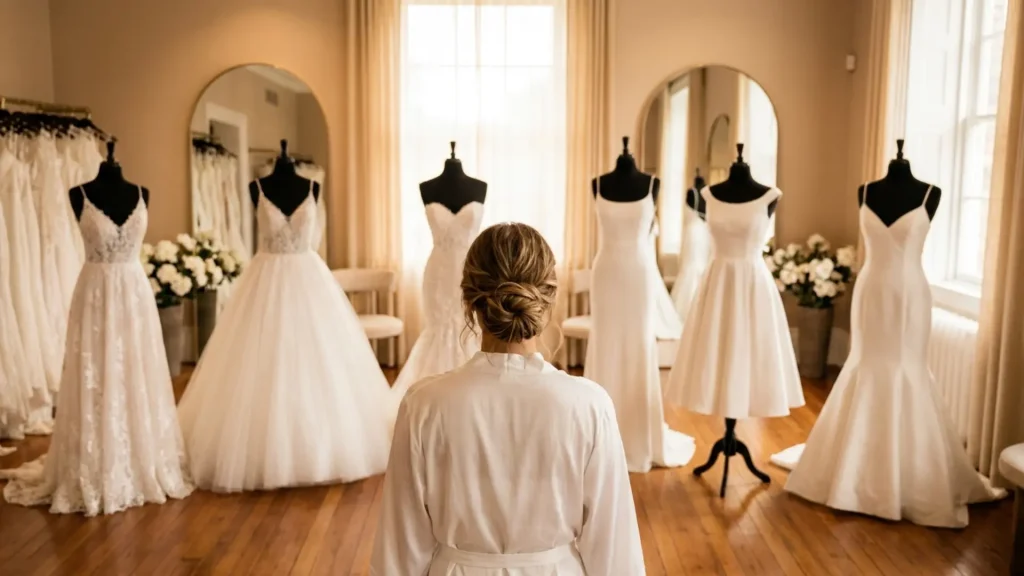
When I first started searching for my wedding dress, I felt completely overwhelmed by the endless options.
I quickly learned that wedding dress styles are mainly identified by their silhouettes, which describe how the gown fits and falls on your body.
The most common bridal silhouettes include the classic A-line, dramatic ball gown, fitted mermaid and trumpet, sleek sheath and column, high-waisted empire, and playful tea-length.
Beyond the main shape, variations are created by elements like necklines, sleeves, fabrics, trains, and waistlines. I wrote this blog to share what I discovered during my own bridal appointments.
It will help you easily compare all options and confidently prepare for your boutique visits, without feeling confused by the terminology.
What are the Main Wedding Dress Styles?
Wedding dress styles are mainly grouped by their silhouette, which means the overall shape of the gown.
Each silhouette fits the body differently through the bodice, waist, hips, and skirt. An A-line dress gently widens from the waist, while a ball gown has a fitted top and a full skirt.
Mermaid and trumpet dresses follow the body closely before flaring out. Sheath and column gowns fall in a straight line, while empire-waist dresses flow from below the bust.
Knowing these basic wedding dress types makes it easier to compare options and choose a shape that feels comfortable.
Main Types of Wedding Dress Styles
Wedding dress styles are usually identified by their silhouette, which is the overall shape created by the bodice, waist, hips, and skirt. Some gowns fit closely to the body, while others have wide, flowing skirts.
The right choice depends on personal comfort, wedding setting, fabric, movement, and the type of look the bride prefers.
Understanding the main types of wedding dresses can make online browsing and bridal appointments much easier. The following styles cover classic, modern, fitted, relaxed, short, and formal options.
1. A-Line Wedding Dress
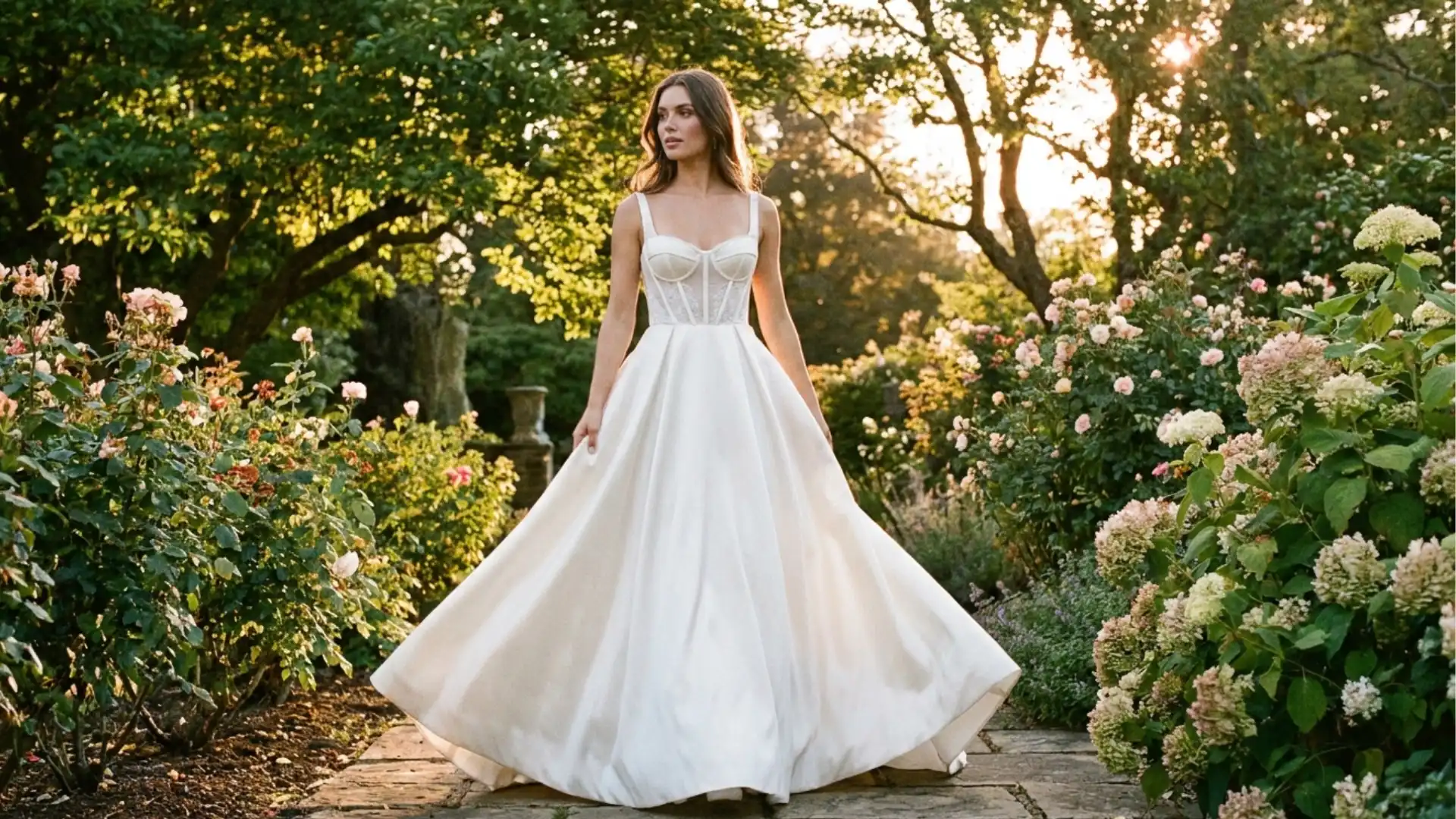
Resembling a capital “A,” this silhouette transitions effortlessly from a fitted bodice to a gradually widening skirt.
Unlike voluminous ball gowns, it offers balanced fullness. It is universally flattering and exceptionally comfortable, though it can feel too traditional for avant-garde tastes.
It acts like a chameleon, swapping heavy satin for light chiffon, and it instantly shifts from a formal ballroom look to a breezy beach vibe.
2. Ball Gown Wedding Dress
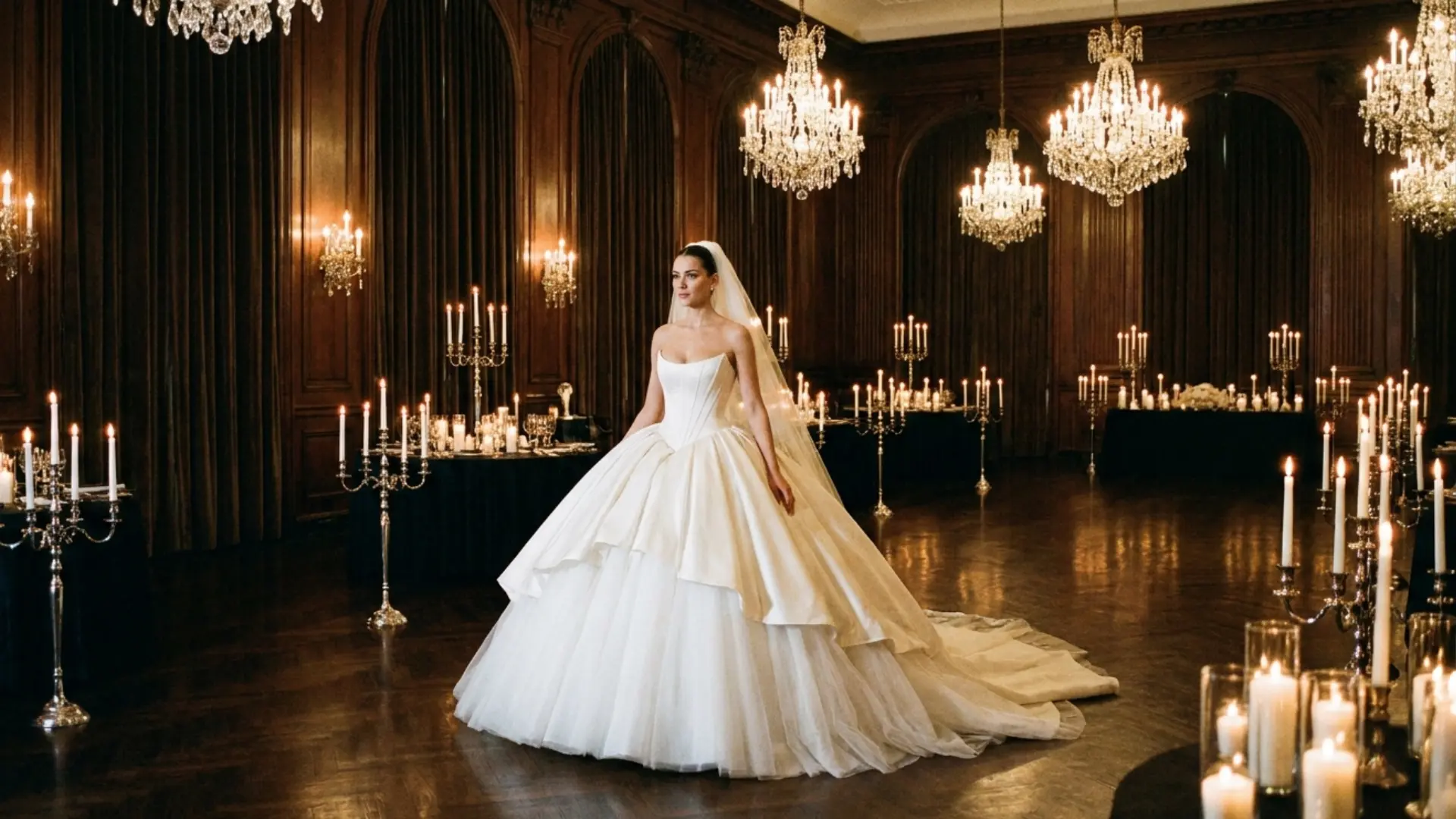
The ultimate royal choice, a ball gown features a sharply defined waist and an expansive, dramatic skirt.
It differs from the A-line by utilizing dramatic layers of tulle or petticoats for maximum volume. It creates a regal, high-contrast silhouette, but can be heavy and restrictive on stairs.
Always test the “sit-and-breathe” factor; a massive skirt requires serious spatial awareness when navigating tight reception aisles.
3. Mermaid Wedding Dress
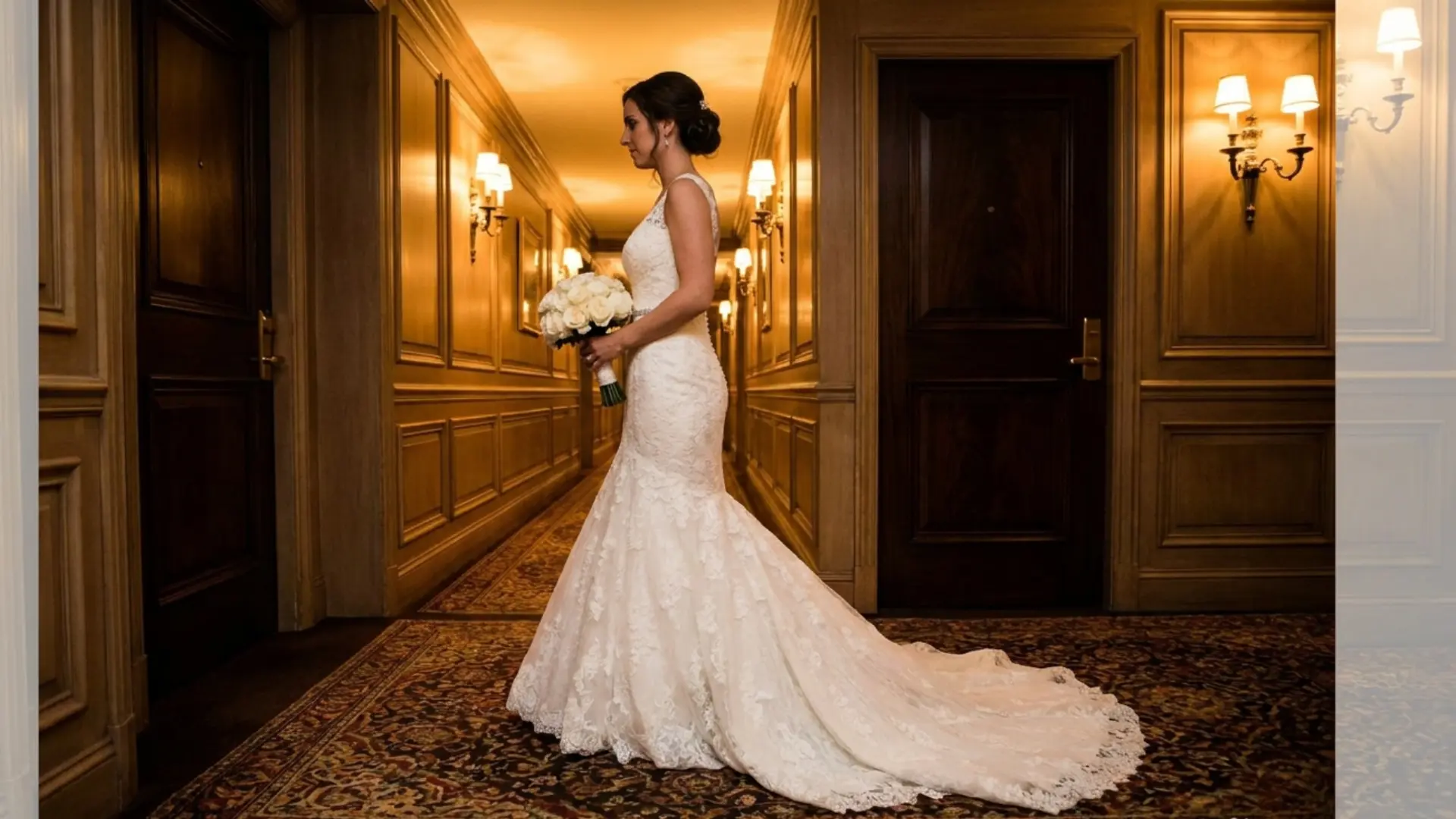
This ultra-glamorous style hugs the chest, waist, and knees before dramatically flaring at the lower leg. It is far tighter through the thighs than a trumpet gown.
It accentuates curves with show-stopping drama, but severely restricts your stride and dancing.
Request a hidden elastic dance strap sewn into the lining so you can move your legs comfortably without compromising the structured silhouette.
4. Trumpet Wedding Dress

Often confused with the mermaid style, the trumpet gown flares higher up, right at the mid-thigh.
This subtle shift provides a fitted look with far superior legroom. It delivers a sensual shape with manageable mobility, though it still requires mindful sitting.
It pairs exceptionally well with heavy lace appliqués because the mid-thigh seam provides a perfect anchor point to transition patterns seamlessly.
5. Fit-and-Flare Wedding Dress
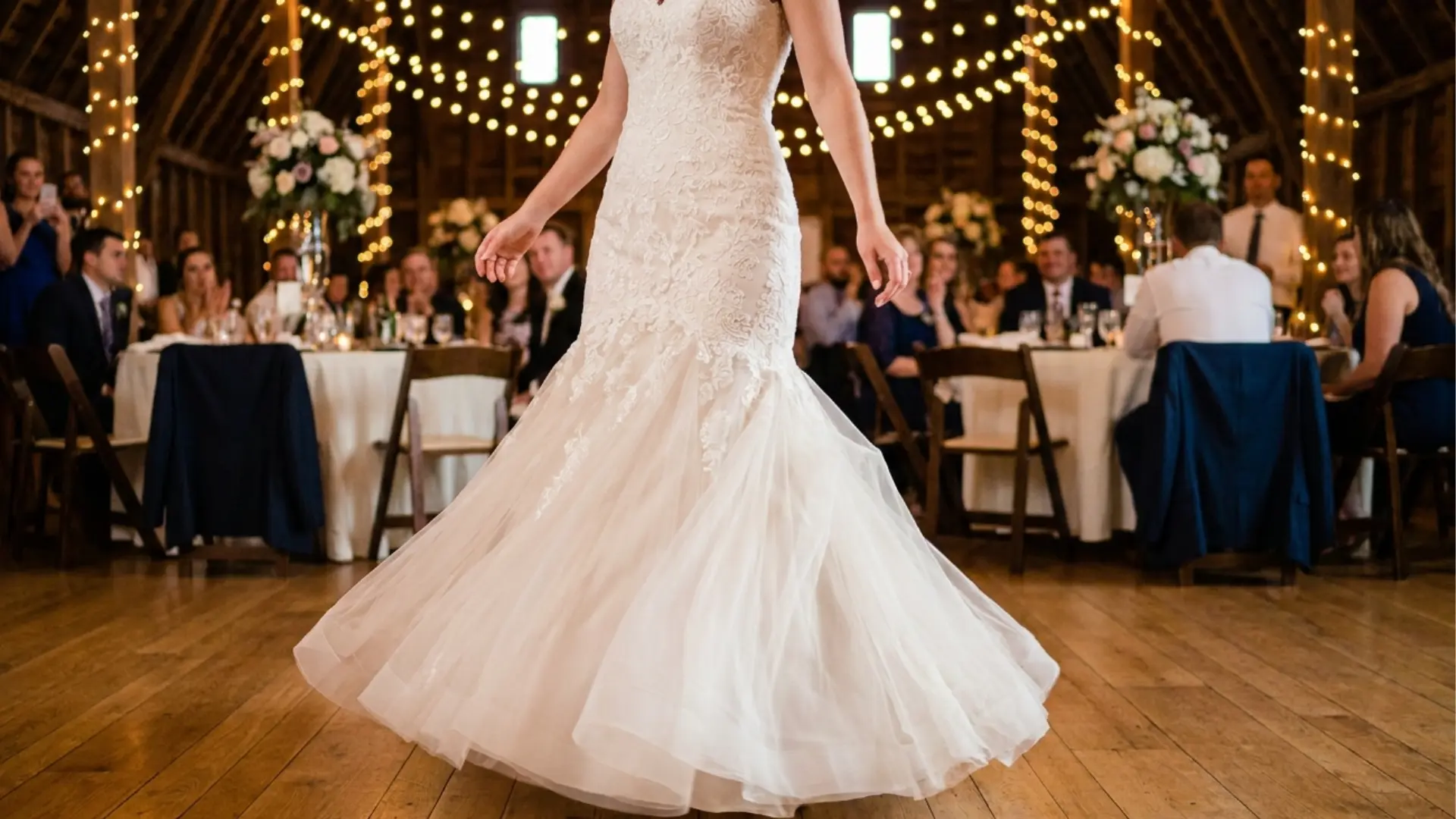
This style offers the softest transition of all fitted gowns, gradually opening just below the hips.
Unlike the sharp flare of a mermaid, it mimics a gentle curve. It provides excellent mobility for dancing, but a lack of standardized designer labels means styles vary wildly.
Ignore the label completely during appointments; focus solely on where the fabric begins to release around your body.
6. Sheath Wedding Dress
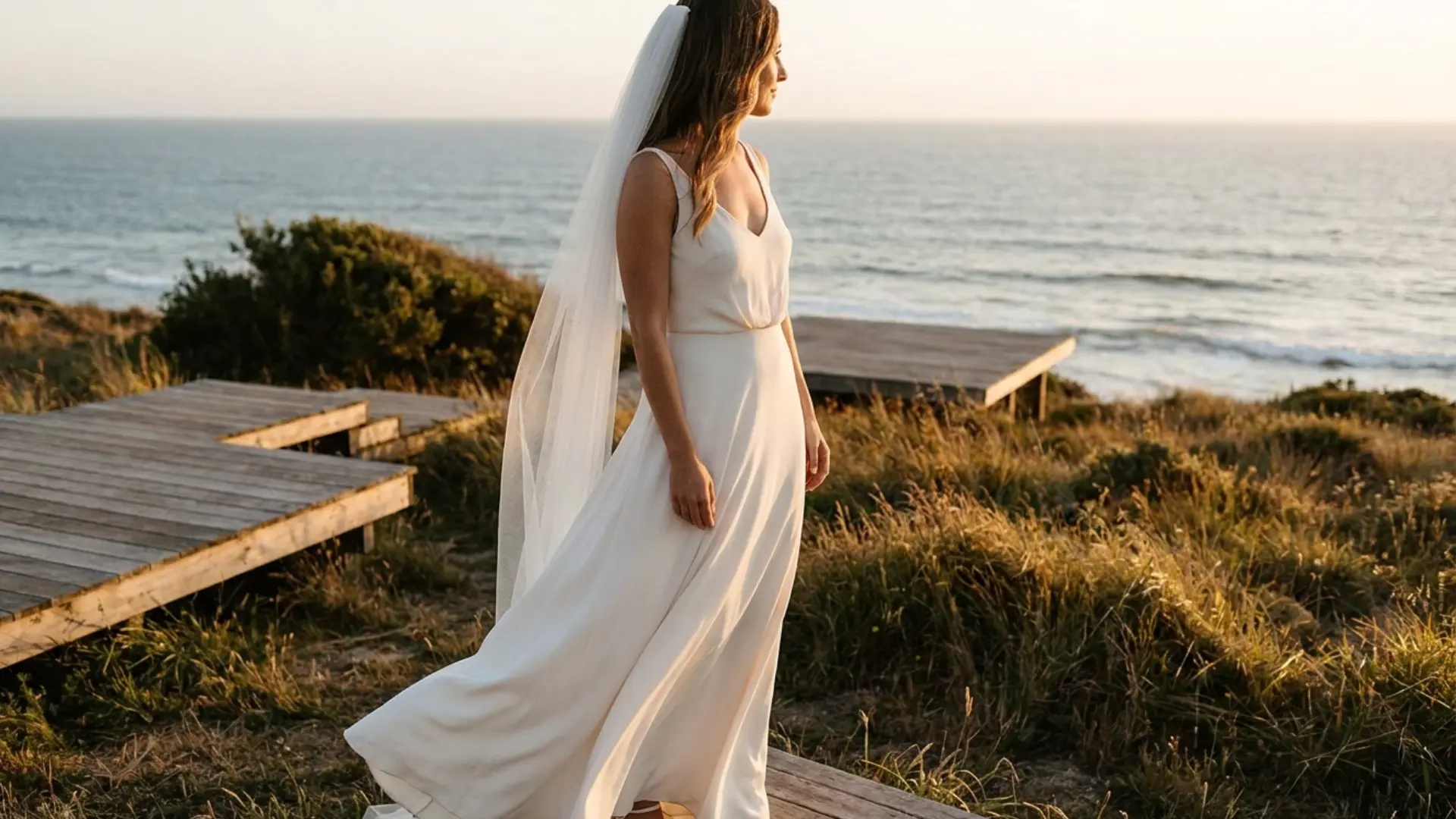
A sheath gown effortlessly hugs your natural shape in a continuous, narrow line. It lacks the architectural rigidity of a column dress, offering a softer drape instead.
It is lightweight, exceptionally packable, and ideal for elopements, though its minimal internal structure means unforgiving lines.
Seamless, high-waisted shapewear is non-negotiable here, as thin crepe or charmeuse fabric will telegraph every seam of undergarments.
7. Column Wedding Dress
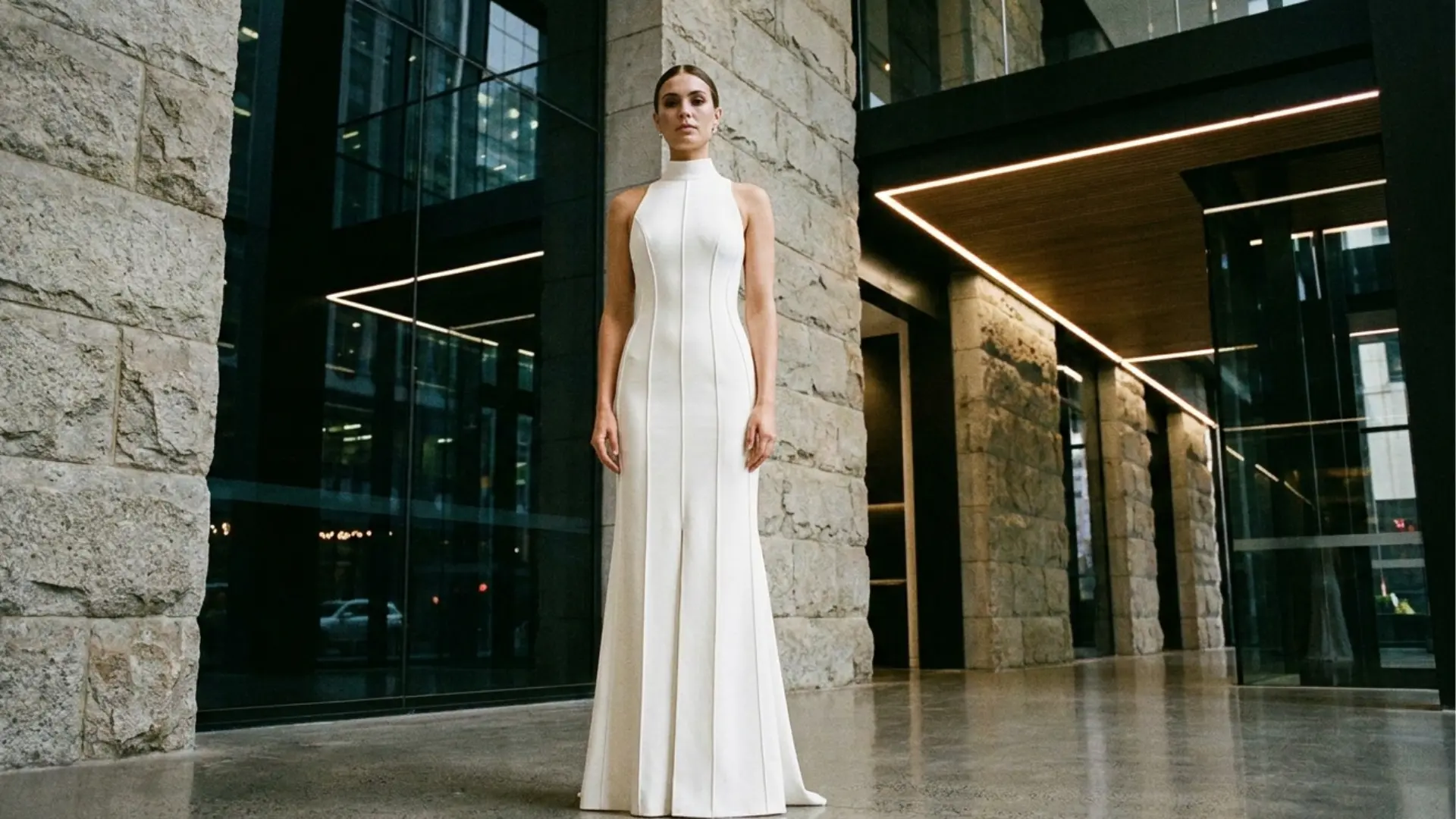
Constructed with crisp, vertical lines, the column dress stands straight from shoulder to hem. It is more structured and geometric than a fluid sheath.
It elongates the torso for a statuesque, modern aesthetic, but limited fabric can restrict deep strides.
Look for a concealed back slit; it preserves the striking, unbroken front silhouette while allowing you to walk normally.
8. Empire Waist Wedding Dress
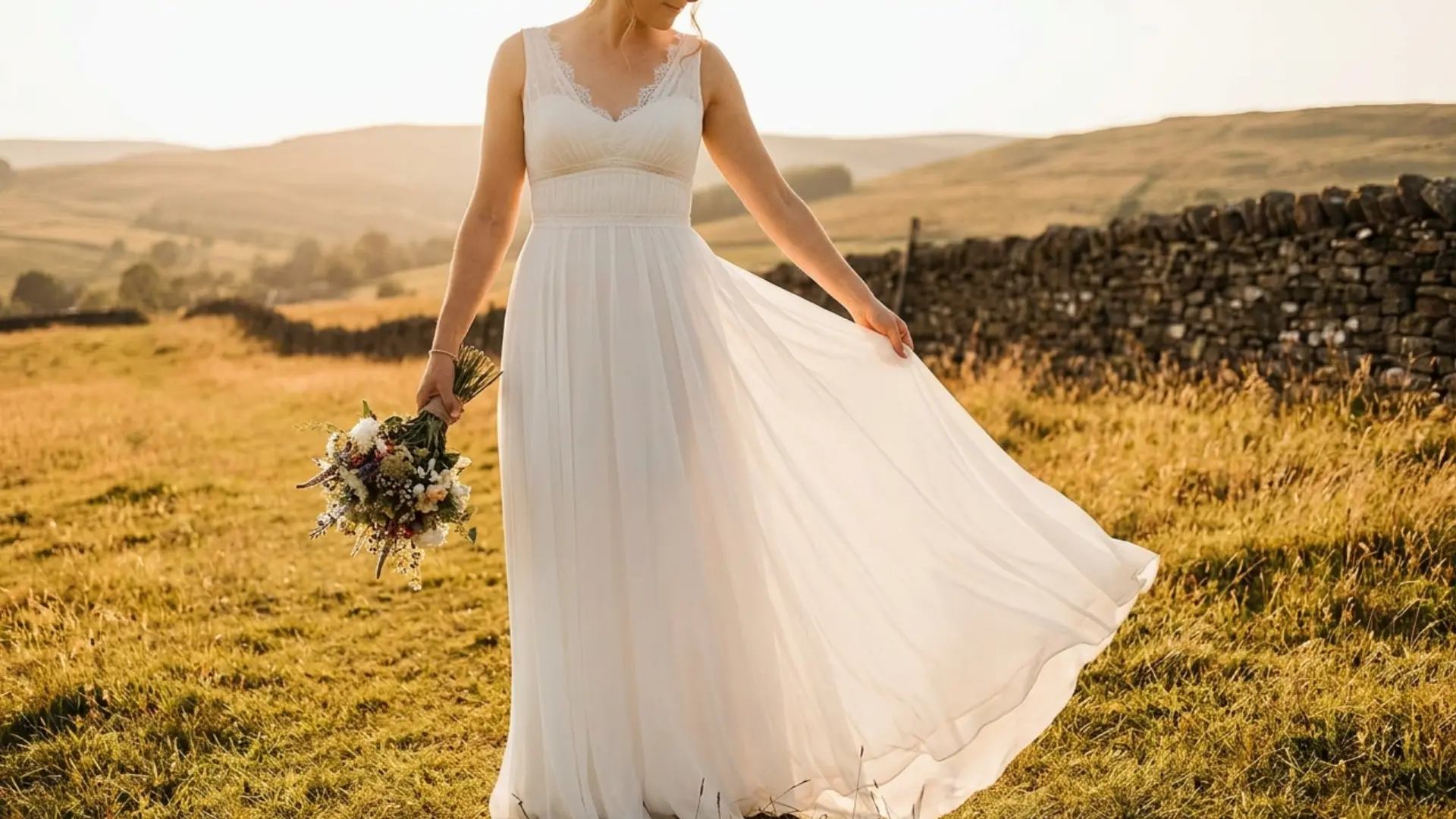
Featuring a high waistline resting directly beneath the bust, this dress flows loosely to the floor.
It completely skips the waist-defining fit of traditional gowns. It offers maximum breathing room and comfort, but risks looking oversized if tailored incorrectly.
Because the entire weight hangs from the chest, investing in high-quality built-in bust cups is essential for safety.
9. Princess Wedding Dress
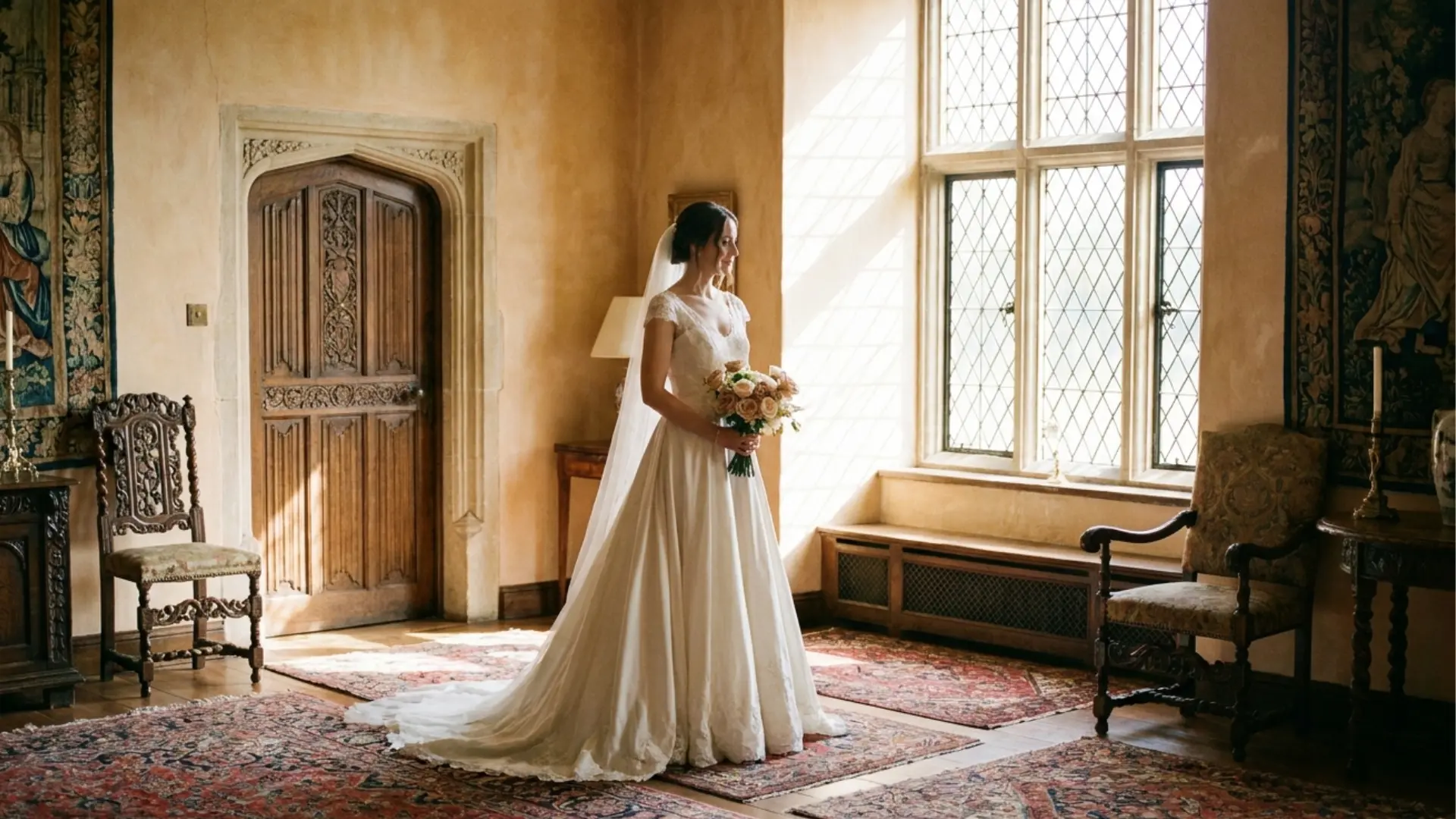
Crafted with continuous, vertical panels from shoulder to hem, this style ditches the traditional horizontal waist seam entirely.
It delivers a smoother, more unbroken line than standard A-lines. It creatively elongates your frame, but can be extremely difficult and costly to alter properly.
The absence of a waist seam makes this the absolute best canvas for vertical lace placements or linear pinstripe beadwork.
10. Drop-Waist Wedding Dress
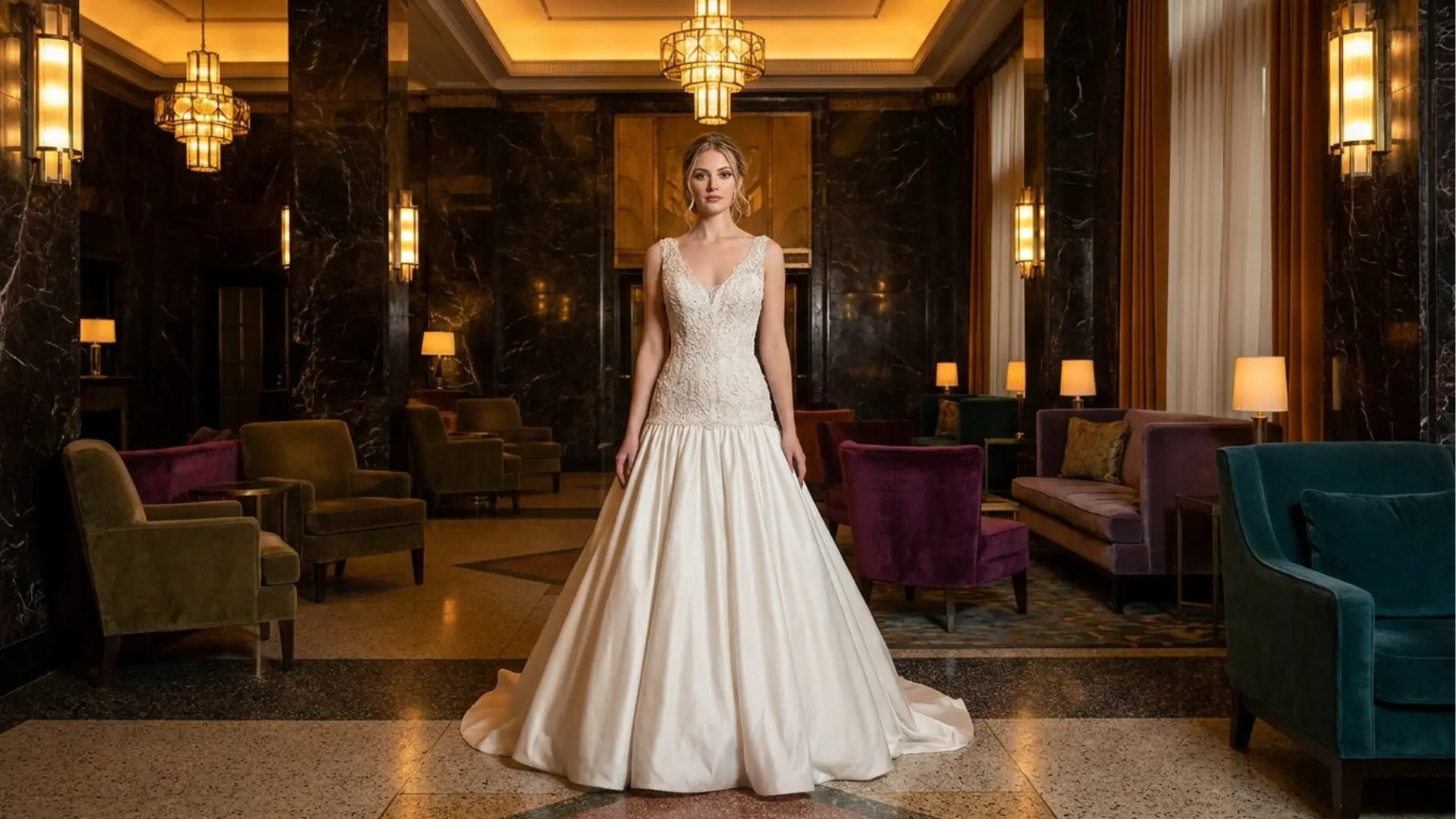
Elongating the torso, this bodice hugs past your natural waist down to the upper hips before releasing into a skirt.
It creates a completely different visual balance than a natural-waist gown. It brings strikingly modern, jazz-age elegance, though it inherently shortens the appearance of your legs.
Bring your exact wedding shoes to the very first fitting; even a half-inch change alters where the dropped seam hits.
11. Basque Waist Wedding Dress
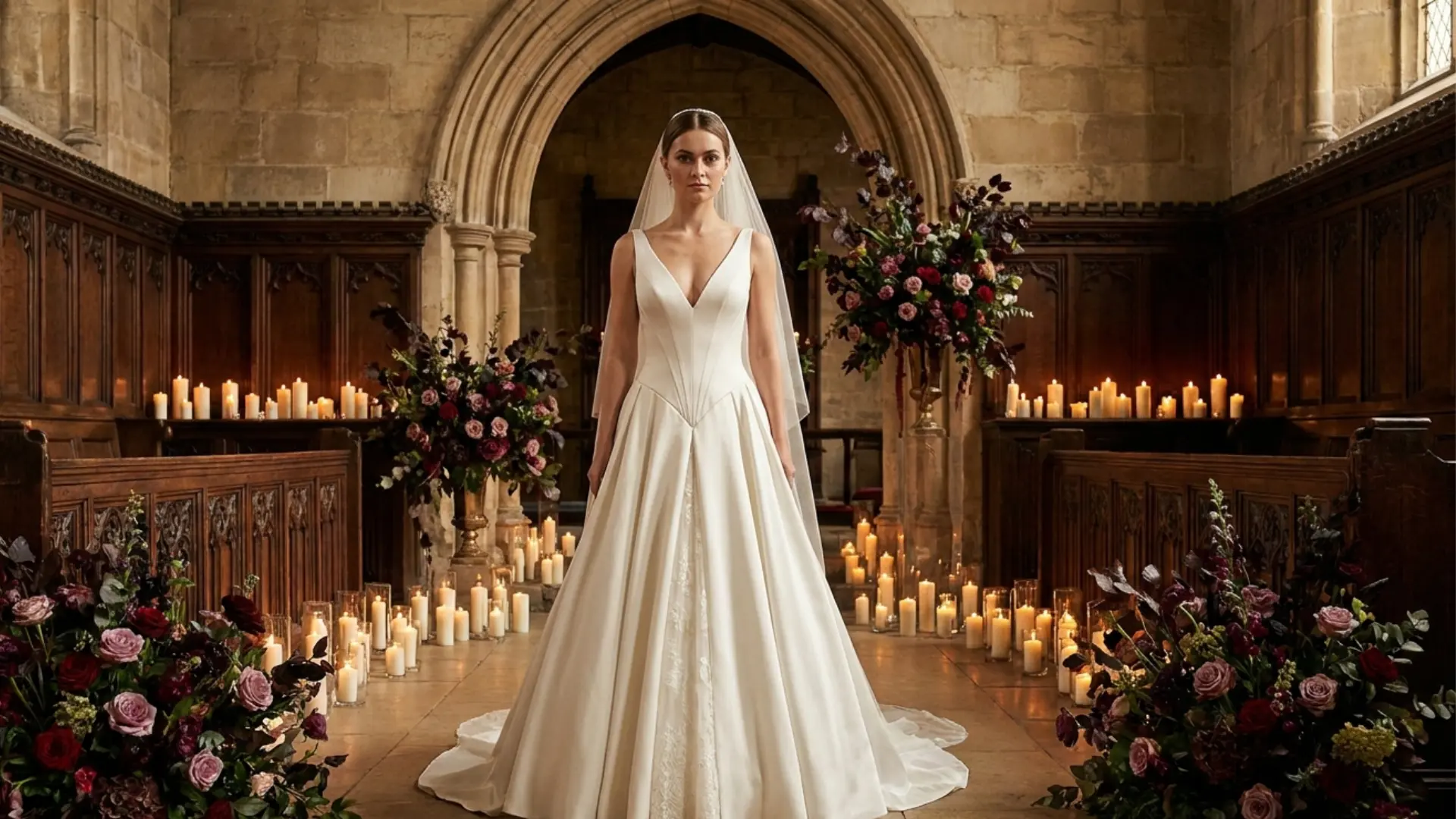
Distinguished by an iconic V- or U-shaped bodice seam, this style dips below the navel to draw eyes inward.
It offers a sharper, more dramatic waist definition than a standard ball gown. It provides exceptional core support and corsetry, but can pinch significantly when sitting.
Sit down for a full five minutes during your try-on to ensure the rigid point doesn’t dig uncomfortably into your hips.
12. Tea-Length Wedding Dress
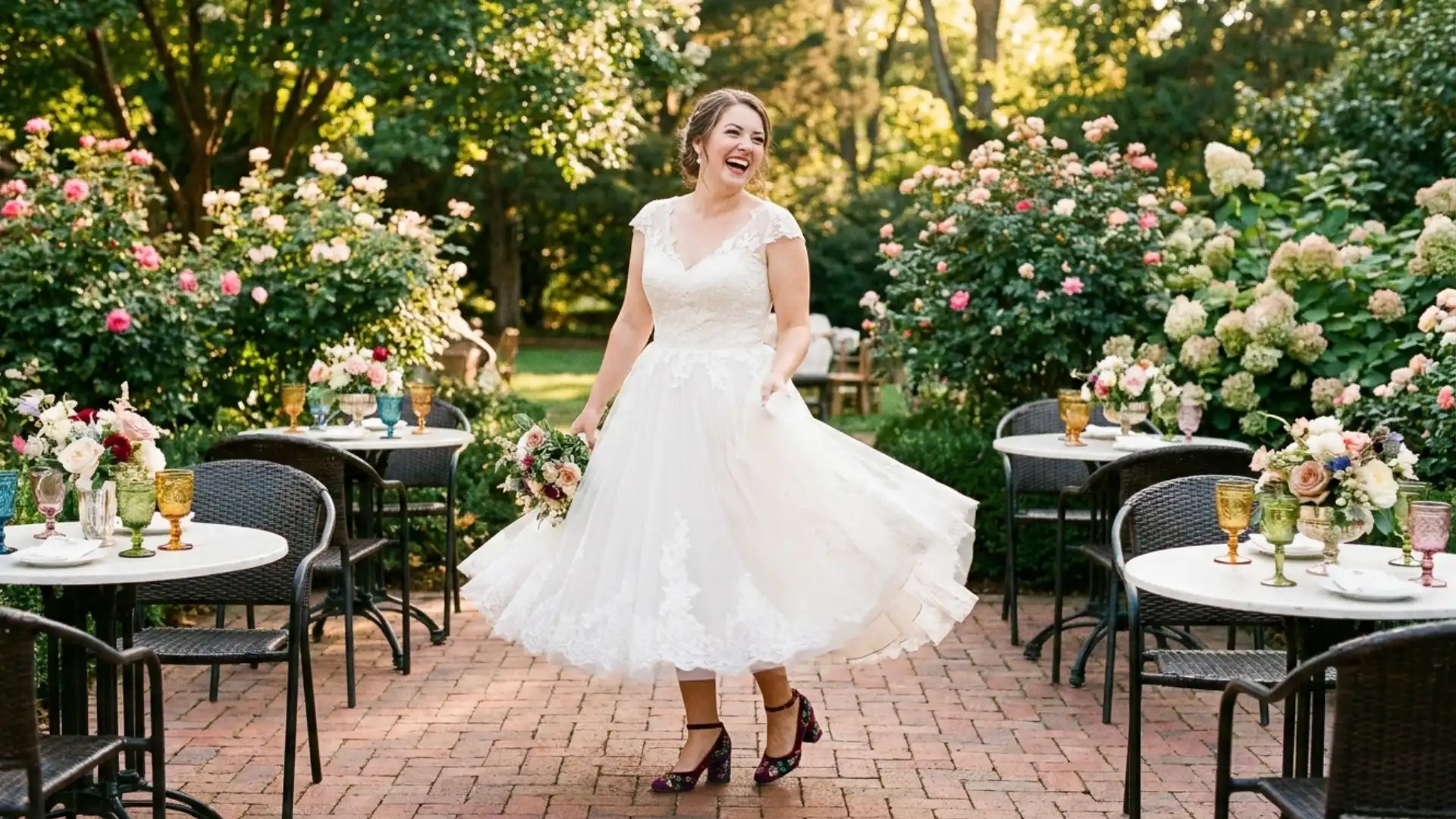
Ending precisely between the knee and ankle, this style brings vintage charm without floor-length bulk.
It provides far more modesty than a mini dress. It ensures zero tripping hazards and is highly breathable, though it visually cuts the calf line.
Since your footwear is completely on display, budget for a statement pair of wedding shoes; they are just as important as the dress itself.
13. High-Low Wedding Dress
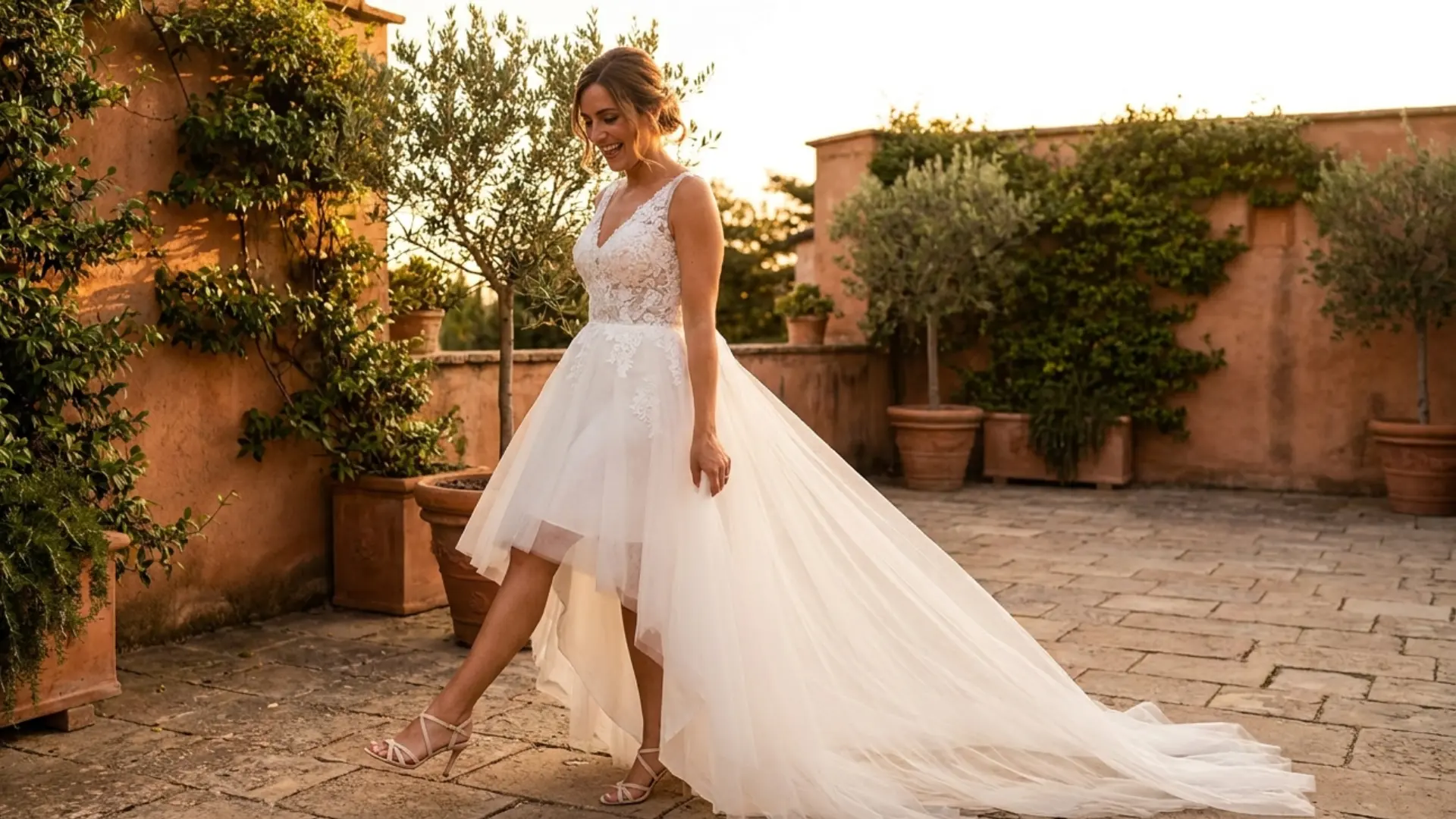
This dynamic silhouette features a cropped front hem paired with a cascading back skirt or train. It marries the playfulness of a short dress with formal bridal drama.
It is perfect for showing off statement heels, but catching the longer back hem on outdoor terrain is common. Ensure your tailor cuts the front hem while you are walking, not just standing, to prevent accidental flashing.
14. Mini Wedding Dress
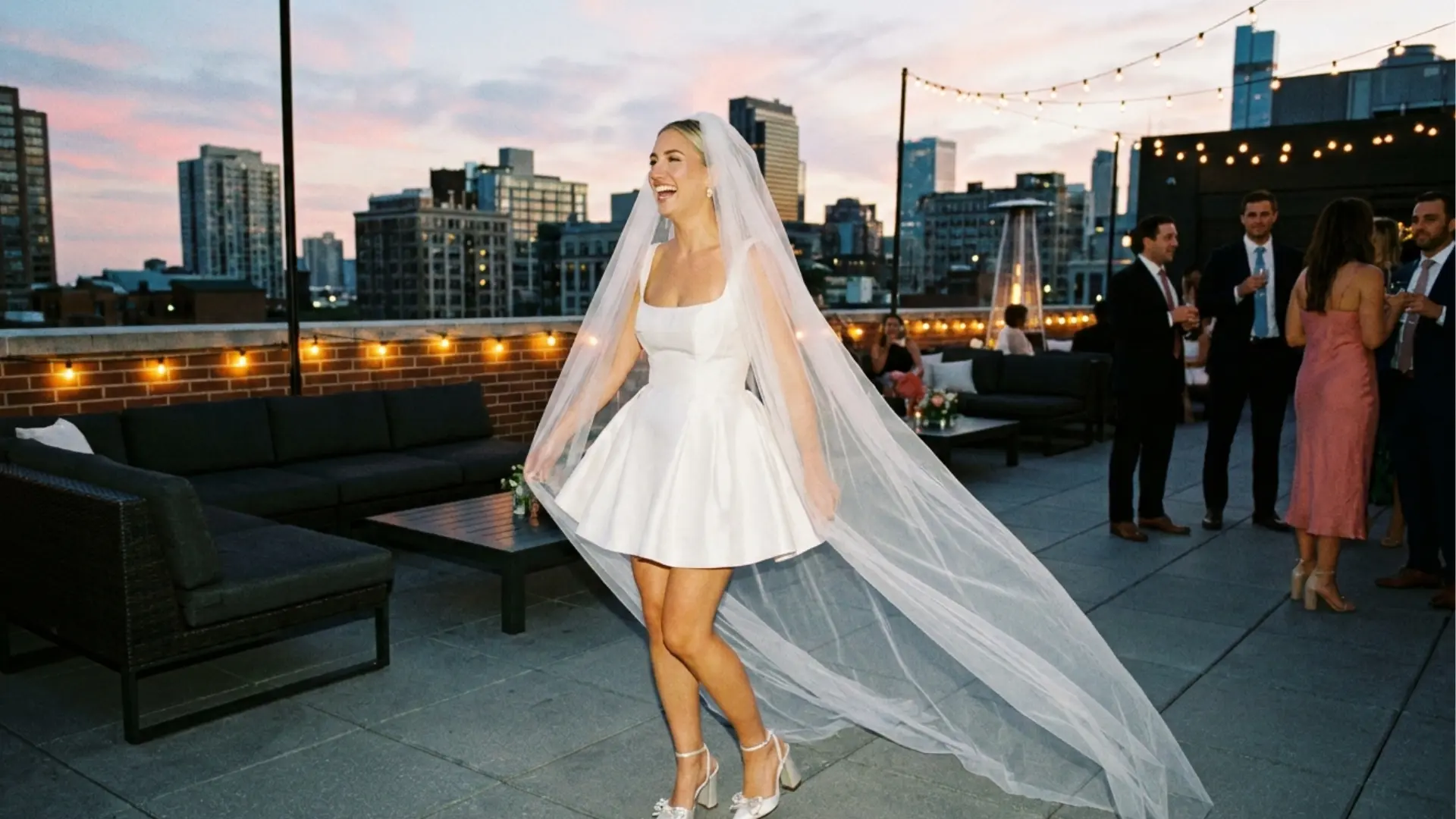
Ending confidently above the knee, the mini is the ultimate fun, modern bridal statement. It abandons all traditional length rules.
It gives complete freedom to dance, walk, and mingle, though it offers minimal coverage and can feel casual.
When choosing a mini for your reception, test a dramatic long veil during the ceremony to maintain a cohesive, high-fashion bridal contrast.
15. Midi Wedding Dress
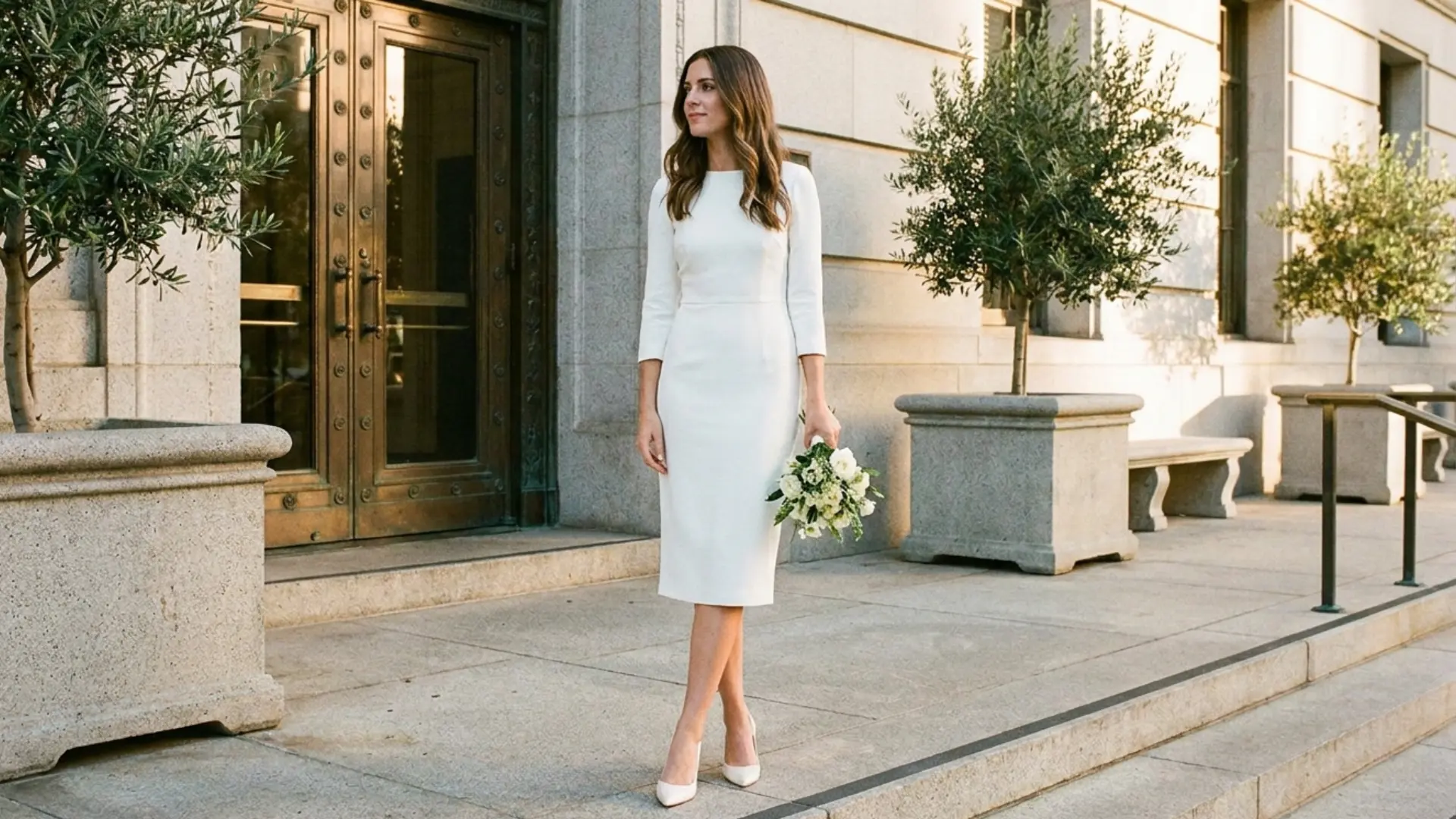
Hitting beautifully just below the knee, the midi offers a chic, tailored alternative that is sleeker than a voluminous tea-length.
It is a classy, effortless, and highly reusable post-wedding, though it can dwarf shorter frames if the hem isn’t precise.
Have your tailor place the hem exactly where your calf begins to narrow to create an instantly elongating, ultra-flattering visual line.
16. Slip Wedding Dress
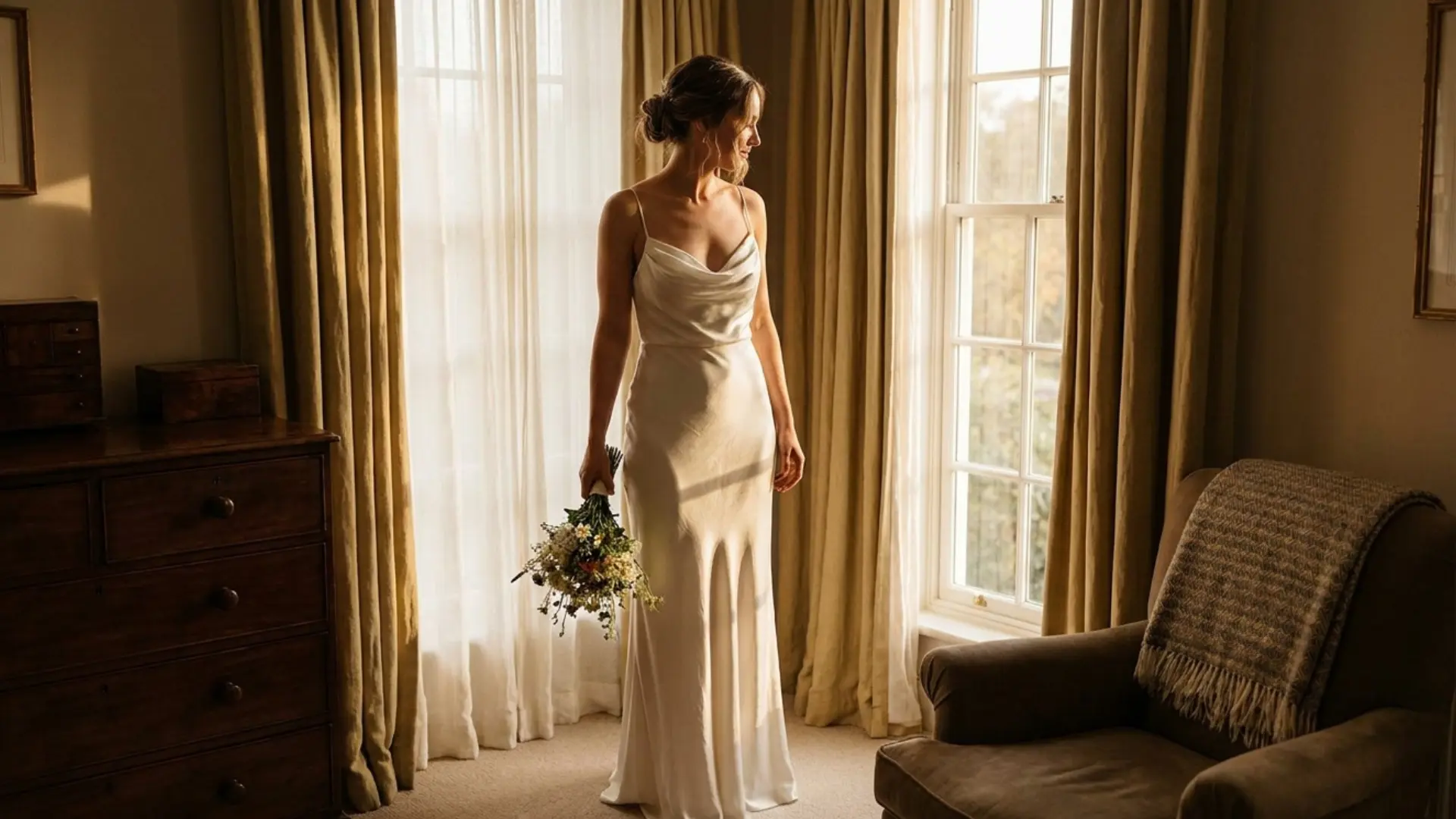
Mimicking fine lingerie, the slip dress features delicate straps, a fluid neckline, and bias-cut silk or satin.
It lacks the boning and structure found in sheaths. It is incredibly sensual, minimalist, and lightweight, but highlights every ripple and lacks bust support.
Hang this dress in a steamy bathroom right before wearing it; the bias-cut silk relaxes beautifully, naturally molding to your exact curves.
17. Two-Piece Wedding Dress
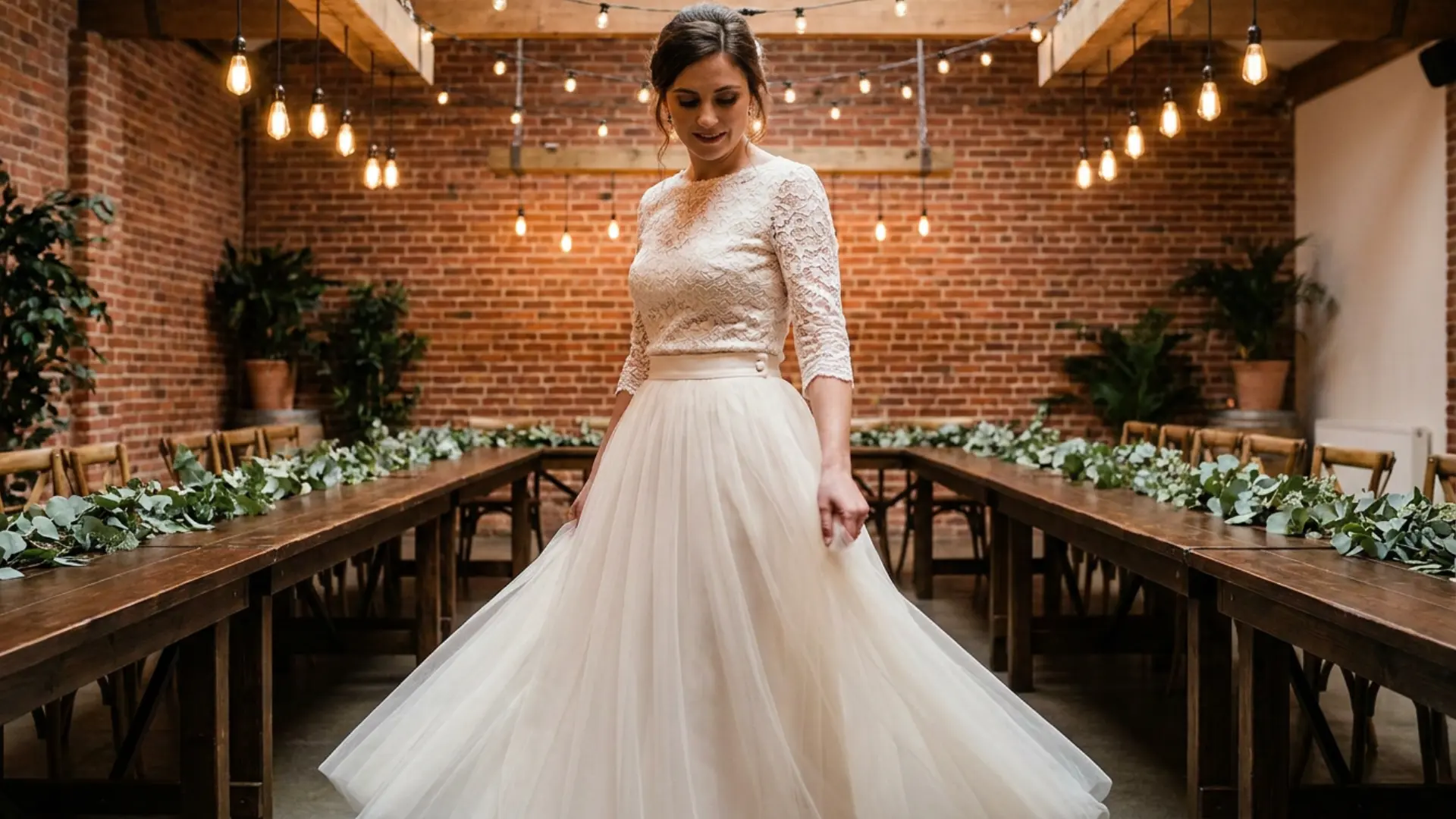
Breaking tradition, this style pairs a separate top with an unattached skirt. It offers unmatched versatility compared to any one-piece gown.
It allows for mix-and-match sizing and an incredibly customized fit, but the waistband can shift or gap throughout the day.
Sew a tiny, hidden snap closure linking the top’s lining to the skirt’s waistband to keep everything flawlessly aligned while dancing.
Wedding Dress Silhouette Comparison Chart
Use this quick comparison chart to see how each wedding dress silhouette fits, moves, and suits different wedding settings.
| Wedding Dress Style | Bodice Fit | Skirt Shape | Movement Level | Common Wedding Settings |
|---|---|---|---|---|
| A-line | Fitted | Gradually widens | High | Most venues |
| Ball gown | Fitted | Very full | Moderate | Formal venues |
| Mermaid | Very fitted | Flares near knees | Limited | Formal ceremonies |
| Trumpet | Fitted | Flares at mid-thigh | Moderate | Formal or modern venues |
| Sheath | Close or straight | Narrow | High | Beach or city weddings |
| Empire waist | Fitted below the bust | Loose and flowing | High | Outdoor or relaxed weddings |
| Tea-length | Varies | Short, often flared | High | Courthouse or garden weddings |
| Fit-and-flare | Fitted | Gradual lower flare | Moderate | Many venue types |
Comparing these features side by side can make it easier to narrow your options before trying dresses in person.
How Mermaid, Trumpet, and Fit-and-Flare Dresses Differ
Mermaid, trumpet, and fit-and-flare gowns may look similar, but the main difference is where the skirt begins to widen and how closely the dress fits the lower body.
- Where the skirt begins to flare: Mermaid dresses usually flare near the knees, trumpet gowns widen around the mid-thigh, and fit-and-flare dresses open more gradually from the hips or upper thighs.
- How closely each style fits: Mermaid gowns are the most fitted through the waist, hips, thighs, and knees. Trumpet dresses are fitted through the hips but feel slightly less tight. Fit-and-flare gowns offer a softer, more relaxed fit.
- Option that allows more movement: Fit-and-flare gowns usually offer the most freedom of movement. Trumpet dresses offer moderate comfort, while mermaid gowns may make walking, sitting, dancing, or using stairs more difficult.
- What to test during a bridal appointment: Sit down, walk several steps, raise your arms, turn around, and try the gown with shoes similar to the ones you plan to wear.
Testing each style in motion can help you choose a gown that looks good and feels comfortable throughout the wedding day.
How Fit, Volume, and Waist Placement Affect the Look
Wedding dresses can look different despite having similar names. The flare point shapes the outline: A-line and ball gowns widen from the natural waist; modified A-line styles begin near the upper hip; trumpet dresses flare at mid-thigh; and mermaid gowns flare near the knee.
Skirt volume changes movement and formality, from slim skirts to moderate flow or full layers supported by tulle and petticoats.
Waist placement affects proportion, whether empire, natural, basque, or drop waist. Seam direction matters: vertical seams lengthen the look, horizontal seams define the waist, and diagonal seams guide the eye.
Choose what feels most like you.
Choosing a Silhouette Around Comfort and Personal Priorities
Choose a dress silhouette based on how comfortable and supported you want to feel.
- Decide What You Prefer: a roomy skirt or a body-skimming fit around your waist, hips, thighs, and legs.
- Check the Bodice Support: include lining, boning, corsetry, built-in cups, waistbands, and low-back limits.
- Test the Dress: while sitting, walking, climbing stairs, raising your arms, bending, dancing, using the restroom, and getting into a vehicle.
- Use Body-Shape Advice: only as a starting point, because fabric, seams, structure, alterations, and personal taste can change the final look.
Choose the silhouette that feels secure, natural, and easy to move in.
Matching the Gown to the Venue, Season, and Dress Code
Your wedding venue, season, and dress code should guide practical choices rather than limit you to a single gown style. For ballrooms and hotels, fuller skirts, structured fabrics, and longer trains can work well, but check stairs, aisles, seating, and bustle needs.
Outdoor venues require attention to grass, uneven ground, breathable fabrics, hem length, and shoes. Beach weddings suit lighter gowns with good airflow, simple linings, and manageable trains.
In courthouses, restaurants, or city settings, shorter hems, slim skirts, two-piece looks, and easy-to-carry dresses make walking and travel simpler. Choose a gown that fits your comfort, setting, and plans for the day.
Fabrics and Construction that Reshape the Same Design
Fabric and construction can change how a wedding dress silhouette looks and feels.
- Mikado, Taffeta, and Heavier Satin: Hold pleats, add volume, and give ball gowns or structured A-line dresses a polished finish.
- Crepe, Charmeuse, and Chiffon: Drape softly, move easily, and suit sheath, slip, empire, or column styles, though lining and undergarments help prevent visible seams.
- Tulle and Organza: Create light fullness, texture, and movement; extra layers produce a fuller outline.
- Lace Appliqués, Scalloped Hems, Sheer Panels, and Contrasting Linings: Add detail, while dense lace creates structure.
Choose fabric based on comfort, movement, and the overall finish you want.
Necklines, Sleeves, and Trains that Finish the Look
Necklines, sleeves, and trains help personalize a wedding dress without usually changing its main silhouette.
A sweetheart, square, scoop, V-neck, halter, high neck, off-the-shoulder, or one-shoulder design can change the look of the bodice and should suit your preferred support, coverage, jewelry, and hairstyle.
Sleeves, from spaghetti straps and cap sleeves to long fitted or detachable styles, affect comfort, balance, warmth, and arm movement. Train lengths, such as sweep, court, chapel, or cathedral, influence the pace of walking and bustling.
Detachable overskirts, capes, trains, sleeves, belts, or shoulder pieces can create a more personal ceremony look and a lighter reception style.
A Practical Bridal Salon Try-On Plan
Preparing for your bridal appointment requires a strategic approach to make the most of your time and find the perfect gown. Follow this practical, three-step try-on plan to streamline your experience:
- Start with Three Distinct Silhouettes: Begin by comparing one full shape (like a ballgown), one softly fitted option (such as an A-line), and one close-fitting or shorter design to instantly see what flatters you.
- Bring Clear Reference Photos: Save images showcasing the full front, side profile, back view, and the dress in motion or seated, focusing strictly on shape rather than lace or beadwork.
- Evaluate Multiple Angles: Walk, sit, turn side-to-side, and check the unclipped fit to assess the gown’s true comfort and skirt weight over several minutes.
By isolating structure from details and testing each gown’s movement, you will confidently choose a wedding dress that looks and feels spectacular.
Naming Mistakes to Avoid When Comparing Wedding Dresses
When comparing wedding dresses, understanding the right terms and looking beyond the label can help you make a more confident choice.
| Mistake | Solution |
|---|---|
| Confusing a neckline with a silhouette | Remember that sweetheart, square, scoop, and off-the-shoulder describe the top of the dress. A-line, ball gown, mermaid, and sheath describe the overall shape. |
| Assuming every designer uses the same definitions | Do not rely only on the dress label. Check where the skirt starts to flare and how full it looks. One designer’s fit-and-flare may look like another designer’s trumpet gown. |
| Rejecting a shape because the sample does not fit | Bridal samples may be clipped, pinned, too long, or not in your size. Ask the stylist how the dress will look after it is ordered in the correct size and altered. |
| Ignoring the dress’s internal structure | Ask about boning, corsetry, cups, lining, petticoats, and underskirts. These features affect the dress’s shape, support, weight, and comfort. |
| Choosing a dress from standing photos alone | Test the dress while walking, sitting, bending, hugging, and dancing. Make sure you can move comfortably throughout the wedding day. |
Focus on the dress’s actual shape, fit, structure, and comfort to find a style that looks beautiful and works well throughout your wedding day.
At the End
Finding the perfect wedding gown is a deeply personal journey, and reflecting on my own wedding day reminds me how vital it is to choose a style that truly feels like you.
Looking back at my photos, I am so glad I prioritized how the dress moved when I danced rather than just how it looked standing still in a fitting room.
By understanding how fit, volume, waist placement, and fabric construction interact, you can confidently navigate your appointments.
Remember to focus on your personal comfort, the venue setting, and the dress’s actual structure over any arbitrary sizing labels.
Which wedding dress silhouette is your absolute favorite? If you have already started shopping, what surprised you most during your bridal salon appointments?
I would love to hear about your experience. Leave a comment below to share your tips or ask any questions
Frequently Asked Questions
How Far in Advance Should a Wedding Dress be Ordered?
Most brides order their gown eight to twelve months before the wedding, allowing enough time for production, fittings, alterations, shipping delays, and finding matching accessories, avoiding unnecessary last-minute stress.
Can a Wedding Dress be Altered to Change its Silhouette?
Minor changes can adjust the fit, waist definition, neckline, sleeves, or skirt fullness, but altering the entire silhouette is often costly, difficult, and constrained by seams, fabric, and internal construction details.
Is It Better to buy a Wedding Dress Online or in-Store?
Shopping in a store allows fitting, fabric checks, and movement tests. Online buying may cost less, but confirm measurements, return rules, production times, reviews, and alteration options before ordering your gown.
Should Wedding Shoes be Chosen Before Alterations?
Yes, bring your wedding shoes or another pair with the same heel height to every fitting. Accurate height helps the tailor set the hem and train safely for walking comfort.