Touring breaks routines. Sleep happens on a moving bus, dinner is whatever the venue rider produced, and the nearest familiar doctor sits four hundred miles behind the last city. Now add orthodontic treatment to that chaos. A surprising number of working musicians do exactly that, wearing metal braces through festival runs, club tours, and studio blocks, because waiting for a convenient two-year gap in a music career means waiting forever. Faith Hill famously walked the Grammys red carpet in braces at 45. Gwen Stefani wore hers proudly at the height of No Doubt’s fame and called them a luxury she couldn’t afford growing up. The stage and the appliance coexist more often than fans notice.
What audiences never see is the logistics. Adjustment appointments booked across three time zones, wax packed next to guitar picks, a vocalist relearning consonants during soundcheck. Talk to touring players and crew about it and the same practical wisdom surfaces again and again, a body of road knowledge that never made it into any official guide. This is that guide, assembled for anyone about to load into a van with brackets on their teeth.
Singers: The First Two Weeks Are the Fight
Vocalists take the hardest hit, and honesty about that helps more than reassurance. Fresh brackets sit against the inner lips exactly where consonants form, so sibilants and plosives blur for the first days. Speech pathologists who work with performers say most singers adapt within one to two weeks as muscle memory recalibrates, which is why the smart move is scheduling placement at the start of a break rather than three days before a tour kicks off.
Wax becomes the singer’s best friend during adaptation. A thin layer over the brackets that contact the lips smooths the friction that causes both soreness and slurred diction. Some vocalists switch to silicone strips, which grip longer through a sweaty 90-minute set. Warm-ups need extending too; lips and cheeks tire faster while they toughen up, and pushing a strained embouchure through a full setlist in week one ends badly.
Brass and wind players face their own version of the battle. Trumpet and sax embouchure presses soft tissue straight into the hardware, and the adjustment period runs longer than for singers. Brass teachers have developed whole method adaptations for braced students, and specialized lip guards exist for exactly this problem. Guitarists, drummers, and DJs get off easy. Their only real enemy is the merch-table close-up.
The Road Kit That Saves Shows
Every touring musician with braces ends up building the same emergency pouch. It weighs nothing and lives in the gig bag, next to spare strings and earplugs:
- Orthodontic wax, three packs minimum
- Travel toothbrush and interdental brushes
- Small folding mirror for backstage checks
- Nail clippers for a snapped wire end
- Salt packets for quick soothing rinses
- Ibuprofen for post-adjustment show nights
- Spare elastics, double what seems reasonable
- Orthodontist’s phone number saved offline
The nail clippers earn their place. A broken archwire poking the cheek mid-tour gets clipped behind the last secure bracket and covered with wax, a fix any orthodontist will describe over the phone in two minutes. That call matters, by the way. Practices routinely talk touring patients through roadside repairs, and many will coordinate with a colleague in whatever city the bus reaches next for anything serious.
Scheduling Treatment Around a Tour Calendar
Adjustments normally happen every four to eight weeks, which sounds incompatible with a three-month tour until you learn how flexible the system actually is. Orthodontists stretch intervals for travelling patients, front-load wire changes before departure, and increasingly use remote monitoring apps that let them check progress from phone photos while the patient is on another continent.
|
Tour situation |
Smart scheduling move |
Why it works |
|---|---|---|
|
Long tour leg, 8+ weeks |
Adjustment in the final week before departure |
Soreness fades before opening night |
|
Festival season, scattered dates |
Book appointments in home-city gaps |
Keeps the regular interval intact |
|
International touring |
Remote monitoring app plus stretched intervals |
Progress tracked without office visits |
|
Album cycle with video shoots |
Discuss ceramic or lingual options upfront |
Less visible hardware for camera-heavy months |
|
Emergency far from home |
Call home practice first, then a local referral |
Most repairs are simple for any orthodontist |
The camera question deserves its own beat. Some artists lean into visible brackets as a look; the braced smile has cycled through pop culture as a genuine aesthetic more than once, and stage lighting mostly swallows the hardware from ten rows back anyway. Others shooting a video cycle ask about ceramic brackets or lingual braces mounted behind the teeth. Both routes work; the point is raising it with the orthodontist before treatment starts rather than mid-course.
Eating on Tour Without Breaking Hardware
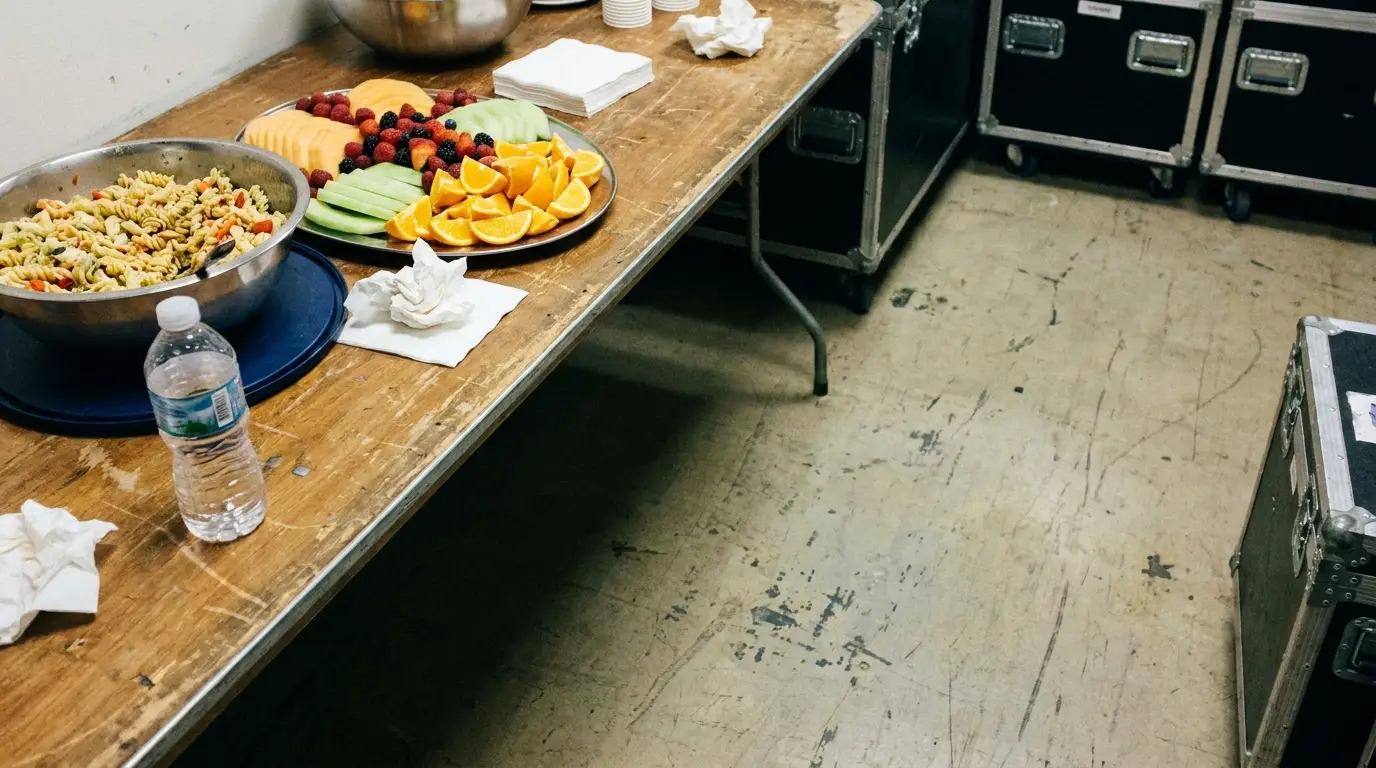
Venue catering and gas-station dinners are a minefield of exactly the foods orthodontists ban. Crusty baguettes, whole apples, corn chips, caramel anything, ice chewed out of boredom on a long drive. Broken brackets from food account for a huge share of emergency repairs, and on tour a repair means finding a stranger’s practice in an unfamiliar city on a day off that doesn’t exist.
The workarounds are unglamorous and effective. Cut the apple, tear the crust off, choose the pasta over the taquitos, and keep protein shakes on the rider for post-adjustment days when chewing anything feels like a bad idea. Several touring vocalists swear by adding soft-food requests to their rider specifically for adjustment weeks, which might be the least rock-and-roll rider item in history and also the most sensible.
Two Years Passes Faster Than a Career Break
The maths that convinces most musicians to start treatment mid-career is simple. A typical course runs 18 to 30 months whether you tour through it or wait for a mythical quiet period, and quiet periods have a way of filling with sessions, writing camps, and support slots nobody saw coming. The players who’ve done it consistently report the same arc: two rough weeks, a month of new habits, then the hardware fades into the background of tour life alongside all the other small disciplines a working musician carries. The smile at the end shows up in every press photo afterward, long after the last van breakdown is forgotten.