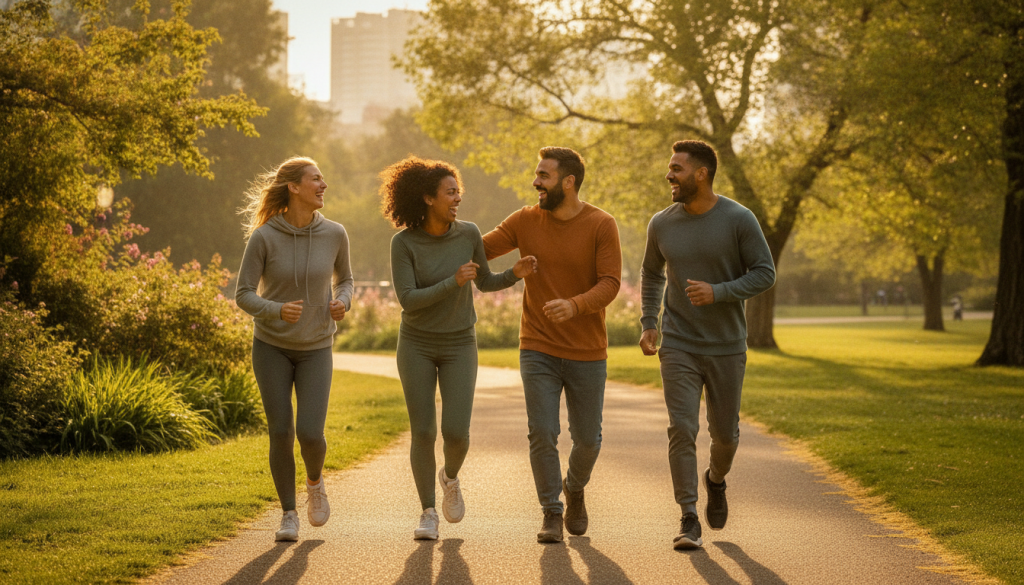
Wellness used to be extremely personal.
You downloaded an app, put on headphones, tracked your workout, counted your steps, and tried to optimize your routine one habit at a time.
That approach is not disappearing, but something else is becoming increasingly appealing: wellness that doubles as a social experience.
Instead of asking friends to meet for another dinner or drink, people are trying Pilates classes, run clubs, climbing sessions, yoga events, walking groups, and other activities that combine movement with connection.
It reflects a broader change in how people think about feeling well.
The best activity is no longer necessarily the most intense one. Sometimes it is simply the one you are excited enough to actually attend.
People Want Wellness to Feel Like Real Life
A perfect wellness routine can look impressive on social media and still be miserable to maintain.
Most people have jobs, relationships, errands, deadlines, and limited free time. Adding another rigid obligation to the calendar is not always realistic.
Social wellness solves part of that problem by combining needs.
You can see a friend and move your body.
You can try something new and get away from a screen.
You can spend a Saturday afternoon doing something active without treating the entire day like a fitness challenge.
That makes wellness easier to integrate into normal life.
The Experience Matters as Much as the Exercise
Traditional fitness tends to focus on measurable outcomes.
How far did you run? How much did you lift? How many calories did you burn?
Experiential wellness introduces another measurement: did you enjoy yourself?
That question matters because people are more likely to remember an activity that gave them a story.
A standard workout can blur into every other workout. A class where something funny, surprising, or unusual happens is more memorable.
In New York, for example, experiences such as puppy yoga in New York turn a familiar yoga format into an activity people can attend with friends, dates, or family members.
The movement is still there, but it is not the only reason to go.
Novelty Can Break the Wellness Rut
Many people do not struggle because they hate being active.
They struggle because they are bored.
Repeating the same routine every week can make even a perfectly good workout feel like another item on a to-do list.
Trying something unfamiliar changes the mental dynamic.
A new instructor, environment, activity, or group gives the brain more to process. You naturally pay more attention because you cannot run entirely on autopilot.
That sense of novelty can be especially helpful for someone who has fallen out of a regular fitness routine.
You do not need to commit to a new identity.
You only need to try one class.
Social Accountability Without the Pressure
Workout accountability often sounds aggressive.
Find a partner who will force you out of bed. Track every session. Never miss Monday.
But accountability can be much softer.
If you have already agreed to meet a friend at a class, you are less likely to cancel simply because you feel slightly unmotivated.
The social plan becomes the reason you show up.
Once you arrive, the physical activity happens almost automatically.
That approach can work well for people who are motivated more by relationships and shared experiences than by performance goals.
Wellness Is Becoming More Playful
Another noticeable shift is that adult recreation is becoming acceptable again.
Not everything needs to improve productivity.
Not every activity needs to produce a transformation.
You can take a dance class because the music is good. You can join a walking group because you like talking to people. You can book an unusual yoga session because it sounds funny.
Enjoyment is not the opposite of wellness.
It may be one of the things that makes a healthy routine easier to maintain.
The Best Routine Is the One You Repeat
None of this means traditional exercise is outdated.
Running, strength training, swimming, cycling, and standard yoga classes remain excellent options for people who enjoy them.
The point is that there are more ways to build movement into life than following a conventional workout plan.
A useful question is not simply, “What exercise should I be doing?”
Try asking:
“What activity would I genuinely look forward to doing again?”
For one person, the answer may be a quiet solo workout before sunrise.
For someone else, it may be meeting ten friends at a weekend fitness event.
Both approaches can work.
Wellness Does Not Have to Be Another Job
The pressure to constantly optimize our bodies and routines can make wellness feel strangely unhealthy.
Sometimes the better option is to lower the stakes.
Move because it feels good.
See people you like.
Try something new.
Laugh during the class.
Leave your phone alone for part of an hour.
The next generation of wellness may be less focused on turning everyone into perfect athletes and more focused on helping people build experiences they genuinely enjoy.
And if that makes us more likely to get off the couch and participate, it is probably a trend worth keeping.