You might save a dozen ring photos and still struggle to explain which one you actually want. In one, the center diamond stands out against a plain gold band. In another, smaller diamonds surround it, and suddenly the whole ring looks fuller. Both appeal to you, but for different reasons.
Solitaire, halo, and pavé help describe those differences. Understanding what each adds makes it easier to choose a ring you’ll enjoy wearing, including on days when the outfit is jeans and a sweater.
Solitaire: When the Center Diamond Is the Main Attraction
A solitaire diamond ring features one diamond without surrounding accent diamonds. The diamond is the star: its shape, proportions, and brilliance define the ring. This makes a solitaire a natural choice for minimalists or anyone who wants a favorite diamond shape to stand out.
Since there are no surrounding diamonds to share the attention, the quality of the center stone matters. Cut is particularly important because it determines how effectively a diamond reflects light. For a round brilliant diamond, an Excellent cut grade is a good starting point. For fancy shapes, compare the diamond’s brightness, contrast and light performance in different lighting conditions.
Clarity and color deserve equal consideration. Look for a diamond without inclusions visible to the naked eye rather than automatically opting for the highest clarity grade. Emerald cuts, with their broad, open facets, can make inclusions easier to notice. Similarly, compare color grades in the setting you prefer, as the diamond’s shape and metal choice can influence how noticeable warmth appears.
Finally, choose a setting that complements the diamond you’ve selected. A slim band creates a delicate contrast with the center diamond, while a wider band gives the ring a more substantial appearance. Consider the height of the setting and how comfortably it sits alongside a wedding band, particularly if you plan to wear both together.
Halo: For a Fuller Look Around the Center
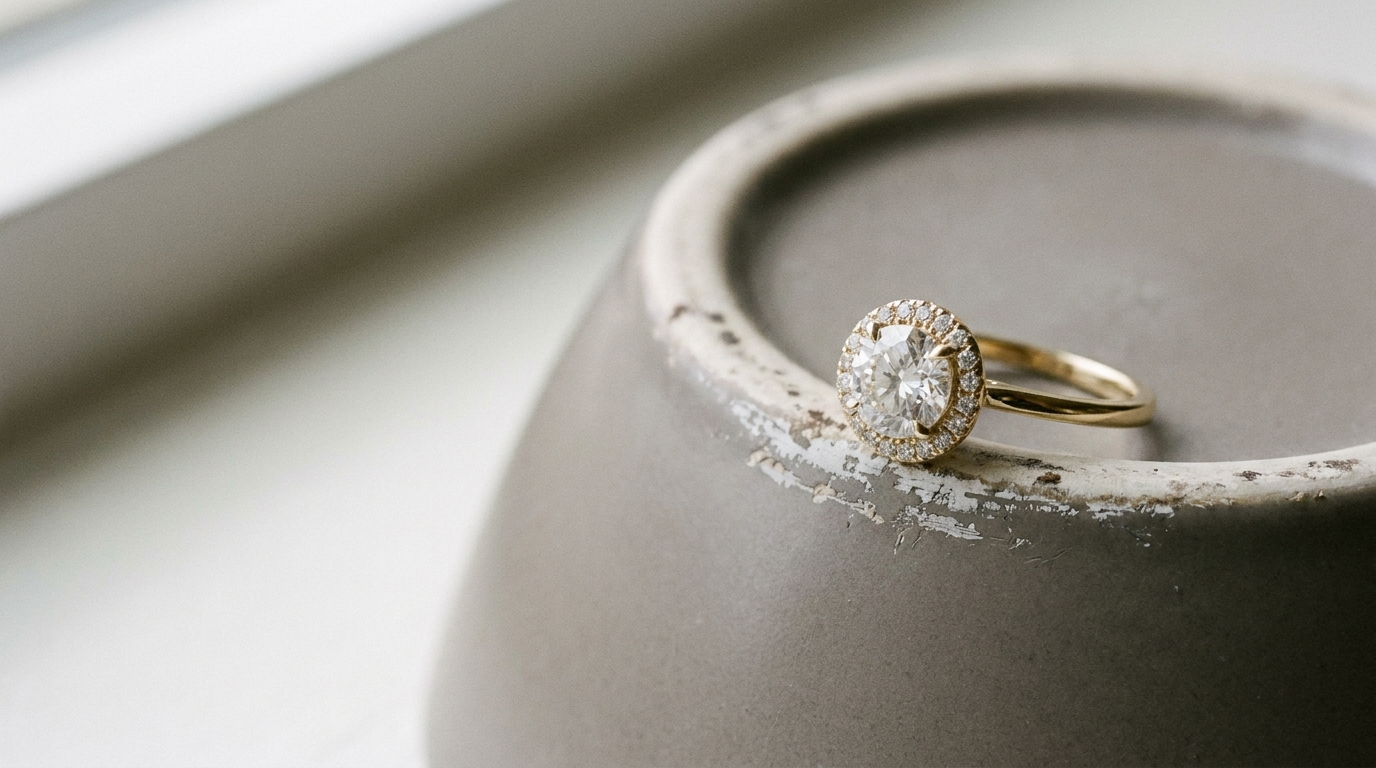
A halo features a border of smaller diamonds surrounding the center stone. This additional row creates a broader diamond surface, adding brilliance and making the center diamond appear larger than its actual dimensions. For those who want more coverage without choosing a significantly larger center stone, halo diamond rings offer an appealing alternative.
Halo designs vary considerably in their overall appearance. A single halo creates a defined frame around the center diamond, while a double halo adds another row of smaller stones for greater coverage and a more pronounced look.
The shape of the halo also influences the ring’s character. Floral halos arrange the surrounding diamonds in petal-like patterns, lending a softer, romantic quality to the design. Geometric halos, on the other hand, use structured outlines such as squares and octagons for a more contemporary appearance. The choice often comes down to whether you prefer a delicate frame or a more elaborate diamond arrangement.
Pay attention to the side profile, too. Some halos sit close to the finger, while others feature raised settings with more elaborate baskets. This affects the ring’s overall height and how it pairs with a wedding band.
Pavé: When You Want Diamond Detail on the Band
Pavé refers to a setting technique in which small diamonds are placed closely together along the ring’s surface, secured by tiny beads or prongs of metal. In pavé diamond rings, this detailing brings additional brilliance to the band while allowing the center diamond to remain the focal point.
One of the advantages of pavé is its versatility. The technique works across different engagement ring styles, from classic solitaires with diamond-set bands to elaborate halo and vintage-inspired designs. It can introduce subtle detailing to an otherwise simple ring or complement a more decorative center setting.
The diamond coverage also varies. Some pavé bands feature diamonds along the upper half of the ring, while others extend the setting around the entire circumference. The former generally offers greater flexibility for resizing, whereas full-eternity styles can be more difficult to adjust because diamonds extend around the band.
Comfort is another consideration. Closely set diamonds can sometimes rub against neighbouring fingers, particularly on wider bands. When trying on a pavé ring, pay attention to how the setting feels against your fingers and whether the band allows comfortable movement.
Everyday Wear Guide
A solitaire, halo, or pavé ring can be part of your daily wardrobe. A few habits will help protect its setting and keep the diamonds looking their best.
Take your ring off before:
- Workouts, sports, and gardening. Knocks and pressure can damage the setting or loosen prongs. Store the ring separately in a padded box or soft pouch before you begin.
- Swimming. Chlorine can damage some alloys used in gold settings, and cold water can make fingers shrink, increasing the chance of a ring slipping off.
- Household cleaning. Remove it before handling bleach or other cleaning chemicals, which can damage the metal holding your diamonds in place.
For routine cleaning, use warm water, mild dish soap, and a soft toothbrush, brushing gently beneath the diamond and around the setting. Avoid toothpaste and abrasive cleaners, and rinse over a bowl rather than an open drain. Ask your jeweler before using an ultrasonic cleaner, since its vibrations can dislodge loose diamonds.
Have the prongs and diamond settings professionally checked about every six months. Include the small settings around a halo or along a pavé band, and arrange an earlier inspection if a diamond moves or a prong starts catching on clothing.
Choosing Between the Rings You Like
If you’re considering a lab-grown diamond ring, With Clarity is worth exploring for its solitaire, halo, and pavé collections. Having these options available makes it easier to compare the details that matter to you, whether that’s an uninterrupted center-diamond outline, a fine halo, or a diamond-set band.
Try your favorites on, include the wedding band, and give yourself time to notice how each feels. Choose the ring whose details you enjoy looking at and whose fit makes you comfortable wearing it through the day.