Your baby was sleeping through the night. Then, out of nowhere, they’re up every two hours again, and you’re standing there trying to figure out what changed.
Nothing’s wrong; this happens to a lot of families, and it’s not permanent.
This blog explains the common sleep regression ages, what causes them, how long they last, and practical ways to help your child sleep better.
What is Sleep Regression?
A sleep regression is a temporary period of poor sleep in a baby or toddler who slept well before. It tends to show up around predictable sleep regression ages rather than randomly.
It’s not a medical diagnosis. Pediatricians and sleep consultants use the term as a shorthand for a rough patch. It doesn’t land on the same day for every child.
Two babies the same age can hit it weeks apart, or skip it completely.
Sleep settles back down once the child adjusts to whatever has changed. That could be a new motor skill, a growth spurt, a nap transition, or a jump in brain development.
Common Signs of Sleep Regression
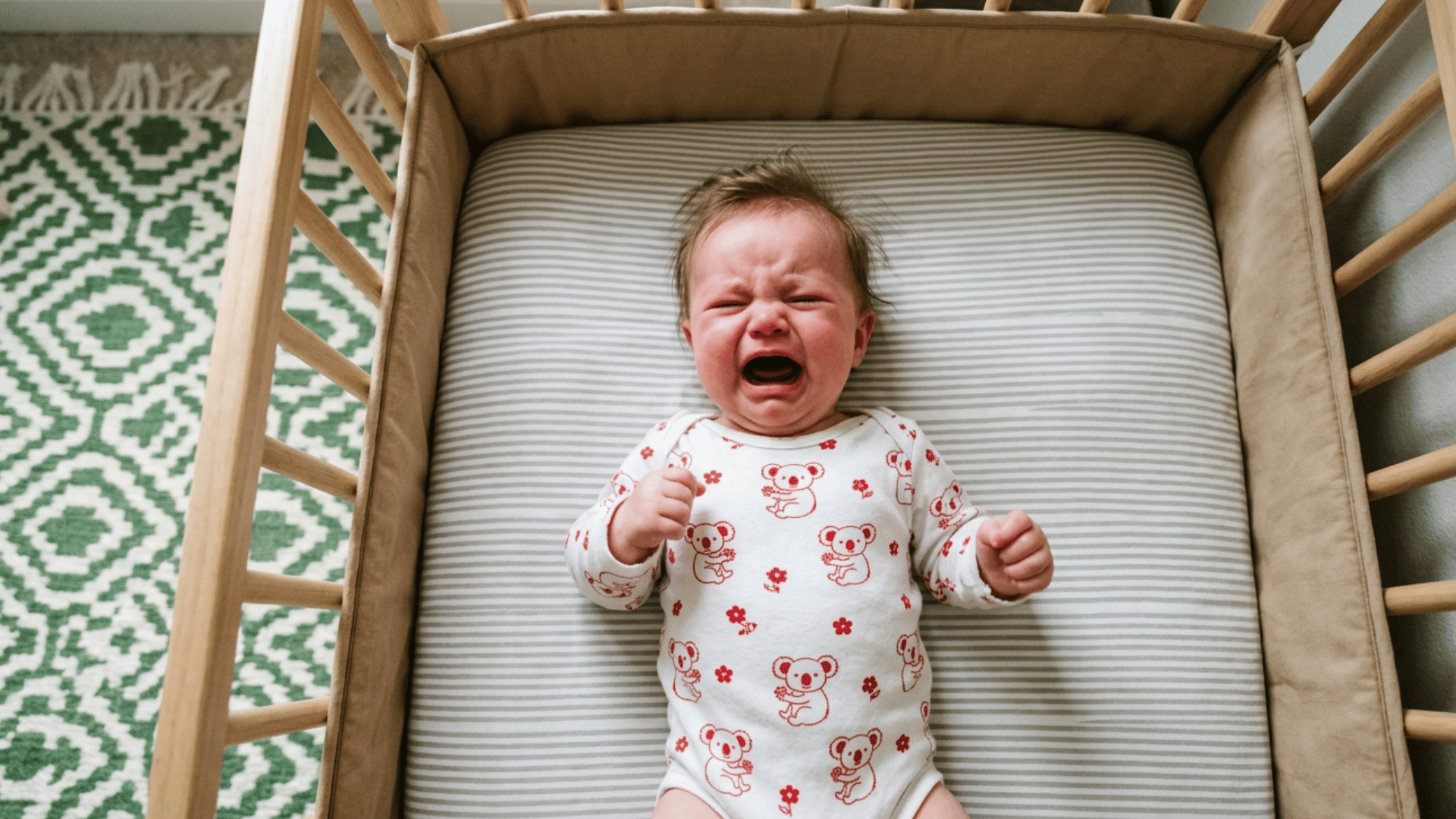
Sleep regression often begins with sudden changes in your child’s sleep patterns. Recognizing the common signs can help you determine whether a regression may be the cause.
- Frequent night waking: Your baby or toddler wakes more often than usual and needs help falling back asleep.
- Bedtime resistance: They suddenly resist bedtime, take longer to settle, or refuse to go to sleep.
- Short or skipped naps: Daytime naps become shorter, harder to start, or are skipped altogether.
- Early morning waking: Your child starts waking much earlier than usual and struggles to fall back asleep.
- Increased fussiness: Poor sleep can leave your child more irritable, clingy, or difficult to soothe during the day.
Sleep Regression Ages: What Each Stage Looks Like
Sleep regressions usually happen around six common ages. Each stage is linked to a major developmental milestone that can temporarily disrupt your child’s sleep.
4-Month Sleep Regression
Around 4 months, babies develop more mature sleep cycles that resemble adult sleep. This change often leads to frequent night wakings and shorter naps for 2 to 6 weeks.
Because babies at this age are also becoming more mobile and starting to roll, the CDC’s guidance on safe infant sleep is worth reviewing around this time, as babies become more active while sleeping.
8 to 10-Month Sleep Regression
As babies begin crawling, standing, and become more aware of separation from parents, sleep can become unsettled. This regression typically lasts 2 to 4 weeks.
Many of these behaviors, including reacting when a parent leaves the room and being clingy or fearful around unfamiliar people, align with the CDC’s 9-month developmental milestones, suggesting the sleep disruption is part of typical development.
12-Month Sleep Regression
Many toddlers experience sleep disruptions as they start walking, develop language skills, and begin transitioning toward one daily nap. This stage usually lasts 2 to 4 weeks.
Some children may fight naps or wake earlier than usual during this period. Keeping nap and bedtime schedules as regular as possible often makes the transition easier.
18-Month Sleep Regression
Peak separation anxiety and the shift from two naps to one can make falling asleep and staying asleep more difficult. Most children return to normal sleep within 2 to 6 weeks.
Toddlers at this age may resist bedtime or call for parents more often during the night. Staying calm and following the usual bedtime routine helps reinforce healthy sleep habits.
2-Year Sleep Regression
Growing independence, stronger emotions, language and cognitive growth, tantrums, and changes in daytime naps can temporarily affect sleep.
This regression commonly lasts 2 to 6 weeks.
Many two-year-olds test bedtime limits by asking for extra stories, drinks, or hugs. Setting clear and consistent bedtime boundaries can reduce these delays over time.
3-Year Sleep Regression
Nightmares, bedtime fears, and resisting naps or bedtime routines are common at this age. Sleep usually improves again within 2 to 4 weeks.
A comforting bedtime routine and reassurance can help children feel safe without creating new sleep habits that are difficult to break.
Which Age is the Hardest Sleep Regression?
The hardest regression varies from child to child, depending on their development, temperament, and changing sleep needs.
Many parents find the 18-month sleep regression the hardest because it combines separation anxiety, the transition from two naps to one, and growing independence, making bedtime more challenging.
Some families struggle most with the 4-month sleep regression because it permanently changes sleep patterns, while others find the 8 to 10-month regression harder due to crawling, standing, and separation anxiety.
How Long Do Sleep Regressions Usually Last?

Most sleep regressions last two to six weeks. The exact length depends on the cause and on how a baby or toddler falls asleep in the first place.
Illness or teething layered on top of a regression can stretch it out too. Once the tooth breaks through or the cold clears, sleep usually improves within a few more days.
A CDC analysis of children’s sleep habits found that roughly a third of children under 18 sleep less than recommended for their age, with infants among the groups most affected.
When Do Toddlers Stop Napping?
Most toddlers stop napping by age 3 to 5, and some stop as early as 2. A few still take an occasional nap up until kindergarten.
- Lying awake or playing instead of sleeping during nap time
- Taking 30 minutes or more to fall asleep at nap time
- Staying cheerful and alert without a nap on occasional days
- Fighting bedtime harder on days they did nap
What Do Parents Say About Sleep Regression Being Real?
Sleep regression is real; even though the term is often discussed by parents on Reddit, it isn’t clinical. There’s no test, scan, or formal diagnosis for it; it’s a normal developmental change that temporarily disrupts sleep.
One parent reported that their baby’s sleep changed dramatically around 14 weeks, when rolling began. Frequent night waking, shorter naps, and bedtime struggles made the 4-month sleep regression feel very real.
A Reddit user shared that their child experienced several sleep regressions during the first year, with some being easier than others. While the 6-month phase was relatively mild, the 13-month regression proved much more challenging, lasting beyond six weeks.
However, one parent was initially skeptical, but their baby went from sleeping through the night to waking every two hours at five months. They added that friends’ babies skipped this phase, showing that sleep regressions aren’t universal.
Another caregiver felt that the term “sleep regression” is overused, even though they noticed more night waking and shorter naps around four months. Despite the sleep changes, they emphasized that their baby continued reaching new developmental milestones and remained generally manageable.
Handling Sleep Regressions Without Losing Calm

Getting through a regression comes down to a handful of habits that work at every age and support healthy sleep until this temporary phase passes.
- Routine: Keep bedtime steps short and identical every night, even during travel
- Check-ins: Offer brief, boring reassurance instead of long conversations or picking a child up
- Schedule: Shift bedtime 15 to 30 minutes earlier during nap transitions to prevent overtiredness
- Daytime practice: Let a baby practice new physical or language skills while awake, not at bedtime
- Patience: Avoid starting new sleep training or big changes mid-regression, since progress is harder to judge
Conclusion
Every child moves through the sleep regression ages differently. There’s no single script to expect, or timeline to compare against.
What matters more than the age chart is the signs: more night waking, shorter naps, or sudden bedtime resistance.
Once you can name what’s happening, it stops feeling random and starts feeling manageable, and the stretch that feels endless right now is rarely the one you’ll remember a year from now.
Has your child gone through a sleep regression? Share your experience or tips in the comments.
Frequently Asked Questions
Do All Babies Go Through Every Sleep Regression?
No. Some babies sail through most windows with no trouble, while others hit every one. Both patterns are normal.
How Do I Know If It’s a Sleep Regression and Not Something Else?
If sleep problems come with a fever, rash, or other illness symptoms, it’s likely not a regression; it’s the illness. A true regression shows up alongside a new skill or milestone, not sickness.
When Should I Talk to a Pediatrician About My Baby’s Sleep?
Talk to a pediatrician if your baby’s sleep problems last longer than six weeks or include symptoms such as trouble breathing, poor weight gain, unusual daytime sleepiness, or loud snoring.